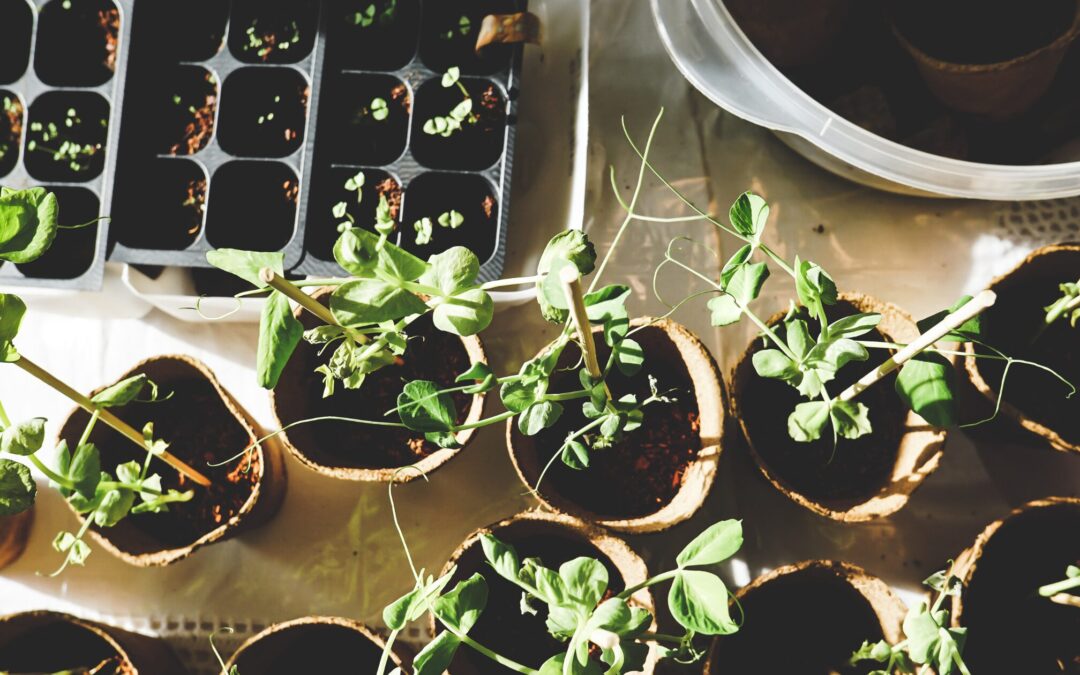
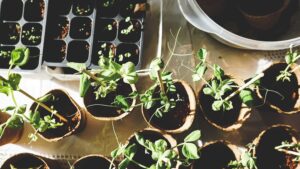
I don’t know about you but once the festive season is over and life starts again in January, my fingers itch to dig into some dirt! Although there are some outdoor garden tasks you should do in January, it’s too cold to get my fingers dirty outside. But I can always do some seed-starting in January and sow vegetables indoors! Of course, it’s way too early to seed-start tomatoes, for example, but there are some plants we can give a head-start by sowing them out in January. Let’s get growing!
Understanding Your Growing Zone and Its Impact on Seed Starting
As you probably know, there are 11 hardiness zones, each divided further into two half-zones. Hardiness zones are set worldwide and classified by the lowest temperatures reached in winter and last frost dates. If you want to know your hardiness zone, hop over to this site, insert your postal code and find out your zone.
The hardiness zone you live in determines to an extent what plants you can cultivate in your region. It also tells you when to plant and seed-start your vegetables which is largely determined by the dates of the last frost.
However, knowing your hardiness zone doesn’t take into consideration regional microclimates that mostly affect temperature and humidity. Also, soil quality contributes a lot to the microclimate. Sandy soils, for example, have a lower minimum and higher maximum temperature than loamy soils.
Apart from temperature, the last frost dates are what’s most important for us vegetable gardeners. When we know how long it takes for a plant to germinate and from sowing to harvest, we can calculate backwards and determine when to seed-start indoors.
Essential Indoor Seed Starting Equipment for January
The basic equipment consists of cultivation trays and/or small pots with transparent covers, alternatively cling film.
Then, you need cultivation soil specially for seed-starting. It contains fewer nutrients and is also good for planting herbs, which also need a few nutrients, in pots.
A small watering can or a plant sprayer helps you to water your seeds carefully without washing them out of the soil.
Plant sticks are great for noting the plants and varieties you sow and sticking them into the tray to mark your plant rows. Don’t think you can determine the plants later. Been there, done it, not successful!
A plant lamp is a true game-changer when it comes to indoor seed-starting as light intensity and light hours are usually not sufficient for healthy plant growth. When there is too little light for our seedlings, they become leggy and might even fall over as they try to reach for the light. A plant lamp can be programmed for how long it has to shine (12 – 14 hours/day) and it usually provides just the right light spectrum for plants.
Additionally, you may want to think about buying a heating mat for warmth-loving plants like peppers, tomatoes and eggplants. With a mat like that underneath the seedling trays you can ensure a consistently high temperature.
How to seed-start indoors
Seed-starting indoors is not rocket science but there are a few things to observe:
Rinse the tray or pots with hot water to eliminate bacteria and fungi.
Put the soil into the tray or pots, press it lightly and make small holes where you want the seeds. Put the seeds into the holes, cover them lightly with soil and press the soil gently. Now, water the seeds carefully with a fine-holed watering can.
Put the transparent covers onto the trays. This enhances the temperature and keeps the moisture in. Put the trays in a sunny place at the temperatures required for each plant. If you want to seed-start plants that need relatively high temperatures, like eggplants, peppers, physalis etc., you should consider using a heating mat that you can put under the trays and heat up to the appropriate temperature.
Once the plants grow, check them daily. Keep the cover off for a few minutes to enable ventilation and prevent fungi. Also, check for fungus gnats, those small black flies that come out of the soil and whose larvae eat your plants’ roots. Sometimes, we bring them into the house with the soil. Put glue traps into your propagation trays and if gnats stick to them, put nematodes, which eat gnat larvae, into water and water your plants with it. Maybe you have to repeat this procedure at a later time.
Vegetables to seed-start in January
#1 Peppers / Chillies
Peppers and chillies need some time to get started. If you sow them too late, they’ll have their fruits late, too, and you risk damaging them by cold temperatures—even if you cultivate them in your greenhouse.
Sow the seeds into a tray with cultivation soil and put it in a sunny and warm spot at 25 °C (77 °F). A bright south-facing window, a winter garden or a heatable greenhouse are good places.
#2 Physalis
Seed-start physalis in January by sowing several seeds into one pot. Put the pot in a warm and bright spot. Temperatures about 25 °C (77°F) are ideal. Physalis grow slowly at the beginning and must be kept moist. Separate the plants when they are about three weeks old and plant them in single pots. Either plant physalis out after the last night frosts or separate them again and put them into large pots that you put outside.
Physalis are perennials and can be kept indoors during winter.
#3 Winter lettuce
Seed-start winter lettuce like ‘Baqieu’ to plant it out later in a cold frame or unheated greenhouse. That way you’ll have an early lettuce harvest.
Sow the seeds into a tray with the appropriate soil and press it lightly. Lettuce only germinates in light so don’t cover the seeds with soil. Temperatures mustn’t be as high as for peppers or physalis. 16 – 18 °C (60 – 65 °F) are ideal. When the plants are large enough, separate them and set them into single pots.
#4 Sweet potatoes
Cut sweet potatoes in halves and let the cutting areas dry for a few hours. Then, put the halves with the cut end facing down into a pot or balcony box with soil. Place the pot or box in a warm and sunny place. After some time, shoots will grow out of the sweet potatoes which we’ll cut off later and put into water for building roots.
#5 Ginger / Turmeric
Ginger and turmeric build rhizomes instead of deep roots and thus are best grown in flat pots. Put a rhizome with “eyes” into a tray or pot and cover it with soil so that two-thirds of the ginger or turmeric is in the soil and one-third is still above.
#6 Eggplants
Like peppers and physalis, eggplants like it warm and thrive best at temperatures of 25 °C (77 °F). Seed-start eggplants at the end of January by sowing seeds into a tray. Later, when they are large enough transplant each plant into a single pot. Always make sure that they are in a warm and sunny place.
#7 Cabbage
Cabbage is usually harvested in autumn, but there are varieties for a summer harvest and those should be seed-started now. As usual, sow the seeds in a tray and separate them later when they’ve grown four seed leaves.
Cabbage doesn’t need high temperatures like peppers and eggplants. On the contrary, it’s perfectly content with temperatures of 16 – 18 °C (60 – 65 °F).
When we plant out these cabbage varieties after the last day frosts, we can harvest the plants already in July.
#8 Savoy cabbage
As with cabbage, there are summer varieties that should be seed-started at the end of January. Savoy cabbage germinates already at temperatures of only 3 °C (38 °F). Once they have four seed leaves, separate the young savoy cabbages and plant them into single pots. Now put them in a bright place at about 16 – 18 °C (60 – 65 °F) and plant them outdoors end of March/beginning of April.
Summer varieties of savoy cabbage can be harvested in July and August.
#9 Early cauliflower
Seed-start early cauliflower varieties in January by sowing them into trays and putting them in a place with 16 – 18 °C (60 – 65 °F). Separate them when they have grown four seed leaves and plant them into single pots. Plant them into an unheated greenhouse or a cold frame mid to end of March. If you have them in the greenhouse, you can plant tomatoes in between later. By the time they need more space, the cauliflower is already harvested.
#10 Kohlrabi
Kohlrabi can also be seed-started now for an early harvest in the cold frame or greenhouse. Indoors they need temperatures about 16 – 18 °C (60 – 65 °F) and should be separated once they’ve developed four seed leaves. Plant them out into the cold frame or greenhouse end of February/beginning of March for an early harvest.
#11 Onions
Sowing onions may be more time-consuming than planting the bulbs but it shows advantages like healthier growth, more varieties and better storage capability. And it’s cheaper. Seed-start onions in January to ensure that you can harvest them before the first frost in autumn. Put the seeds into a tray or small single pots and place them in a bright spot of about 16 – 18 °C (60 – 65 °F) or colder (not under 10 °C / 50 °F). At the end of March/beginning of April, you can plant them outdoors.
#11 Summer leek
Summer leek, that’s harvested in July / August must be seed-started in January. You can either sow the seeds in trays and separate them later or you sow them into small single pots. Plant the leek outdoors when it’s about as thick as a pencil. To protect it from night frosts, however, you should cover it then with a frost fleece.
Summary
Starting seeds in January sets you up for a productive growing season ahead. Remember to choose varieties suited to your zone and provide proper growing conditions for strong, healthy seedlings. When you observe the simple rules for seed-starting vegetables indoors (see above), you’ll give your plants a good head-start and have a great harvest later that season.
Ready to get growing? Grab your seed packets and let’s make this your best gardening year yet!
Here you’ll find further articles on seed-starting:
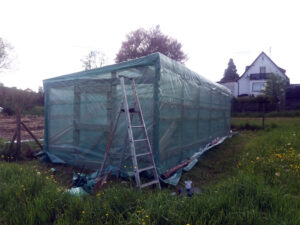
This guide is based on my own greenhouse, which I built and have used for four growing seasons.
Standing in my vegetable garden on a rainy summer day, watching my tomato plants struggle under these humid conditions, I dreamed of a greenhouse—a warm sanctuary where peppers could ripen, tomatoes could climb to the ceiling, and the growing season wouldn’t end with the first frost.
What I didn’t realise was that this dream would lead me on a journey from browsing expensive catalogues to hammering in my own ground sleeves, learning how to build a DIY wooden greenhouse from scratch – something far better than anything I could have bought.
Here’s a quick summary of what building this greenhouse involved.
Quick Overview
Building a Greenhouse from Scratch
Greenhouse type:
DIY wooden greenhouse with plastic covering
Foundation:
Ground sleeves driven into soil (no concrete base)
Total cost:
~€1,300 in materials
Build time:
Several weekends, weather-dependent
Skill level:
Beginner-friendly with basic DIY skills
Best suited:
Gardeners wanting a low-cost, non-permanent greenhouse
Research
As I said, I first looked for ready-made options. There were, of course, several varieties of greenhouse kits, but a greenhouse of the size I wanted (about 10 x 3 metres) was nearly impossible to find, and when I finally found one, it was definitely not within my budget!
Another problem was that all these greenhouse kits had to be fixed onto a solid concrete base. As I do not own my garden but have rented it, I am neither allowed to plant deep-rooted bushes or trees nor set up anything permanent. Like a solid concrete base. But how to make sure that the greenhouse would be safely anchored without a base? So I googled DIY greenhouse construction without a permanent foundation.
There were, of course, greenhouse tunnels that had a frame made of curved PVC tubes that were stuck into the earth. However, as we have severe storms around here, especially during autumn, I was afraid that one of those would lift the greenhouse right out of the ground and send it flying through a neighbour’s window. So, a greenhouse tunnel with a frame of PVC tubes was certainly not an option either.
It was my dad, finally, who suggested building a greenhouse from scratch with wood and using ground sleeves as point foundations. I was sceptical at first–would simple ground sleeves really be enough to keep a greenhouse safely anchored? Four years later, I can tell you: this has worked reliably for me over four seasons!
Planning your greenhouse: What you need to build a greenhouse from scratch
But how to build a greenhouse without concrete foundations? I’m not all thumbs when it comes to handcrafting, but I haven’t had much experience either. Well, the first step is:
Drawing your greenhouse plan
By the way: Planning is an ideal task for winter, when there are only a few things to do in the garden (for more details, read on here about January garden tasks).
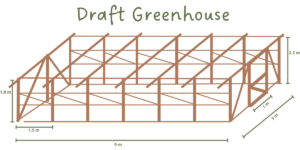
First, I drew a rough plan of the greenhouse and talked it over with my dad and an acquaintance who is an experienced carpenter. I had to adjust some things and refine the details, but in the end, I was good to go. Here is my draft. Feel free to use and adapt it if you’re planning your own greenhouse project.
I set the greenhouse behind the vegetable garden, facing south for optimal light yield. The south side is 1,8 metres (3.3 feet) high and 9 metres (30 feet) long, and the north side has a height of 2,2 metres (6.5 feet). Those two long walls are 3 metres (10 feet) apart, so I have gained 27 square metres (300 square feet) of additional gardening space (9 x 3 metres / 30 x 10 feet).
Beginner note: You don’t need a perfectly scaled drawing or technical software. A hand-drawn sketch with measurements is enough—as long as you know where every beam and opening will go.
Advanced note: If you’re comfortable with it, sketching your plan to scale or using simple CAD software can help you pre-calculate angles and material lengths more precisely.
Choosing your location
When you’re planning a greenhouse in your garden, you’ll want to put it in direct sunlight while making sure that it doesn’t cast a shadow on already existing beds.
In my case, it was obvious that I wanted the greenhouse to go behind the vegetable garden, that is, at the north side. That way, it wouldn’t throw a shadow on the existing garden while at the same time protecting it from harsh north winds.
Before you start: What you need to know
Now that you have your design planned out, let’s talk about the practical side: what this will actually cost, how long it takes, and what you’ll need to get started.
How much will this cost? (And is it worth it?)
Before we dive into the details of building a greenhouse from scratch, let’s talk about costs. I’m sure you’re dying to know if the whole procedure is worth the trouble.
Well, the ready-made options I found online, in catalogues, and at hardware stores ranged from € 5,000 to € 23,000. Nothing I could or would remotely ever pay for a greenhouse. For that amount of money, I could buy organic vegetables for the rest of our lives. Of course, prices may vary in your region, but I doubt you’ll find something cheap.
The total cost to build this greenhouse was €1.310.
Here’s a list of everything I needed and what it cost:
Item
Details
Cost
Ground sleeves
16 sleeves, 90cm length, 7x7cm top
100 €
Wood
Beams, boards and battens, cut to size at the sawmill
500 €
Screws
Various sizes for construction
200 €
Hinges and hardware
24 window hinges, 3 door hinges, 1 door bolt
80 €
Heavy-duty tarp
Grid-reinforced greenhouse film
250 €
Gutter system
Brackets, tubes, end pieces
100 €
Water container
1000-liter capacity (secondhand)
80 €
Total
1.310 €
Ready to start planning your own greenhouse? Get my weekly gardening tips delivered to your inbox!
Join the Seasonal Simple Life Community!
Seasonal inspiration for your garden, kitchen, and home—delivered with care every week.
Depending on your region, these costs may vary as well, of course, but I’m pretty sure it’ll still be way less than a ready-made greenhouse.
For €1310 and several weekends of work, I gained 27 square metres of growing space that a comparable ready-made greenhouse would have cost at least € 5.500, plus installation—if I could even find one this size.
Beginner note: If this is your first large DIY project, expect it to take longer than planned—and that’s completely normal. Build in extra time so the process stays enjoyable.
Advanced note: With pre-cut lumber, power tools, and a second person, you could reduce the build time by several weekends.
How long does it take to build a greenhouse from scratch?
Bear in mind that I worked mostly alone and on weekends when the weather permitted. With a helper, you could cut this time significantly. The key is not to rush—take time to ensure everything is level and secure.
Description
Time frame
Planning and design
2 weeks
Gathering materials
1 week
Setting sleeves and frame
2 weekends
Installing windows and tarp
2 weekends
Finishing touches
1 weekend
Total
About 6 - 7 weekends, spread over two months
What tools do you need?
Must-have tools
Spirit level
Hammer or mallet
Electric drill with bits – you can borrow one if your site has electricity
Saw (hand saw works, electric is faster)
Measuring tape (at least 5 meters)
Folding rule
String and stakes for marking
Sharp knife
Nice-to-have tools
Screw clamps
Spade
Planer or drawknife
Beginner note: You don’t need professional-grade tools. I built most of this greenhouse with basic, borrowed equipment and hand tools.
Advanced note: Access to a table saw, impact driver, and laser level would speed things up considerably, but isn’t required.
Helpful skills
Basic measuring and levelling
Sawing in a straight line
Using a drill
Patience and problem-solving!
Don’t let this list intimidate you. I had never built anything this large before, and if I could learn as I went, so can you. The trick is just not give up.
When should you build?
I started building my greenhouse mid-March, but in hindsight, it would have been better to do it in the autumn of the preceding year.
Had I done so, I would have had more time to build the house–I got really stressed at one point, thinking that I’d never finish this project in time to really grow something in it that year.
Also, the soil I’d put into the greenhouse would have had time to settle before I put the plants in.
However, depending on your growth zone, your skills and experience with projects of this kind and if you have any help, late winter/early spring can be just fine to start building a greenhouse.
How to build a greenhouse from scratch
Step 1: Measuring and setting up a string frame
By the end of this step, you’ll have made a string frame for your DIY greenhouse.
First, I measured out the space behind the vegetable garden where I wanted to build my greenhouse and marked it with strings. I’m glad my dad helped me with that. If you (like me) have never done this before: don’t worry. Here’s a step-by-step guide on how to set up a string frame:
Marking your first corner
When you have decided where to put your greenhouse, you hammer a wooden (or metal) stake into the ground to mark a corner of your future greenhouse. Ensure the stake extends at least 20 cm (8 inches) above the ground for string attachment.
Creating the rectangle
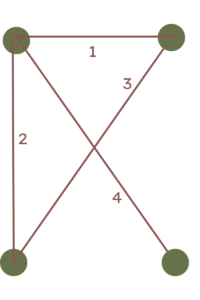
Next, you measure out the small side (in my case, 3 metres / 10 feet) and hammer in a second stake. Connect these two stakes with a string. You then measure out the long side from one of the two stakes (here: 9 metres / 30 feet) and hammer in a third stake. Again, connect this stake with the first one.
Ensuring perfect squares with the diagonal method
Beginner note: If this step feels confusing, take your time. Getting the base square makes everything else easier later—and fixing mistakes now is far simpler than correcting them later.
Advanced note: If your site isn’t perfectly flat, you can still square the frame—just focus on accurate horizontal measurements rather than ground level at this stage.
Now comes the coolest part: measure the diagonal length from the second to the third stake and make a note of the length. If, like in my case, you want to build a large greenhouse, you can do that with the help of a string that you attach to the second stake and pull it to the third one. Otherwise, you just use a folding rule. Mark the spot on the string where it touches the stake and measure it. Now you measure from the first stake to a (at that point imaginary) fourth stake until you have the same diagonal length as measured before between stakes two and three. Hammer in the stake and connect the last side with the string.
Step 2: Setting up the frame
By the end of this step, you’ll have
set the ground sleeves
pillar beams securely bolted
a stable base frame including windows and a door
Setting the ground sleeves
Beginner note: Ground sleeves are very forgiving. Small inaccuracies can be compensated for later when you attach the beams—don’t aim for perfection, aim for consistency.
Advanced note: In very loose or sandy soil, you may want to set sleeves slightly deeper or compact the soil around them with gravel for extra stability.
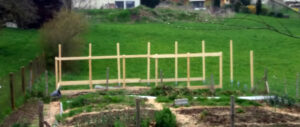
With the string frame in place, I started to hammer in the ground sleeves for greenhouse foundation, one on each corner and then one every 1,5 metres (3.5 feet) at the long sides. I used sleeves with a length of 90 cm (3 feet) and a 7×7 cm (2.75 x 2.75 inch) base on the top.
At the front of my future greenhouse, i.e. the short side facing east, I additionally added two sleeves where the doorframe would be. All in all, I used 16 ground sleeves (7 on each long side and two for the door frame).
All sleeves must be at exactly the same height. To ensure that, I used a plank, put it across two sleeves and measured with a spirit level. Since the area I built my greenhouse on isn’t level, I had to compensate. Some sleeves needed to be hammered deeper into the earth, while others stood higher—all carefully adjusted so the tops were perfectly level with each other.
I had to decide what my reference point for height was. Naturally, I took the deepest point in my greenhouse area where I let the sleeve stand out 20 cm (8 inches) above ground. The other sleeves were adjusted accordingly. That meant that while the reference sleeves stood out 20 cm (8 inches), some had to go 10 cm (4 inches) into the ground. There, I shovelled away the earth and hammered the sleeve into the right height. After every sleeve, check that it is level with the others.
Erecting the wooden beams
Beginner note: If planing beams by eye feels intimidating, remove small amounts of wood at a time and test the fit often—you can always take more off, but you can’t put it back.
Advanced note: A thickness planer or belt sander makes this step faster and ensures consistent beam dimensions.
At my dad’s workshop, I sawed 8×8 cm (3×3 inches) wooden beams to the right length, which I determined with good old Pythagoras. I added an extra 15 cm (6 inches), though, as I wanted the beams to protrude over the south edge.
This was necessary, as I intended to fix a gutter on this side. In the end, I had 7 beams with 1,8 metres / 6 feet (south side) and 7 with 2,2 metres / 7 feet (north side), all with an angle of 13 ° at the upper side. The two beams for the doorframe were adjusted later.
To fit the wooden beams into the sleeves, I had to plane 0.5 cm / 0.2 inches on each side of the lower 10 cm (4 inches) of the beams. Since my 8×8 cm (3×3 inches) beams were slightly larger than the 7×7 cm (2.5 x 2.5 inches) sleeves, I planed them by eye until they fit snugly.
After fitting the beams into the sleeves, I drilled holes into them through the pre-made holes in the sleeves and stuck 8 cm (3 inches) carriage bolts into them. Lastly, I screwed them tightly into the sleeves using the carriage bolts and nuts.
Constructing the wooden greenhouse frame
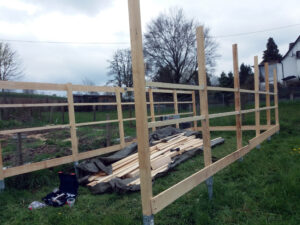
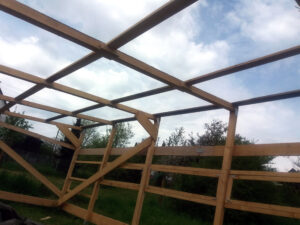
Once the pillars were set, I started to build the wooden greenhouse framework for which I used boards that were 2,5 cm (1 inch) thick, about 20 cm (8 inches) broad and 4 – 5 metres (12 – 15 feet) long. I fixed the first board with a screw clamp across the bottom of the front corner pillar, starting at the south side.
Then I marked where it hit the last pillar it could reach (in this case, the third), took it off and sawed along the mark. My garden plot has no electricity connection, so everything had to be done by hand—a workout I hadn’t quite anticipated when I started this project!
After fixing it again with two screw clamps, I screwed the board to the pillars. In that way, I did all the bottom boards around the greenhouse and afterwards started screwing boards to the upper side of the pillars. I just had to remember that no bottom board was needed where the door should be built.
Adding windows
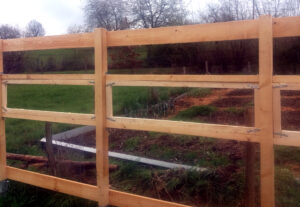
Next, I installed the frames for the windows that I wanted to build into the sections on the south and north sides. For this purpose, I took wooden battens (5 cm x 2,5 cm / 2 x 1 inches), measured the distance between two beams, sawed them to the measured length and screwed them in between the beams. For each window, I needed an upper and a bottom batten to complete the frame.
Window frames
Beginner note: Slight variations in window size are perfectly fine. What matters is that each window fits its own opening, not that all windows are identical.
Advanced note: If you want tighter seals, you can add weatherstripping or overlap battens once the tarp is installed.
Now the windows had to be built. This was the same as building the window frames, but with additional sidebars. I measured out every section and sawed the battens according to measurement. I’m no carpenter, so the measurements varied a bit from section to section, so it made more sense to measure each section individually and saw the battens accordingly.
When the windows were ready, I fixed them into the frames with hinges at the lower part, two on each window, making sure that they opened to the outside of the greenhouse. I can’t tell you the delight I felt when I opened my first (empty) window, and it worked! In the end, I had 12 windows, six on the south and six on the north side, and it was time to tackle the ceiling.
My first completed window frame—empty, but perfect!
Tip: Always double-check that the windows open outward fully to allow ventilation.
Ceiling beams
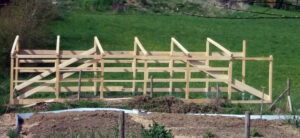
Next, I laid beams of 3,15 m (10.3 feet) across the upright beams in a north-south direction so that they ended at the north side at the edge of the pillars and overhung on the south side by approximately 10 cm (4 inches). I screwed the ceiling beams onto the pillars and additionally fastened them with metal angles.
All, except the last one on the front. I only laid this beam onto the pillars, inserted the remaining two beams into the sleeves where the doorframe would be, and marked the height at which I had to saw so they would fit. I didn’t want to take the risk of calculating the height (I was never good at maths), so that seemed the best and easiest way to do it.
As the framework needed stability, I screwed boards diagonally across the backside and the fields left and right of the door frame. I also installed diagonal boards from each pillar beam to the adjacent ceiling beam. That done, stability had improved A LOT!
Beginner note: Diagonal bracing may not look pretty, but it’s one of the most important elements for long-term stability—especially in windy regions.
Advanced note: Metal cross-bracing or tension cables can be used instead of wooden braces for a cleaner look.
Reinforcing the ceiling
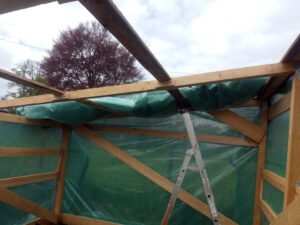
The wooden beams on top are adjusted in a north-south direction. To make sure the tarp wouldn’t hang loosely and form sags when it was raining, I inserted boards between the beams’ sections. I started with the highest, i.e. the north side and screwed the boards on with angles so that they levelled with the top of the beams.
I did three boards per section, one on the north side, one in the middle and one on the south side, ending with the beams’ edges.
Building the door
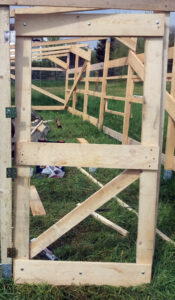
Now, I had to build the door: I made a frame out of boards and stabilised it with a horizontal board in the middle and diagonal boards on the upper and lower sections. I then fixed it to the left pillar with hinges that were larger and thus more stable than the window hinges.
When that door swung smoothly on its hinges for the first time, I may have done a little victory dance. (Okay, definitely did a victory dance.)
Step 3: Covering
At the end of this step, you’ll have
covered all sides of the greenhouse with tarp
closed the ceiling
secured the tarp in the soil
cut open all windows and the door
Research on greenhouse covering
The last step now was to cover the whole DIY greenhouse frame with greenhouse film. I had done a lot of research in advance, comparing different possibilities like plastic twin-wall sheets, plexiglass, real glass and different greenhouse films.
The twin-wall sheets and plexiglass I dismissed pretty soon, as they would have been too expensive. The same went for real glass, which had the additional disadvantage of heating the greenhouse too much, so that shading would have been necessary–which would have cost even more.
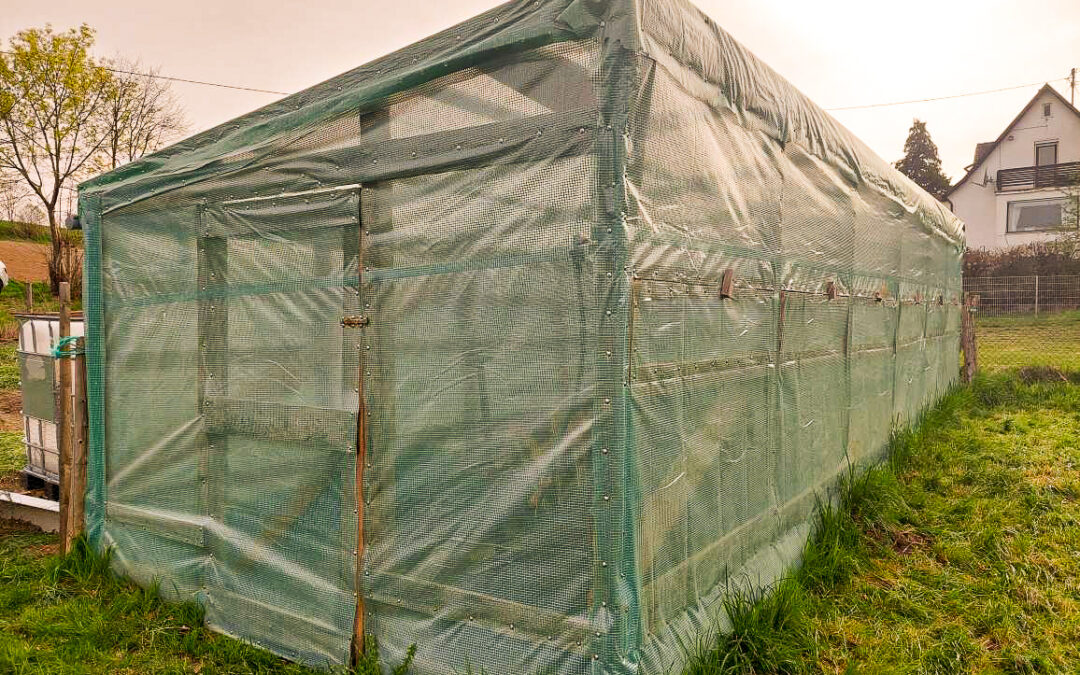
Film it was then. Here, too, there are multiple possibilities. In the end, I opted for this heavy-duty tarp, which, due to its grid, is very stable and also thick enough to last several years (the manufacturer guarantees 3 – 5 years, but I think it may last a good deal longer. Time will show.) Update (2025): After three years, the ceiling tarp developed holes in it, forcing me to replace it.
Covering the greenhouse sides
Beginner note: This step is much easier with two people. If you’re working alone, clamps are your best friend—use more than you think you’ll need.
Advanced note: For long-term durability, sandwich the tarp between wooden battens and the frame rather than relying on screws alone.
Adjusting the heavy-duty tarp was the hardest part of this whole project, as it lives up to its name and is very heavy. However, with the help of several clamps (and after a bit of swearing and sweating), the first edge was tightly screwed to the corner beam of the east side using plumbing screws.
How to fix the tarp
Plumbing screws are metal screws with a rubber seal washer. That means that they have a larger contact area than without the washer, making sure that the film doesn’t tear out.
Update (2025): Despite the plumbing screws, the tarp was partly torn out when I replaced it after three years. This time, I fixed the tarp with boards on the framework.
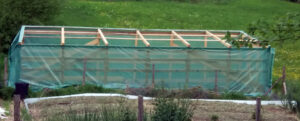
Now, I pulled it to the next pillar and screwed it on, making sure that it was tightly stretched. Additionally, I fixed screws along the upper and lower boards and around the window frames, clinging them firmly to the wood. I started at the back wall and worked my way around the entire house. I made sure that the film levelled up at the upper side of the greenhouse and overlapped at the lower side.
Opening up the door
To enter the greenhouse, I used a sharp knife to cut a slit between the door and the doorframe. Next, I screwed a door latch onto the door and its counterpart onto the frame—and just like that, I could open it! It was a great moment entering “my house” for the first time!
Covering the greenhouse ceiling
Beginner note: Wind stress adds up over time. Even if the tarp looks secure at first, reinforcing it now can save you from repairs later.
Advanced note: UV-resistant greenhouse film with reinforced edges lasts significantly longer than generic tarps, especially on roofs.
To get the ceiling covered, I first unfolded the tarp to its full size and then rolled it lengthwise. I then lifted it onto the ceiling and started to screw it onto the east beam. (Honestly, I don’t remember how I got that heavy foil onto the ceiling all by myself, but I’m pretty sure that some swearing was involved.)
I then unrolled the film inch by inch, using a lot of plumbing screws to screw it onto the beams and boards. I took a screw every 10 – 15 cm, in short: a lot! But I was (and still am a bit) scared that the wind would rip off the film and tear the whole greenhouse apart, and so I decided that in this case, more is more.
Update (2025): It turned out that my fears were justified– the tarp had ripped off the boards when I replaced it after three years. To prevent that, I additionally fixed the tarp with boards on the wooden framework.
Opening up the windows and digging in the tarp
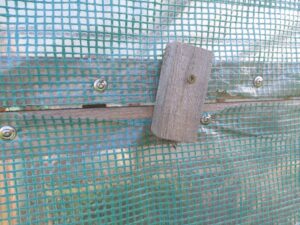
The whole house was covered now, and I opened the windows by cutting around between their edges and the frame with a knife, just like before when I opened the door. To keep the windows from falling open, I took some wooden scraps, leftover pieces from the battens I’d sawed earlier, and hammered them not too tightly onto the upper frame so that I could turn them and use them as a latch.
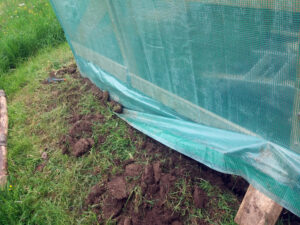
The last step on this building journey was to dig the overlapping tarp into the soil. I used a spade to dig slits into the earth, stretched the tarp and burrowed it tightly by firmly pressing the soil with my feet.
Step 4: Final touches
Fixing the gutter
As a last step, I fixed a gutter to the south side of the greenhouse to collect the rainwater from the roof. I had bought several gutter brackets that I screwed onto the upper boards of the greenhouse frame, one bracket per metre.
As you need a slight slope to one side to which the rainwater will be flowing, I fixed the brackets in a descending line from west to east. That means I started with the first bracket on the west side, screwed it almost at the top of the board and gradually lowered the brackets so that the last on the east side was about 10 cm lower.
Then I stuck the gutter tubes together and inserted them into the brackets. I closed both gutter sides with end pieces. About one metre from the east side, I inserted a tube into the gutter that leads the water downward into a 1000-litre water container that I bought from eBay. Finally, with the gutter in place, I could collect rainwater efficiently—an eco-friendly bonus!
Prepare for planting
Beginner note: Letting the soil settle for a few weeks before planting improves water retention and root stability.
Advanced note: Installing drip irrigation or soaker hoses before planting is much easier than retrofitting later.
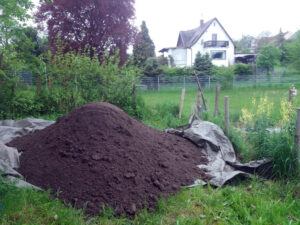
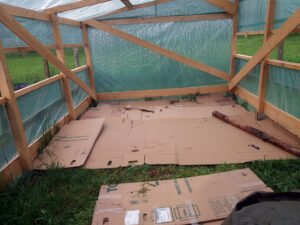
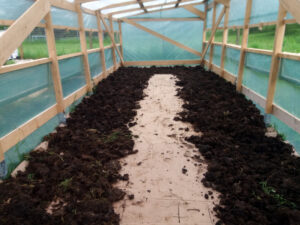
With the greenhouse complete, it was time to prepare the beds. For this, I used the same method as with my garden: I laid out cartons, put some leftover manure I still had from the previous year and ordered some good humus. To determine how much soil you need, measure your planting area (excluding paths) and multiply by 0.15 m (0.5 feet) to raise your beds 15 cm (6 inches) high.
This is the soil for my greenhouse—it took me two hours to distribute it all!
This shows the massive pile I had to move.
Laying out cardboard for bed preparation
Distributing the manure evenly
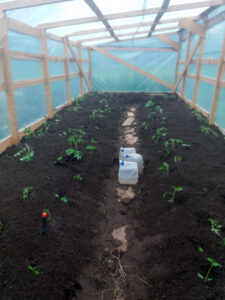
Ready for planting!
Finally, I was ready to plant my tomato, pepper and cucumber plants in the greenhouse, which had grown very large already!
What I’d do differently next time
Beginner & Advanced takeaway: If you only take one thing from this section, let it be this: start earlier than you think, secure the tarp better than you think necessary, and don’t hesitate to ask for help.
Start earlier
Well, to be honest, I totally underestimated the time it took for me, an inexperienced non-craftswoman, to build a greenhouse of that size. Naturally, I sometimes had to reflect on how to proceed and all in all, I wasn’t very quick.
Additionally, you’re dependent on the weather. Heavy rains will stop your work on a project like that. That said, if I were to build a greenhouse again, I’d start earlier in the season. It was ready for planting by the end of May, and that was a bit too late for all my warmth-loving plants like tomatoes, cucumbers and peppers.
Use boards to secure the tarp.
Next, I’d fix the tarp on top with wood boards. That means, I’d first roll the tarp across the ceiling, place boards on top of it where the beams are and secure it all in place with screws. That way, the tarp couldn’t get torn out when the wind gusted in and lifted it.
Invest in better materials.
Also, four years in now, I’d definitely invest in a more weather-resistant tarp. The one I bought initially guaranteed weather-resistance for 3 – 5 years, and last year (after three years), I had to exchange the ceiling tarp. This may also have to do with the insufficient fixing to the beams just with screws, but it had also become brittle when I took it off. A better tarp is more expensive, of course, but it’ll be worth it in the long run.
Reconsider measurements
For a greenhouse of this width, I learned that three instead of just two beds is better. They’re narrower, giving you better access to all plants.
Plan the door width more carefully—mine could be 20 cm wider for easier wheelbarrow access through the growing season.
Ask for help
Get help. I’m not good at asking for it, and I always want to know if I can do things on my own, but honestly, it wouldn’t have taken that long if I had asked the boys to help. I only admit this to you. Hope none of my family will ever read this section… (Don’t tell them I said so!)
Resume
Four years later, my low-cost greenhouse alternative has weathered autumn storms that would have demolished those flimsy PVC tunnels I first considered. Inside, tomatoes climb past my head, peppers ripen in abundance, and I’ve extended my growing season by months. Every time I step inside—even just to check on seedlings on a February morning—I feel proud. Not because it’s perfect (it’s definitely not!), but because I built it with my own hands.
If you’re dreaming of your own greenhouse, I hope this guide shows you that building a greenhouse from scratch is possible. You don’t need to be a carpenter or engineer. You just need patience (a lot!), basic tools (some), and the willingness to learn as you go (absolutely!).
Start with that string frame, take it one step at a time, and before you know it, you’ll be harvesting tomatoes in your very own DIY greenhouse.
Happy building—and even happier gardening!
Want to know more about gardening? These posts are for you:
These January reflections are part of a monthly practice of noticing what each season asks of us.
When I look outside my bedroom window on a typical January morning, I can see the nearby woods, sometimes covered in tiny snow hats. At least, that’s the case this January (so far) as snow has become increasingly rare around here in the alpine upland. A hundred kilometres to the south, snow is a certainty, but not here. That’s why I’m so happy that this year we are covered in white.
View from my bedroom window in January.
Temperatures hover steadily below 0 °C (32 °F), and a slight wind blows from the west. Going outside is a marvel – if you’re appropriately accessorised with a thick scarf, a woolly hat and mittens. The air smells crisp and clean with a hint of wood smoke. On my strolls through the snow-covered woods, there’s almost no sound. Everything seems muffled by the white blanket that buries all the plants, or at least considerably changes their appearance.
The sun rises late this time of the year, and sometimes we don’t see it at all (despite it being day) due to thick fog. On days like these, I light as many candles as I can to make our home cosy and light, despite the dullness outside. When the sun does come out, however, its light is reflected by zillions of snowflakes, making it almost blinding.
When I was a child, life had slowed down on our farm. Dad went to the woods to fell trees if necessary, but on the farm itself, beyond caring for the animals, we mainly did maintenance work. We organised the workshop and kept the machines and tools well-tended.
I love the slow pace of January.
Only a few things need, can and should be done. While others crowd gyms and plan overhauls, I prefer to hibernate as much as I possibly can. This resistance to January’s forced productivity isn’t just personal preference—it runs contrary to how humans historically understood the year.
I learned that it was Julius Caesar who determined the first of January as the start of the year, choosing the date because it was when the new consuls started their work. Later, Pope Gregory XIII reformed the Julian calendar but kept January 1 as the year’s start.
This was largely a political decision rather than a seasonal one. Before that, many cultures started the New Year at the spring equinox on March 20/21.
This makes so much more sense to me!
Nature starts reviving again, so it’s a lot more plausible to “start” anew then, instead of in the deepest winter. No wonder January can feel misaligned with our energy!
While the world rushes with resolutions, nature rests – and we should do the same. Instead of getting myself stressed out, I’d rather sit on my couch with hot cocoa, browsing through seed catalogues, or journaling by the Christmas tree (which we’ll keep until the end of January). No hectic for me, thank you very much. This is my January: dreaming, planning, organising – a quiet preparation for spring.
The Garden’s Deep Sleep
When I stroll through my garden in January, everything is dormant. It’s like watching a child sleeping peacefully, deep in dreams, undisturbed. Snow covers the garden, tucking the earth into winter’s rest.
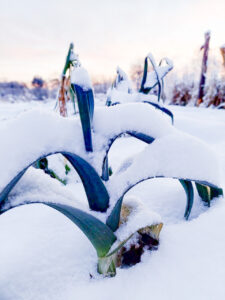
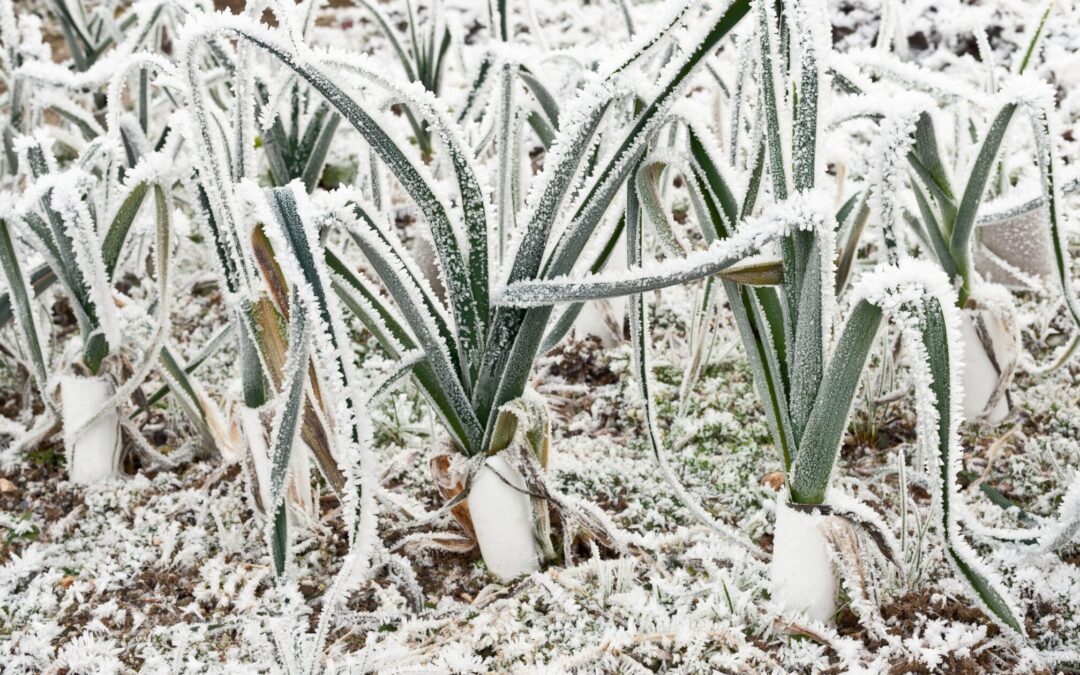
The branches of the nearby trees and shrubs are bare, showing their form and unique structure clearly against the deep blue January sky. The beds in the vegetable garden are almost empty; only a few hardy leeks brave the cold.
At first glance, it might seem bleak, yet a garden in winter is incredibly beautiful in its bareness.
The necessity of dormancy
This dormancy is necessary for our garden to regain its strength for the upcoming growing season. Just like the child I mentioned earlier, our garden needs its rest after a long year.
Nevertheless, there’s work underneath that we can’t see: the roots of trees, shrubs, and perennials strengthen and store as much energy as possible, invisibly preparing for spring.
The garden as teacher
The garden quietly teaches us something important here: rest isn’t laziness; it’s necessary preparation. Just like nature – and we are part of nature – we live in cycles. There’s a time to work and a time to rest, daily and yearly. Trusting these cycles makes us stronger and more productive in the long run–not despite the rest, but because of it.
The garden asks very little of me right now.
There’s little to do in the garden right now. I clean my tools and repair them as needed. I also sketch out a planting plan for the vegetable garden, dream of new patches and order new seeds – remember the seed catalogues I mentioned earlier.
If you dream of adding a greenhouse, now is the perfect time to research and plan. When I built my greenhouse from scratch, I started planning it in January.
Let’s be honest: January is the darkest month of the year. Indeed, the days get longer again after the winter solstice at the end of December, yet the festive glamour of Christmas is over, and it can all look very bleak. Whenever I catch myself sinking into melancholy, I tell myself that January is meant to be dark and quiet. It’s nature’s permission to hibernate, and I try working with it instead of fighting it.
Winter Self-Care Practices
For body…
Just because it’s cold doesn’t mean we shouldn’t go outside. On the contrary, a walk in the snow gets us enough fresh air and movement to keep us fit and healthy during the cold months. And it’s mesmerising to see how our surroundings look so different when they’re covered in snow. No gym session offers quite the same nourishment.
After the walk, a long, hot bath, ideally with dried herbs from summer, is perfect. The hot water envelops us like a soft embrace and warms us up after our time in the cold.
It’s a small ritual, but it makes a difference.
To nourish my body, I love eating warm food, often made from root vegetables, but also meat with delicious gravy. These rouladen with Spaetzle, for example, are one of my favourite dishes in winter.
I’ve found out that in January, I often need more sleep than in any other month, and I’ve learned to give myself permission to go to bed early and get that extra sleep if I need it.
That, too, feels like winter care.
…Mind…
One of my favourite things in January is reading all the books that I saved for winter. Right now, for example, I’m reading a biography about Franz Schubert, which I’ve had for almost a year now. I couldn’t muster the energy for it during the busy growing season, but now is the perfect time to indulge in Schubert’s life and work.
I also tackle creative projects that I simply don’t have the time for the rest of the year. Knitting a shawl or fingerless gloves is on my list. As I’m not an avid knitter, I need time and muse to concentrate on a knitting pattern. Now is a wonderful time to just give it a go.
As an introvert who needs her alone time to recharge, I take winter as the perfect excuse to say no to as many obligations as I can. I’ve experienced that I’m much more outgoing and sociable in summer, but in winter, I love being at home, either alone or with my boys and not interacting with any other people if I can avoid it. If all else fails, there’s always the weather to blame for not being able to leave the house…
… and Soul
Whenever it’s dim and dusky in January, I light candles. Their natural, flickering light creates an atmosphere of enchantment and cosiness. It lifts my mood and touches my soul. Also, I light up the Christmas tree as long as we have it in our apartment. It has artificial candles, but the light banishes the darkness–and with it any chance of a dark mood.
What has also helped me a lot when my mood plummets is listing five things I’m grateful for. For that purpose, I keep a gratitude journal on my nightstand where I can reach it literally any time, day or night. I’ve found gratitude practice a powerful tool to boost my energy and mood.
I’m not good at meditation (my thoughts always wander elsewhere), but I love just sitting in a quiet environment. In my job, I almost constantly communicate with many different people, which sometimes can be overwhelming. That’s why I treasure some quiet time at home all the more.
Creating Cosy (Gemütlichkeit)
What Hygge is for Scandinavian folk is Gemütlichkeit for Bavarians. Both describe the same longing for warmth and shelter, the art of making your home a sanctuary. It doesn’t take much. Some candles, one or more thick blankets and some tea or hot chocolate can transform a home into a cosy nest.
Gemütlichkeit deepens when nothing needs to be rushed. When you are not obliged to be productive but permit yourself to live slowly, you’ve reached a new level of relaxation.
Pantry Gratitude
May I tell you a secret? Sometimes I go down to the basement just to look at all the jars of homemade preserves. I’m immensely grateful to my former self for having cooked, canned, fermented, and dried all the vegetables, fruits, and herbs that we can now consume. Having tomato sauce with our pasta, sprinkled with dried herbs, then a dessert made of frozen or canned berries, is like opening jars of preserved summer.
It’s also deeply satisfying to cook creatively with what we have and not run to the store and buy “fresh” ingredients from the other end of the world. Cooking from what we already have feels quietly abundant. Traditional winter recipes pave the way for a more sustainable life in harmony with the seasons. For me, re-learning to make do – and finding joy in it – is the best part of preserving.
Right now, I wish that January would never end. The slowness of the month and the cosiness I have created for us feel deeply relaxing. By month’s end, I know I’ll get restless, sensing daylight lengthen, but that’s weeks away. For now, I take my garden’s advice and allow myself to rest, relax, and contemplate my intentions, not resolutions, for the upcoming year.
I hope you, too, can embrace January’s slow energy! If you’re looking for permission to rest – you have it. It’s not a luxury – it’s essential. I’m making my home cosy, flowing with January’s energy, and caring for myself— I hope you’ll do the same.
I wonder if you feel this pull too—this permission to rest when January arrives. However you spend this month, may you find the rhythm that serves you best. Spring will come — but for now, winter is enough.
If you’re interested in more cooking and baking recipes, look here: Recipes – seasonalsimplelife.com Many (but not all) of the recipes there are authentically Bavarian.
Although our gardens are sleeping right now, that doesn’t mean that we gardeners have nothing to do! Garden tasks in January keep dedicated gardeners busy even during winter’s quiet months. Admittedly, it won’t be so many outdoor tasks like weeding and planting, but more indoor chores like maintenance and planning. However, these are not the only garden tasks in January. Below, I’ve listed 12 actionable tasks you should think about.
Note: My garden is in a USDA zone 7b, and these tasks are timed for zones 6-8. If you’re in a warmer or colder region, adjust timing accordingly based on your last frost date.
#1 Planning your garden in January
If you’re new to gardening and just starting, this may seem a bit overwhelming, but don’t worry, I’ve got you covered! Whether you have a large backyard you want to turn into a veggie paradise or just a patio or balcony with a few containers to cultivate in, planning is always the first step. This is also valid if you already have a garden or if you want to expand. Let’s dive in and start planning our dream garden step by step.
Drawing
Grab a piece of square paper and draw the patches you have or want to have. Just don’t get overambitious, but start small, especially as a beginner.
It’s best to start with one or two beds of about 1.2 x 1.2 metres (4 x 4 feet). Leave room for paths and future expansion.
Imagine what you’d want your garden to look like. Do you want a cottage garden with flower borders and herbs? Will you start with raised beds? Do you want to have a greenhouse and/or cold frames? Or is a permaculture garden what you’d like?
Dream big first – then adjust your ideas to your available space, budget, and time. Expansion is always possible later.
Creating your vegetable wishlist
The next step is to make a wish list of all the vegetables you’ll want to grow.
Focus on crops you and your family actually enjoy eating. It’s no use to grow spinach if you loathe it, but you should plant more of those radishes that your children are so fond of.
Add a few new varieties you’d like to experiment with. If you’ve already dipped your toe into gardening, you may want to try out new types of crops; put them on your list.
Adjust choices based on your space and experience level. If you’re a garden greenhorn, start with these easy vegetables for beginners. With more experience, you can try other, more complicated crops.
Ordering seeds in January
When you know which vegetables you want to grow, check the seeds you already have to see if they’re still germinable (see “2. Seed checking)”.
For new seeds, browse seed catalogues (my favourite garden task in January!) and order what you need and want.
January is an ideal time for ordering seeds, as widely popular varieties sell out later in the season.
If you want to learn more about starting a vegetable garden, this beginner’s guide will tell you everything you need to know on that topic.
#2 Check your seeds for germination
Among the most important January garden jobs is checking if your seeds are still able to grow.
If you have seeds left, especially when they are more than two years old, you’ll want to check if they are still capable of germination. Some plants, like parsnips and celery, can be a bit finicky when it comes to germinating.
To find out if they’re still good, put some seeds between moist kitchen paper and observe for a few days if they germinate. If two-thirds or more sprout, the seeds are good to use; if it’s less, order new seeds.
Testing old seeds now prevents disappointment later when trays stay empty.
#3 Create new patches
January is a good time to build new patches. Don’t worry, you won’t have to dig up your garden (which would be especially tedious with frozen ground).
My favourite method of building new patches only requires cardboard and good planting soil or compost.
Gather enough cardboard to cover the ground of your new garden bed.
Peel off any plastic from the cardboard and lay it flat on the ground where you want to have the patch.
Distribute well-rotted compost or planting soil about 10 – 15 cm (4 – 6 inches) on it.
Done! If you want a detailed step-by-step guide on how to make these easy no-dig garden beds, hop over to this article.
#4 Prepare your indoor growing station
Another January garden task is to clean trays, pots, and tools with hot water to remove pathogens and pests before sowing season begins.
Also, sterilise your growing soil by baking it at 150 °C (300 °F) for 30 minutes. This will kill, for example, fungus gnats but also pathogens that can be a real danger for seedlings.
If you don’t have any planting lights already, consider buying some. They’re a real game changer when it comes to indoor sowing, as the natural light usually isn’t sufficient to help develop healthy plants.
#5 Seed-starting
Toward the end of January, you can start sowing slow-growing crops indoors, especially in regions with long growing seasons. Remember: I’m talking about zones 6 – 8 here; if you live in a warmer or colder climate, adjust timing accordingly based on your last frost date.
Some vegetables, for example chillies and peppers, are real sloths when it comes to growth. To give them enough time to become large enough to plant them out eventually, sow them indoors at the end of January. Cabbage, cauliflower, leeks and onions can also be sown indoors at the end of the month. Want to read more about what vegetables you can seed-start in January? This complete guide to seed-starting in January contains a comprehensive list.
#6 Protect your plants
Whenever you’re out in winter, you’ll probably be covered up from head to toe to be protected from the harsh weather. Your plants need the same treatment.
One of our garden tasks in January, then, is covering them with frost protection fleece, which not only protects them from the cold but also from drying winds.
Still got any root crops in the ground? Cover them with an extra layer of mulch to protect them from the freezing weather.
You can also use the branches of your Christmas tree to cover your root crops or herbs, BUT ONLY if it hasn’t been treated with pesticides! We don’t want that in our gardens, do we? Always choose organic trees if you plan to use them in your garden.
#7 Harvesting
If you’ve ever harvested frozen vegetables in winter, you’ll know that, for example, lettuce becomes soft and slimy once it has thawed. The reason for that is that the plant you harvested can’t recover from the frost once its roots are cut off.
Rule of thumb: Never harvest frozen vegetables unless they are protected from frost or temperatures are above freezing.
#8 Watering
This may sound weird, but your plants can suffer from dryness even in winter, especially when it’s sunny and windy. This phenomenon is called frost drought.
When the ground is frozen, your plants can’t take up water, but they still evaporate moisture through their leaves, especially on sunny and/or windy days. Frost drought occurs when frozen soil prevents water uptake, but plants continue losing moisture through their leaves.
To protect your plants from drying out, you have to water them. This is best done in the mornings when temperatures will still rise, and the plants will get a chance to snatch up the water during the day.
#9 Pruning
January is an ideal time to prune:
Fruit trees
raspberries and blackberries
blueberries
currants and gooseberries
The best time to do that is while the plants are still dormant. If you haven’t done so earlier (ahem… yes: guilty), cut out any old growth from your fruit trees and berry shrubs to maintain their productivity in the upcoming season.
#10 Tool inventory and maintenance
Check if you’ve got everything ready for the upcoming season:
Frost protection and nets Do you have enough frost protection fleece? Winter may go on a bit longer, or frost may hit even after some warm days. In that case, you’ll want some spare fleece at hand.
Pest control supplies Stock up on pest protection nets for spring and summer if you don’t want to share your harvest with maggots. Also, if you have as many slugs in your garden as I have, make sure you have enough barriers like snail collars and snail fences to keep them off your vegetables.
By the way: Companion planting, which means planting vegetables together that support and protect each other, also helps to keep pests and diseases at bay. If you want to learn more about some foolproof pairs for your vegetable garden, you can explore proven companion planting combinations in this article.
Tool cleaning and repairs If you haven’t done it already, clean up your garden tools by scraping off the dirt and washing them thoroughly. Afterwards, it’s good to sharpen them, if necessary, and oil them. If something’s broken, repair it.
#11 Build what you need (and want)
The garden is still dormant, so why not head into your workshop and build what you’d like to have?
Whether it be a
trellis
raised beds
a scarecrow or
an insect hotel,
Now is a good time to put your designs into reality.
#12 Support the animals
Our feathery friends will be grateful for food, so hang up bird feeders and fill them with appropriate food for wild birds.
If you have squirrels in your garden, you can also hang a squirrel feeder with balanced squirrel food in one of your trees. Install the feeder far from the house and at least 2 metres (6.5 feet) above the ground.
Leave dead plant stems and fallen leaves on the ground as they offer hedgehogs and insects a great winter home. You can clean it all up later in spring when they’ve woken up from hibernation.
☐ Plan garden layout:- Vegetable Wishlist- Order Seeds- Create and Draw plan
☐ Check seeds for germination
☐ Prepare indoor growing station: ☐ Clean trays, pots and tools with hot water ☐ Sterilise growing soil by baking at 150 °C (300 °F) for 30 minutes ☐ Consider investing in planting lights
Frequently Asked Questions About January Garden Tasks
Can I really start seeds in January?
Yes! Cold-season crops like cabbage and cauliflower can be started indoors at the end of January. Peppers and chillies also need an early start due to their slow growth rate.
What if I live in a different climate zone?
These tasks are timed for USDA zones 6-8. Gardeners in warmer zones (9-11) can start earlier, while colder zones (3-5) should wait 2-4 weeks. Always check your last frost date.
Is it too cold to work in the garden in January?
Many January garden tasks can be done indoors (planning, seed starting, tool maintenance). Outdoor tasks like pruning should be done on milder days when plants are dormant.
Do I need to water my garden in winter?
Yes, plants can suffer from frost drought during sunny, windy winter days. Water in the morning when temperatures are rising so plants can absorb moisture before nightfall.
When should I order seeds for my garden?
January is ideal for seed ordering. Popular varieties often sell out by late winter, so ordering early ensures you get what you want.
A quiet month with a big impact
You see, even if almost nothing’s growing outside right now, there are still some garden tasks in January that we can do. And although the tasks seem different, they can be mostly summed up as: Preparation. Whether it’s planning new patches and crops, maintaining and repairing tools, building new things or seed-starting indoors, these are all steps that lead to the next season’s garden. Have fun and enjoy the (relative) calm. We’ll soon be digging in the soil again!
When the leaves start to paint warm hues on the landscape, it’s time for us gardeners to roll up our sleeves for the last time this year and do an autumn garden cleanup.
But what does autumn garden cleanup mean? In short, it’s the process of preparing your garden for its winter rest. Just like preparing a child for bedtime by brushing their teeth, giving them a bath and putting on their PJs, we clear out dead plants from our garden, manage fallen leaves and protect it from cold weather damage.
In this guide, I’ll walk you through the essential steps of autumn garden cleanup, from timing your efforts to sustainable practices that benefit both your garden and local wildlife.
Importance of an autumn garden cleanup
An autumn garden cleanup isn’t just for appearances, but helps our garden to stay healthy for the seasons to come.
It prevents the overwintering of pests and diseases and improves soil health for the next growing season.
Additionally, an autumn cleanup enhances our garden’s appearance during the winter months.
And lastly, it will reduce our workload next spring.
Timing your autumn cleanup
It’s important to choose the right timing for your autumn cleanup. Starting too early may deprive beneficial insects of their habitat, while starting too late may make cleaning up more difficult.
Roughly put, an autumn garden cleanup typically takes place between late September and early November. There is no one-size-fits-all date, though; it rather depends on the climate you live in:
Northern regions have earlier frost dates, starting in September to early October, while southern regions have their first frost later in the year, sometimes not before November or even December. In coastal areas, frost also comes late.
Also, growing seasons are shorter in northern areas and longer the nearer you get to the equator.
An additional factor is the altitude of our region: the higher we live, the earlier the first frost may come.
Knowing all that, we’ll want to start cleaning up our garden early in colder and/or wet climates. The warmer the climate we live in and the drier, the later we may leave the time to clean up.
Keep in mind, however, that these are general guidelines. Local weather patterns, microclimate variations, and specific plant needs should always be considered when determining the optimal timing for autumn garden cleanup.
Signs that indicate it’s time to begin
There are several signs that indicate it’s time to start a garden cleanup:
Nighttime temperatures consistently drop below 10 °C (50 °F).
The first frost date is approaching.
The leaves change colour and start to fall.
Annual plants finish their life cycle.
Perennials begin to die back.
Tasks for autumn garden cleanup
I always recommend a gradual approach over several weeks to cleaning up your garden. It’s way better than trying to do everything at once, which will only lead to overwhelm. Besides, a longer cleanup time allows for a longer enjoyment of all those beautiful late-blooming plants.
Vegetable garden
✅Harvest late vegetables like beetroots, carrots, celery, parsnips and parsley roots.
✅Before the first frost, cover spinach and winter lettuce like lamb’s lettuce with a special gardening mesh that will protect your vegetables from the cold.
✅ Plant garlic and winter onions to give them a head start for next year’s harvest. Look here for a comprehensive guide on cultivating garlic: How To Grow Garlic: Complete Planting Guide
✅ If you haven’t sown cover plants in August or early September, cover the soil with mulch.
Orchard
✅ Harvest the last fruits from the trees to avoid pests and diseases from overwintering and spreading.
✅ Remove and destroy any mummified fruits, that is, dried, shrivelled fruits that are still on the branches. Also, clean up fallen fruit to prevent disease spread.
✅ Check for and remove pest egg masses or cocoons.
✅ Trim dead, diseased or crossing branches from trees and shrubs. For the overall pruning of fruit trees and bushes, late winter is a better time.
✅ If your area is prone to winter sunscald, consider whitewashing the tree trunks. The white colour will reflect the sunlight so that the bark will not heat up too much. The tree temperature changes only slightly, which is great, considering that extreme temperature fluctuations are the cause of sunscald.
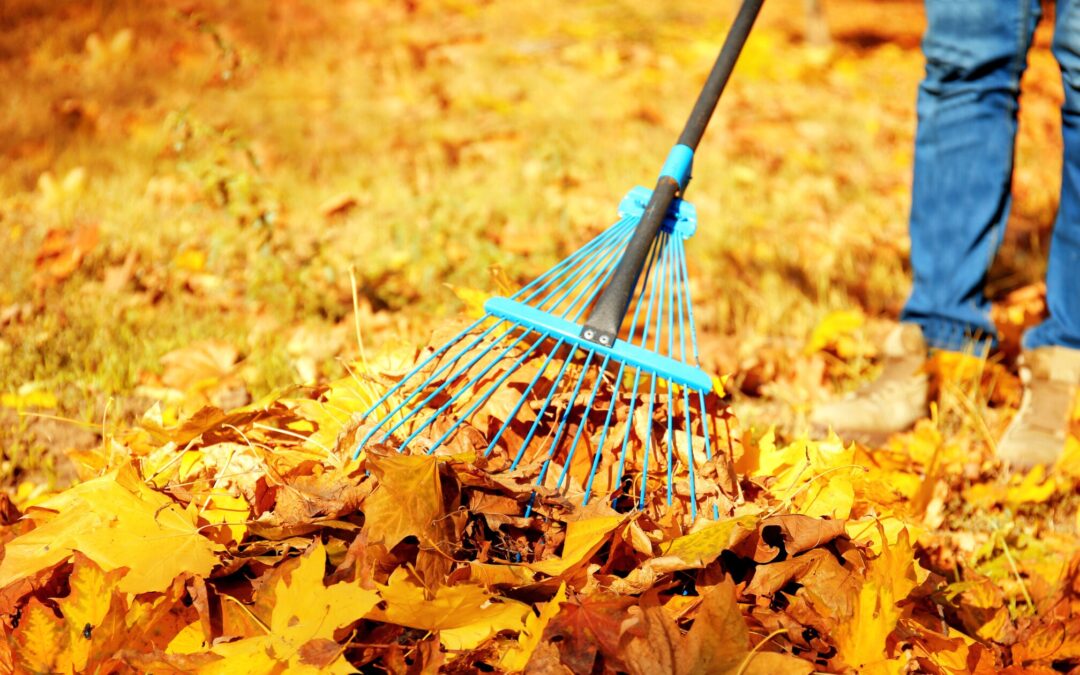
✅ Rake fallen leaves and remove those with a disease. Use the remaining leaves as mulch, either under the trees or in the vegetable garden. You can also create a leaf compost. The leaves will rot very fast, and the compost will be available in spring. Additionally, this compost heap will make a shelter for hedgehogs and insects.
✅ Spread compost or well-rotted manure under fruit trees and shrubs. Make sure to avoid direct contact with the trunks.
✅ Cover the soil beneath the trees and shrubs with mulch and make sure to extend the mulch to the trees’ drip line, which means the radius of the treetops.
Ornamental garden
✅ Remove spent annual flowers and compost any disease-free plant material.
✅ Cut back the dead foliage of perennials but leave some stalks for wildlife habitat. Note that some plants, like ornamental grasses, can be left standing for winter interest and wildlife habitat as well.
✅ Spread mulch around perennials and shrubs, and give sensitive plants insulation with extra mulch.
Remember, a thorough fall cleanup doesn’t mean creating a sterile environment. Leaving some areas slightly untamed can provide crucial winter habitats for beneficial insects and wildlife. That way, we can strike a balance between garden health and ecological responsibility.
Protecting sensitive plants
Depending on your hardiness zone, some plants require special protection to survive cold winters. In my garden, for example, I need to care especially for Mediterranean herbs like rosemary, thyme, and oregano, as well as the artichokes in my DIY greenhouse.
I mulch the plants with leaves, hay or straw. Then, I put straw onto them so that they are covered with it and fix that with twigs. You can also use protective wrapping made of non-woven material or jute. Do not use plastic, though, as moisture will build up beneath it and cause the plant to rot.
During winter, especially when it’s wet, you should check the plants for rotting. In that case, remove the mulch and protective layers and replace them with new, dry material.
Tool maintenance
Once you’re finished with cleaning up your garden, it’s time to care for your garden tools.
✅ First, clean all your garden tools thoroughly by removing any dirt and debris. Soak the tools in warm, soapy water, then scrub the dirt off and rinse. Let them dry well.
✅ If necessary, sharpen your tools with a file or a sharpening stone.
✅ Repair any damage (if possible), tighten loose screws, bolts and nuts and replace any broken or worn parts.
✅ Apply vegetable or machine oil to the metal parts to prevent rust and keep them moving smoothly.
✅ For wooden handles, use linseed oil to protect and nourish the wood
✅ Lastly, store your tools in a dry space, for example a garden shed, a garage or the basement, to prevent moisture build-up.
Conclusion
A garden cleanup in autumn is more than just tidying up: it’s an investment in the health and vitality of our garden.
By removing spent plants, protecting sensitive specimens and using fallen leaves as mulch or compost, we not only prevent pests and diseases from overwintering but also create a fertile environment for the next growing season.
Your garden has given you months of joy and abundance; now is the time to return the favour by preparing it for its winter rest. So, embrace the crisp autumn air, put on your gardening gloves, and tackle your autumn cleanup with enthusiasm.
Happy gardening, and here’s to a productive autumn cleanup and a glorious garden in the year to come!
Originally published October 12, 2025 · Updated July 23, 2026
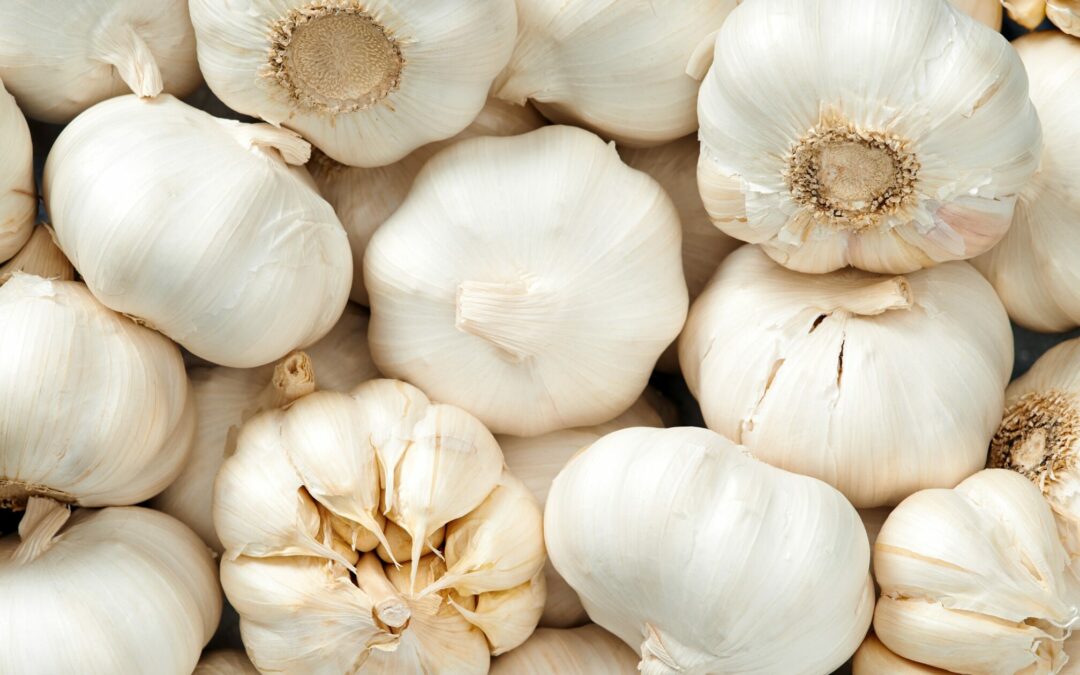
Garlic is one of the easiest vegetables you’ll ever grow. Plant one clove in autumn, give it a sunny spot, and by next summer you’ll harvest an entire bulb packed with flavour—often far better than anything you can buy in the supermarket.
In this complete beginner’s guide, you’ll learn when and how to plant garlic, how to care for it through the seasons, solve common problems, and harvest bulbs that store for months.
Following these steps gives you the best possible chance of harvesting beautiful, healthy bulbs.
Quick Overview on planting garlic
Difficulty
Easy
Best planting time
October (or early spring)
Sun
Full sun
Soil
Fertile, well- drained
Spacing
10 cm (4 inches)
Harvest
June - July
Suitable for Containers
Yes
When to plant garlic
At a glance
✅ Best: October
✅ Second choice: February
✅ Needs winter cold
✅ Autumn planting = larger bulbs
There are two possibilities for when to plant garlic:
Autumn
Planting garlic cloves between the end of September and the beginning of November will give them a head start. They’ll grow until it becomes too cold, overwinter and restart growing in spring. That way, the bulbs will be much larger, and that’s why I recommend planting garlic in autumn.
Spring
If you didn’t plant garlic in autumn, you can still do so in early spring. Plant the cloves as soon as the soil is workable. Depending on your growth zone, that’s between mid-February and late March.
Garlic needs some cold to develop bulbs and not shoot into bloom; therefore, you must plant it early enough to catch some of the cold weather still.
Garlic planted in spring will develop equally fine bulbs, albeit smaller ones, that you can harvest the same year.
Choosing your garlic
Hardneck vs Softneck
Garlic is divided into two groups: hardneck and softneck varieties.
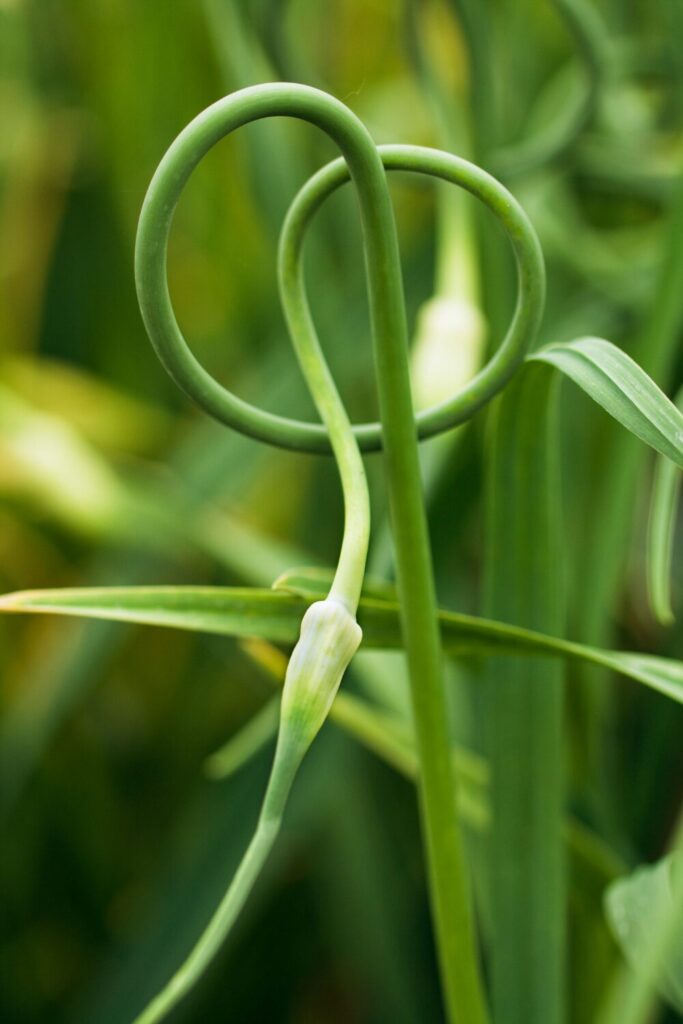
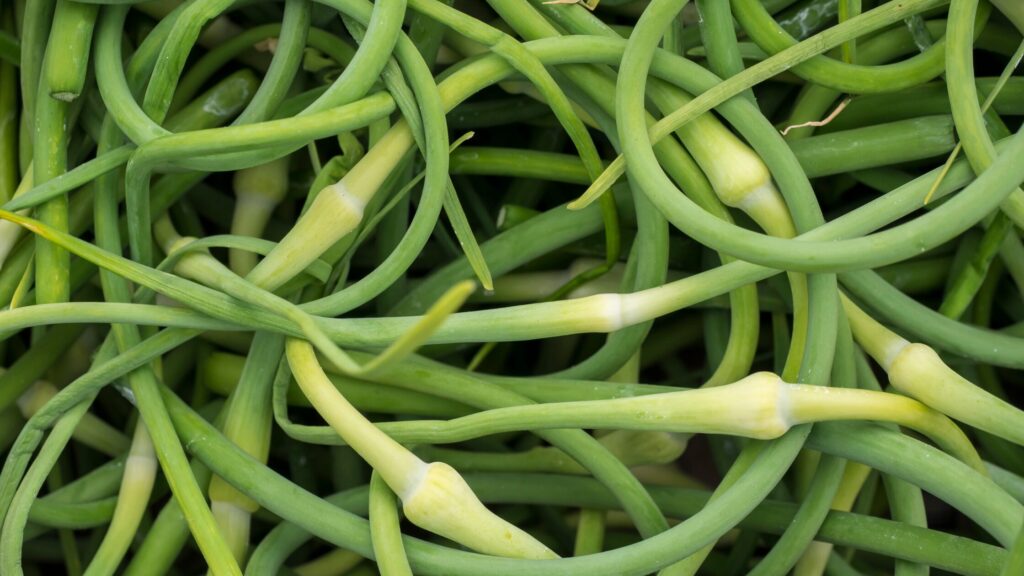
Hardnecks, as the name indicates, develop a hard flower stem or scape, which is edible, as well. Their bulbs form a single ring of large, easy-to-peel cloves around a central stem and, in general, the bulbs (and cloves) are larger than those of softnecks. The outer peel colour can vary from white to violet.
Hardnecks are more cold-tolerant than softnecks, which makes them wonderful for planting in autumn, and they have a strong, sharp flavour.
My favourite hardneck varieties are ‘Ajo Rosa’, ‘Deutscher Porzellan’ and ‘Chesnok Wight’.
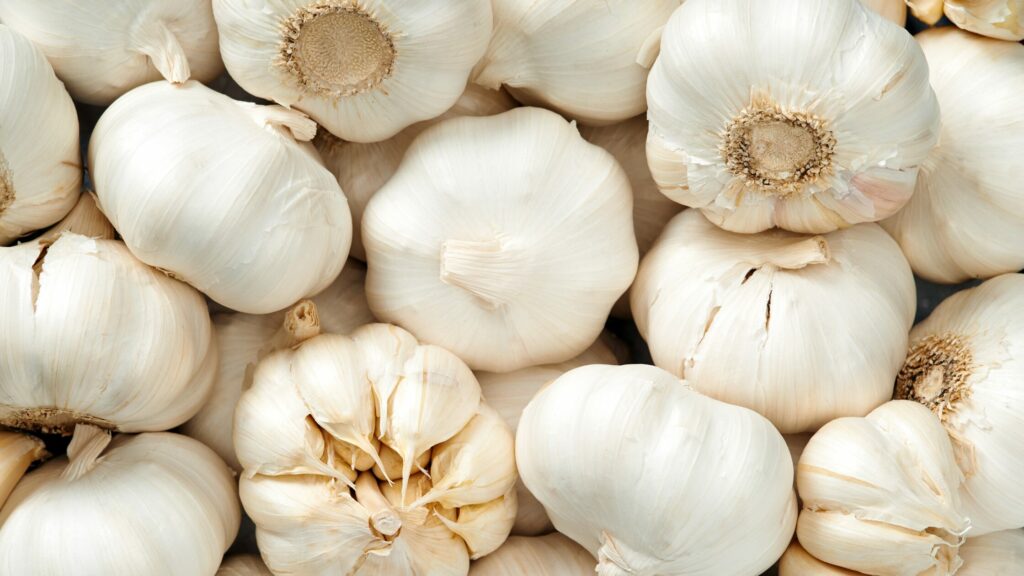
Softneck varieties, on the other hand, build a soft stalk, which makes them suitable for braids. The bulb usually consists of several layers of cloves in a concentric circle around the stalk. The outer peel is usually white or beige; the cloves are beige or light brown.
Softneck varieties are better suited for warmer climates or spring cultivation (although it’s possible to plant them in autumn, as well).
The garlic found in stores is usually a softneck variety, as these types are better suited for machine handling. Softneck varieties I like are ‘Thermidrome’, ‘Germidour’ and ‘Cledor’.
If you’re new to growing garlic, I recommend starting with hardneck varieties. They’re more reliable, produce bigger cloves, and you get the bonus of garlic scapes to cook with.
Even though its name suggests otherwise, elephant garlic is not a garlic variety but a leek relative. Nevertheless, it can be harvested and used just like real garlic.
Cloves vs Bulbils
There are two different ways of planting garlic:
The first option is planting cloves. You simply put single cloves into the earth, and each clove grows into a garlic bulb. It’s simple, easy and the fastest way to get a good harvest.
Option number two is planting bulbils.
When we let garlic blossom, it will produce tiny mini-cloves or bulbils on the scape. You can plant them as well, but in their first year, they may produce a small, undivided round. Often, it’ll produce a bulb in the second year, but depending on the variety and growing conditions, it may take longer than two seasons to produce a fully sized, divided bulb.
Cultivating garlic from bulbils is more cumbersome and takes longer to produce a harvest. On the pro side, you don’t have to sacrifice cloves from your harvest. I mostly choose the faster way of planting cloves, but this year, I’ve let some garlic develop bulbils, which I harvested and put right back into the soil of a seed tray. I’ll keep you updated.
Where to buy seed garlic
It seems easy to buy some garlic in the supermarket and plant it in your garden. However, supermarket garlic usually comes from sites in very warm climates. If your climate is colder (like mine), store-bought cloves won’t grow very well in your garden.
Furthermore, and even more important, supermarket garlic may have been treated to delay sprouting, and imported varieties may not be well adapted to your climate.
If you must buy garlic for growing in the supermarket, go for organic garlic, which is less likely to have been treated with an inhibitor.
A better possibility to get good garlic seeds for planting is to look for local seed manufacturers. Their cloves are well-adjusted to your climate. Or ask friends who already cultivate garlic if they’ll give you a few cloves for planting.
I always set the largest bulbs of my garlic harvest aside and use their cloves for planting. That way, I develop and gather garlic cloves that are perfectly adjusted to my garden conditions.
Choosing the right planting site for garlic
Sunlight
First of all, select an area that gets at least 6 – 8 hours of full sunlight per day. Light shade is ok, but the bulbs and thus the yield will be smaller. The best position for planting garlic is on a south-facing bed without any tree shade.
The most important factor for where to grow garlic is drainage. Garlic will rot in waterlogged soil, so good drainage is essential.
Garlic doesn’t compete well with weeds, so make sure that the bed you want to cultivate garlic in is weed-free.
Also, mixing in compost won’t hurt, as it’ll help to improve the soil structure, drainage and fertility.
Only use mature compost, though. Fresh manure, for example, is not suitable for the soil you want to plant garlic in, as it causes bulb splitting.
If your garden doesn’t provide good conditions for garlic, think about creating a raised bed or planting it in pots.
Growing garlic in containers
If you don’t have a garden space, you can still grow your own garlic in containers. In fact, it’s quite easy to cultivate garlic without a garden bed, making it the perfect crop for people who only have a patio or a balcony.
There are, however, a few things you need to observe when growing garlic in containers.
Container requirements
The container you want to grow garlic in should be at least 30 cm (12 inches) deep to give the roots enough space. The width is not that important; any size will do. The wider your container is, the more cloves you can plant.
The material does not matter. Your planting container can be made from terracotta, plastic or even fabric; all pots work.
What is essential, however, is that the container has some holes in it to ensure good drainage. Garlic is much more likely to rot in poorly drained soil, so it’s important that water can drain off quickly.
Spacing
When planting garlic cloves in containers, you must observe the same spacing as in a garden bed. Put the cloves 10 – 15 cm (4 – 6 inches) apart. If you just have small one-litre pots, put one clove per pot. In a larger pot with a diameter of 40 cm, you can put 6 – 9 cloves.
Container care differences
Caring for garlic in containers is slightly different from a garden bed.
For example, containers tend to dry out faster. For that reason, you must check the soil regularly, at best daily, and water if necessary.
Use a good-quality, multi-purpose compost mixed with 20% perlite or grit for drainage. Replace or refresh the potting mix before growing garlic in the same container again to reduce disease problems.
Also, garlic in containers may need a light feeding in spring as the container soil has limited nutrients.
If you plant your garlic in autumn, which I recommend, you must put the container against a wall or insulate it if the weather gets very cold.
In general, put the containers in a place with full sun. Move them to track the sun if possible.
Leave the containers outside all winter to give your garlic that cold kick it needs for forming bulbs.
Planting and harvesting timing are the same as for garlic cultivated in patches.
Crop rotation
Crop rotation is essential for a sustainable gardening practice; it balances soil nutrients and thus improves soil health in the long run.
As with most vegetables, it’s not advisable to plant garlic in the same place year after year. Not only would it leach out the soil, but it would pave the path for pests and diseases.
Instead, wait at least 3 – 4 years before replanting garlic in the same spot and don’t plant it where any other members of the allium family (onions, leeks or shallots) have grown this season or the season before.
Unfortunately, if white rot becomes established, avoid growing garlic, onions, leeks or shallots in that spot for at least 15 years.
Companion planting
Like in human life, vegetables also don’t love each other unconditionally. Some will always be BFFs, and others don’t get on that well if planted in close vicinity.
As I already told you, garlic shouldn’t be planted near members of its own family, like onions, leeks, or shallots, as they would compete for the same nutrients.
Other plants that don’t grow well with garlic are peas and beans, potatoes, parsley and sage.
It fits conveniently, though, between many slower-growing or widely spaced crops, including
strawberries
raspberries
cucumbers
peppers
tomatoes
eggplants
lettuce
carrots
parsnips
cellery/celeriac
dill
spinach
beetroot
You’ve learned all about the requirements for a good garlic harvest. Now, let’s dive right into planting!
How to plant garlic: step-by-step
If you follow this step-by-step guide, you’ll be rewarded with an abundance of garlic next summer!
How to plant garlic
Soil preparation
Before planting, thoroughly remove any weeds from the patch as they compete for nutrients.
If you have it, add some mature compost to the patch to enhance nutrients and organic matter in the soil.
Loosen the soil with a garden fork by digging into it and wiggling the fork a bit. That way, the garlic can set its roots deeply into the ground, and it may even be easier to harvest the bulbs in summer.
Both the compost and the loosening of the soil support good drainage and soil structure.
Planting garlic
The easiest and most common way is to break up the bulb and stick the single cloves into the soil.
Break up the bulb so that you get out the single cloves.
Use the largest and healthiest cloves – usually the outer ones – and leave the papery skin on as it protects the clove from rot and disease. Discard any cloves that are soft or squishy, discoloured, diseased or in any other way damaged.
When you plant a clove, its pointed tip must face upwards. That’s where it’ll start sprouting, and we want it to be able to sprout upwards via the sunlight. The flat, rounded end will produce the roots and therefore point into the earth.
I recommend planting garlic in rows with 15 cm between cloves and 25 cm between rows. Within the rows, you make holes of about 4 – 6 cm (1,5 – 2,5 inches) deep for cloves and 1 – 2 cm (0.3 – 1 inch) deep for bulbils. A dibble can help here.
Put one garlic clove or bulbil per hole and cover it with soil; press the soil slightly around the clove so that it sits firmly in its spot.
Watering and mulching
A great advantage of planting garlic in autumn is that usually the soil is already sufficiently moist. That way, we don’t have to water the cloves. I don’t water my garlic after planting, but depending on your climate, it may be necessary to do so.
If you’ve followed me for some time, you know that I’m a huge fan of mulching. So, when I’ve planted my garlic, I put on a thin layer of mulch, either straw, dried leaves, well-rotted compost or grass clippings. When the sprouts show, and the weather tends toward freezing, I add more mulch to protect the cloves from extreme cold and keep the soil moist and weed-free.
If it’s mulched too thickly, though, garlic can develop fungal and viral diseases, so make sure that the mulch layer doesn’t exceed about 3 – 5 cm (1 – 2 inches).
How much to plant
As a rule of thumb, I calculate 8 – 10 cloves per person. For my family of three, that means about 30 cloves of garlic, which may sound like a lot but, thankfully, doesn’t take up much space.
If you’re a beginner to vegetable gardening, I recommend starting with 10 – 20 cloves to get a feel for it.
Stay on Track in the Garden
Wondering what else needs doing in the garden this month?
Join my seasonal newsletter and receive practical gardening advice, new growing guides and a free monthly garden checklist to help you keep track of the most important jobs—without feeling overwhelmed.
Garlic Care – Timeline
Autumn (if Autumn-planted)
2 -4 weeks after planting, green shoots will appear. When it gets too cold, the plants will stop growing and go dormant. Don’t worry, they’re fine, even though they have sprouted already.
Apart from removing weeds, you don’t have to do anything for your garlic now. If it’s very dry, water it, but that’s usually not necessary. Cover it with mulch, though, to protect it from cold temperatures and drying out.
Winter (December – February)
In winter, the plant is dormant, and although there’s no visible growth above ground, the roots develop further underground. As I described earlier, this cold period is essential for producing bulbs.
During this time of rest, you’ve got nothing to do. Don’t disturb your plants, not even to “just have a look if they’re fine” (which I admittedly did, but only once, so it doesn’t count).
After severe frost periods, you’re allowed to check that the cloves have not been heaved out of the ground. If so, just press them back in carefully.
Spring (March – May)
When the air grows warmer in spring, scrape the mulch away so that the soil can warm up.
If you haven’t planted garlic in autumn, early spring is the second-best time to do so. As soon as the soil is workable, plant the cloves as described above.
Weeding
Remove weeds as they will compete with the garlic for nutrients and water. It’s best to weed by hand as garlic has shallow roots that can easily be destroyed by hoeing.
The leaves will grow tall and lush now, even those of spring-planted garlic, and the plant builds up energy for bulb development.
If the soil is compacted, gently loosen it around the garlic plants to improve drainage.
Watering
Keep the garlic well-watered, especially as the weather gets warmer, but avoid overwatering it.
Inconsistent watering can cause bulb splitting. That’s why keeping the soil consistently moist is better than occasional soaking. Always water at ground level and not overhead to avoid diseases. The best time for watering is early morning.
To check your soil’s moisture, poke in about 2 – 5 cm (1-2 inches) with your finger: the soil should be moist but not soggy. If it’s dry at that depth, it’s time to water.
Fertilising
A healthy dose of a light nitrogen-emphasised fertiliser, for example, stinging nettle manure or blood meal, provides nutrients in spring. By mid-May, once the bulbs begin to swell, you should stop all feeding. Too much nitrogen will induce the leaves to grow when we want large bulbs instead.
Pest and disease control
Keep an eye out for pests and diseases like thrips or mould. Remove infected or infested plants immediately to keep pests and diseases at bay.
Scape removal (hardneck varieties only)
These beauties are the scapes. If you let them on the plant, they’ll burst into bloom, which is quite a pretty sight, and later on develop bulbils. If you want to get large garlic bulbs, however, you must cut off the scapes.
If you cultivate hardneck garlic, remove the scapes (i.e. flower stalks) before they bloom. Otherwise, the plants will use all their energy to form bulbils, instead of large bulbs.
The scapes are ready to harvest when they’ve made 1-2 complete curls and are still tender and flexible. You should be able to snap them off easily with your fingers. If you wait too long, they’ll straighten out, become woody and fibrous, and will be tough to eat.
The best test is to gently bend the scape – if it bends easily, it’s perfect. If it feels stiff or starts to crack rather than bend smoothly, you’ve waited a bit too long (though they’re still edible, just tougher).
The cool thing is that scapes are quite delicious! They have a mild garlic flavour, and you can use them like spring onions. Chop them into stir-fries, pasta or pesto, for example, or grill them whole as a side dish. Once cut off, they can be stored in the fridge for 2 – 3 weeks.
Common problems and solutions
We always hope that our crops go through the seasons without any problems and reward us with a large harvest. But although garlic is a very undemanding crop, some issues may occur. Let’s have a look and see how we can deal with them:
Yellow Leaves
If your garlic’s bottom leaves turn yellow in June/July, that’s perfectly normal: the bulbs are maturing.
If the problem occurs in spring, however, we’ve got a problem! Usually, the cause is overwatering or a nutrient deficiency.
What to do: Check if the soil is waterlogged. If it’s dry, feed the garlic with dissolved nettle manure or another liquid, fast-available fertiliser.
White Rot
White rot is a serious disease! The first sign is an early yellowing of the leaves and the formation of a white, fluffy mould on the bulb base. Eventually, the bulb becomes soft and decays, developing a strong odour.
What to do: Remove the affected plants immediately and throw them in the bin. Do NOT compost them!
White rot cannot be cured or treated, and it remains in the soil for 15 – 20 years. That means, if you get white rot in your garden, you can’t plant any alliums (garlic, onions, leeks) on that patch for at least 15 years.
To prevent white rot, you should only use certified seed garlic and practice crop rotation. Also, make sure your soil has good drainage.
Rust
When your garlic leaves show orange-brown spots or streaks, they have caught rust. It usually appears in damp conditions and is more common in softneck varieties.
What to do: Improve the air circulation by removing weeds and – in the first place – planting your cloves with enough space in between.
Rust usually doesn’t kill the plant, but you should remove all badly affected leaves. Do NOT compost them.
You’ll still get a usable harvest, but it may be slightly reduced.
No Bulbs Formed
The main cause for no bulbs forming is the wrong timing in planting. If you’ve planted too late and the garlic didn’t have a cold period, it didn’t get the trigger to form bulbs.
Another, less common cause is that you fertilised with too much nitrogen late in the growing season. Nitrogen enhances leaf growth but not fruit (or in this case: bulb) formation.
What to do: Stick to autumn planting for reliable results and stop fertilising once bulbs form.
Harvesting and storing garlic
When to harvest garlic
As a rule of thumb, garlic takes 8 – 10 months if it’s an autumn variety and 4 -5 months for spring varieties to become ready for harvesting.
In my zone, I can harvest garlic in June and July if it was planted in autumn and in July and August if it was planted in spring.
The exact timing, of course, depends on the variety and the weather.
How to know when garlic is ready to be harvested?
You know that the garlic is ready for harvesting when the bottom third to half of the leaves have turned yellow or brown, while the upper leaves are still green and start to flop over. Don’t wait until the leaves die back or collapse completely.
Also, the bulb wrapper must still be intact, and the bulbs should be closed.
If you wait too long, the bulbs may open up, which reduces their storage time.
If you’re unsure about whether your garlic is ready to harvest, carefully dig up one bulb to check its size and development. If the bulb is clearly defined and shows a tight skin, it’s ready.
Harvesting garlic
Choose a dry day for harvesting. Dry soil makes lifting the bulbs out easier and cleaner, and they can be stored for a longer time.
Loosen the soil around the garlic with a garden fork and pull out the bulbs. Clean up the garlic right on the bed by gently brushing off the soil. Now it’s ready to cure.
Curing Garlic After Harvest
Curing is an essential step after harvesting garlic. It dries the outer skins and seals the cloves, and by that dramatically extends the garlic’s storage life. If you skip this step, your garlic will rot within a few weeks!
For curing, place the garlic into bundles and hang them in a dry, well-ventilated area for about two weeks. If you have a canopy at your house, a garage or even a balcony that’s protected from rain, that’s an ideal place. Just make sure that the garlic is out of direct sunlight, as that would cause bleaching and a degradation of the flavour.
If you, like me, don’t have a place to hang your garlic up to cure, however, you can always cure it lying flat on a rack or a slatted shelf. Keep the stems attached (they’ll dry down into the bulb) and don’t pile the bulbs on top of each other. Every few days, you should turn the bulbs to ensure that they’ll dry evenly. If you’ve got no place outdoors, cure your garlic indoors in a dry place (no moist basements!).
Depending on your curing location (and the weather, if it is outdoors), curing takes between 2 and 4 weeks. The garlic is ready for storage when the bulbs’ outer skins have become papery and dry, the stems are completely dry and brittle, and the roots have shrivelled.
Once your garlic is fully cured, brush off any remaining soil, but don’t wash the garlic! Then, either braid the stems if you have softnecks or bind the hardnecks together. Now it’s ready for storage.
How to store garlic
There are a few things we need to observe when storing garlic.
Optimal Storage Conditions
The perfect environment for storing garlic is a cool place with temperatures between 10 and 15 °C (50 – 60 °F). It should be dark or at least dim, because light causes sprouting. The place should have low humidity (about 50 – 60 %) and good air circulation.
These conditions are commonly found in a pantry, utility room, or spare room. I store my garlic in the basement, which is cool and dim, but thankfully not damp.
There, my garlic can be stored till the next harvest.
Storage methods
There are some ways to store garlic in such a way that it will last until the next harvest:
Mesh bags or nets
Putting garlic bulbs into mesh bags or nets is an easy method to store garlic, especially hardneck varieties, for the long term. The bags or nets provide excellent air circulation and make it easy to check on the bulbs. You can easily hang them from the ceiling or a shelf, and thus they won’t take up too much room.m
Braiding (softneck only)
Braid the stalks of softneck garlic while they’re still slightly flexible and hang them from the ceiling or a shelf in a cool and dry place. As with mesh bags, braids provide good air circulation and don’t take up much room.
Wooden crates or boxes
Put an old newspaper on the bottom of a crate or box and put garlic bulbs on it. The bulbs should not touch. Cover the bulbs with a second newspaper and continue layering the bulbs in the crate. Don’t stack them too deep, though. 3 – 4 layers is the maximum.
This is a good method of storage for large harvests, but you must check the bottom layers occasionally and discard any rotten bulbs as soon as possible.
Paper bags
This is a good method for small quantities: poke some ventilation holes in a paper bag and put the bulbs in. You can hang the bag from the ceiling or a shelf if it’s not too heavy, or just store it on the shelf.
No matter how you store your garlic, check it every few weeks and remove any bulbs that become soft or mouldy.
Preserving garlic
If the conditions for storing garlic are not optimal where you live, for example, if it’s too warm throughout your flat, preserving is a great way to store your garlic.
One of my favourite preservation methods for garlic is fermenting it in honey. In this recipe for fermented garlic in honey, I’ll show you how it’s done. It’s very easy and only requires two ingredients: garlic and honey.
How NOT to store garlic
There are some mistakes in storing garlic that you need to avoid.
In sealed plastic bags: they don’t allow for air circulation, trap moisture and the garlic will rot.
In the fridge, if you want to prevent premature sprouting.
In damp or poorly ventilated rooms
In direct light
Frequently Asked Questions
Can I grow garlic from supermarket cloves?
Technically, it’s possible, but I don’t recommend it for several reasons:
First of all, supermarket garlic is mostly imported and mostly from climates that are very different from yours.
And although it may look good and is safe to eat, the cloves may carry diseases that you’d spread in your garden when planting them.
Lastly, supermarket garlic is almost always treated with sprouting inhibitors to prevent the bulbs from sprouting in the market.
If you want to experiment, though, choose organic supermarket garlic, which is less likely to be treated. You must understand, however, that the results will be unpredictable.
My recommendation: Instead of using supermarket garlic, spend a few Euros, Dollars or Pounds (or whatever your currency is) on certified seed garlic for much better results.
Can I plant garlic cloves that have sprouted in storage?
Yes!
Sprouted garlic cloves from your pantry or storage can still be planted, and they’ll often grow just fine. The green sprout shows the clove is viable and ready to grow, and it’s actually a great way to use up garlic that’s past its prime for cooking!
However, sprouted cloves may have used some of their stored energy, so they might produce slightly smaller bulbs than unsprouted ones. Plant them as you would any other clove, with the sprout pointing upward. Just make sure the clove itself is still firm – if it’s soft, mushy, or mouldy, discard it.
Is it too late to plant garlic now?
That depends on the current month:
October-early November: Perfect timing! This is prime garlic planting season.
Late November-December: Still possible in mild winter areas if the soil isn’t frozen. Get the garlic in the ground ASAP.
January: It’s risky. I’d only attempt planting garlic now in very mild areas. The bulbs will be small, though.
February-March: When you’ve missed autumn planting, switch to spring planting. Plant your garlic cloves as early as the soil is workable.
April-September: Now it’s too late for spring planting. Use this time to prepare your bed and buy quality seed garlic for October planting.
How much garlic will I harvest from one clove?
One planted clove will result in one full bulb. Each bulb contains between 5 and 12 cloves, depending on the variety. So, one clove becomes 5 – 12 cloves at harvest.
Hardnecks typically produce larger but fewer cloves, usually around 6 – 8 large cloves.
Softneck varieties have smaller but more cloves, usually around 10 – 12 small cloves per bulb.
My garlic sprouted over winter – is that okay?
Yes, that’s completely normal for autumn-planted garlic!
2 – 4 weeks after planting in autumn, the cloves sprout, and the green shoots reach a height of 5 – 10 cm (2 – 4 inches) before winter. In winter, growth stops or slows down considerably, only to restart vigorously again in spring.
So, if your garlic sprouted over winter, this is exactly what should happen!
Can I leave garlic in the ground too long?
Yes and no. If you miss the right harvesting timing, the bulbs will split open, and the cloves will forfeit storability.
If you’ve completely overlooked a bulb in the soil, the cloves will sprout anew later and try growing new bulbs. Due to the minimum spacing, they won’t grow large, though.
Should I soak garlic before planting?
No. Soaking would enhance the risk of mould or rot.
Can I plant garlic in raised beds?
Yes, the steps are the same as with growing garlic directly in the soil. You may only have to water it more frequently.
Can I grow garlic from a single clove?
Yes, one clove of garlic will produce one bulb.
Why is my garlic flowering?
You’ve let the scape on the plant for too long, and it burst into bloom. You can still harvest the bulb, but it will stay smaller.
Garlic-growing mistakes to avoid
Planting unsuitable or unhealthy cloves
Planting too late for sufficient winter cold
Setting cloves upside down
Growing garlic in waterlogged soil
Applying too much nitrogen late in spring
Leaving mature bulbs in the ground too long
Make Seasonal Garden Planning Easier
Get my free monthly garden checklist, along with practical growing advice and new seasonal guides delivered to your inbox.
Why you should grow garlic
Garlic is one of those rare vegetables that asks for very little and gives back a great deal. Plant a handful of cloves in autumn, give them sunshine, well-drained soil and a little patience, and by next summer you’ll be harvesting beautifully aromatic bulbs you’ll be proud to use in your kitchen. Once you’ve grown your own garlic, it’s surprisingly difficult to go back to supermarket bulbs.
If you’re planning your vegetable garden, explore the rest of the Gardening Hub for more practical growing guides and seasonal advice.