.
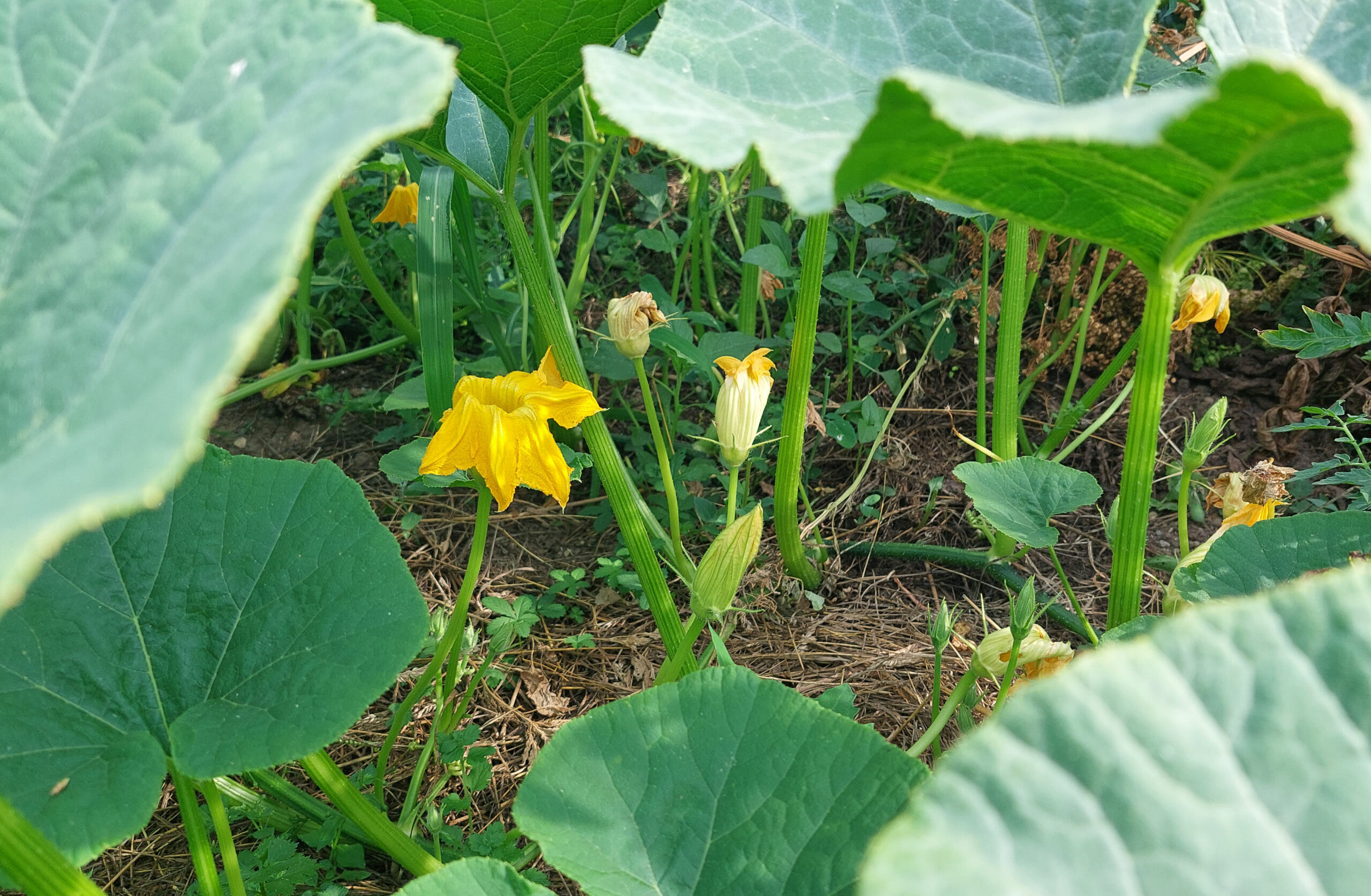
I was just visiting my garden and checking on the veggies. When I looked after my pumpkins, I realised that some of them are already bearing fruit, while others only show male flowers but no pumpkins.
If your pumpkin plant has plenty of flowers but still isn’t producing pumpkins, there are several possible reasons. In this article, we’ll look at one of the most common: plants that produce only male flowers. I’ll explain why it happens and what you can do about it.
Normally, male flowers develop earlier so that their pollen is ready for pollination as soon as the female flowers open.
Sometimes, though, a pumpkin plant keeps producing only male flowers and no female flowers. Without female flowers, there can be no pumpkins. In this article, I’ll explain why that happens and what you can do about it.
Why do some pumpkins have only male flowers?
Pumpkin plants produce both male and female flowers.
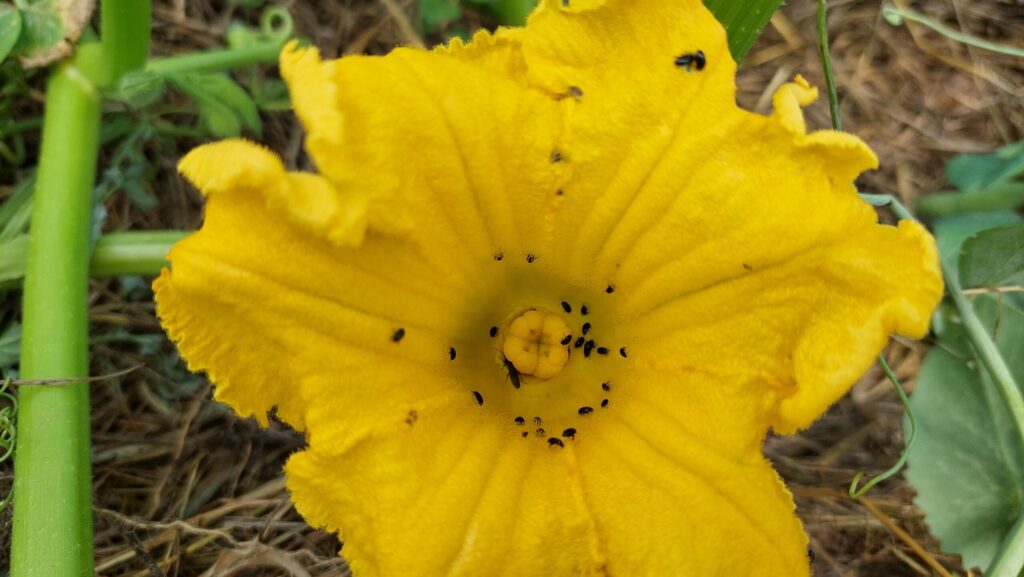
You can distinguish them by the characteristic ovary under the female flowers that looks like a mini pumpkin. In the middle of the flower, there’s a so-called stigma which looks a bit like a small crater.
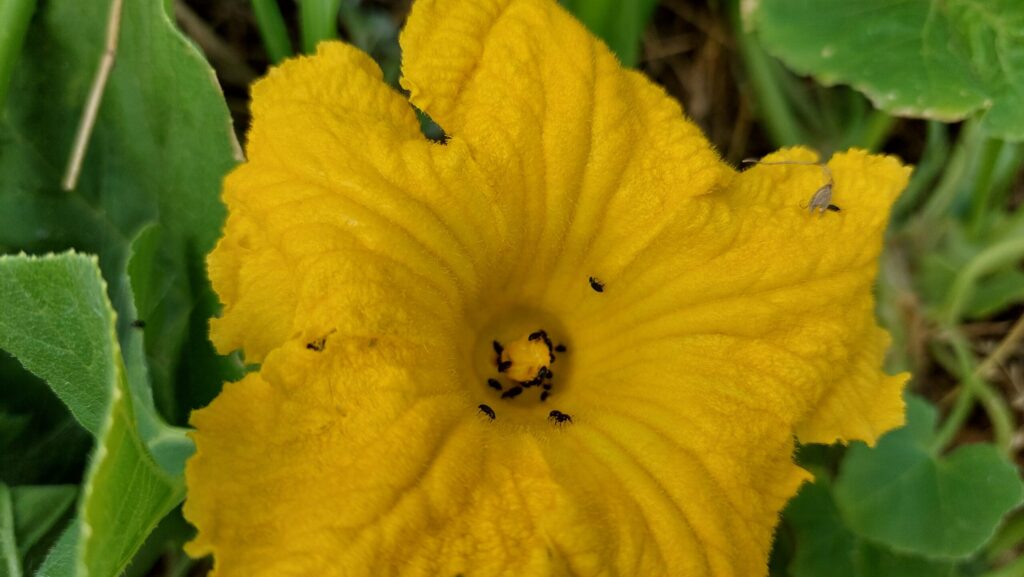
Male flowers, on the other hand, grow just on a long stem (no mini fruit here). Inside the flower are several pollen-covered stamens. It’s normal for a pumpkin plant to produce more male than female flowers. What’s not normal is when a pumpkin plant does not produce any female flowers at all. There are several reasons for that phenomenon:
Don’t panic – Male flowers develop first
Young pumpkin plants naturally begin by producing male flowers. In fact, 2 – 3 weeks before the first female flowers show, there are already male flowers on the plant, so they’re ready to pollinate the first female flowers when they open.
So don’t panic when your plant has just started to show flowers. As long as the plant is growing vigorously and looks healthy, patience is often all that’s needed.
Variety
Some vigorous pumpkin varieties produce lots of male flowers before switching. If you’ve chosen one of those varieties, you may want to wait another few weeks.
Too little nutrition
When a pumpkin doesn’t show any female flowers, the plant could have a nutrient deficiency. When the soil hasn’t had many nutrients to begin with or just doesn’t have the right kind of nutrients, a pumpkin plant can’t produce female flowers.
Too much nitrogen
On the other hand, too much fertilisation—especially with nitrogen—can also prevent pumpkins from producing female flowers. Too much nitrogen encourages leafy growth instead of flowering and fruit production.
Wrong place
Pumpkins originally come from warm regions, and they still love the sun. When planning your vegetable garden, choose a place where they get at least 6 – 8 hours of sunlight. In a shady spot, therefore, they don’t grow well.
Wrong watering
When pumpkins aren’t watered properly while they’re in bloom, the harvest will suffer.
In normal weather, pumpkins usually benefit from one deep watering each week. During hot, dry spells, they may need watering every day. Very cold water straight from the hose can stress the plants, especially during hot weather. If possible, let the water warm up a little first. In fact, it’s best to store the water during the day in an outdoor container so that it adopts the temperature of its surroundings.
Another point we must observe when watering pumpkins is to avoid spraying the part of the stem that grows out from the soil. When this root stem becomes wet, the plant can rot.
Temperature
Although pumpkins are sun-lovers, they suffer from very high temperatures. Heat waves with temperatures above about 32 °C (92 °F) can delay the production of female flowers.
Too little distance between plants
Truth be told, I’ve been guilty of that. In May, when we can finally transplant our pumpkins into the garden beds, it’s tempting to ignore the recommended distance between plants of about one metre (3 feet). The pumpkin plants are still relatively small, and although I know they’ll become immense, I pretend I couldn’t imagine it and “use the space better”.
Plants that grow too tightly together get less light and compete for nutrients. And as we’ve learned earlier in that article: no nutrients, no female flowers.
Too many leaves and shoots
When the plant produces too many leaves and shoots, that’s often a symptom of too much nitrogen. The plant goes full into “green mode”, growing leaves and shoots like mad and then doesn’t have any energy left for building flowers and fruits.
How to Help Your Pumpkin Produce Female Flowers
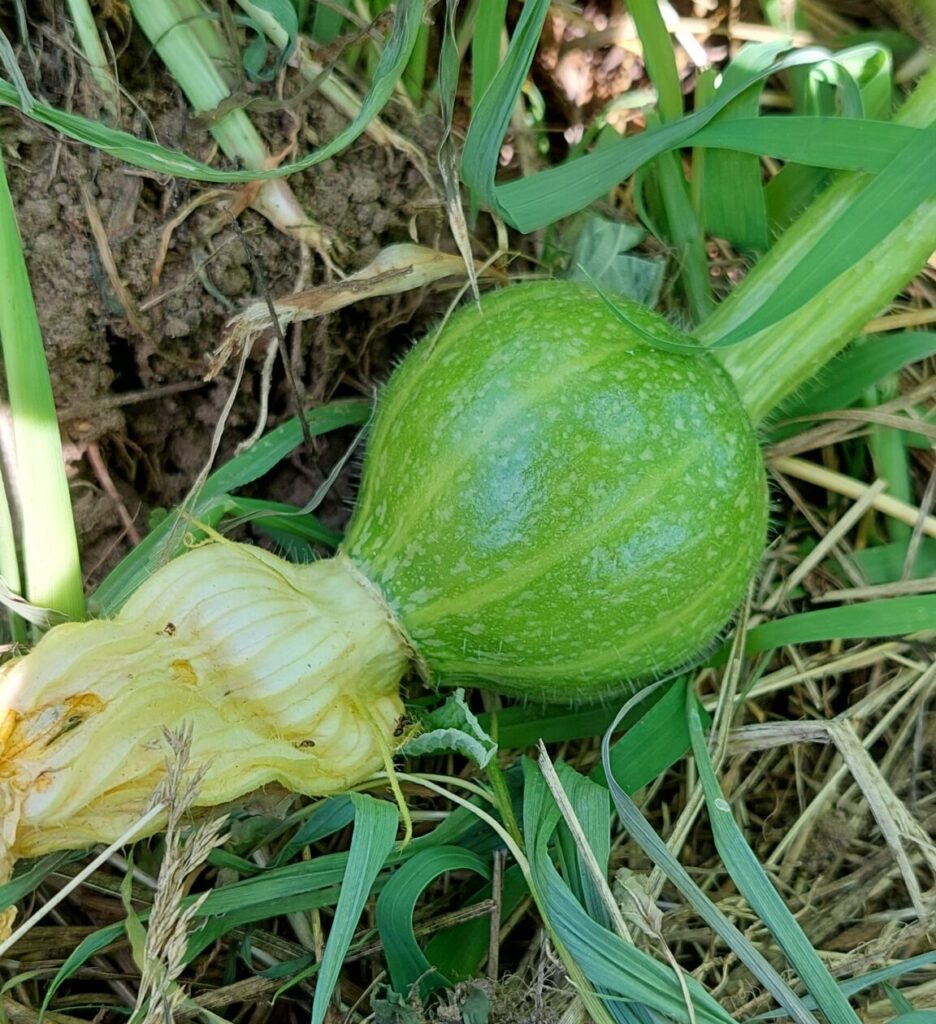
Let me show you what we can do if our pumpkins only show male flowers:
Fertilise correctly
Pumpkins are heavy feeders and must be fed enough nutrients.
About a week before transplanting, add compost to the patch where you want to grow the pumpkins. When I finally plant the pumpkins, I usually put some well-rotted, moist manure into the planting hole. That way, the plant has enough nutrients and moisture to grow well at the beginning.
When the plant has produced its first 4 – 5 real leaves, we must fertilise it for the first time. For heavy feeders like pumpkins, tomatoes or cucumbers, I mostly use my homemade nettle manure, but horn shavings are equally good.
During the growing season, from mid-summer until August, I fertilise my pumpkins every 2 weeks, alternating between the nitrogen-rich nettle manure and some phosphorus-containing fertiliser for fruit-building.
The right location
As we learned before, pumpkins are sun-lovers and need a place with at least 6 – 8 hours of sunlight per day. They can grow in the shade, but not well, and they’ll definitely produce fewer and smaller fruits there – if any at all.
The best place to grow pumpkins is a sunny bed near a compost heap where they get enough nutrients, light and water.
Watering correctly
It’s essential for the development of healthy pumpkin plants that they get enough water on a regular basis. Usually, it’s enough to water them once a week, but thoroughly so that the soil is well soaked.
During dry and hot summers, however, it may be necessary to water them daily.
Let the water warm up before, at best, by storing it in a rainwater barrel or another container during the day so that it can adopt the temperature of its surroundings.
The best times to water plants are the mornings and evenings. Just make sure to water where the roots grow (avoiding watering the root stem) and not hit the leaves.
Sufficient planting distance
Make sure to keep enough distance between pumpkin plants (remember, they’ll get massive!).
When they compete for nutrients and water, they can’t grow optimally, and they don’t get enough light and sunshine.
Want healthier vegetables all season long?
From pumpkins and tomatoes to cucumbers and beans, successful gardening is all about knowing what your plants need at the right time. Join my newsletter for practical gardening tips, traditional techniques and seasonal inspiration straight from my garden to yours.
Sign up here:
Once female flowers show, you can pollinate them by hand. Hand pollination should be carried out in the morning on the day when a female flower opens.
Choose a male flower for pollination and check by brushing with a finger over the stamen and look if you’ve got pollen on it. If so, remove the petals so that the style is exposed.
Carefully hold back the female flower’s petals and brush the pollen-covered stamens of the male flower against the stigma in the centre of the female flower.
Hand pollination is a good method to make sure that a pumpkin plant produces fruit.
Frequently Asked Questions
Should I remove male pumpkin flowers?
No. Leave them where they are, because they’re necessary for pollination.
Are pumpkin flowers edible?
All pumpkin flowers are edible, except those of ornamental pumpkins. They can be filled with ricotta and baked in a pan and have a slightly nut-like flavour.
How long do pumpkin flowers stay open?
Every pumpkin flower opens only for one day. If the female flower isn’t pollinated during that day, it withers and falls off.
How do I know if a pumpkin flower is pollinated?
The only way to be sure is by pollinating the female flower by hand.
Why do my baby pumpkins turn yellow and fall off?
That’s usually due to incomplete pollination. The pumpkins that turn yellow are just the ovaries at the bottom of the flower. When they have not been pollinated, they will fall off.
How many pumpkins grow on one plant?
A pumpkin plant can produce between one and 10 pumpkins, with small varieties up to 15.
Where can I learn more about cultivating pumpkins?
This ultimate guide to cultivating pumpkins teaches you everything you need to know for a successful pumpkin harvest.
How I support my pumpkins
This is a good reminder that even experienced gardeners sometimes need to play detective. Remember when I told you at the beginning that two of my pumpkin plants showed only male flowers?
Rather than assuming something is wrong with the plant itself, it’s often worth looking around it. In my case, I suspect the neighbouring kohlrabi are shading the pumpkins more than I’d realised.
The plants I’m referring to grow under the corn in a three-sister bed. (For those of you who don’t know: this is a combination of corn, pumpkin and beans; read more about it in this guide on companion planting.)
However, south of them, blocking the sun, still grow some soon-to-be-harvested kohlrabi. I think the problem the pumpkins have is too little sunlight. As I’m going to pick the kohlrabi anytime soon, I’m optimistic that the pumpkins will enjoy the newfound sunlight and celebrate by producing lots of female flowers.
I’m so looking forward to my pumpkin harvest this autumn—and I hope you’ll be harvesting plenty of pumpkins, too. If you’re wondering what to do with them all, here’s my favourite sweet-and-sour pumpkin recipe.
Looking for more practical gardening tips? Browse my Gardening Hub, where you’ll find step-by-step guides, seasonal advice and tried-and-tested solutions to help your garden thrive.
0 Comments