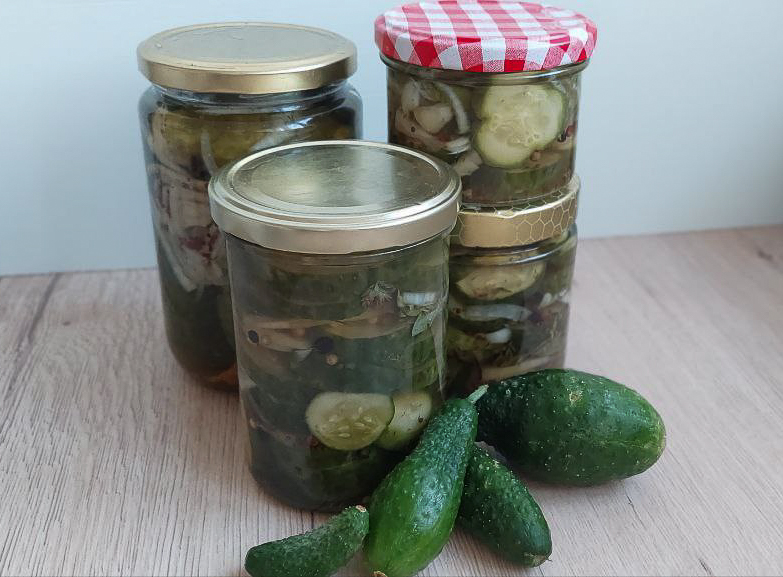
Every summer, when the gherkins start coming in faster than we can eat them fresh, one preserving session is guaranteed to happen in my kitchen: homemade gherkin pickles. The whole house smells of vinegar and dill, jars line the worktop, and I already know that opening the first one in autumn will be worth every minute. That satisfying crunch when I bite into a perfectly pickled gherkin can hardly be topped.
Gherkin pickles are extremely versatile: they make a wonderful addition to a cold lunch and sandwiches and are an essential ingredient for burgers, hot dogs and traditional German rouladen. Or you just snack on them between meals right out of the jar. It’s a healthy alternative to that bar of chocolate, and you can eat them straight from the jar. I certainly won’t judge you. 😉
I used to think that pickling cucumbers (or gherkins, as we now know) was complicated and only for an experienced chef, but it’s actually pretty easy, and you only need a few ingredients. And the best thing: it tastes so much better than the store-bought stuff! Are you ready to learn how to make homemade gherkin pickles? Let’s dive in.
Quick Overview
✓ Ready in: about 30 minutes (+ overnight soaking)
✓ Difficulty: Easy
✓ Shelf life: • Fridge: 2–4 months • Water bath canned: about 1 year
✓ Best vinegar for classic pickles: White wine vinegar or distilled white vinegar (5% acidity)
Looking for more ways to preserve your harvest? Read on in my preserving section.
Understanding Gherkins
What Are Gherkins?
Contrary to what many may think, gherkins are not just regular baby cucumbers but specific cultivars or even an entirely different species, like Mexican sour gherkins.
Gherkins are typically harvested small (3 – 8 cm/1 – 3 inches), and even if you’d let them grow (which you wouldn’t unless you want to harvest the seeds), they hardly exceed 15 cm (6 inches). Cucumbers, on the other hand, grow larger and are harvested when they are 15 – 20 cm (6 – 8 inches) long, some even longer.
As gherkins are picked small, they contain fewer seeds and less water, which makes their texture firmer and crunchier than that of regular cucumbers. Due to their high water content, cucumbers are only partially suitable for pickling as they tend to become mushy.
Gherkin skin is also thicker and bumpier, which helps it hold up better during the pickling process. At the same time, gherkin skin is also more porous, allowing the brine to penetrate more effectively.
As gherkins maintain their shape and crispiness much better during the pickling process than regular cucumbers, they are the preferred choice for homemade and commercial cucumber pickles. You can use cucumbers for a quick pickle, as well, but when it comes to long-term storage, they won’t hold up.
When to harvest gherkins
Once your gherkin plants start to flower, check them daily. Like zucchini, gherkins can grow from tiny to enormous in (almost) seconds.
Gherkins should be hard when you squeeze them gently; their skin should be glossy and the bumps well-defined.
During peak growing season, you’ll want to harvest gherkins every 1 – 2 days to catch them at the right stage. Gherkins are best harvested in the mornings when they are still hydrated from the overnight moisture.
Good harvesting sizes are
Cornichons: 3 – 4 cm (1 – 1.5 inches) for the smallest, most premium pickles
Small gherkins: 4 – 6 cm (1.5 – 2.5 inches) for classic pickle size
Medium gherkins: 6 – 8 cm (2.5 – 3 inches); don’t let them grow larger or they’ll become too seedy
If you don’t grow gherkins in your garden, check out local farmers’ markets or speciality stores for fresh produce.
How to pickle gherkins
Equipment Needed
There’s some general equipment you’ll need for pickling, which is:
Glass jars
You can either use Mason jars or twist-off jars. It’s best to pick a jar size that’s not too large, as the pickles don’t last long once the jar’s open. It’s usually better to use smaller jars, as the pickles don’t keep as long once opened.
Bowl
in which you can let the gherkins soak in salt brine overnight.
Pot
Use a non-reactive pot in which you can prepare the brine.
Measuring tools and scales
You’ll need a measuring cup for the liquids, scales for weighing the sugar and a tablespoon for measuring the salt and spices.
Core Ingredients
Now we come to the ingredients. You’ll need
Gherkins
Well, obviously. They’re best when freshly picked, of course, but it’s also fine to use them after they’ve been harvested a day or two. Just make sure they don’t shrivel or become soft.
Also, check whether the skin is hard and unmarred. Discard any gherkins with blemishes and spots.
Salt
It’s best to use pickling salt as it doesn’t contain any additives like iodine or anti-caking agents, which can make the brine cloudy. It’s also finely grained so that it’ll dissolve quickly and completely in the brine.
An alternative to pickling salt is high-quality sea salt, but make sure you take one without additives.
Kosher salt is also acceptable, but as it’s less dense than other salts, measurements must be adjusted: you’ll need about 25 % more salt to make the brine equally saline. Also, kosher salt is rather coarse and takes longer to dissolve.
Best Vinegars for Pickling
There’s a variety of vinegars you can try for your pickles! Here are my favourites:
White distilled vinegar
This is the most common choice for most pickle recipes. It has a clear, sharp taste that doesn’t compete with your pickles and spices. Also, it makes a clear brine and has a long shelf-life when used in pickles.
Apple cider vinegar
It has a milder and mellower taste and adds a bit of sweetness to your brine. As its colour is a light brown, it’ll tint your brine a bit, but in exchange, it add more complex flavours. Raw, unfiltered versions are the best, and you can use your homemade apple cider vinegar! Just make sure that it contains at least 5 % acetic acid.
White wine vinegar
This is the premium version for pickles, as it tastes cleaner than apple cider vinegar but more complex than white distilled vinegar. It costs a bit more, but it creates really elegant pickles.
Rice vinegar
If you want to try out Asian inspired pickles, rice vinegar is your preferred choice. Its taste is gentler and less aggressive, and it works wonderfully with ginger, garlic and sesame flavours.
Champagne vinegar
Now, this is the luxury version of vinegar, which you can see reflected in its price. However, it has a very delicate and refined taste and is ideal for special occasion pickles.
Pro tip: Blend vinegars for custom flavour profiles. Try a mixture of 2/3 of white wine vinegar and 1/3 apple cider vinegar, for example. Just make sure that the acidity is at least 5 %.
Vinegars to avoid
Some vinegars are just not suitable for pickling:
Balsamico vinegar
It’s too sweet and would overpower the pickles’ taste. Also, it would make the brine dark and cloudy.
Flavoured vinegars
Rather, add the flavours you want with your selection of herbs and spices
Vinegars with an acidity below 5%
5 % of acidity is necessary to keep the food safely in the sour zone where certain (dangerous) bacteria can’t grow.
Water
I use our tap water for pickling, and it works just fine. However, if you live in a region where your tap water is highly chlorinated, or the house you live in has old (rusty) pipes that could leak iron, it’s best to carbon-filter your tap water before using it for pickling (or drinking or cooking for that matter).
If in doubt, taste your tap water. Smelling and tasting good? Then go on and use it for pickling. If it’s got a metallic or chlorine taste, filter it first.
Distilled water is NOT a good alternative, as – due to the lack of minerals – it tastes very bland and lets the pickles go mushy.
Flavour Enhancers and Spices
You can, of course, make pickles just with the above ingredients, and they’d taste good, but to enhance the flavour and transform your gherkins into a truly marvellous preserve, add spices and herbs.
The traditional herbs and spices for pickled gherkins are dill, peppercorns and mustard seeds, but try adding onions, garlic, bay leaves and tarragon.
Thyme and oregano are other herbs you can use.
If you want to experiment even more, include chilli flakes, juniper berries and/or fennel seeds.
Homemade Gherkin Pickles – Step by Step
Let’s dive in and make those yummy gherkin pickles!
Here are the ingredients you need for 3 – 4 jars of 500 ml:
1 kg gherkins 1 bunch of dill (including the flowers) 5 small laurel bay leaves 2 stems of savoury 2 stems of tarragon 1 tbsp peppercorns 1 tbsp mustard seeds 1 onion 800 ml water 400 ml white wine vinegar 50 g + 2 tbsp salt 250 g brown sugar
1. Sterilise your jars and lids by washing them with boiling water. Let them cool on a rack and dry them out.
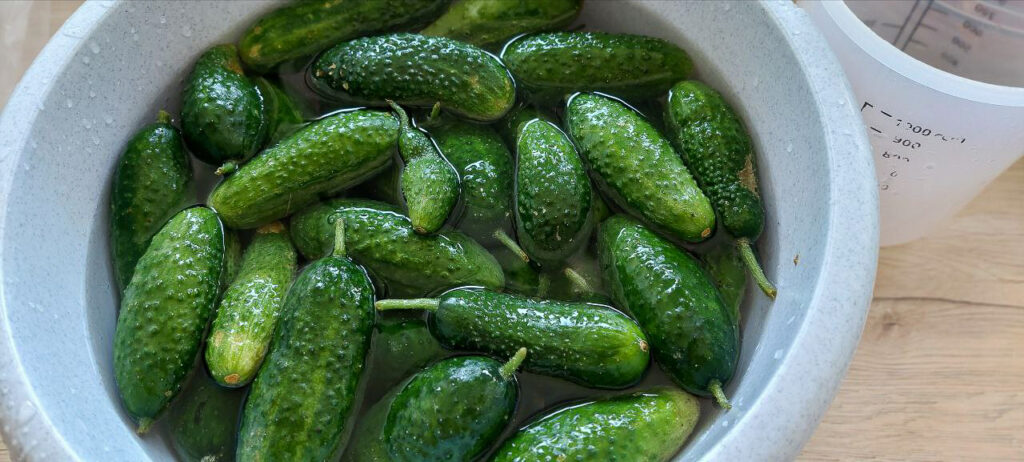
2. Wash the gherkins thoroughly. Put them into a bowl, mix 50 g salt with 1 litre of water and pour this brine over the gherkins. They should all be under the brine. Cover the bowl with a plate and let them rest for 8 – 12 hours, at best overnight.
This is an essential step. The salt will pull out water from the gherkins (i.e. dehydrate them) and thus help them stay crisp for a long time. Don’t skip this step!
3. The next day, pour off the brine and dry the gherkins with a cloth.
4. Now, cut off the blossom end (that’s the one where there’s no vine attached), because it contains certain enzymes that may lead to mushy gherkins. You can also cut off the stalk end, but that’s optional. I usually leave about 0.5 – 1 cm (0.2 – 0.4 in) of vine on the gherkins.
5. If the gherkins are very large, you may cut them into slices or sticks.
6. Wash and dry the dill and carefully remove the flower tips.
7. Wash and dry the savoury and tarragon.
8. Peel the onion and cut it into rings.
9. Layer the gherkins, herbs, onions and spices into the jars.
10. Put water, vinegar, 2 tbsp salt and sugar into a pot and bring the mixture to a boil. Stir until sugar and salt have dissolved.
11. Carefully pour the vinegar brine over the gherkins into the jars and close the lids immediately.
12. Let the jars cool down. Now you can either store them in the fridge for 2–4 months or preserve them in a water bath canner for 30 minutes at 90 °C. That way, the gherkins can be stored for at least a year.
Why this recipe stays crunchy
Freshly harvested gherkins give the crispest results.
Overnight salt soak removes excess water.
Removing the blossom end eliminates softening enzymes.
5% vinegar provides safe acidity.
How long before homemade pickles taste their best
Technically speaking, you can eat the pickles after 24 hours. However, they develop their best flavour after about 3 days. During this time, the herbs, spices and vinegar have enough time to penetrate the gherkins completely, giving them that typical sour, spicy flavour we love so much.
Angela Braun
Homemade Gherkin Pickles
Gherkin pickles are one of my favourite preserves and can be easily made at home. That satisfying crunch when you bite into a perfectly pickled gherkin can hardly be topped. And the best thing: you don't need many ingredients to make them. Just follow this simple, easy recipe.
Sterilise your jars and lids by washing them with boiling water. Let them cool on a rack and dry them out.
Wash the gherkins thoroughly. Put them into a bowl, mix 50 g salt with 1 litre of water and pour this brine over the gherkins. Let them soak in the brine for 8 – 12 hours, at best overnight.
The next day, pour off the brine and dry the gherkins with a cloth.
Now, cut off the blossom end. You can also cut off the stalk end, but that’s optional.
If the gherkins are very large, you may cut them into slices or sticks.
Wash and dry the dill and carefully remove the flower tips.
Wash and dry the savoury and tarragon.
Peel the onion and cut it into rings.
Layer the gherkins, herbs, onions and spices into the jars.
Put water, vinegar, 2 tbsp salt and sugar into a pot and bring the mixture to a boil. Stir until sugar and salt have dissolved.
Carefully pour the vinegar brine over the gherkins into the jars and close the lids immediately.
Let the jars cool down. Now you can either store them in the fridge for 2–4 months or preserve them in a water bath canner for 30 minutes at 90 °C. That way, the gherkins can be stored for at least a year.
How long do homemade pickles last?
Store your homemade pickles in the fridge for 2 – 4 months.
If you want to store them longer, put the jars in a water bath canner and can them for 30 minutes at 90 °C. That way, you can store them in the pantry or basement (no need for refrigeration) for up to one year. After that, they are still edible, but the taste will decline, and the gherkins will get mushy.
Once a jar is opened, put it in the fridge and consume it within two weeks.
Troubleshooting Common Issues
Sometimes, things go wrong, and your gherkins won’t taste the way you expected. Here are some common issues with gherkin pickles and how to fix them:
Texture Problems
Mushy pickles
One of the reasons for mushy pickles is that you likely skipped the dehydration step, where you let the gherkins sit in salt brine for several hours. This is an essential step; don’t skip it!
Another reason is that you used distilled water. As it doesn’t contain any minerals, it’s more likely that gherkins go mushy.
It’s also possible that you used too little salt. Or the pickles weren’t completely covered with brine. When they get air contact, the gherkins will become mushy
Flavour Issues
To maintain a good balance of acidic, sweet and salty, stick to the above ratio of vinegar, water, salt and sugar.
If you use too much vinegar, for example, you’ll get overly acidic pickles. Too little vinegar will result in a dull flavour and possible safety issues.
Too much salt will preserve the pickles well, but you won’t want to eat them due to their overly salty flavour. Too little salt, on the other hand, will leave the pickles bland.
Too much sugar and you’ll get gherkin sweets; too little and the taste will be very one-dimensional.
Safety and Storage Concerns
Watch out for any visual signs of spoilage like white scum on the surface, mouldy gherkins above the brine or a cloudy brine that has been clear before (although a little cloudiness can be normal). These pickles have gone bad, and you must throw them away.
Also, discard any pickled gherkins that have gone dark or slimy or if the jar lids are bulging.
If the gherkins’ texture has become mushy and slimy and they fall apart, you shouldn’t eat them anymore.
Also, watch out for any smell or taste that seems “wrong” or unpleasant.
Variations and Creative Recipes
There are (almost) endless variations for flavouring pickled gherkins.
Herbs
You can, for example, just use dill and onions for German-style dill gherkins, or you can add chillies or even jalapeños for hot pickles.
For French cornichons, add tarragon and pearl onions, and for an Asian variation, use rice vinegar and ginger.
Use caraway seeds, juniper berries and chervil for a Northern variation or Za’atar, sumac and preserved lemon for a Middle Eastern touch.
Vinegar
Experiment with different vinegars or even vinegar blends (see above).
You could even try out different vinegar strengths while maintaining the proper acidity for safety.
Sweetener
Replace the sugar with honey, maple syrup, agave or even molasses for different flavour notes.
Additional Vegetables
Who says that gherkins have to stay alone in the jar? Layer in onions, carrots, cauliflower or radishes with the gherkins.
Or add just fennel bulb slices. Or mix in green beans and asparagus. Get creative!
Liquids
Use part beer or white wine in the brine or, instead of water, use vegetable or herb-infused broth.
An interesting way to add more depth to the flavour is by including pickle juice from a previous batch.
Texture
Apart from mustard seeds, you could also add toasted sesame or other seeds for a bit of “pop”.
Also, experiment with different salt types like flavoured, smoked or sea salt. Just be careful that the salts don’t have any additives that may harm the brine.
Frequently Asked Questions
Can I pickle regular cucumbers instead of gherkins?
It’s possible, but the result won’t be the same. Cucumbers have a higher water content which makes them mushier and the flavour watered down. Additionally, cucumbers require a longer pickling time to develop their best flavour and level of crunchiness.
Why aren’t my homemade pickles crunchy?
There are different reasons:
You haven’t cut off the blossom end of the gherkins. They contain enzymes that make the pickles go mushy
You haven’t soaked the gherkins in salt water before pickling. This soaking process dehydrates the cucumbers slightly, making them stay crunchy for a prolonged time.
You used too little salt
You used distilled water instead of tap water.
Do I have to soak gherkins overnight?
Yes, if you want crunchy gherkin pickles. It won’t affect the flavour and storage time, though, if you skip that step.
Can I reduce the sugar?
You can reduce the sugar slightly, but don’t remove it completely. Sugar contributes to the flavour and helps balance the acidity of the vinegar. If you prefer less sweetness, reduce it gradually until you find your preferred balance.
Can I reuse pickle brine?
You can add the brine to a salad dressing (instead of pure vinegar), cocktail or barbecue sauces and even in drinks.
Do homemade pickles need to be refrigerated?
When they’ve been properly made and the lids are sealed, there’s no need to refrigerate your homemade pickles. Once a jar is opened, however, put it in the fridge and consume it within two weeks.
Why are my pickles floating?
That’s perfectly normal. As long as they’re covered by the brine and don’t show signs of spoilage, they’re safe to eat.
Join my newsletter for seasonal preserving recipes, fermentation guides and gardening tips.
Serving Suggestions and Uses
How can you use gherkin pickles now?
Well, apart from the classic pairing with sandwiches, burgers, or charcuterie boards, gherkin pickles add depth to a potato, egg or chicken salad.
Chop them into relishes, remoulade or aioli.
Gherkin pickles are an essential ingredient for German “rouladen” (beef rolls) and can be wonderfully included in stuffing for poultry or pork as the acidity cuts the richness.
You can even use the brine in cocktail sauces or barbecue sauces or as a vinegar replacement in salads. Or drink it straight as an electrolyte replacement or mix it with beer for a “pickleback” style drink.
Conclusion
Buying gherkin pickles is a fast solution when you’re pressed for time, but making them yourself not only gives you numerous flavouring possibilities but the certainty of knowing what’s inside the jar – and, more importantly, what’s not. Once you’ve found out that it’s actually quite easy to make gherkin pickles at home and how great they taste, I promise you’ll never touch the store-bought version ever again!
As long as you stick to the ratios of vinegar, salt, sugar and water, you can start experimenting with different flavours. From mild and deep to hot and spicy, everything is possible!
Just keep in mind to pickle only gherkins without any blemishes and harvested no longer than a few days ago.
The most important step to follow is soaking the clean gherkins overnight in a salt brine to slightly dehydrate them, making sure that they stay crunchy when preserved. Also, remove the blossom end of the gherkins (the end without the stem) as it contains an enzyme that lets the gherkins go soft and mushy.
Easy, right? So, what are you waiting for? Get along, grab some gherkins, jars and the few ingredients you like and start pickling your very first (or second, or third) batch of gherkins!
When it suddenly smells of summer at the end of May/beginning of June – sweet, flowery and a bit like childhood – then it’s elderflower time! And as this fragrance is too precious to enjoy just on a walk, I preserve it every year with my homemade elderflower syrup.
Elderflower syrup is not only a classic but also wonderfully versatile. Whether you add it to sparkling wine, use it as a lemonade, drizzle it over ice cream or scent your cake dough with it, this delicious syrup immediately lifts the mood of everyone tasting it. And the best thing about it is that you can make elderflower syrup very easily at home with this simple recipe.
What is elderflower syrup?
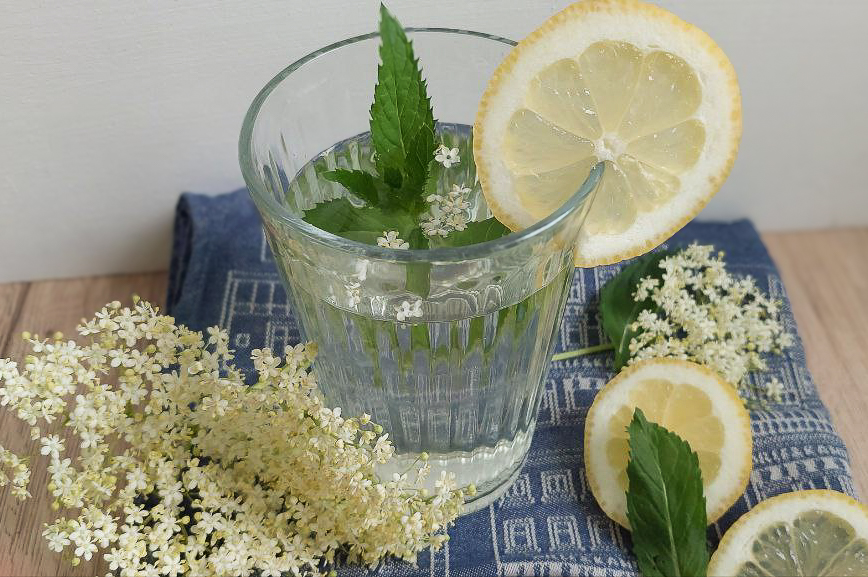
Elderflower syrup is a sweet floral syrup made by infusing fresh elderflowers in sugar syrup with lemon. It can be diluted with water for a refreshing drink or used in desserts, cocktails, baking, and homemade preserves.
Quick Overview
Harvest time: Late May–June
Difficulty: Easy
Infusion time: 2–3 days
Storage life: Up to 1 year
Best for: Lemonade, cocktails, desserts, baking
Is Elderflower Syrup the Same as Elderflower Cordial?
What British people call elderflower cordial is usually called elderflower syrup (Holunderblütensirup) in Germany.
A cordial often contains citric acid, is thinner and is specifically intended as a drink concentrate, while a syrup may be cooked longer and therefore can be slightly thicker. Apart from drinks, it’s sometimes intended for desserts, cocktails, pancakes or baking.
But honestly, that’s hairsplitting, and in practice both recipes are nearly identical.
Let’s have a closer look at the basic product:
How to recognise elderflowers
The flowers of the black elder (Sambucus nigra), also known as elderberry, mark the beginning of early summer and appear from late May to June. During that time, the prominent flower heads unfold. Look for the following characteristics:
🌿Form and colour: Elderflowers have creamy white flower heads that grow in an umbrella-like form with diameters of up to 30 centimetres (12 inches).
🌿Structure: Numerous tiny single flowers form the panicles, and each of these flowers consists of five petals and yellow stamens
🌿Fragrance: The flowers release a gentle, slightly lemony fragrance.
When and how to forage elderflowers
Depending on where you live, elderflowers bloom between mid-May and mid-June. When you spot them, take a basket and garden shears and head out to forage them.
Only gather umbels that grow far away from streets, at the edge of the woods, on field paths or in gardens. At those places, you can be sure that they are not polluted by exhaust fumes or other environmental toxins.
Elderflowers are quite easy to identify, but I strongly recommend you don’t pick anything if you are not 100% sure what it is. If in doubt, consult a good book on plant identification or ask somebody with experience.
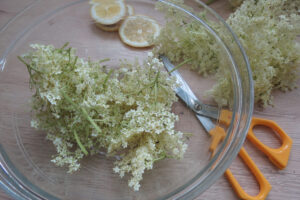
Always cut the elderflower umbels with garden shears or scissors. That way, you won’t shake the flowers too much and lose their valuable pollen and flavour.
Make sure to forage only elderflowers that are in full bloom and still fresh, meaning that the little flowers don’t fall off when shaking them. The best time for harvesting is the late morning of a sunny day. Ideally, it has been sunny for several days because that’s when the fragrance is strongest, and there are hardly any insects in the flowers.
A basket is best for carrying the harvested elderflowers home, because they lie lightly and airily without being pressed too much together.
One important request: don’t overpick! Never take more than a third of umbels per bush to leave enough for bees and birds! And to come back in autumn and harvest the elderberries 😉.
Essential Equipment and Ingredients for Making Elderflower Syrup
This recipe is simple, not only because you don’t need many ingredients, but also because you certainly already have all the equipment.
Basic Equipment
You need
A pot
A large bowl (optional; you can also add the flowers to the liquid in the pot)
A fine-mesh strainer or a cheese cloth to filter the syrup
Bottles with matching lids, sterilised
Funnel
Ingredient list
Making elderflower syrup was never easier! You just need these ingredients:
8 – 10 fresh elderflower heads in full bloom
500 g sugar
2 untreated lemons
600 ml of water
Citric acid (purely optional; I don’t like its tangy taste and don’t use it)
Elderflower Syrup: Step-by-Step Making Process
Step 1
When you’ve brought the umbels home, just shake them carefully to remove insects. If you want to be absolutely sure that no insects are left, leave the flowers outside in a dry and shady place for about 20 minutes. That way, the insects can wander off.
Do not wash the elderflowers! Their flavour lies in the pollen, and if you wash them, the pollen – and with it the flavour – would be rinsed off.
Once the elderflowers are clean, cut off the thick stems.
Step 2
Wash the lemons with hot water, dry them and cut them into slices.
Step 3
Mix the water and sugar in a pot and slowly bring the mixture to the boil while constantly stirring until the sugar has dissolved. Fill the sugar syrup into a bowl.
Step 4
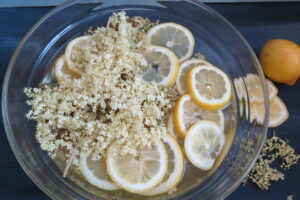
Add the elderflowers and the lemon slices to the syrup and cover it with a cloth or lid. Let the mixture rest for 2 – 3 days and stir occasionally.
Step 5
Sterilise the bottles by rinsing them with hot water. Remove the elderflowers and lemon slices from the syrup and filter it through a fine mesh strainer. Alternatively, you can filter the syrup through a cloth and wring it out to get the last drops of elderflower syrup. If you press the flowers, the syrup may become a bit more opaque, but that’s ok.
Step 6
Fill the elderflower syrup into a pot and bring it to the boil. Fill the hot liquid into the sterilised bottles and tightly close the lids.
Angela Braun
Elderflower syrup
Elderflower syrup is not only a classic but also wonderfully versatile. Whether you add it to sparkling wine, use it as a lemonade, drizzle it over ice cream or scent your cake dough with it, this delicious syrup immediately lifts the mood of everyone tasting it.
Citric acidpurely optional; I don’t like its tangy taste and don’t use it
Equipment
1 pot
1 large bowl (optional, you can also add teh flowers to the liquid in the pot)
1 fine-mesh strainer or cheesecloth to filter the syrup
bottles with matching lids sterilised
1 funnel
Method
When you’ve brought the umbels home, just shake them carefully to remove insects. If you want to be absolutely sure that no insects are left, leave the flowers outside in a dry and shady place for about 20 minutes. That way, the insects can wander off.Do not wash the elderflowers! Their flavour lies in the pollen, and if you wash them, the pollen – and with it the flavour – would be rinsed off.
Once the elderflowers are clean, cut off the thick stems.
Wash the lemons with hot water, dry them and cut them into slices.
Mix the water and sugar in a pot and slowly bring the mixture to the boil while constantly stirring until the sugar has dissolved. Fill the sugar syrup into a bowl.
Add the elderflowers and the lemon slices to the syrup and cover it with a cloth or lid. Let the mixture rest for 2 – 3 days and stir occasionally.
Sterilise the bottles by rinsing them with hot water. Remove the elderflowers and lemon slices from the syrup and filter it through a fine mesh strainer. Alternatively, you can filter the syrup through a cloth and wring it out to get the last drops of elderflower syrup. If you press the flowers, the syrup may become a bit more opaque, but that’s ok.
Fill the elderflower syrup in a pot and bring it to the boil. Fill the hot liquid into the sterilised bottles and tightly close the lids.
Notes
Elderflower syrup can be stored in a cool and dry place (e.g. the basement) for up to one year.
How Long Can You Store Elderflower Syrup?
You can either consume the elderflower syrup as soon as it’s ready (after 2 – 3 days). Kept in the fridge, it’ll last for about 10 days.
Alternatively, you can boil the filtered syrup and fill the hot liquid into bottles. Stored in a cool and shady place (your basement, for example), it lasts up to one year.
Another way to store elderflower syrup is to put it in the freezer, where it will also last up to one year.
Flavour Variations and Enhancements
The classic elderflower syrup, as described above, is a treat in itself. However, if you want to get creative, you can vary and enhance the flavours by adding other ingredients:
Add the slices of an orange to the sugar infusion
Instead of lemons, use limes
Add a stem of mint and/or lemon verbena to the syrup
Put 3 – 5 slices of ginger into the mixture and let it steep for 2 – 3 days
You can even adjust the level of sweetness to your taste. However, the less sugar you use, the shorter the storage time of the syrup, even when it’s boiled.
Creative Uses and Serving Suggestions for Elderflower Syrup
Elderflower syrup is incredibly versatile. Here are some ideas on how to use it:
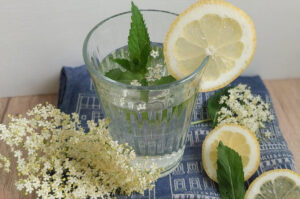
Fill it up with cold (sparkling) water, and you’ve got a refreshing lemonade. Additionally, you might add several mint leaves and cucumber slices.
Mixed with prosecco, elderflower syrup makes a wonderful summer cocktail.
Speaking of cocktails: elderflower syrup is also a great additive for gin and tonics and mojitos. Just saying…
Next time you serve a fruit salad, yoghurt or ice cream, drizzle some elderflower syrup over it to give it that extra taste of summer.
Elderflower syrup can be wonderfully made into a sorbet or ice cream
Have you ever tried flavouring your pancake dough with elderflower syrup? Well, you should!
A bottle of elderflower syrup is a great homemade gift that everybody likes.
Troubleshooting Common Issues
Making elderflower syrup is very simple. However, there are some issues that you may face. Here’s what you can do about them:
The syrup is too sweet or not sweet enough
If it’s too sweet, you have used too much sugar; if it’s not sweet enough, too little.
In the first case, I’d recommend making a second batch of elderflower syrup with a little less sugar than indicated (e.g. 300 g) and mixing both batches to adjust the sweetness.
If the syrup is not sweet enough, don’t just add sugar to it, because it won’t dissolve properly. Instead, add sugar to about a third of the syrup and heat it up while constantly stirring until the sugar has completely dissolved. Add this to the remaining syrup and preserve it as described in the recipe.
The syrup’s cloudy
A certain opaqueness is normal, especially when you squeeze out the elderflowers into the syrup when filtering it off. That’s the pollen that carries the flavour, and it’s not harmful.
However, if the syrup shows white (or – heaven forbid – black) streaks and smells sour, alcoholic or vinegary, pour it away. It may have fermented spontaneously (see below).
The flavour is too weak.
Usually, if your elderflower syrup has only a weak flavour, you’ve used too few elderflowers. If the umbels are very small, you may have to add some more. Filter the syrup, add some fresh elderflowers and let the mixture steep for 24 hours before filtering.
Another reason for a weak flavour is that the elderflowers you used were too old. They should be freshly opened when you gather them from the tree, and not lose their tiny flowers when shaking them or even have already gone brown. That’s a clear sign of over-mature flowers. Pick fresh ones instead, and if there aren’t any left, make sure you harvest them earlier next year 😉.
However, if you can’t lay your hands on more elderflowers, a weak-tasting elderflower syrup needn’t be thrown away. Add some mint leaves and, if you like, some slices of lemon, and let it steep for 24 hours. That way, you get a lemon-mint syrup with a hint of elderflowers.
The syrup ferments
If you have used no other ingredients than the ones mentioned in the recipe and the elderflower syrup forms bubbles and smells sour, alcoholic or vinegary, I’m sorry to say you’ll have to throw it away. It has fermented spontaneously. This happens when natural yeasts on the elderflowers begin fermenting the sugar in your syrup, creating alcohol. The risk increases if you infuse the flowers for too long – beyond 3-4 days can trigger spontaneous fermentation.
Another fermentation issue may be the growth of mould, which is also due to the uncontrolled growth of undesired bacteria.
All these issues can be prevented by the following factors:
Timing control: don’t let the infusion steep for more than 2 -3 days. I know there are recipes out there suggesting up to one week of infusion, but with every day, the risk of fermentation increases.
Acidity: Adding lemon slices, juice, or citric acid helps to keep the “bad” bacteria at bay and thus prevents spontaneous fermentation.
Hygiene: Sterilise all your equipment and pick flowers only from unpolluted areas
Temperature: Pasteurising the elderflower syrup before filling it into bottles kills most of the yeast and bacteria in it. After opening a bottle, keep it in the fridge and consume it within a week.
Frequently Asked Questions
Can you freeze elderflower syrup?
Yes. I recommend freezing it in an ice cube tray; that way you can better take out portions.
How long does homemade elderflower syrup last?
Properly bottled elderflower syrup keeps for about one year in a cool, dark place. Once opened, store it in the refrigerator and use it within 1–2 weeks.
Can I make elderflower syrup without citric acid?
You could, but apart from affecting the taste, it will also not be as stable as with citric acid.
Why is my elderflower syrup cloudy?
A light opaqueness is normal due to the pollen, but when the cordial shows streaks, it’s probably spoiled.
Can elderflower syrup ferment?
Yes, wild yeasts can cause a spontaneous fermentation. To avoid that, we boil the syrup shortly before filling it into bottles.
Elderflower syrup is Summer to Drink!
Elderflower season lasts only a few short weeks each year, but a few bottles of homemade syrup allow you to capture its delicate fragrance long after the blossoms have faded. Whether stirred into sparkling water, drizzled over desserts, or shared with friends, elderflower syrup is one of the simplest ways to preserve the taste of early summer.
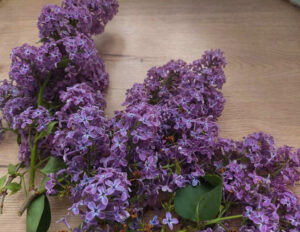
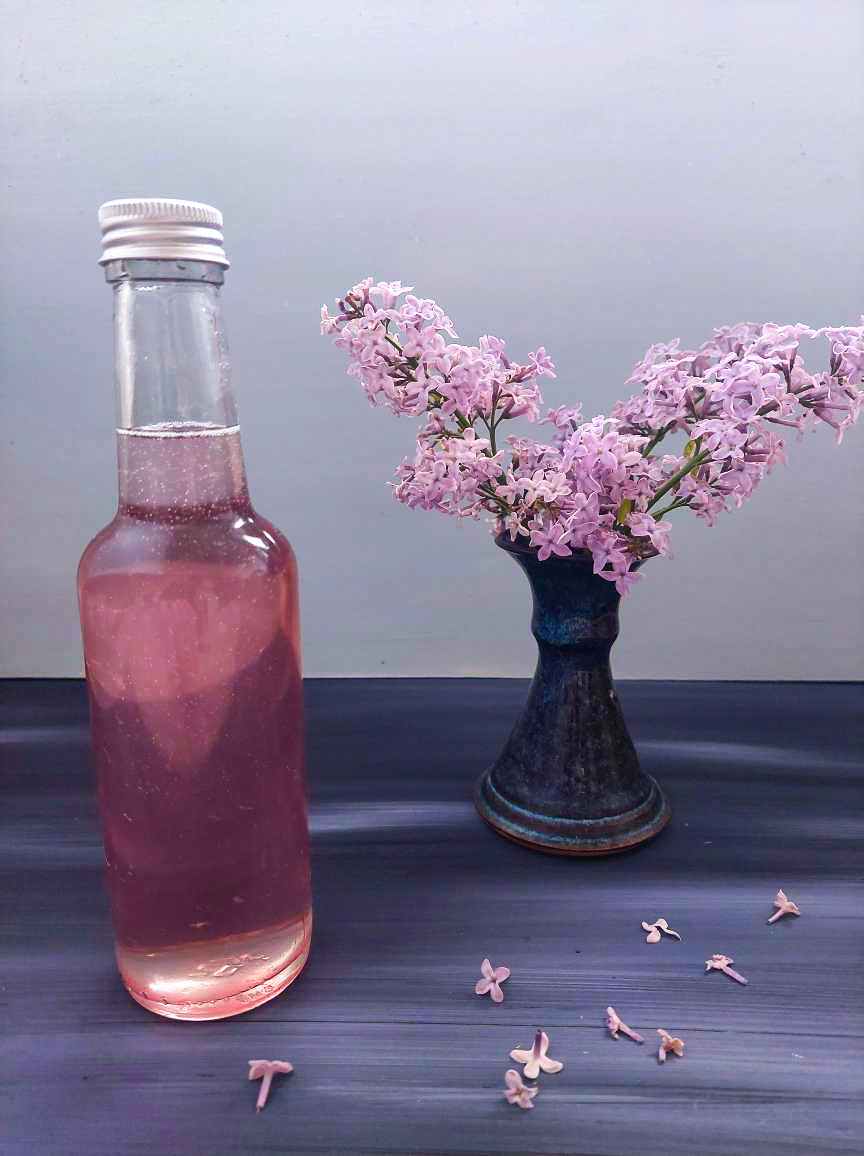
Every year, I can’t wait for the lilac to bloom, and every year, I’m sad when it fades again a few weeks later. That’s why I try to preserve those beautiful flowers as best as I can and thus prolong their season. Contrary to popular opinion, lilac flowers are not toxic. In fact, any variety of lilacs (Syringa spp.) is edible. One of my favourite recipes is this homemade lilac syrup. Its colour is stunning, and lilac syrup in a lemonade or on top of ice cream adds an extravagant touch!
For the colour, however, we must use a trick, as it does not come from the lilac itself. Nevertheless, it’s totally natural and organic. I’ll show you how to do it.
Lilac syrup
Yield: 500 ml
Ingredients
a bowl full of lilac flowers: make sure to use unsprayed lilac; also, do not use lilac from a roadside where it gets polluted by exhaust fumes and dust
250 ml water
250 g sugar
3 – 4 blueberries for the colour
1 tbsp lemon juice
Instructions
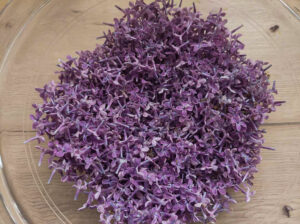
1. Carefully pluck the flowers off the stems. Make sure that nothing green gets into the bowl, only the flowers. The green parts of the flowers would make the syrup bitter.
2. Carefully wash the flowers with cold water.
3. Put the water and sugar into a pot and boil the solution while constantly stirring it. The sugar must be dissolved completely.
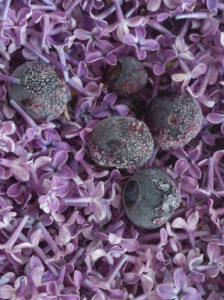
4. Remove the pot from the heat and add the blueberries and lemon juice. Stir slightly until the liquid has the colour you like.
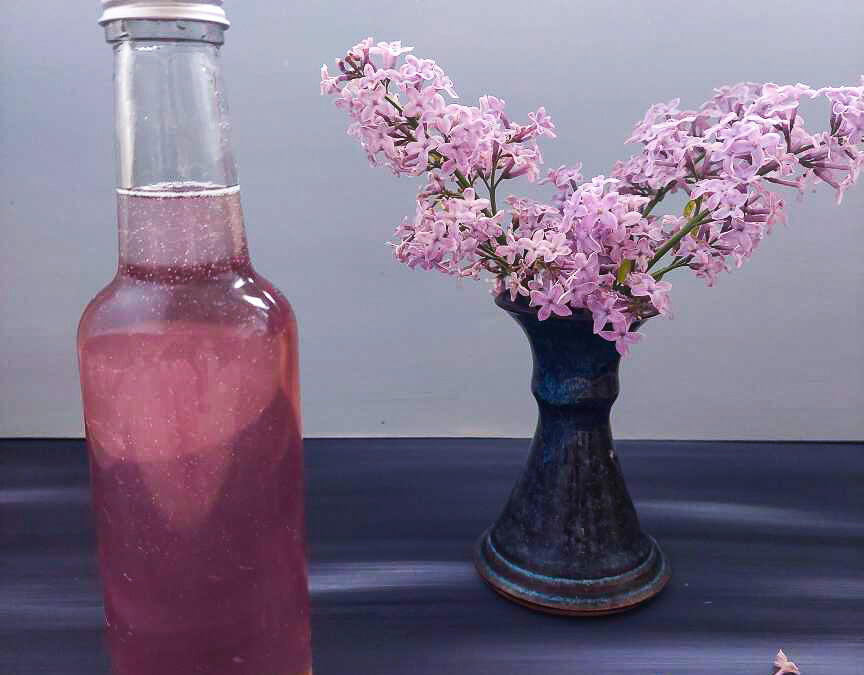
Blueberries give our lilac syrup that wonderfully light lavender hue.
5. Let the syrup cool down to room temperature. Now, add the lilac flowers and stir them slightly in.
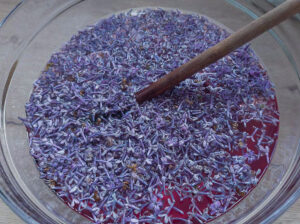
Cover the pot and let it all rest for about 18 – 24 hours.
The lilac syrup is ready to rest for about 18 – 24 hours
6. Strain the mixture through a fine strainer into another pot. Gently press the last syrup out of the lilac flowers.
7. The mixture is ready for use now, but it will only last 2 – 3 days in the fridge.
If you want to preserve it for longer, bring the syrup to a short boil once more and pour the hot liquid into glass bottles. Close them immediately with lids. Preserved that way, lilac syrup can be stored up to 18 months. Once you open a bottle, consume the syrup within 2 – 3 days.
Alternatively, you can freeze the lilac syrup.
Angela Braun
Lilac Syrup
This elegant syrup adds a touch of botanical sophistication to cocktails, lemonades, and iced teas. Drizzle it over pancakes or waffles, stir into yoghurt, or use as a finishing touch for cakes and pastries.
Carefully plug the flowers off the stems. Make sure that nothing green gets into the bowl, only the flowers.
Wash the flowers with cold water.
Put the water and sugar into a pot and boil it while constantly stirring. The sugar must be dissolved completely.
Remove the pot from the heat and add the blueberries and lemon juice. Stir slightly until the liquid has the colour you like.
Let the syrup cool down to room temperature, add the lilac flowers, cover the pot and let it all rest for about 18 - 24 hours.
Pour the mixture through a fine sieve into another pot. Gently press the last syrup out of the lilac flowers.
The mixture is ready for use now but will only last 2 - 3 days in the fridge. If you want to preserve it for longer, bring the syrup to a boil once more and the boiling liquid into glass bottles. Alternatively, you can freeze the lilac syrup.
Notes
Add lilac syrup to cocktails, lemonades and iced teas. Mix it with sparkling wine and you have an extravagant aperitif. However, lilac syrup is not only for drinks. Get creative and drizzle it over pancakes or waffles, stir it into yoghurt, or use it as a finishing touch for cakes and pastries.
How to use lilac syrup
Beverages
Stir a tablespoon into a glass of iced tea for a floral afternoon refreshment
Swirl into plain yoghurt with fresh berries and granola
Blend into smoothie bowls
Stir into overnight oats with sliced almonds and blueberries
Brush onto warm scones fresh from the oven
Desserts
Brush onto cake layers before frosting for added moisture and flavour
Drizzle over vanilla ice cream
Mix into whipped cream for a floral topping on desserts
Use as a sweetener in homemade popsicles with berries
Capture Spring in Every Sip
Lilac blooms are fleeting, but with this simple lilac syrup you can bottle their delicate fragrance and flavour to enjoy long after the blossoms fade. Whether swirled into sparkling lemonade, stirred into cocktails, drizzled over pancakes, or mixed into yoghurt and desserts, this floral syrup brings a touch of springtime elegance to everything it touches. A little patience while steeping the blossoms rewards you with a beautiful, aromatic syrup that truly makes the most of lilac season — a seasonal treat worth preserving and sharing.
If you want to make more syrups, try out these recipes
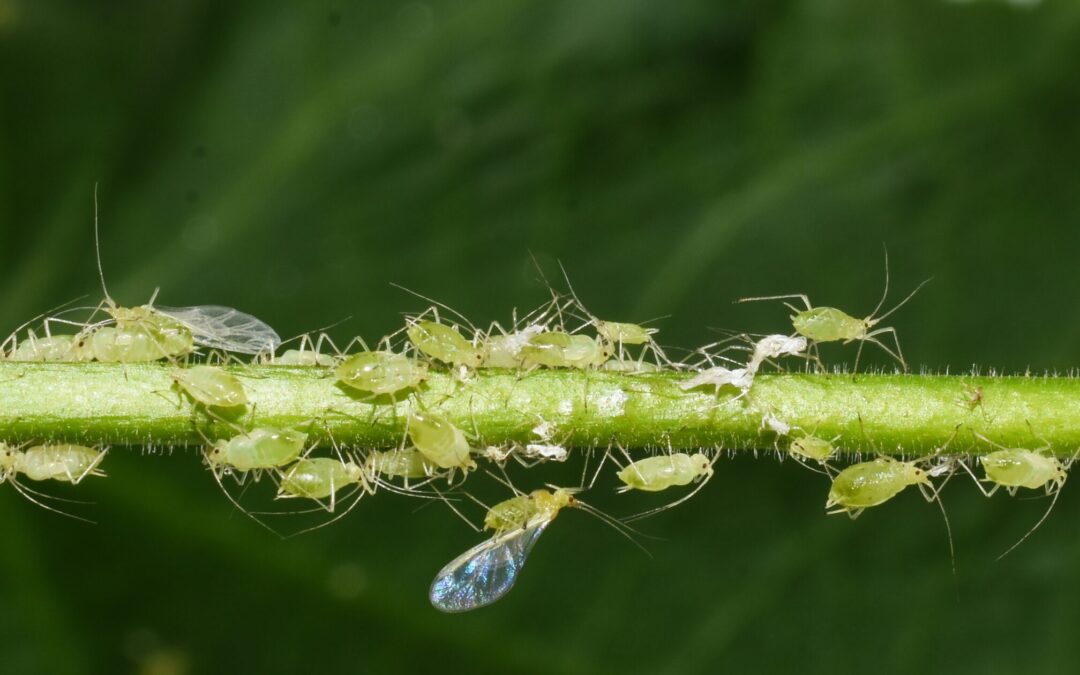
Aphids are a common pest and make life hard for gardeners. Within a very short time, these yellow, green, red or black insects can grow into gigantic hordes and damage the leaves and young shoots of many plants with their piercing-sucking mouth parts. Additionally, aphids often transmit dangerous pathogens, especially viruses. However, it’s not necessary to fight aphids with chemicals. There are much cheaper and – what’s even more important – natural household remedies to get rid of aphids. Let’s have a look!
Preventing aphids
The right place and nutrients
As so often, it’s best to take every measure to keep pests like aphids away from your plants. One way to do that is not to plant too many of the same plants together. In an ornamental garden, this could mean combining roses with different perennials; in the vegetable garden, you should apply the system of companion plants. That way, we can already combine plants that help each other.
Healthy plants that get enough nutrients, water and light are generally less prone to pests than over-fertilised or weak plants. Avoid over-fertilising with nitrogen, because aphids like the nourishing plant sap.
Attract natural enemies
A further step to prevent aphids is to attract their natural enemies like ladybugs, lacewings, ichneumon flies, hoverflies and other insects. Offer them enough nesting opportunities, for example deadwood hedges, lacewing boxes and insect hotels. When aphid hunters feel comfortable in your garden, the aphids will decrease noticeably in late spring or early summer. The reason is that with an increased food supply, the beneficial insects proliferate as well. In summer, we usually have a good balance.
Strengthen your plants
Seeing as pests first infest weak and unhealthy plants, it’s a good idea to strengthen them. Here, too, we have tried-and-tested household remedies for strengthening:
Horsetail manure
To make horsetail manure, you need 1 kg fresh or 200 g dry field horsetail. Soak it in 10 litres of cold water for 24 hours and filter it. Dilute 2 litres of the liquid manure with 10 litres of water and water or spray the plants every week.
To prevent aphids from infesting your tomato plants, mix one litre of skimmed milk or whey with 4 litres of water and spray the concoction once a week on your plants. If the aphids have already infested your tomatoes, however, this won’t help.
Diluted with water is a strengthening tonic for young and weak plants and helps prevent aphids.
Wormwood manure
Wormwood manure (not to be confused with wormwood tea) does not repel pests but distracts them with its strong and pungent smell. It’s made in the same way as nettle manure.
Vinegar
Vinegar, for example your homemade apple vinegar, is also a preventive means against aphids, as they shy away from acid. You must be careful, however, and only use vinegar dilutedly. Otherwise, you risk damaging your plants with too high acidity.
How to get rid of aphids with household remedies
One day, everything’s fine in your garden, and the next day, all your plants have aphids! At least, it often seems as dramatic as that because aphids proliferate very fast and can truly infest a garden within a week.
So, what to do now? Here are some tried-and-tested household remedies to get rid of aphids in a natural way.
Water
Yep, that’s right, just plain old water. Often, a strong jet of water is enough to catapult the aphids into nirvana. Just shoot them off the plant. This works for house plants, as well. Put them into the shower or bathtub and rinse the aphids off.
Soft soap or dish soap solution
The most commonly known household remedy against aphids is soft soap. This soap is made with potash instead of sodium hydroxide and has no surplus of fat. An alternative to soft soap is dish soap, although it contains fragrances and colourings.
Shower gel and other body care products on the basis of soap are not suitable. They contain environmentally dangerous substances and can damage your plants.
To make an effective household remedy against aphids, dissolve 50 g of soft soap or dish soap in one litre of warm water. Let the solution cool down and fill it into a spray bottle. Spray the infested plants.
Pro tip: In case of a heavy infestation with aphids, stir 2 teaspoons of alcohol or spirit to the soft soap solution to enhance its power.
Nettle brew
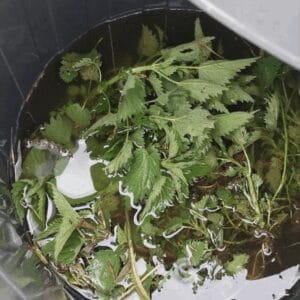
A brew (not manure) from stinging nettles is also a successful household remedy to get rid of aphids. To make an extract, put 100 – 200 g of fresh stinging nettles into one litre of water and let them steep for two days. You can use the brew undiluted against aphids, also on houseplants.
Make sure to filter the brew after two days and dispose of the nettles. Otherwise, the liquid will ferment and become nettle manure, which mustn’t be used undiluted on any plants.
Oregano
You may know oregano in the kitchen, but this herb is also suitable against aphids. To make a spray solution, take 100 g fresh or 10 g dry oregano and add one litre of boiling water. Let it steep for 15 – 20 minutes and filter it. Dilute the brew at a ratio of 3:1 with water and spray it on the aphid-infested plants.
Tansy brew
Soak 500 g fresh or 30 g dried tansy in 10 litres of water for 24 hours. Filter the brew and dilute it with 20 litres of water. Fill the solution in a spray bottle and spray it on the diseased plant.
Wormwood tea
Besides aphids, wormwood tea (not wormwood manure, see above) also helps against other sucking and eating pests. Brew 100 g fresh or 10 g dry wormwood leaves (Artemisia absinthum) with one litre of water and let it steep for 24 hours. Filter the tea and use it undilutedly against aphids.
Bracken brew
Mix one kilogram of bracken with 10 litres of water. The brew can be used undilutedly against aphids and is especially suitable for houseplants. Bracken contains lots of potassium, and the brew strengthens the plant like a fertiliser.
Onion and garlic „tea“ as a household remedy against aphids
Onions and garlic can help against many pests. Make a tea from 40 g chopped onions or garlic and 5 litres of boiling water. Let the tea steep for at least three hours (closed with a lid, it stinks!) and filter it afterwards. Spray your plants with this undiluted tea every 8 – 10 days against aphids and preventively against fungal diseases.
Rhubarb leaf brew
If your beans are infested with black bean aphids (Aphis fabae), a brew from rhubarb leaves is a good household remedy. Boil 500 g of leaves for half an hour in 3 litres of water, filter the brew and spray your plants with the cooled liquid once a week.
Black tea
Black tea is also a good household remedy against aphids. Take two teabags of black tea and pour one litre of boiling water over them. Let it steep for at least 15 minutes. Fill the cooled tea in a spray bottle and spray your plants from all directions.
Conclusion
Aphids are a common pest, and to a certain extent we have to live with them. In a natural garden, where their natural enemies feel comfortable, we usually get a good balance.
In case of a large infestation, however, we should not use chemicals to fight them as these would also harm beneficial insects. Instead, there are so many cheap or even free household remedies that really help get rid of aphids in a natural way. The ecosystem and environment will thank you, and you can eat your vegetables with an easy conscience.
Interested in more garden talk? Browse my garden library for tutorials on all things vegetable garden.
Here are some examples that I’m certain will help you:
Liquid manure made from stinging nettles is a must-have in every vegetable garden as you can use it for different purposes: first and foremost as a natural fertiliser for your vegetables, as a tonic to strengthen your plants and as a pesticide to get rid of damaging pests. So let’s not waste any more time, I‘ll show you how to make nettle manure!
Quick overview
7 Steps to making nettle manure
Step 1: Harvest 1 kg of stinging nettles and chop them roughly. ⇒ Best to wear gloves
Step 2: Put the nettles in a container ⇒ made of wood or plastic. Don’t use a metal container!
Step 3: Fill up with 10 litres of water ⇒ Rainwater is best
Step 4: Add a handful of rock flour ⇒ It binds the odour
Step 5: Stir it all well and cover the container loosely ⇒ Nettle manure needs oxygen
Step 6: Stir daily ⇒ The nettle manure is ready to use when no more bubbles appear.
Step 7: Dilute nettle manure ⇒ Ratio 1:20
How to make nettle manure
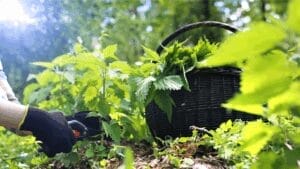
Grab your garden gloves, shears and a basket or bucket and get out into nature.
Look for stinging nettles that don’t grow near a street or at the edge of a field so that we can be sure our soon-to-be fertiliser is free from harmful substances.
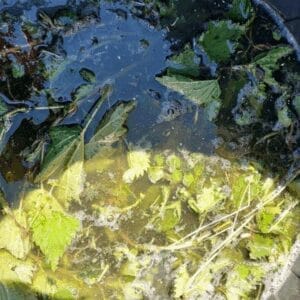
Cut off about 1 kg of stinging nettles and take them home. If you like, you can chop them into pieces of 2 – 3 cm (about 1 inch). That way, you can also fill the nettle residues into your watering can and water them out with the manure. I don’t cut the nettles, but filter the manure and use the remaining nettle parts selectively for certain plants.
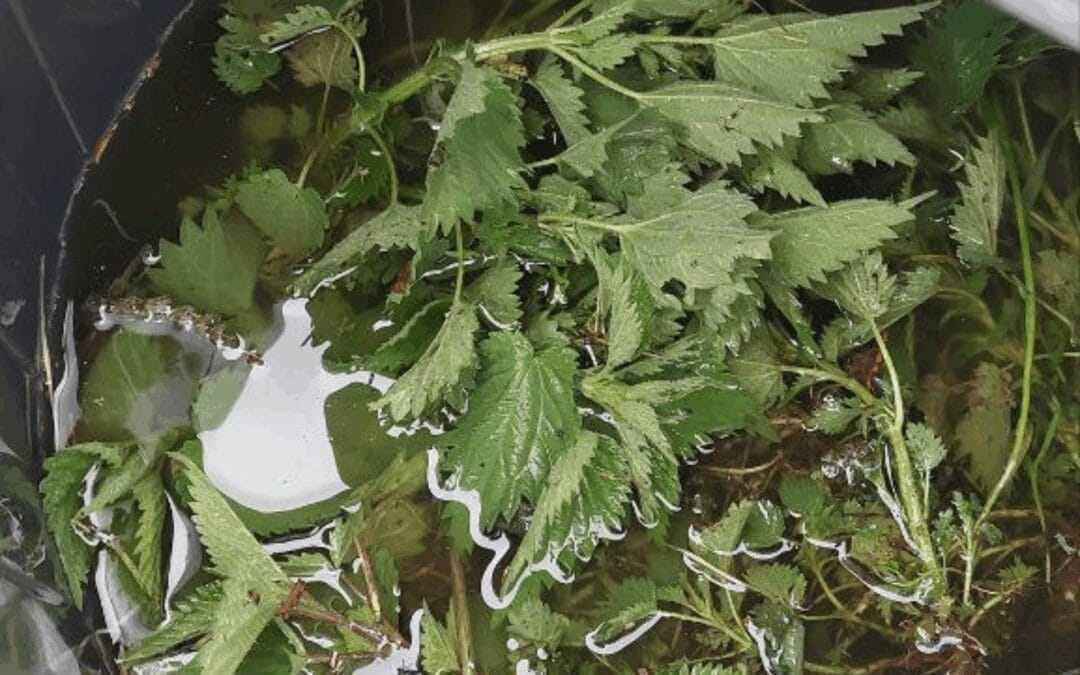
Put the nettles into a container that’s not made of metal. That’s important because during the fermentation process, the manure would react with metal, causing undesired chemical processes.
Now, fill in about 10 litres of water. Rainwater is best as it’s soft and doesn’t cost a thing, but you can also use tap water.
It lies in the nature of manure to stink. To keep the smell at least a bit under control, you can add one to two handfuls of rock flour or compost. It helps bind the odour and additionally enriches the manure.
Now stir the liquid thoroughly with a stick and cover the container loosely so that the air can circulate and provide our manure-to-be with oxygen for the fermentation process. Besides, the resulting gases can’t build up pressure.
Stir your manure every day until no more bubbles appear. Now your homemade fertiliser is ready!
How to use nettle manure
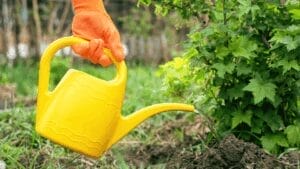
Mature nettle manure is a concentrate and would be too harsh for your plants. That’s why you must dilute it 1:20, that means one part nettle manure and 20 parts water. For example: put 0.5 litres of nettle manure in your watering can and fill up with 10 litres of water. Now, water the soil around your vegetables with it.
Avoid watering the stems or leaves with nettle manure. If you get residues of the fermented nettles on the ground, that’s okay. They’ll rot and provide nourishment for the soil organisms.
Fertilise plants with high nutrient uptake, like tomatoes or pumpkins, every three to four weeks, plants with low nutrient uptake only to strengthen them and if they are infected with pests. It’s best to produce nettle manure continually so that you can use it throughout the growing season.
Stored in a cool and dark place and covered with a lid, nettle manure has quite a long shelf life. Over time, however, nutrients decline, and the manure loses its power. In autumn, therefore, when you don’t have to fertilise anymore, pour the residual nettle manure on your compost heap or dilutedly on harvested patches. Next year, you can make nettle manure afresh.
The different uses of nettle manure
Fertiliser
Nettle manure is a wonderful fertiliser, containing everything your plants need. The nutrients are instantly available, and that’s why your plants will thrive when you fertilise regularly with nettle manure.
Before you plant your seedlings out into the open, dip their root bales in three to four days old (that is: relatively fresh) nettle manure. That strengthens the roots and defences and facilitates taking root.
If your vegetables are a bit weak and don’t grow properly, nettle manure can help. Water your plants every one to two weeks with a dilution of 1:20, and they’ll thrive in no time!
Strengthening tonic
Your plants tolerate capricious weather conditions like heavy rains or lasting drought better when you feed them with some nettle manure.
Or if your veggies have been damaged by hail, nettle manure can help them to recover and grow healthily again
Protection
If your plants are infected with pests, you can help them with nettle manure:
Take nettle manure that’s about 4 – 7 days old and still bubbles powerfully and foams when stirred, and dilute it at a ratio of 1:50. Spray that mixture on a cloudy day or in the evenings on the leaves of your infected plants. That’ll repel aphids and other pests.
If time is of the essence because there are already too many pests, you can also make nettle extract:
Chop up 100 g of stinging nettles and fill them up with 1 litre of water. Let the concoction sit for 24 hours, and use it without diluting.
Ingredients of nettle manure
Due to its wonderful ingredients, nettle manure can be used versatilely. It contains nitrogen and potassium, vitamins and growth-inducing enzymes that push your veggies!
Another substance in nettle manure is silicic acid, which makes your plants strong and resistant. That way, your vegetables can fight off pests and diseases better or cope with damage from hail or downpours.
Making nettle manure is a great way to produce a wonderful energiser for your plants that fertilises and strengthens them at the same time. Nettle manure is easy to make, fast and has so many advantages. Make it continually throughout the summer, and you’ll have a wonderful plant food. So, get out into nature, harvest stinging nettles and make your own nettle manure!
Wanna read more about how to grow vegetables successfully?