
.
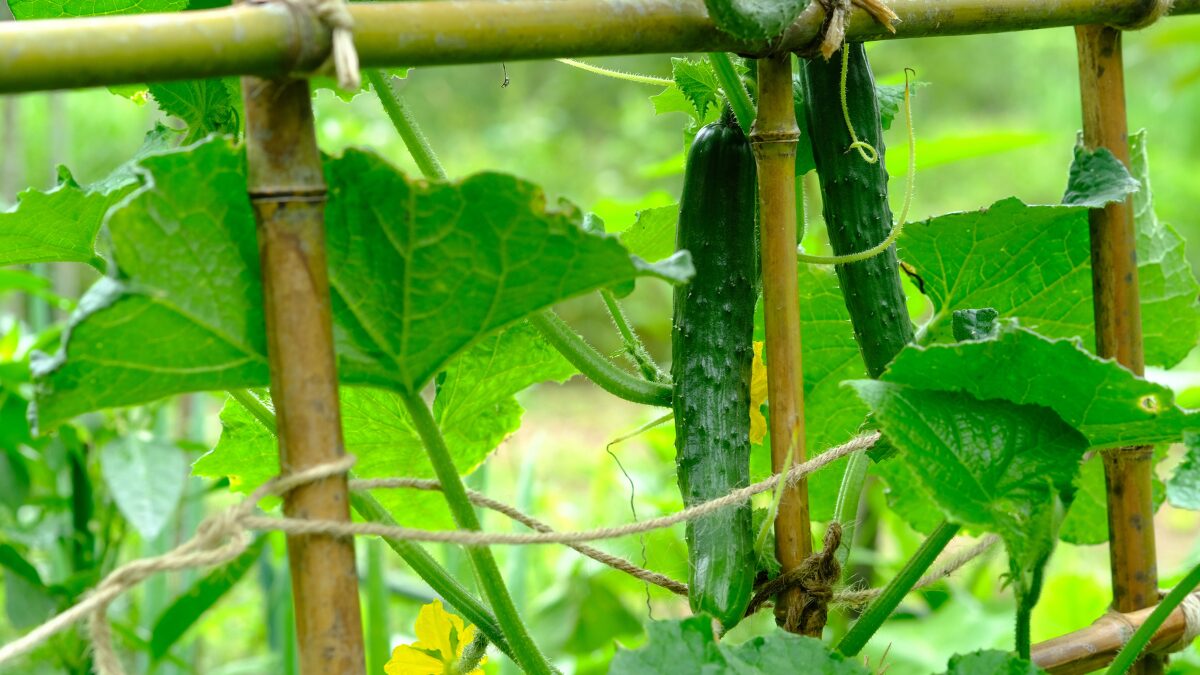
Cucumbers are popular veggies to grow in our gardens. They quickly develop an abundance of green leaves, then yellow flowers follow, and soon afterwards we can watch tiny cucumbers growing. When the plants are content, they produce fruit continuously. Until something bothers them. Then the harvest – as well as often the whole plant – goes south. Except when we discover soon enough when something’s wrong and help our plants quickly.
By following some basic principles and keeping a close eye on our plants, we can often prevent most diseases before they ever take hold.
And in the unlikely case our cucumbers get infected, it’s good to determine the cause. The sooner we identify the culprit, the better we can get rid of it.
In this guide, I’ll walk you through the most common diseases that affect cucumber plants, how to identify them, and what to do if they appear. You’ll also learn how to prevent serious infections in the first place — so your plants stay strong and productive throughout the season.
I’ll cover:
- Identification: How to recognise each disease and the damage they cause
- Prevention: Garden practices that reduce disease pressure
- Treatment: Organic, as far as possible
For a better understanding, I’ve grouped the diseases by their cause, that is, whether they’re caused by fungi, viruses, or bacteria.
Quick Overview: Cucumber Diseases at a Glance
If you’re in a hurry, this table gives you a quick overview. Scroll down for detailed identification and treatment advice.
| Disease | Type | Main Symptom | Quick Fix |
|---|---|---|---|
| Damping Off | Fungal | Seedlings collapse | Remove affected plants, improve air-flow |
| Powdery Mildew | Fungal | White powder on leaves | Remove affected foliage, improve air-flow |
| Downy Mildew | Fungal | Mycelium on leaves' undersides | Remove affected plants |
| Cucumber Mosaic Virus | Viral | Mosaic leave pattern | Remove affected plants, control aphids |
| Grey Mould | Fungal | Glassy, moist patches, brown spots | Remove affected plants, disinfect tools |
| Bacterial Soft Rot | Bacterial | Fruits Rot | Remove affected plants, crop rotation, don't overfertilise |
| Anthracnose | Fungal | Watery to black lesions | Remove affected plants, spray with copper-based fungicide |
| Fusarium Wilt | Fungal | Yellow leaves, root rot | Remove affected plants, crop rotation |
| Angular Leaf Spot | Bacterial | Spots on leaves | Remove affected plants, disinfect tools, spray with copper-based fungicide |
| Sclerotinia stem rot | Fungal | White mycelium at stem | Remove affected plants |
| Verticillium Wilt | Fungal | Leaves wither | Remove affected plants, crop rotation |
| Cucumber Leaf Spot Virus | Viral | Patches on leaves | Remove affected plants |
| Stem rot | Fungal | Green mycelium at stem | Remove affected plants |
But let’s see first what we can do to prevent diseases from infecting our plants.
General preventive measures against diseases
As I describe in this guide on growing cucumbers, there are a few things we can do to make it hard for diseases to take root.
Crop rotation
This describes the concept of not growing the same plants or members of the same plant family in the same spot year after year.
Crop rotation helps prevent nutrient depletion and reduces the build-up of pests and diseases in the soil.
In this guide to crop rotation, I explain the concept in detail.
Only use healthy plants.
Whether you’re starting your cucumber plants from seeds or buying young plants at a nursery, always check their health before transplanting:
- Colour: The leaves are equally coloured
- Leaf structure: Firm and elastic, no dry spots or discolourations
- Growth: The plant grows regularly and evenly
- Roots: Healthy root structure is firm and white
- Blossoms: When plants bloom, their blossoms are fresh and firm
Hygiene
One of the most effective ways to prevent diseases from spreading is by washing your hands. Yes, just like in the kitchen.
Furthermore, when plants are already infected, I recommend disinfecting all gardening tools.
Choose resistant varieties
Seed manufacturers advertise resistant varieties, so next time you browse the seed catalogues, look out for that characteristic.
When you’re buying plants in a nursery, ask them what varieties are particularly resistant.
Watering
Cucumbers want constantly moist (but not wet) soil. Water them regularly every few days or when necessary, and only in the mornings. That way, the leaves can dry off during the day. Prolonged moisture on the leaves creates ideal conditions for fungal diseases.
Only water the soil around the plant and avoid splashing the leaves.
Good container drainage prevents many diseases — especially when growing cucumbers in pots.
Good air circulation
Especially in greenhouses, the climate can get very hot and humid on summer days. It’s essential, therefore, to guarantee good air circulation by opening the windows and maybe even the door.
The air not only cools down the temperature but also dries off the dew from the plants.
If the plants grow too many leaves, it can be advisable to remove some of them to let the air flow more smoothly around the plant.
Spacing and trellis
Observe the right spacing between cucumber plants and rows to ensure adequate air circulation.
Also, cucumbers are climbers, which means they need a trellis they can grow up. That way, the leaves are off the ground and dry off more easily.
Check for diseases
Regularly check for diseases. The sooner you spot an infection, the easier you can prevent it from spreading.
In my experience, early detection is far more effective than aggressive treatment.
How to Tell Diseases Apart from Pests
I know how it is: on your routine control, you discover a plant that’s obviously suffering from something, but how do you know whether it’s from a pest or a disease?
Several signs will put us on the right track.
Signs it’s a disease (not pests)
- No visible insects or slime trails
- Spreading spots or patches
- Wilting despite adequate water
- Mould or powdery coatings
- Rotting stems or fruits without an obvious cause
Signs it’s a pest (not disease)
- Visible holes with clean edges
- Insects visible on the plant
- Sticky residue
- Webbing
- Slime trails
Here’s how to identify diseases and manage the most frequent problems.
Not sure what’s wrong with your plants?
Get seasonal gardening tips, troubleshooting guides and preserving inspiration delivered straight to your inbox.
How to identify diseases quickly
Now that we know how to grow healthy plants and tell apart diseases from pests, let’s see which common diseases can affect cucumbers. It’s important to identify them as soon as possible so that we can quickly take measures against them.
| Symptom | Most Likely Cause | Severity |
|---|---|---|
| White Powder on Leaves | Powdery Mildew | 🟡 Serious but manageable |
| Yellow angular spots | Angular leaf spot or downy mildew | 🔴 Remove plant immediately |
| Plants wilt despite watering | Fusarium or Verticillium wilt | 🟡 Serious but manageable |
| Mushy fruit with foul smell | Bacterial soft rot | 🟡 Serious but manageable |
| Grey, fuzzy mould | Grey mould | 🟡 Serious but manageable |
| Deformed leaves and patchy fruits | Cucumber mosaic virus | 🔴 Remove plant immediately |
Fungal Diseases Affecting Cucumbers
If a cucumber plant is infected with a fungal, viral or severe bacterial disease, remove it immediately and dispose of it in household waste rather than composting it.
Damping-Off
This fungal disease only affects seedlings and young plants. The stems look thin and water-soaked at the bottom, and sometimes white fluffy mould forms at the base. Eventually, the plants collapse at the soil line and die.
Damping-off often spreads very quickly and infects the entire seed tray.
How to prevent it:
- Use sterile seed-starting soil.
- Don’t overwater the seedlings and avoid splashing the seedlings.
- Ensure good air circulation by opening the covering daily.
- Avoid overcrowding seedlings.
- Dust the soil surface with cinnamon powder (cinnamon is a natural antifungal)
How to get rid of it:
- Destroy the infected plants as well as the substrate.
Powdery mildew (White Coating on Cucumber Leaves)
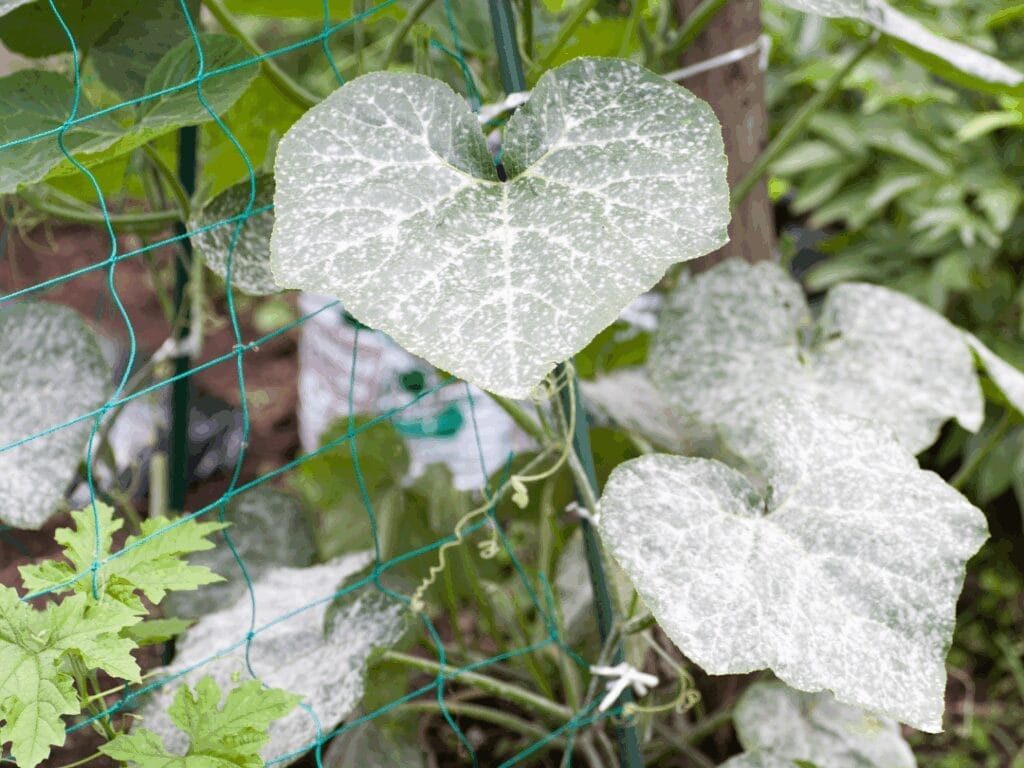
Powdery mildew is one of the most widespread fungal diseases that affect cucumbers. At first, we can see small white patches with white mycelium. These patches grow larger until the whole leaf is covered by it. The mycelium looks a bit as if the leaves were dusted with flour. Eventually, the leaves die.
Powdery mildew spreads best on dry and warm days. Powdery mildew cannot be cured completely, but removing infected leaves and improving growing conditions may slow its spread.
How to prevent it
- Choose resistant varieties
- Keep the plants at an appropriate distance
- In the greenhouse, make sure the air can flow freely (Dreaming about a greenhouse but shrinking back from the price? Here’s my complete guide on how to build a greenhouse by yourself)
- Don’t overfeed the plants with nitrogen
- Make sure not to spray the leaves when watering
- Mulch the soil between the plants
- Regularly check for infection
- Strengthen the plants with plant manures, for example, from field horsetail
How to get rid of it
- At the first stage of the disease, it can be helpful to spray the plant with a brew of field horsetail
- Remove infected plant parts and dispose of them properly.
- Spray the plants with a baking soda solution (dilute 1 tsp of baking soda in 1 litre of water)
- Spray the plants with diluted milk spray (1 part milk with 10 parts water)
- Spray the plants with potassium bicarbonate solution (1 part potassium bicarbonate to 40 parts of water)
Downy mildew (Yellow Spots on Cucumber Leaves)
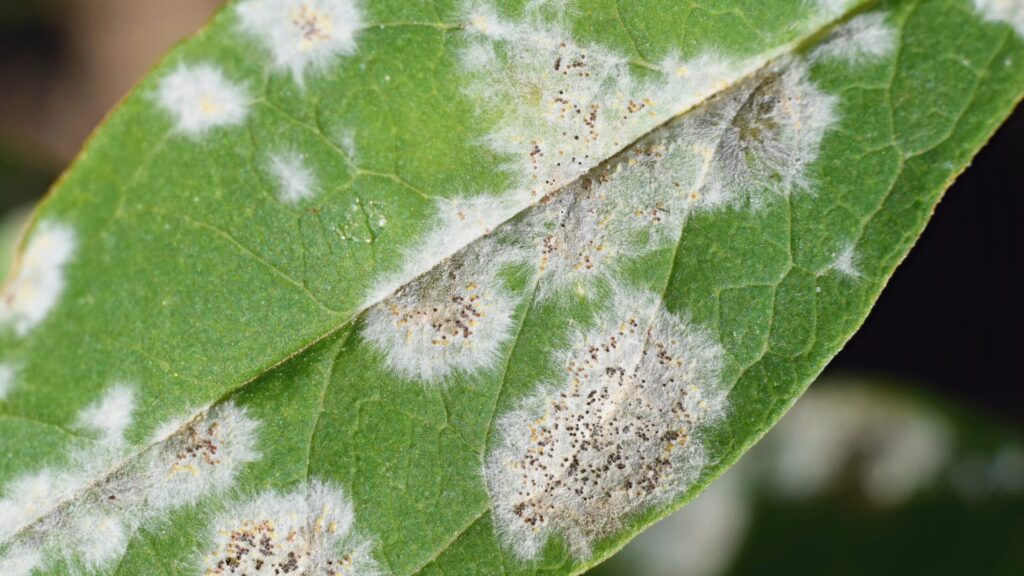
While powdery mildew spreads on warm and dry days, downy mildew haunts us when the weather is cool and moist. It shows by light green, yellow or brown patches on the leaves that stop at the leaf veins. The mycelium on the downside of the leaf is grey-violet. Within a few days, the leaves turn completely yellow. The fruits stop developing and may shrivel or rot. Eventually, the whole cucumber plant dies.
How to prevent it:
- Keep leaves dry
- Observe the right planting distance and only water the ground
- Don’t overfeed the plants with nitrogen
- Choose resistant and tolerant varieties
- Spray preventively with garlic tea
How to get rid of it:
- Remove infected plants and dispose of them properly.
- In case of a strong infection, spray the leaves‘ undersides with a fungicide.
Grey mould (Grey coating)
The fungus mycelium of grey mould is, as the name states, grey. The spores can survive many years in the soil where they wait for the right conditions to attack again. Moist weather and wet cucumber leaves are ideal for them.
The fungus spreads on the whole plant, which eventually is covered with a thick coating.
How to prevent it
- Air your greenhouse regularly to make sure that the leaves dry off quickly.
- Water regularly but not excessively, and avoid splashing the leaves with water.
- Observe the right planting distance between cucumber plants.
How to get rid of it
- Remove infected plants and dispose of them properly.
- Disinfect your gardening tools and wash your hands after handling infected plants.
Anthracnose (Grey or Brown Patches on Cucumber Fruits)
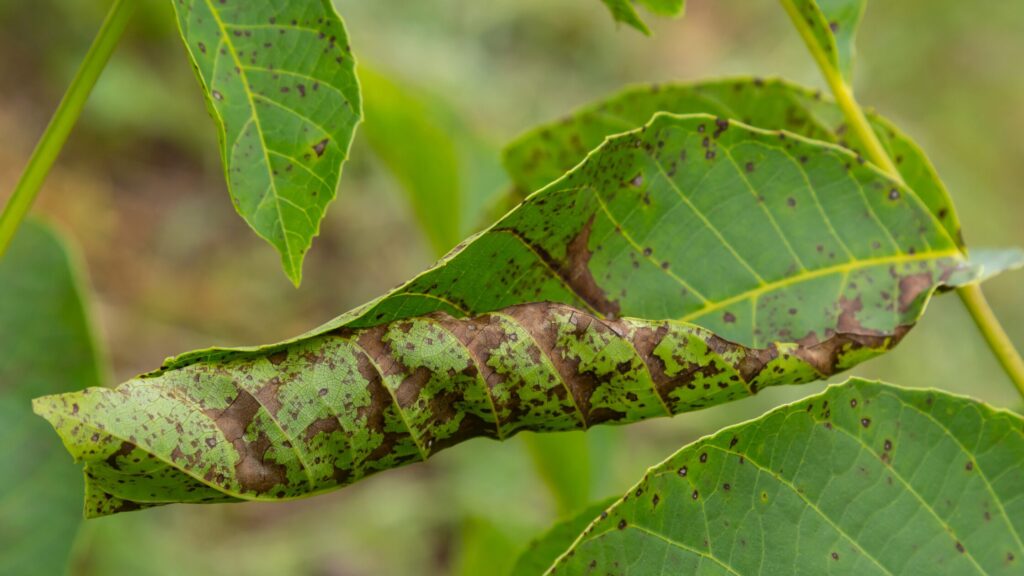
Anthracnose affects the whole cucumber plant. The fruit settings shrink and dry out; the cucumbers get grey or brownish patches with red fungal spores. These spores spread, and the cucumber, as well as eventually the whole plant, dry out.
How to prevent it
- Make sure the soil for your plants is well-drained.
- Use healthy, resistant varieties.
- Only water the ground around your plants, not the plant itself and definitely not the leaves.
- Keep ripening fruits from touching the soil.
- Remove all plant debris after harvesting, as the fungus can survive in plant parts for a long time.
- Observe the rules of crop rotation.
How to get rid of it
- Remove infected leaves and fruits
- Dispose of heavily infected plants
- Disinfect garden tools
Fusarium wilt (Withered leaves)
Fusarium wilt is caused by fungi of the Fusarium genus and shows the following characteristics: at first, the cucumber plants wither during the day but seem to recover during the night. After a few days, the leaves become yellow and dry out completely. At this time, you may see a pink fungus mycelium at the bottom of the stem. The roots turn brown, and the plant eventually dies.
Black root rot (Black Cucumber Roots)
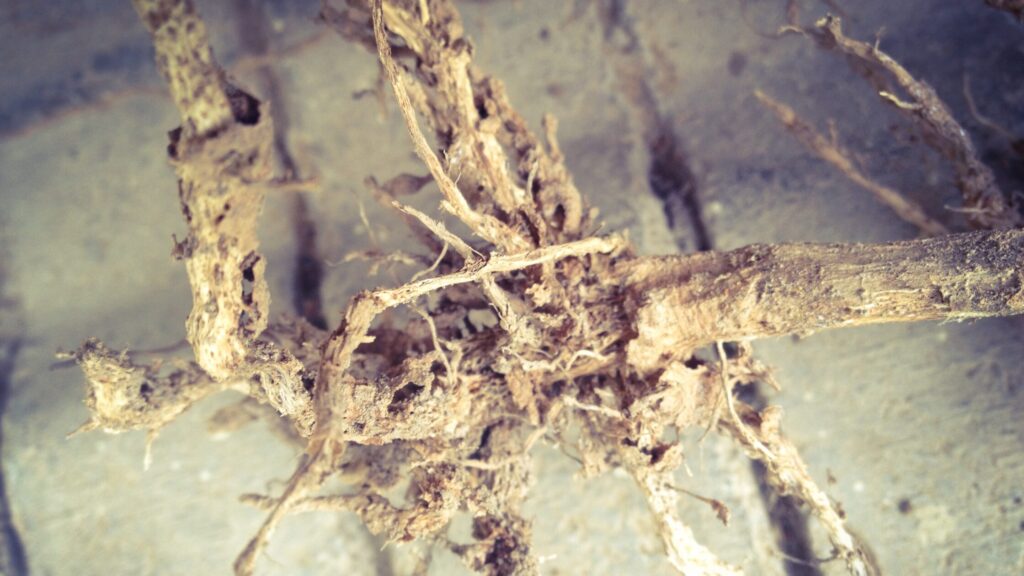
Black root rot is another fungal disease which attacks the roots of cucumber plants. The black colouring that shows on infected plants has given the disease its name. The base of infected plants becomes brittle, and the roots turn black and rot. The plant grows new roots, the so-called adventitious roots and the lower leaves wither and die.
Sclerotinia stem rot (White Mycelium at the stem base)
Sclerotinia stem rot, or sclerotinia withering, mostly affects the base of the stem but sometimes may also affect the cucumber fruits. Infected plants show a fungal mycelium that looks like cotton wool at the base of the stem and on infected cucumber fruits. Within the mycelium, you can see large black fruiting bodies of about 1 cm / 1/3 inch.
Stem rot (Green mycelium at Cucumber Stem Base)
This disease mostly affects cucumber plants in greenhouses where it typically spreads when the weather is warm. Infected cucumber plants suddenly wither and die quickly afterwards. The base of the stem shows a greenish fungus mycelium, becomes brittle and rots.
Verticillium wilt (Withering leaves)
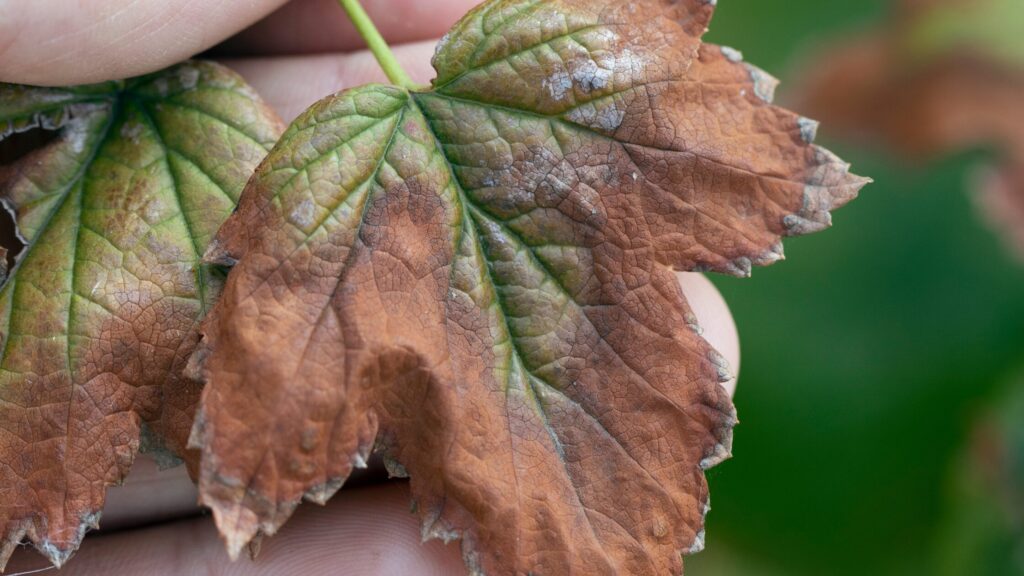
This withering disease spreads when the air and soil temperatures are low. First, the lower leaves become limp and brown, often just on one side. During the night, the plant seems to recover. When you cut a stem, you’ll see grey and brown vessels.
How to prevent wilt diseases
All those withering diseases I described can’t be fought with chemical means. For that matter, it’s important to prevent them with the following measures to create optimum growing conditions.
- provide the soil with healthy compost or humus every year
- observe the rules of crop rotation and don’t cultivate cucumbers in the same spot for years in a row
- don’t water cucumbers with cold water
- remove all roots from the soil in autumn
- in the greenhouse, exchange the soil
- Let the soil dry before watering again. If you’re unsure, poke a finger in the ground and check if the soil is still moist
If one of these cucumber diseases has already broken out, we must prevent it from spreading and make sure that it won’t come again next year. For that reason, remove infected plants immediately and discard them.
Fungal diseases are unfortunately not the only diseases that can affect our cucumbers.
Virus diseases
Although virus diseases don’t form a coating on the cucumber plants, they nevertheless can be lethal.
Cucumber leaf spot virus (CLSV)
This disease affects mostly cucumbers in the greenhouse. Young leaves form yellow-green patches, starting at the edges. In the middle, you can see a brown spot, around which blisters form. On the cucumber fruits themselves, we can see no signs of a disease.
How to get rid of it
Up to now, there’s no way to fight this virus disease. To prevent it from spreading, remove infected plants immediately.
Cucumber mosaic virus (Mosaic-like patches on Leaves)
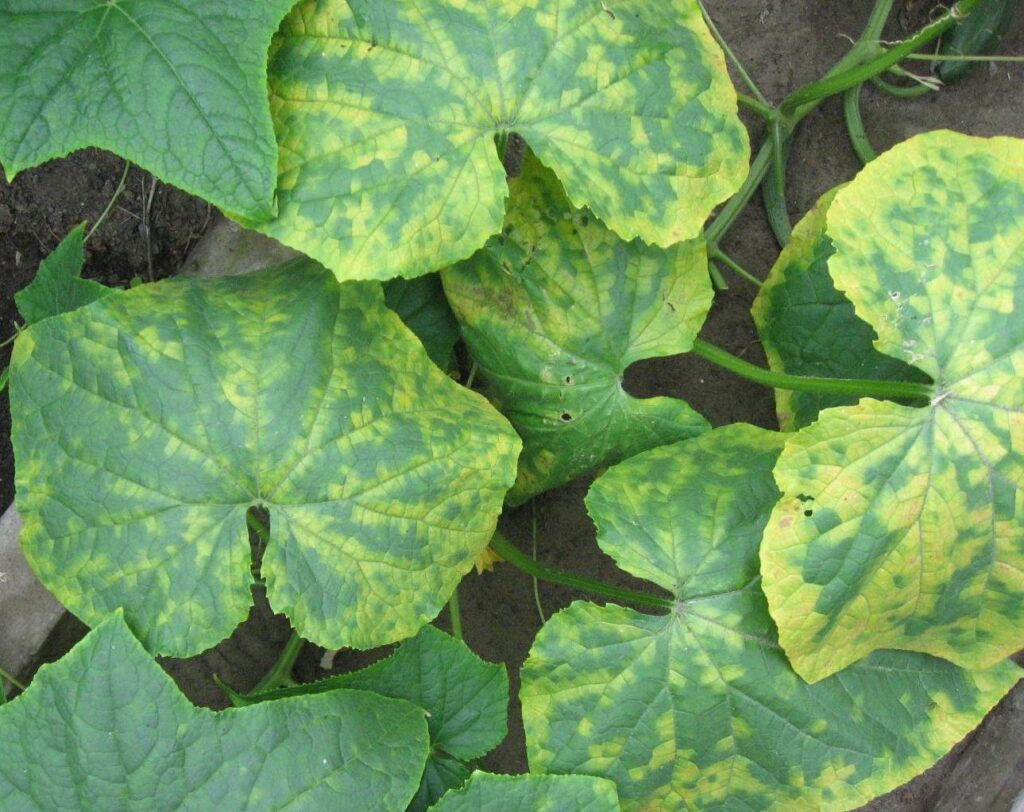
This disease is spread by aphids, and it shows as light green patches or circles on the leaves. Young leaves may even show deformations. Eventually, the cucumber fruits get patchy, too. When temperatures vary, the plant withers and can even die.
How to prevent it
- Choose resistant cucumber varieties
- Viruses are passed on through plant sap. It’s important, therefore, to regularly clean and disinfect your garden tools.
- Remove all plant debris at the end of the growing season. Viruses can survive in plant parts for months.
- Observe the rules of crop rotation.
- Control insects that spread the disease, especially aphids. (In this guide, I describe in detail how to get rid of aphids naturally.)
How to get rid of it
- Remove infected plants and dispose of them properly.
- Disinfect garden tools after every use.
- Closely monitor nearby plants.
- Wash your hands after handling the plants.
Bacterial diseases
Apart from fungi and viruses, bacteria are the third group of pathogens that can affect cucumber plants.
Bacterial soft rot (Mushy, Rotting Cucumbers)
Soft rot is mostly transferred by water splashes that get into the plant via damaged or gnawed spots. The cucumbers become mushy, starting at the flower end, and even young cucumbers can be affected. The most telling sign is the foul odour of these infected cucumber fruits.
Tip:
This bacterium also loves zucchini, carrots and onions. When you suspect the disease, check the other plants as well for signs of infection.
How to prevent it:
- Plant in well-drained soil.
- Observe the rules of crop rotation.
- Don’t overfertilise or overwater your plants.
How to get rid of it:
- Remove infected plants and dispose of them properly.
Angular leaf spot (Holes in Cucumber Leaves)
Angular leaf spot spreads mostly when temperatures are above 24 °C (75 °F) and the air shows a high humidity. The leaves get angular, yellow patches that seem glassy. These patches get larger and turn brown until, in the end, they dry and fall out. On the downside of the leaf, there may be bacterial slime. The cucumber fruits form mushy, dark patches with a white spot in the middle.
How to prevent it
- Choose resistant varieties
- Only use healthy plants
- Observe the rules of crop rotation.
How to get rid of it
- Remove infected plants and dispose of them properly
- Spray the plants with a copper-based bactericide
- Disinfect your tools
When you’ve got an infection with angular leaf spot, don’t cultivate any cucurbitaceae in this patch for at least three years. After that time, the bacteria in the soil should be dead.
Frequently Asked Questions About Cucumber Diseases
Why are my cucumber leaves turning yellow?
Yellow cucumber leaves can have several causes. Common reasons include downy mildew, nutrient deficiencies, overwatering, underwatering, or natural ageing of older leaves. Check whether the leaves also show spots, mould, or other symptoms that may indicate a disease.
What is the most common cucumber disease?
Powdery mildew is one of the most common cucumber diseases, especially during warm, dry weather. It appears as a white powdery coating on the leaves and can quickly spread throughout the plant.
Can a cucumber plant recover from disease?
It depends on the disease. Mild fungal infections can sometimes be slowed down if detected early. However, viral diseases such as cucumber mosaic virus cannot be cured, and infected plants should be removed to prevent further spread.
Should I remove diseased cucumber leaves?
Yes, removing heavily infected leaves can help slow the spread of some fungal diseases. Always use clean tools and dispose of diseased plant material in household waste rather than on the compost heap.
Is it safe to eat cucumbers from diseased plants?
In many cases, cucumbers from plants with mild fungal diseases are still safe to eat if the fruits themselves are unaffected. However, fruits showing signs of rot, mould, soft spots, or bacterial infection should be discarded.
How can I prevent cucumber diseases naturally?
The best prevention includes crop rotation, proper spacing, good air circulation, watering at soil level, healthy soil, and regular inspection of plants. Choosing resistant varieties can also reduce the risk of disease.
Why are my cucumber plants wilting even though the soil is moist?
Wilting despite adequate moisture can indicate a serious disease such as Fusarium wilt or Verticillium wilt. Root damage, poor drainage, or severe bacterial infections may also cause similar symptoms.
Can cucumber diseases stay in the soil?
Yes. Some fungal and bacterial pathogens can survive in soil or plant debris for several years. This is why crop rotation and thorough garden hygiene are important parts of disease prevention.
What should I do with infected cucumber plants?
Remove severely infected plants as soon as possible and dispose of them in household waste. Avoid composting diseased plant material, as some pathogens may survive and infect future crops.
How often should I check my cucumber plants for diseases?
Inspect your cucumber plants at least once or twice a week during the growing season. Early detection gives you the best chance of preventing diseases from spreading to healthy plants.
The Key to Disease-Free Cucumbers
Healthy cucumber plants rarely become seriously ill. Most diseases take hold when plants are stressed by poor airflow, excess moisture, or unsuitable growing conditions. By checking your plants regularly and acting quickly when problems appear, you’ll often prevent a small issue from becoming a season-ending disaster.
A few yellow spots don’t necessarily mean the end of your harvest. With a bit of observation and timely action, most cucumber plants will reward you with plenty of crisp fruits throughout the season.
Want more cucumber-growing guidance? Check out these related articles:
0 Comments