When my siblings and I were children, we used to play outside a lot (those were the days), even in winter. Or rather: especially in winter. We had a (small but great) hill in our back garden that used to be frequented by all the children in the neighbourhood as a sledge hill. When, after a long day of bobsleighing, building snowmen and doing snowball fights, we came back into the house, cold and wet with snow, my mum sometimes had made an authentic Bavarian apple strudel (what else?) to warm us up and get us back our strength. It was heaven! Even today, when I eat apple strudel, I remember those days and sometimes I still can smell the snow.
However, apple strudel is not only for winter but it’s a year-round sweet dish or dessert that’s best served with vanilla sauce. Our Bavarian strudel has a slightly thicker dough and is crispier than its Austrian brother which requires pulling the strudel dough very thinly. If you are new to making strudel dough or a bit intimidated by the pulling process, read this article where I’ve described step-by-step how to do it.
But no matter which strudel you prefer, just make sure you bake plenty of it. There won’t be any leftovers. 😉
You are currently viewing a placeholder content from Default. To access the actual content, click the button below. Please note that doing so will share data with third-party providers.
Sieve the flour into a bowl, add the other ingredients and knead it all into a smooth dough. Brush the dough with oil, put it back in the bowl, cover that with cling film and let it rest for at least 30 minutes (the longer, the more elastic the dough gets).
If you use fresh apples, peel and core them and cut them into thin slices. Put them in a bowl and mix them with lemon juice to prevent them from browning. If you use dry-canned apples, just put them into the bowl.
Roast the nuts in a pan without fat until they are lightly brown. Immediately get them out of the pan and either grind them finely in a kitchen mixer or put them as they are (as chops or flakes) to the apples.
Add the raisins (if you like), sugar and cinnamon and mix it all well.
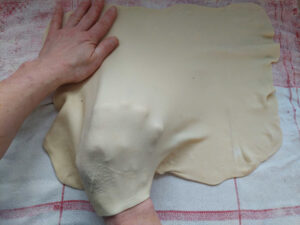
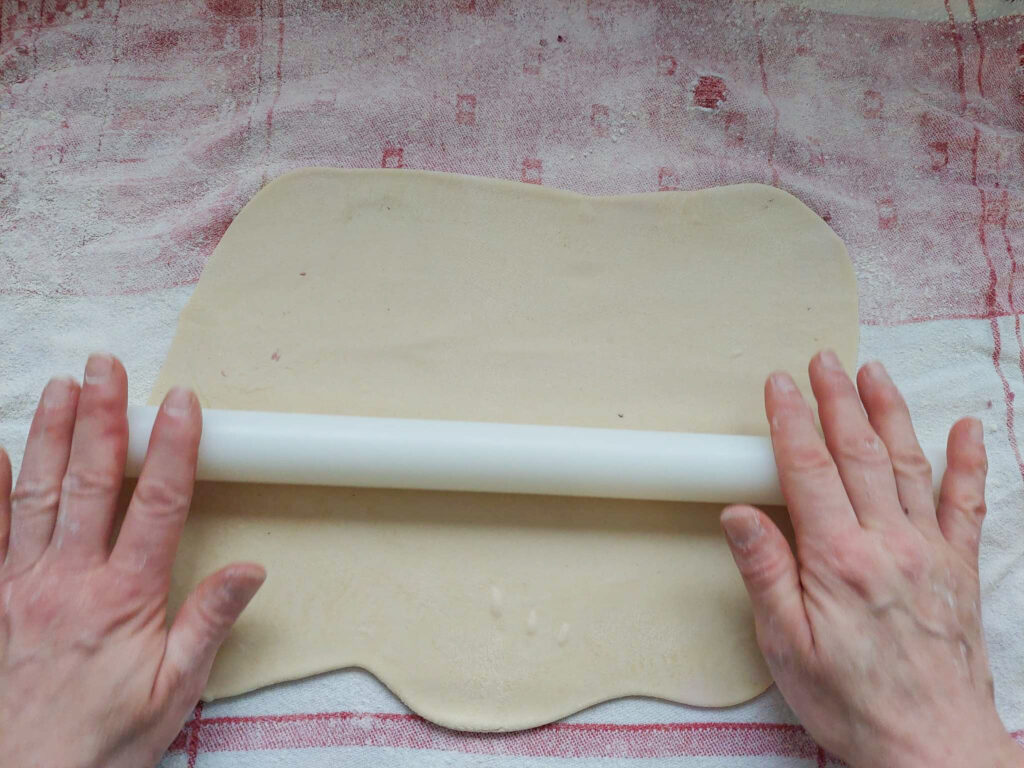
Dust a kitchen towel with some flour and roll out the strudel dough on it with a rolling pin. Now pull the dough with your hands to the desired size.
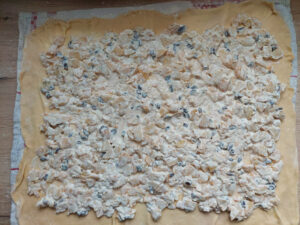
Spread the filling evenly across the whole dough but leave out about 2 cm (1 inch) from the edges.
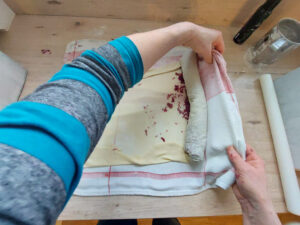
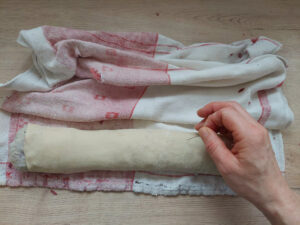
Fold the shorter edges in and roll the strudel with the help of the kitchen towel. Put the strudel either on a baking tray or in a roasting pan that is either covered with a baking tray or greased with butter, lard or tallow.
Brush the strudel with butter and egg yolk and bake it in the preheated oven for 45 minutes at 180 °C (350 °F) (no fan-oven).
Vanilla sauce
Ingredients:
1/2 l milk
1/2 vanilla pod
80 g sugar
2 tbsp cornstarch
2 eggs
Instructions:
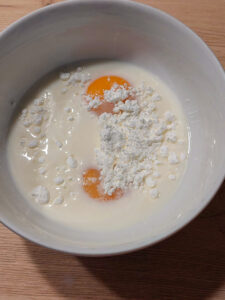
Separate the eggs and mix the egg yolks with sugar, corn starch and a bit of the milk to a homogenous mass.
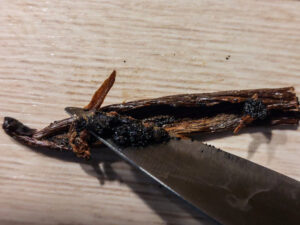
Cut the vanilla pod lengthwise in half, scrape off the seeds and put the seeds and the pod in a pot. Add the milk and put it to the boil.
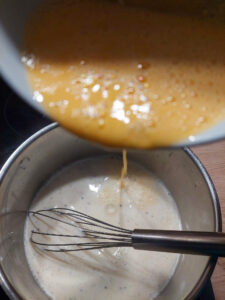
When the milk wells up, add the egg yolk mixture.
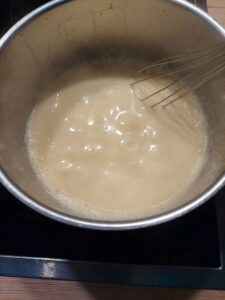
Stir it all well until the sauce thickens. Put the pot off of the plate.
While the sauce cools down, beat the egg whites and fold them into the (still hot) sauce.
Let it cool and stir once more before serving.
Cut this Authentic Bavarian apple strudel into slices and serve them with a huge dollop of vanilla sauce.
Variations
Finely grind the nuts or almonds and add them with 200 g cream cheese to the filling.
Bake the strudel in a deep roasting pan. Bring 120 ml milk, 25 g butter and 20 g sugar to the boil and add the mixture after 20 – 25 minutes of the baking time to the strudel. Let it bake until the strudel has soaked up all the milk (total baking time about 40 – 45 minutes).
If you don’t want to make vanilla sauce, you can serve the strudel with vanilla ice cream as well.
Authentic Bavarian Apple Strudel
Authentic Bavarian apple strudel is not only a main dish for autumn and winter but a year-round dessert that's best served with vanilla sauce.
Sieve the flour into a bowl, add the other ingredients and knead it all into a smooth dough. Brush the dough with oil, put it back in the bowl, cover that with cling film and let it rest for at least 30 minutes (the longer, the more elastic the dough gets).
If you use fresh apples, peel and core them and cut them into thin slices. Put them in a bowl and mix them with lemon juice to prevent them from browning. If you use dry-canned apples, just put them into the bowl.
Roast the nuts in a pan without fat until they are lightly brown. Immediately get them out of the pan and either grind them finely in a kitchen mixer or put them as they are (as chops or flakes) to the apples.
Add the raisins (if you like), sugar and cinnamon and mix it all well.
Dust a kitchen towel with some flour and roll out the strudel dough on it with a rolling pin. Now pull the dough with your hands to the desired size.
Spread the filling evenly across the whole dough but leave out about 2 cm (1 inch) from the edges.
Fold the shorter edges in and roll the strudel with the help of the kitchen towel. Put the strudel either on a baking tray or in a roasting pan that is either covered with a baking tray or greased with butter, lard or tallow.
Brush the strudel with butter and egg yolk and bake it in the preheated oven for 45 minutes at 180 °C (350 °F) (no fan-oven).
Vanilla sauce
While the strudel is baking, prepare the vanilla sauce:
Separate the eggs and mix the egg yolks with sugar, corn starch and a bit of the milk to a homogenous mass.
Cut the vanilla pod lengthwise in half, scrape off the seeds and put the seeds and the pod in a pot. Add the milk and put it to the boil.
When the milk wells up, add the egg yolk mixture.
Stir it all well until the sauce thickens. Put the pot off of the plate.
While the sauce cools down,beat the egg whites and fold them into the (still hot) sauce.
Let it cool and stir once more before serving.
When the apple strudel is baked, dust it with icing sugar, cut it into slices and serve it with a huge dollop of vanilla sauce.
Notes
Variations:
Finely grind the nuts or almonds and add them with 200 g cream cheese to the filling.
Bake the strudel in a deep roasting pan. Bring 120 ml milk, 25 g butter and 20 g sugar to the boil and add the mixture after 20 - 25 minutes of the baking time to the strudel. Let it bake until the strudel has soaked up all the milk (total baking time about 40 - 45 minutes).
If you don't want to make vanilla sauce, you can serve the strudel with vanilla ice cream as well.
Apple strudel is one of my favourite sweet dishes and although I’ve made lots of them myself and have eaten even more in restaurants and cafés, my mum’s apple strudel is still the best I’ve ever tasted. She always made two baking trays of strudel for our large family, plus two generous cans of vanilla sauce. What shall I say? There never were any leftovers! It tasted too good to leave a single crumb on the plate (especially for my brothers who always ate like there was no tomorrow).
When I tried to make my first strudel, it was, well, not a disaster but not a pretty sight either. The dough was too thick in some parts and so thin in others that it tore and had holes in it. It tasted good, however, and that kept me going. Since then I’ve gathered a lot of experience in making strudel dough and pulling it without tearing – although the occasional hole may form.
If you’ve ever wanted to make an apple strudel by yourself but have shrunk back from pulling the strudel dough, here’s your chance to learn how to do it. Some basic ingredients and a few knacks to observe are all you need for a delicious strudel dough for all kinds of fillings!
Strudel basics
What makes a strudel into a really good strudel?
A good strudel has a beautiful colour. It is usually golden yellow, but it can also be almost black, for example, when the dough is coloured with cocoa or sepia.
The outer layers should be crispy and the strudel should look good when cut into pieces.
Nevertheless, the most important thing about a strudel is the filling which may be sweet or savoury.
What kinds of strudel doughs are there and what do you use them for?
The classic strudel dough is a pulled dough which refers to the fact that you have to pull out the dough very thinly before you spread the filling on it. Pulled strudel dough is typically used for apple or vegetable strudel.
Other strudel doughs include for example puff pastry, shortcrust, yeast dough, curd cheese dough and even pancake dough.
In this post, we’re gonna learn to make a classic Bavarian and an Austrian pulled strudel dough.
Basic knowledge about pulled strudel dough
Most beginners are not afraid of the simple kneading of the dough but the “pulling” part. When pulled properly, the dough should be very thin (some say you should be able to read a newspaper through it) and it shouldn’t tear.
How do we manage that?
By mixing flour with water. The flour proteins (gluten) build a network with the water and form a rubber-like, elastic mass. This network enables us to pull the dough very thinly without tearing it. The longer the dough can rest, the better its capacity to be pulled. The dough should rest for at least half an hour, but it’s better to let it rest for 1 – 2 hours or even overnight in the fridge.
If you want to use the dough now, it still needs to rest for about 30 minutes but my mum always used to cover it with a hot metal bowl: she poured hot water into a metal bowl that was slightly smaller than the dough bowl opening, drained off the water and dried the bowl. Then she put the bowl upside down over the dough.
Ingredients like oil, vinegar and egg also enhance the dough’s elasticity.
It’s also important to knead the dough thoroughly as kneading intensifies the protein-water-reaction. When you work the dough for some time you’ll realize that it starts to feel elastic, smooth, even and not in the least sticky.
What flour should you use?
As you heard before, the proteins (= gluten) in the flour are important. The higher the protein content, the more elastic the dough.
Worldwide there are different flour types. What we in Germany know as “Type 550” (wheat flour) is the “all-purpose” flour in English-speaking countries. Flours of a higher type like bread flour or high-gluten flour are also suitable. The same goes for spelt flour.
No matter what flour you use, however, it’s important to observe the water-flour ratio. After kneading the dough should be smooth, elastic and a little bit moist but not sticky.
Storage
Strudel dough can be kept in the fridge for about 2 days. It may change its colour to a light grey but that’s quite normal and will lighten when kneaded. Always let the dough reach room temperature before processing it further.
You can even freeze raw strudel dough and let it thaw overnight before processing it.
If you want to freeze a whole (or parts of a) strudel, put the (raw or baked) strudel onto a tray with baking paper and put it into the freezer until it’s completely frozen. Afterwards, put it into a container or freezer bag.
How to fill a strudel
There are two different methods to fill a strudel.
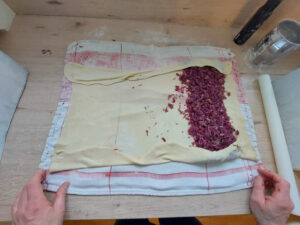
1) Put the filling on the first third of the dough
With this method, it’s important to have a thin strudel dough as you have several layers of it on the outside when it’s baked. If the dough were too thick, the outer layers would be hard and you couldn’t cut them well.
Always leave out the edges which will be folded inwards before rolling the strudel.
This method is recommended.
when you have a relatively moist and hardly compact filling
when the filling contains a good amount of eggs that will rise during baking
when you want to get more crispy strudel dough instead of only one layer
when you want to make sure that the strudel dough won’t tear
when you want to make an elegant strudel that can also be presented standing
when you want to use store-bought dough like filo, yufka or strudel dough. Brush each layer with melted butter before adding another dough leaf (not more than 4 – 6 leaves)
2) Put the filling on the whole dough
For this method, you can use thin and (even better) thicker doughs which stay more compact during baking and don’t tear as easily as thin doughs. If your filling contains eggs or beaten egg whites, the risk of tearing is higher during baking as the filling expands. Just make sure to roll the strudel not too tightly.
Sieve the flour into a bowl, add the other ingredients and knead it all into a smooth dough.
Brush the dough with oil, put it back into the bowl, cover the bowl with cling film and let the dough rest for at least 30 minutes, the longer the better. If you want to use it right away, cover it with a hotly rinsed and dried metal bowl for 30 minutes.
This dough is traditionally pulled very thinly.
Strudel dough – step-by-step instructions
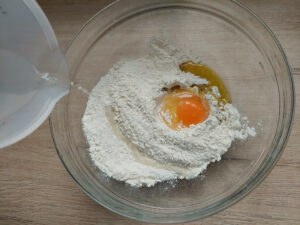
1. Put the flour, egg/vinegar, salt and oil into a bowl and add the lukewarm water
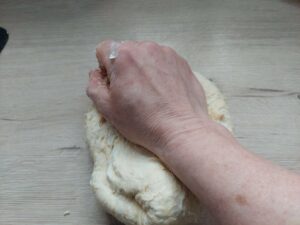
2. Mix the ingredients thoroughly and knead the dough…
3…. until it’s smooth. Form the dough into a ball, brush it with oil, put it back in the bowl that you cover with cling film. Let it rest for at least 30 minutes.
4. Dust a kitchen towel with flour and roll out the dough with a rolling pin.
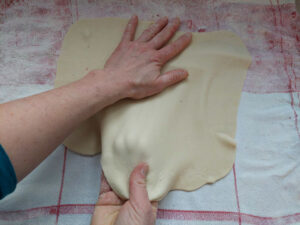
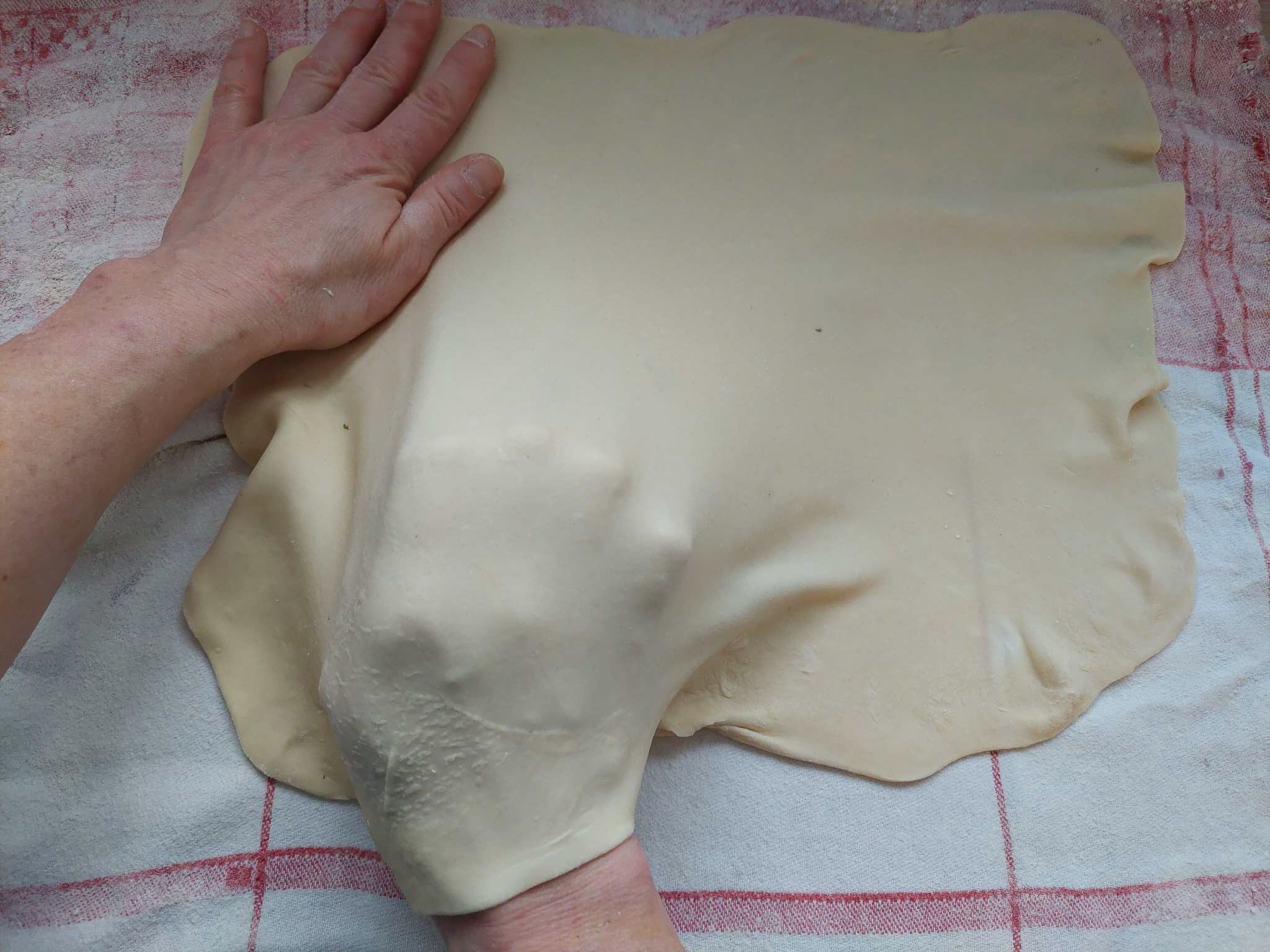
5. Start pulling the dough carefully at the edges with your fingers.
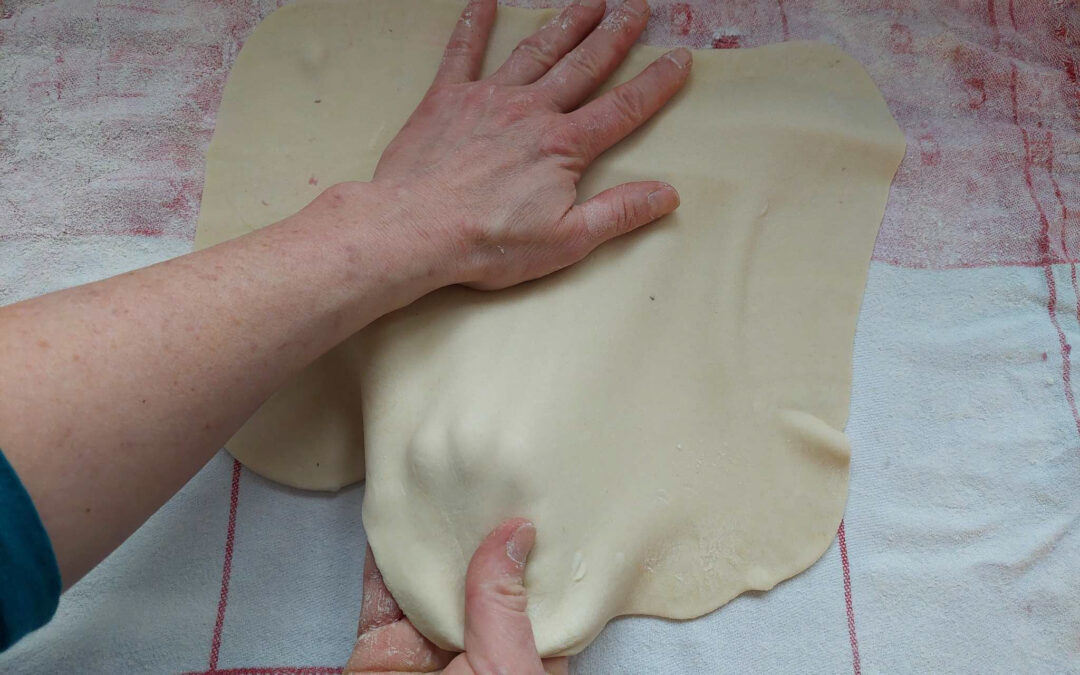
6. Pull the dough with the back of your hand while holding it with the other hand.
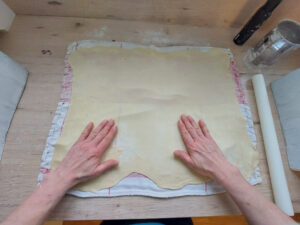
7. Pull the dough thinly into a rectangle. You should see slightly through it.
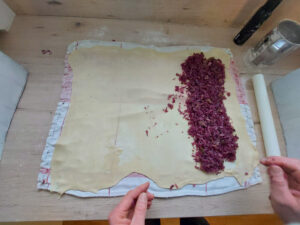
8. Either spread the filling on one-third of the dough…
9. … or across the whole dough. Leave out the edges.
10. No matter how you placed the filling, fold in the edges.
11. Gently roll the strudel with the help of the towel.
12. Prick the strudel with a pin so that moisture can evaporate during baking.
13. Bake the strudel at 180 °C (350 °F) for 35 – 45 minutes and let it cool down a bit before serving.
Bavarian Strudel Dough
This authentic Bavarian strudel dough recipe creates a delicate, paper-thin pastry that's both elastic and tender. When stretched correctly, this dough becomes nearly transparent—the hallmark of traditional strudel. Mastering this technique opens the door to countless sweet and savory fillings, from classic apple to savory meat variations.
Put the flour, egg/vinegar, salt and oil into a bowl and add the lukewarm water.
Mix the ingredients thoroughly and knead the dough until it's smooth.
Form the dough into a ball, brush it with oil and cover it with cling film. Let it rest for at least 30 minutes.
Dust a kitchen towel with flour and roll out the dough with a rolling pin.
Start pulling the dough carefully at the edges with your fingers.
Pull the dough with the back of your hand while holding it with the other hand.
Pull the dough thinly into a rectangle. You should see slightly through it.
Either spread the filling on one-third of the dough or across the whole dough. Leave the edges out.
No matter how you placed the filling, fold in the edges.
Gently roll the strudel with the help of the towel.
Prick the strudel with a pin so that moisture can evaporate during baking.
Bake the strudel at 180 °C (350 °F) for 35 - 45 minutes and let it cool down a bit before serving.
Tips and tricks for a perfect strudel
Dust the kitchen towel with flour before you roll the dough out with a rolling pin. Remove rings, bracelets, watches etc., they only cause holes. Always pull with the whole (back of the) hand and work slowly and relaxed.
Before rolling, fold in the short edges. That way no filling can spill.
Make sure that the seams of your strudel are tightly closed so that no filling gets out during baking.
If your filling contains eggs, it’ll rise during baking and will need more room. Don’t roll the strudel too tightly.
Prick the strudel with a pin before baking so that moisture can evaporate and the dough won’t tear.
If you brush the strudel with egg yolk before baking, it gets a beautiful colour and becomes crispy.
Brushing with olive oil or butter also makes the strudel crispy.
If the dough has become too hard after baking, cover the strudel with a cloth or brush it lightly with salt or sugar water and let it cool. It becomes softer.
Troubleshooting
The strudel dough is too moist.
The right ratio between flour and water is essential for a strudel dough which should be smooth and elastic, slightly moist but not sticky. If the dough is too moist, knead in some flour, a little at a time.
The strudel dough is too dry.
If the dough tears when kneaded, it usually is too dry. Wet your hands repeatedly when kneading and thus moisten up the dough.
What to do when strudel dough tears
You did everything right but your dough has torn nevertheless? The flour may be the reason. Flour is a natural product and the protein (gluten) content can vary.
However, it’s no drama if your dough has torn. That has happened (and still does) to everyone who has ever done a strudel. There are, however, a few things you can do:
1) Most tears and holes aren’t large. Just press the dough together with your fingers and close the hole.
2) Depending on where the holes have formed, you may not see them when the strudel has been rolled up. “Mending” won’t be necessary then.
3) If there are really many holes (think Swiss cheese) you could put the dough together, knead it through and try to pull it out again. Or you cut off parts of the edges and stick them onto the holes. You could even cut off dough strips and decorate the wrapped-up strudel creatively. Remember, the most important part of the strudel is the filling!
Making strudel dough is very easy and pulling it thinly without tearing is also not rocket science. If you’re a newbie to strudel making, I suggest starting with the Bavarian strudel dough as it needn’t be pulled out too thin and is more forgiving. Make sure that you observe each step and you’ll be on your way to becoming a strudel master before you can say “apple strudel”!
When my youngest son was in 7th grade, his school grades suddenly worsened and he became quieter and more introverted. At first, I thought it was probably normal, what with puberty and all, but one day he told me that he “didn’t get along with” (read: was bullied by) the boy sitting next to him. The moment he could change seats and get away from the bully, his grades got better and he was his usual easy-going self again. What applies to people is even more valid for plants. Some thrive in each other’s vicinity while others just can’t stand one other. The concept of considering these veggie loves when planning a garden is called Companion Planting.
But who to pair and who to separate? Whether you want to start gardening on a tiny balcony or in a large backyard, I’m about to introduce you to some plant partnerships that are practically guaranteed to work out. Better still, these aren’t high-maintenance vegetables but easy-going duos that’ll make you soon famous for your green thumb. I know, companion planting can feel overwhelming – even if you have already some experience – but I’ve discovered some foolproof combinations that just work!
Before we grab our garden gloves and head out, though, let’s see what companion planting is and why it works.
What is companion planting?
Companion planting is a gardening technique where different plant species are grown near each other for mutual benefit.
Think of it as playdates in your garden. Just like people, plants can be great friends who help and support each other in all sorts of ways.
Some share nutrients that they gather with their neighbours, others are great at sharing space, like offering a bit of shade on hot days or becoming a live trellis their friends can climb.
Others are the bodyguards of the patch and keep pests and diseases away from their pals. can be paired to help each other by repelling pests, attracting beneficial insects, providing nutrients, offering physical support, or creating beneficial growing conditions like shade or ground cover.
Getting Started: Essential Tips for Success
Pairing great vegetable couples alone, however, will not make your garden a success. There are a few preparations you have to take and recommendations you should observe.
Soil type
First of all, get to know your garden’s soil type and make arrangements to adjust it if necessary. Don’t worry, it’s easier than it sounds and you can look at how to do it here.
Soil preparation
Loosen the soil on your patch with a hoe, remove all the debris and weeds and rake it even. Work in some compost and/or well-matured manure to enhance the soils nutrient content. If you start from scratch, I’ll show you here the easiest way to build a new garden patch without digging.
If you plant in containers, make sure you use high-quality planting soil that’s suitable for vegetables.
Spacing guidelines
It’s tempting to plant too close and even seasoned gardeners make that mistake from time to time (yep, that would be me). But: your vegetables won’t thrive when they haven’t got enough space. At the back of your seed packages is usually a space guideline which you should observe!
Timing
Depending on your growing zone, planting and sowing can differ by weeks. The first step is to find out your growing zone (for example here) and then to watch nature and observe the weather forecast. You should realize when day frosts are over and when the last night frosts will happen.
Basic tools
Apart from soil, you need a few tools for gardening. A large garden fork is great for digging in compost and manure if you have patches. A hand trowel and hand cultivator are essential for both container and patch gardening.
A rake (large or hand-sized) helps you to get the soil even.
Buy a good watering can for watering specific plants and seedlings. If you use a hose, make sure it has an adjustable nozzle.
For your own protection, you’ll need gardening gloves and maybe a knee pad.
If you want to cultivate a backyard garden, a wheelbarrow is a useful investment for carrying compost, manure or other heavy things around. Additionally, a bucket comes in handy for smaller amounts of soil or weeds.
The 10 Surefire Companion Planting Pairs
Now that we know how companion planting works and how to prepare our beds and containers, Here are some foolproof companion planting pairs that are guaranteed to be a success! I’ll show you how they benefit from each other and give you tips for growing.
No 1: Tomatoes and Basil
Pest control: Basil can prevent pests like spider mites, white flies or aphids and thus protect tomato plants from them. The basil’s essential oils either confuse or repel these pests. On the other side, basil attracts ladybirds, the natural antagonist of for example aphids.
Normally, you harvest basil before it blooms, but as we want to attract beneficial insects, let at least some blossoms start to bloom. (Not sure how you can preserve herbs? Take a look over here.)
Use of space: Tomatoes grow high while basil stays relatively short. In combining these two, you can use your garden space optimally while at the same time making sure that the tomatoes can shadow the sensitive basil and thus protect it from too much direct sunlight which would burn its leaves.
Ground cover: On the other side, basil covers the soil and prevents evaporation. This leads to constantly moist soil which is beneficial for the tomatoes.
Soil improvement: Basil loosens the soil with its shallow and well-branched roots and enables oxygen to get into the soil. Its structure supports the creation of a good microclimate around the tomatoes, strengthening their vitality and enhancing the harvest
Taste enhancement: Many gardeners have experienced that basil enhances the taste of tomatoes – not only on the plate but also when planted together.
Planting and growing tips
You can start growing tomatoes and basil indoors by sowing them about 6 weeks before you can plant them out which is after the last night frosts. When this will be depends on the zone you live in. (Not sure what your growing zone is? This page will help you find out). If you have a greenhouse, you can plant them out a few weeks earlier.
Basil grows best in a bit of shadow which the tomatoes easily provide. Both plants like it warm and protected from wind and rain.
Tomato plants need about 60 cm (25 inches) distance from each other, bush varieties about 40 cm (15 inches). Plant the basil between or around the tomatoes but not too close so that the leaves of both plants won’t touch.
If you plant in containers make sure they are large enough. A diameter of 30 cm (12 inches) is the minimum.
No 2: Carrots and Onions
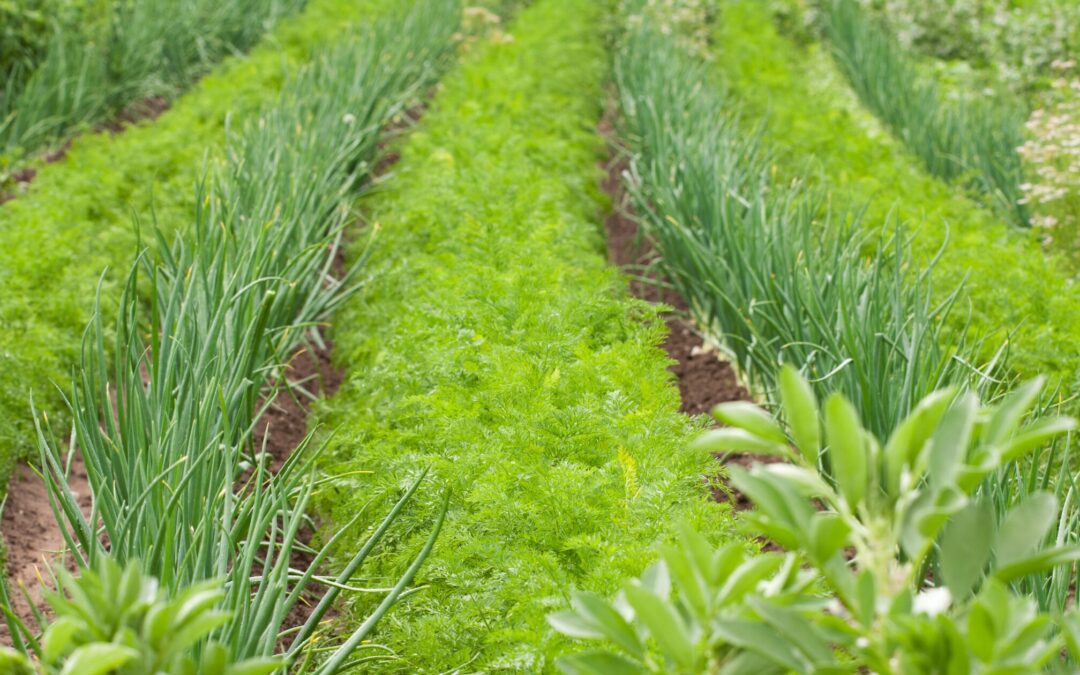
Pest control: Carrots keep the onion fly away while onions deter the carrot fly. Both plants absorb a scent that repels the pests.
Use of space: As carrots have deep roots and onions shallow ones, the combination of both guarantees an optimal use of gardening space. Besides, both plants get their water and nutrients from different zones of the soil and don’t compete.
Planting and growing tips
Loosen the soil with a digging fork before you sow and plant. This will make sure that the carrots can grow easily into the depth and build long straight roots.
Sow carrots and plant onions after the last day frosts and when the soil has warmed up. In my zone 7b this is around the beginning to mid-April. As carrots may need it a bit warmer, you can also plant the onions first and sow the carrots later when the soil has turned warmer. Make sure to keep enough space between the onion rows, so that there’s plenty of room for the carrots.
Carrots take their time to grow leaves which makes it hard to weed during the first weeks. To make it easier, mark the rows of carrots when you sow, either with a plant sticker or by sowing radishes between the carrots. They grow very fast and indicate soon where the rows are.
No 3: Cucumbers and Nasturtiums
Pest control: Nasturtiums attract pests like aphids, white flies and squash bugs, thus acting like a trap and keeping the cucumbers relatively pest-free. In particular, nasturtium confuses and deters cucumber beetles, which are a major pest for cucumber plants. Additionally, nasturtium help deter soil nematodes.
With their beautiful flowers nasturtium attracts bees, butterflies and other pollinators. This can lead to higher fruit yield and a better harvest.
Use of space: Cucumbers are known to be avid climbers and grow on trellises. As nasturtiums grow low, they can be cultivated between the cucumber plants to optimally use the space.
Ground cover: Nasturtiums cover the ground between the cucumbers and shadow their roots. That way, they also prevent evaporation and help retain moisture in the soil. As cucumbers like moist soil, this is a great combination. Additionally, it prevents weed growth and keeps the soil cool.
Soil improvement: Nasturtiums also loosen the soil due to their root structure and that way enable oxygen to reach the cucumbers’ roots.
Taste enhancement: Nasturtium is said to improve the taste of cucumbers.
Edible flower bonus: If all that hasn’t convinced you, this is the absolute bonus: nasturtium not only looks pretty, its flowers (and leaves) are also edible and pimp every salad or the occasional pasta dish. If that’s no reason to grow nasturtium, I don’t know what is.
Planting and growing tips
Pre-cultivate cucumbers and nasturtium indoors by sowing them about 4 – 6 weeks before the last night frosts. Both like it warm and sunny and should not be planted out before it’s really warm enough.
No 4: Lettuce and Marigolds (tagetes)
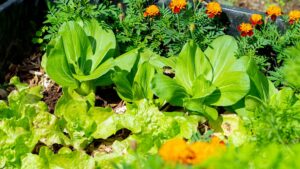
Pest protection: Marigolds are the SWAT team of pest protectors! Their strong sent, for example, repels aphids while secretions of their roots kill soil nematodes. At the same time, they deter leaf-eating pests from the salad and build a barrier against common garden pests like snails. If that’s not high-level natural pest control, I don’t know what is!
Soil improvement: Marigolds improve the soil structure with their robust root system which enables oxygen to get into the soil where it’s also beneficial for the lettuce.
It also provides organic material, for example when spent blooms fall off and decompose.
Ground cover: Both plants provide good ground cover for each other which makes the soil stay moist but also prevents weeds from growing.
Edible flower bonus: Some marigold varieties have edible flowers, for example tagetes lemmonii, tenuifolia and minuta
Planting and growing tips
The best way to plant marigolds and lettuce together is to cultivate a marigold border around salad patches. Plant the marigolds with a distance of 20 – 30 cm (8 – 12 inches). If you have a large lettuce patch, plant the occasional marigold between the lettuce.
No 5: Beans, Corn and Pumpkin
The trio of beans, corn and pumpkin is called the “Three Sisters”, a famous companion planting scheme from native Americans. They are cultivated together for the following benefits:
Structural support: Beans in this case means climbing beans. The corn stems provide a sturdy structure for the beans to climb up.
Use of space: Corn and beans grow high while pumpkin spreads along the ground which makes that the perfect example of an optimal use of space.
Soil improvement: Beans are nitrogen-collectors which means that they gather nitrogen from the air and store it in their roots where the corn and pumpkin benefit from it. (Read more about plant nutrients here.) When the beans are harvested, cut them off above the ground and leave the roots there. That way, the nitrogen stays in the soil.
Ground cover: The spreading pumpkin provides a great ground cover, thus retaining moisture and preventing weeds from growing.
Planting and growing tips
Make sure to choose the right varieties of beans and corn. Use mid to low-growing beans and strong-growing corn, otherwise, the beans will crush the corn stems.
It has also proven advantageous to choose coloured beans which makes it simpler to find them later in the thicket of the patch.
Sow corn about two weeks before the last night frosts (in zone 7b that’s the beginning of May) with a distance of 40 cm (16 inches) between plants and 60 – 80 cm (24 – 32 inches) between rows. Sow up to 3 beans around each corn and plant pumpkin between the rows with a distance of 2 m (6.5 feet) between the pumpkin plants.
You can even cultivate the “Three Sisters” small-scale in a container. Choose one with a diameter of at least 50 cm (20 inches), plant low-growing corn in the middle, 3 – 4 bush (!) beans at the container edge and between corn and beans one small pumpkin variety.
No 6: Radishes and Spinach
Pest control: Spinach’s strong scent can help repel certain insects, while radishes deter leave-eating pests.
Use of space: Radishes have deep roots and spinach develops shallow roots. That, in addition to them having similar requests regarding watering, makes those two vegetables a great example of how to use space efficiently.
Ground cover: Spinach covers the ground well with its large leaves and thus keeps the soil moist and prevents weeds.
Soil improvement: Furthermore, radishes help loosen the soil with their deep roots and thus support the more complex root system of spinach.
Planting and growing tips
Both, radishes and spinach can be sowed throughout the growth season, just make sure to pick the right varieties. You can start sowing spinach and radishes early in the year, in fact, after the last day frosts (here around that’s beginning to mid-April). Due to their relatively short growing time, both can be used as a gap filler or preparatory cultivation for plants that take a longer time to grow. There are also summer varieties which tolerate heat and, when sown every 6 – 8 weeks, ensure a continuous harvest from spring to autumn.
Radishes can be harvested after 3 – 5 weeks so that they won’t compete with spinach for nutrients.
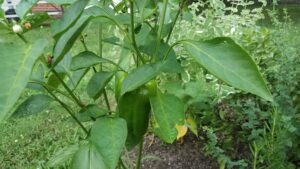
No 7: Peppers and Oregano
Pest control: Oregano releases a scent that repels certain pests like aphids, spider mites and other pepper-loving bugs. The scent can be so strong that it covers up the peppers’ scent so that pests can’t detect them.
Ground cover: Oregano, planted between and around peppers is a great ground cover which suppresses weeds and retains moisture in the soil. It also keeps the soil’s temperature stable and reduces soil splashing onto the pepper leaves during rain or watering, which minimises the risk of soil-borne diseases.
Flavour enhancement: Some gardeners report that oregano planted with peppers enhances their flavour. I personally haven’t had the same experience but maybe my taste buds aren’t refined enough 😊. Try it out and let me know what you think!
Planting and growing tips
Peppers and oregano enjoy the same sunny conditions and well-drained soil. But while peppers grow fast and vertical, oregano grows slower and stays more compact, thus building a good ground cover (see above). Both plants have different root depths and get their nutrients and water from different soil zones which means they don’t compete.
No 8: Zucchini and Nasturtiums
Zucchini and cucumbers are both members of the gourd family or Cucurbitaceae. Knowing that, it’s no wonder that zucchini, like cucumbers, pair well with nasturtiums.
Pest control: As described above, nasturtiums attract pests like aphids, white flies and squash bugs, keeping zucchini pest-free. Additionally, nasturtium helps deter soil nematodes.
Pollination benefits: Nasturtium with its large, beautiful flowers attracts bees, butterflies and other pollinators. This can lead to higher fruit yield and a better harvest.
Ground cover: Most gardeners know zucchini only as growing spaciously on the ground, but if you grow them vertically by binding them to a stick (yes, just like tomatoes), you not only save space but also keep the zucchini healthier. Nasturtium then works as a ground cover that keeps the soil moist and prevents weeds.
Planting and growing tips
Pre-cultivate zucchini and nasturtium indoors by sowing them about 4 – 6 weeks before the last night frosts. Both like it warm and sunny and should not be planted out before it’s really warm enough.
No 9: Peas and Carrots
Use of space: The carrot tops are relatively sparse, allowing the pea vines to grow upwards. This vertical growth pattern allows you to grow more food in a smaller space.
Soil improvement: Peas (like beans) are nitrogen collectors; that means they gather nitrogen out of the air and store it in their roots where it’s partially available for the carrots. When the peas are harvested, cut them off shortly above the ground and leave their roots in the soil. That way, the nitrogen stored in their roots enhances the soil.
Peas have shallow roots whereas carrots develop deep taproots that go well into the ground. That way, both plants get their water and nutrients from different soil zones and don’t compete with one another.
Planting and growing tips
Peas are cool-season crops that can be planted early and carrots can either be sowed at the same time or slightly afterwards. By the time the carrots need more space for their roots, the peas will most likely be harvested and can be cut off. If you leave their roots in the ground, the carrots can access the nitrogen that’s stored in there.
No 10: Cabbage and Dill
Pest control: The strong scent that we love about dill, deters pests like cabbage white butterfly and aphids. Additionally, dill attracts insects like ladybugs, wasps and hoverflies that prey on cabbage pests.
Use of space: Dill grows upright and airy whereas cabbage shows a spreading form. Also, the root systems of those two don’t compete regarding water and nutrients as dill has shallow roots and cabbage has deep roots. That way, both plants can be cultivated well together, using garden space optimally.
Flavour enhancement: Some gardener’s say they perceive a flavour enhancement in cabbage when planted together with dill. I’d say, it’s worth a try!
Planting and growing tips
Both plants can be grown during the same seasons but dill grows a good deal faster than cabbage which allows for continuous garden use. When dill goes to seed, it can self-sow for the next season while cabbage continues growing.
Common Mistakes to Avoid
Companion planting is a great method to enhance your garden’s productivity but there are still some rules to observe. Here are some of the mistakes you should avoid:
Overcrowding
Even seasoned gardeners sometimes make this common mistake: planting companions too close together. Please bear in mind that all plants need their proper space for root growth and air circulation. By planting too close, you increase the risk of diseases and competition for resources instead of diminishing them.
Incompatible combinations
Make sure you know which plants get along well and which don’t. As described above, some plants inhibit growth in other plants. When you plant antagonists together, you needn’t wonder why your veggies don’t thrive.
Timing errors
Consider how long different vegetables need to be harvested. Some have a very short cultivation time (for example radishes), others are practically the whole season on the patch (cabbage). Use short-seasoned plants to fill the space until those who stay longer need more room.
However, it’s no good to combine vegetables with different plant windows. None of them will thrive.
Sunlight requirements
Sun lovers will become straggly in the shadow and the sun sensitives will get sunburnt in the blazing sun. Always plant veggies with similar sunlight requirements together. Also, take into consideration the shadow plants will cast on each other once they reach their final height.
Companion Planting – It’s worth the effort!
Companion planting can be a bit intimidating at first but you can make so much more of your patch if you bear in mind which pairs are love matches and which want to go at each other’s throats.
Whether you’re teaming up tomatoes and basil or letting beans and corn support each other, these combinations are practically guaranteed to succeed. Think of it as playing cupid with veggies – and these couples are definitely a match!
Still overwhelmed? There’s no need to put all the above into practice at once. Start slow and just try one or two of these tried-and-true pairs, watch them thrive together and before you know it, you’ll also be infected with the “garden bug” and want to try out more!
Now get out there, grab your garden gloves and a shovel and let these plant pals work their magic in your garden!🌱
Did you know that over 67% of households started gardening during recent years? As you’ve found this article, I gather you’re a newbie, too, and you’re finally ready to start growing your own food. That’s wonderful! And don’t you let yourself become anxious that you might kill your plants. I’ve got you covered: because there are some vegetables that are practically begging to grow, no matter how brown your thumb might be. 2025 is your year to leave all doubts behind and finally develop that green thumb. Whether you have a spacious backyard or just a few containers on your patio or balcony, these 11 easy vegetables for beginners are practically guaranteed to thrive with minimal gardening experience. From fast-growing radishes to foolproof tomatoes, I’ll show you exactly what to plant for a successful first harvest. Let’s dig in! (Pun absolutely intended 😉)
What are “beginner-friendly” vegetables?
What makes a vegetable easy for beginners?
One criterion, for example is that they are robust against diseases and have a high germination capacity (that means, seeds grow easily) .
Furthermore, they must be easy in their demands on the soil, temperature and watering. Even in conditions that are not ideal, they can grow successfully. For that reason, maintenance requirements are comparatively low.
A furhter indicator is that beginner-friendly vegetables often have a rapid growth cycle. That means that you can harvest them after a relatively short growing time.
Easy vegetables for beginners
The following vegetables are easy to grow and thus great for beginners.
#1: Radishes – the perfect beginner’s vegetable
Sowing: When the soil’s no longer frozen Harvesting: 4 – 6 weeks after sowing Pot size: small; a balcony container is sufficient
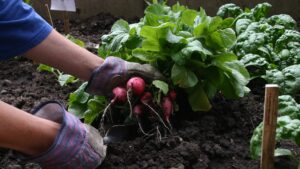
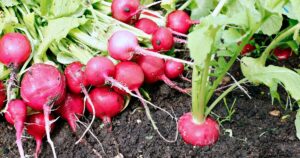
Radishes were the first vegetables my mum let me grow when I was just a toddler. That said, radishes will work for anyone and everyone who has a patch of soil – be it in a garden, a pot or a container. They have very few requirements on the soil and you can harvest them already after 4 – 6 weeks!
Depending on your growing zone, you can start to sow radishes outside after the last days of frost. In my region (7b) that’s beginning to mid-April. If you have a greenhouse or a cold frame, you can start even earlier.
Prepare the soil and make rows with the stick of your rake or the side of your hand. Sow the seeds 1 cm (1/2 inch) into the row with a distance of 3 – 5 cm (1 – 2 inches). The distance between rows should be about 10 – 15 cm (4 – 6 inches). Cover the seeds with soil, water them and let nature do its magic.
When your radishes are about the size of a large cherry, they’re ready to harvest. If you leave them too long in the ground, they’ll become woody in texture.
You can continually sow radishes until September, which makes them a great gap filler. They grow very well in balcony containers.
Pro tip: When you’ve sowed too tight, plug out all the seedlings that are too close to one another. When they’ve too little room, they won’t build out bulbs.
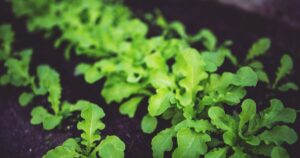
#2: Rocket salad – an easy green
Sowing: early spring to early autumn Harvesting: 4 – 6 weeks after sowing, multiple times Pot size: small; a balcony container is sufficient
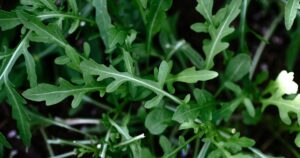
Rocket salad grows similarly fast and easy as radishes. It’s a great salad and addition to pizza and pasta.
Sow rocket salad at around the same time you sow radishes and also in rows. Sow the seeds 1 cm (1/2 inch) deep and keep a distance between rows of 15 – 20 cm (6 – 8 inches).
If you sow in spring, cover the rows with a garden mesh to keep the seeds warm. After about 6 weeks (depending on the temperature), you can harvest your first rocket salad by breaking off the leaves you want to eat.
You can also sow rocket salad continually until September. It also grows well in balcony containers.
Pro tip: Sooner or later rocket salad will shoot into bloom. At that stage, it won’t taste that good any longer. Cut off all the leaves at about 5 cm above the soil and it’ll soon build out new leaves.
#3: Sweet Peas – a must-have for a beginner’s vegetable garden
Sowing: early spring to early summer Harvesting: 6 – 8 weeks after sowing Pot size: You can sow sweet peas in a balcony container (one row per container) but you have to build some kind of stable support for the plants like twigs. Otherwise, the wind will snap them.
Sweet peas are one of my favourite veggies and usually, I snack them right from the stem! And the best thing is they’re terribly easy to grow.
Sowing time is after the last day frosts.
Prepare the soil and mark two rows with a distance of about 20 (8 inches) in between. Sow a pea seed every 3 – 4 cm (1 – 2 inches) and cover the seeds 4 – 5 cm (1.5 – 2 inches) with soil.
Peas grow to a height of up to 50 – 60 cm. For that reason, it is advisable (but not absolutely necessary) to build a trellis of wire or twigs to support the peas.
Also, protect the peas from birds during the first few weeks of growth with a protective net.
After about three months, the sweet peas are ripe for harvesting. Pluck off the peas when they’re still flat so that they’ll continue to bloom and build new peas.
Pro tip: Peas don’t like beans. If you want to grow beans as well, make sure that you don’t plant them next to peas.
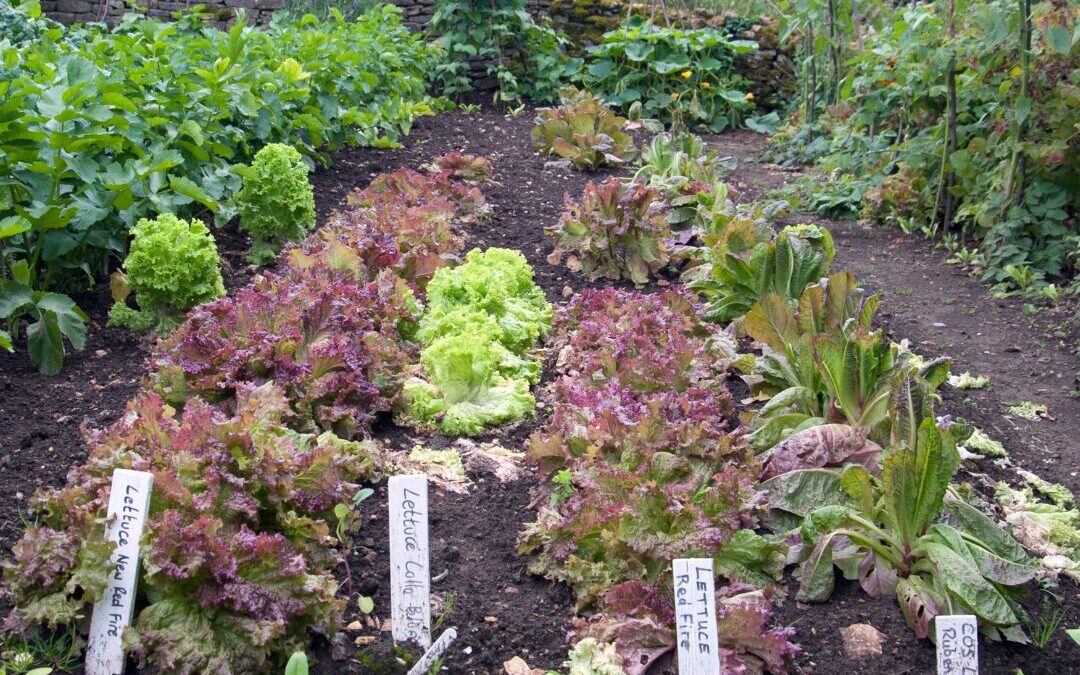
#4: Lettuce – easy to grow and so many varieties!
Sowing/planting: Depending on the variety early spring to early autumn Harvesting: 6 – 10 weeks after sowing, in case of pluck salad multiple times Pot size: A balcony container is sufficient for pluck salad; if you want to grow head salad in pots they should at least be as large as the ready-to- harvest head will be.
Lettuce comes in almost all colours and forms. There are green, red and purple varieties, some even with lovely speckles. Some lettuces build out round or elongated “heads”, others consist of loose leaves or rosettes. When you plan wisely, you can grow salad all year round, because some varieties like for example, radicchio unfold their full flavour not until it’s cold.
Lettuce grows quite fast which makes it a perfect gap filler.
The easiest lettuce to cultivate is pluck salad which you sow directly into your patch or container around the same time as radishes. Cover the seeds only very lightly with soil or just press them into the soil without covering them at all. If you just pluck the leaves without damaging the plant’s heart, it will continue to grow leaves for harvesting.
Head lettuce takes a bit more time and space to grow and you have to make sure that the varieties you sow or plant are appropriate for your climate. Head lettuce itself, for example, doesn’t like temperatures above 22°C (100 °F). In summer, therefore, it’s better to plant iceberg lettuce.
Pro tip: If you use seedlings, don’t plant them too deep. They must “wave in the wind”, otherwise they won’t build out heads.
#5: Swiss chard – an easy vegetable with a long harvesting time
Sowing: early spring to late summer Harvesting: 10 – 12 weeks after sowing, multiple times Pot size: The pot should be at least 20 cm high
In my opinion, Swiss chard is the prettiest vegetable ever. It comes in different colours (yellow, orange, red and green) and looks good even in a flower bed. It doesn’t need much regarding nutrients and maintenance and it’s well resistant to pests.
Sow Swiss chard when the temperature is above 15 °C (75 °F) during the day. Sow in rows with a distance of 15 – 20 cm (6 – 8 inches) between plants and about 30 cm (12 inches) between rows. Cover the seeds about 3 cm (1.3 inches) with soil.
After 10 – 12 weeks, you can harvest the stalks and leaves of Swiss chard. Make sure that you leave the plant’s heart intact. That way you can harvest until the first frost.
Pro tip: Swiss chard is closely related to spinach and beetroots which means they need about the same nutrients. To avoid competence, don’t plant these vegetables near each other.
#6: Beetroot – an underrated vegetable for beginners
Sowing: mid to late spring Harvesting: about 6 – 8 weeks after sowing; leave it longer if you want to get larger plants Pot size: The pot should be at least 20 cm high
Beetroot is the jack of all trades in the vegetable world. They come in different colours (even striped varieties) and can be eaten raw, roasted or cooked. They can be stored in sand during the winter months and are also easily preserved.
Beetroot grows best at temperatures around 16 °C (60 °F) which means that we either sow it in spring or later at the beginning of autumn.
Sow beetroots in rows with a distance of 15 cm (6 inches) between plants and 25 cm (10 inches) between rows.
Beetroots can be harvested when they’re about the size of a golf ball, but you can also let them grow.
Pro tip: When harvesting, twist off the leaves. That way, the beetroots don’t dry out so fast and can be stored for a longer time.
#7: Bush beans – easy to grow and a rewarding harvest
Sowing: Late spring / early summer Harvesting: 6 – 10 weeks after sowing Pot size: You can grow bush beans in a balcony container but you must build a stable support for the plants, like twigs. Otherwise, the wind will snap them.
We differ between bush beans and climbing beans. The latter are more difficult to cultivate but bush beans are a great beginners’ vegetable.
Country lores tell us that beans want to hear the bells ring and that they are best planted barefoot. And it’s true! Beans shouldn’t be planted too deep, not more than 2 – 3 cm (about 1 inch) and when the soil is sufficiently warm to walk barefoot. In my region, that’s about the beginning of May.
Either sow bush beans in rows with a distance of 5 cm (2 inches) between plants and 20 cm (8 inches) between rows or sow them in groups of 6 seeds with a distance of 30 – 40 cm (12 – 16 inches) between groups. Sowing in groups has the advantage that the plants support each other. Nevertheless, as long as the variety doesn’t exceed a height of 25 cm (10 inches), I prefer sowing in rows.
After sowing and watering you needn’t do anything. Bush beans are very modest and don’t need much to grow. On the contrary, they even enrich the soil with nitrogen they catch out of the air and store in their roots.
Pro tip: Harvest regularly. The more often you harvest, the more beans you’ll grow.
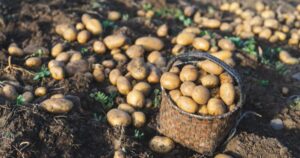
#8: Potatoes – an easy vegetable for beginners with a magic harvest
Planting: late spring Harvesting: depending on the variety 10 – 24 weeks after planting Pot size: Take a large pot of at least 50 cm (20 inches) in diameter or a sturdy sack.
To cultivate potatoes, you only need some space and time.
Give potatoes a headstart by presprouting them: about 4 weeks before planting, put the planting potatoes on a window sill (this is best done in an egg carton) and let them sprout. You can plant the potatoes about 3 – 4 weeks before the last night frosts.
Dig a hole 10 cm deep into the soil, place a potato with the sprout facing upwards in and carefully cover it with soil. When the leaves are about 15 cm high, earth them up by raking soil from around the plant and accumulating it around the leaves (don’t bury them; the green must still be visible).
Potatoes are also suitable for growing in pots. Put a drainage into a large pot, add about 20 cm (8 inches) of good, rich soil into it, put about 4 – 6 potatoes onto it (depending on the pot size) and cover it with 10 cm (4 inches) of soil. As the leaves grow, earth them up as described above.
Potatoes are ready to harvest when the leaves have died.
Pro tip: Earthing up not only supports the growth of more potatoes but it also protects them from the sun. If exposed to light, the potatoes will turn green and as a consequence won’t be edible.
#9: Bush tomatoes – the easiest of their kind
Sowing (indoors): 6 – 8 weeks before planting out Planting (outdoors): after the last night frosts Harvesting: 8 – 10 weeks after planting, continually until the first frost Pot size: Depending on the variety from a balcony container to a large pot of at least 50 cm (20 inches) in diameter.
Admittedly, tomatoes are usually not considered a beginner-friendly vegetable. They have very special requirements regarding nutrients, temperature and watering and can be a bit tricky to cultivate. However, bush tomatoes are more forgiving than the larger varieties! They don’t need to be pruned or tied up and even grow in large pots.
As a beginner, I recommend buying plants from a good nursery. Prepare the soil by working in compost and/or manure to provide enough nutrients. After the last night frosts (in my zone that’s mid-May), you can plant the tomatoes outdoors, either into your garden patch or even into a large pot. Make sure they have enough water, especially when they grow in pots. (If you don’t know your hardiness zone, check out the “plantmaps” website.)
Bush tomatoes produce abundantly all summer long, providing you with loads of little fruit for a salad or just as a snack.
Pro tip: Tomatoes are very hungry: add some liquid fertilizer every 4 weeks to give them everything they need.
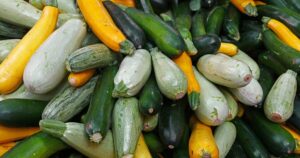
#10: Zucchini / Summer squash – more than you can eat
Sowing (indoors): 4 – 6 weeks before planting out Planting (outdoors): after the last night frosts Harvesting: 8 – 10 weeks after planting Pot size: The pot should be at least 50 cm (20 inches) in diameter
There’s hardly any vegetable that produces reliably so many fruits as a zucchini. 2 – 3 plants can easily feed a family of four, with plenty to spare for preservation. Zucchini can be eaten raw or cooked, even the blossoms are edible.
Summer squash is very easily grown from seeds. However, as the plant likes it warm, you’d best start them indoors. Zucchini grow very fast which is why I recommend sowing them around 4 – 6 weeks before the last night frosts. In my region, night frosts are usually over by mid-May, which means I sow the seeds indoors at the beginning of April.
When the plant has four leaves and night frosts are definitely over, you can plant it out into the garden patch or a large enough pot.
Zucchini need nutritious soil and some fertilising every four weeks or so. As a beginner, it’s best to use a ready-made liquid fertiliser for fruit-bearing vegetables which is normally made of organic manures. If you want to know more about fertilisation you can read about it here, here and here.
Pro tip: Harvest zucchini when they are between 15 – 20 cm (6 – 8 inches). They taste best at that size and continual harvest will produce an abundance of new fruit.
#11: Kale – the easy-to-grow superfood
Sowing: March (indoors), after the last night frosts (outdoors) Harvesting: August to October. If you harvest only the outer leaves you stimulate growth and harvest yield. That way you can harvest throughout winter. Pot size: Take a large pot of at least 50 cm (20 inches) in diameter.
Kale is not only a superfood due to its high vitamin content but also very easy to grow, even in containers.
Further, it’s frost-hardy which makes it great for early and late cultivation. You can even harvest it in winter when nothing else grows outside.
Kale is a hungry plant, however, which means that you must enrich the soil with nutrients, for example by digging in compost or well-rotted manure. Additionally, it needs further nutrients during the summer which can be done by watering it with diluted nettle manure.
Sow kale in rows at a distance of 50 cm (20 inches) between plants and rows.
Pro tip: Although frost is not necessary, light frost and sunshine stimulate the storing of sugar in the leaves which makes them even better.
Essential Growing Tips for Beginner Vegetable Gardeners
The next step on your way to cultivating vegetables is to remove all weeds, grass patches, rocks and debris from your patch. That way your vegetables won’t have to compete for nutrients, light and water
It’s good to incorporate compost, well-rotted manure or other organic matter into your soil. This not only adds nutrients and enhances water retention but it also improves the soil structure. Add 5 – 8 cm (2 – 3 inches) of organic matter and mix it thoroughly into the soil.
If you plant in a pot, make sure you have high-quality planting soil with all the nutrients vegetables need. Ask your local nursery what soil is best for your plans.
After planting, add a layer of mulch – yes, in pots as well. This will suppress weeds and retain moisture while at the same time regulating the soil temperature. Over time, the mulch will decompose and that way add more organic matter to the soil.
Watering techniques
After sowing or planting always water the seeds or plants thoroughly. That way, the soil is pressed close to the seed or roots without any space in between. The plants can grow easily into the soil and get water and nutrients from it without effort.
As we mulch, our plants needn’t be watered very often. Unfortunately, most beginner gardeners water way too much, sometimes even drowning their plants! Watch your vegetables and only water them when they show clear signs of a lack of water.
Watering is best done either in the mornings or in the evenings, never when the sun is blazing down. Imagine you take a sunbath and suddenly someone drowns you in cold water. That’s how your plants will feel if you water them during a hot day.
When you water, water deeply. Instead of regularly watering shallowly, water once but deeply. The water should go down all the way to the roots which in some cases can be pretty long.
If you want to invest a little, you can buy drip irrigation and water hose systems. These are the most efficient watering methods. They deliver water directly to the plant’s root zone, minimize water waste, and keep foliage dry. Drip systems can be set on timers for consistent, precise watering and are especially useful for larger gardens.
Sunlight requirements
Vegetables need light to grow, some more than others, but they all need it. Take therefore the sunniest part of your garden to create your vegetable garden, build a raised bed or put your pots. Make sure there are no large trees, buildings etc. that would throw a shadow onto your plants.
Pest management strategies
Better to hear the hard truth right now: there is no garden without pests! BUT: although we don’t want to share our veggies with them we should focus on using the least intervening methods first. The goal is to create a healthy, self-regulating environment in your garden and prevent pests rather than eliminating them with hard chemicals.
An easy but often overlooked approach is to build physical barriers. Install snail barriers and use garden mesh to protect your plants. Additionally, gather snails and harmful caterpillars and dispose of them far away from your garden.
A good step towards regulation is companion planting, which means planting together vegetables that help keep pests away from each other. A good example of that concept is planting onions and carrots together. Onions secrete an odour that keeps the carrot fly (a common pest for carrots) away while the carrots prevent onion flies from attacking the onions.
Fertilization fundamentals
As you know, plants need “food” which they take up with their roots from the soil. However, the nutrients in the soil are not always enough which is why we need to “feed” (= fertilise) them. Every kind of vegetable needs a mix of key nutrients for root growth, healthy leaves and overall plant strength. The key to success lies in the ground – literally. A simple soil test will tell you what your garden needs.
It’s always a good idea to work in compost or well-rotted manure before planting in spring. These methods will slowly release nutrients and improve soil structure. Depending on the plants’ requirements, however, you’ll have to add nutrients at different stages of growth. Be careful though to not overdo it. Much does not help much here.
Container-Friendly Vegetables for Small Spaces
If you don’t have a garden but maybe only a patio, balcony or concrete backyard, you can grow all of the above vegetables in containers. Container gardening is slightly different from regular gardening but with a bit of preparation, both are equally easy.
Soil and pot selection
If in doubt always take the larger pot. There’s nothing more frustrating than watching plants grow and then stagnate or even die before you can harvest anything, just because their roots don’t have enough space in their container.
The second important factor is the soil. Although it’s more expensive, use high-quality, nutrient-rich soil for your containers. You can use ready-mixed vegetable soil or compost. Especially fruit-bearing vegetables like zucchini or tomatoes need plenty of nutrients to keep them going during their long growth period.
Sunlight and watering requirements
All vegetables need sun but some more than others. Fruit-bearing vegetables like tomatoes, zucchini and potatoes prefer a place with many sun hours while others like salad and radishes can grow well in a place with fewer sun hours.
If you grow plants in containers, you must always have a sharp eye on the water. Containers dry out a lot quicker than soil in the garden and therefore must be watered more often. Especially tomatoes, zucchini and potatoes need plenty of water. Too much, on the other hand, isn’t good either. Watch your plants carefully and only water them when they need it.
Common Mistakes to Avoid for New Vegetable Gardeners
Here are a few common mistakes I’ve often seen new gardeners make:
Overwatering plants
Water thoroughly when sowing or planting and then only if it’s really necessary.
Incorrect spacing
Resist the urge to sow or plant veggies too close together and give them the space they need although it may seem too big at the beginning. But trust me, it’s a bit like children and oversized garments: they’ll grow into it.
Poor soil preparation
Prepare your patch into a bed your plants will want to lie in. That means, put out weeds and rocks and add compost and well-rotted manure
Ignoring local climate conditions
Learn your growth zone and cultivate your garden accordingly. It’s frustrating to plant too early only to watch our seedlings die from frost.
Unrealistic expectations
Remember the first letter you learned to write? Did you think you could write a whole book with it? No? Then why do you think you can feed a whole family from your first garden’s harvest? Like your garden, your experience will grow.
Conclusion
It can be a bit daunting to start cultivating vegetables but don’t let yourself be intimidated by that! By observing a few simple steps and using beginner-friendly vegetables, your success is guaranteed. Remember, every single gardener out there started exactly where you are now: with curiosity, a bit of uncertainty and the passion to grow something new. Don’t get discouraged by initial setbacks or small harvests. Gardening is a skill that will develop with time and the willingness to learn from every experience. Start small, stay curious and celebrate everything you grow.
Whether you’re nurturing a few balcony pots or transforming a backyard into a garden, you’re not just growing vegetables: You cultivate a deep connection with nature, understand where your food comes from and create something truly magical with your own hands!
Welcome to the wonderful world of gardening. Your adventure starts now!
Hey there future garden guru! Are you excited to try your hand at vegetable gardening, but feeling a bit nervous about where to start? Don’t worry – you’re in the right place!
Whether you have a large garden you want to start cultivating or just a small patio, in this ultimate guide I’ll show you how to create your own veggie paradise. From picking the perfect spot to choosing plants that practically grow themselves, we’ll turn you into a gardening whiz before you can say “carrot”.
So, are you ready for an adventure that will be equally rewarding for body and soul? Grab your gardening gloves and we’ll dig right in! With this step-by-step guide (and some foolproof tips), you’ll be soon eating your first homegrown tomatoes (even if they look a bit wonky).
Step 1: Choose the right spot for a vegetable garden
The first step on our journey is selecting the right spot for your vegetable garden-to-be.
Location
If you can, set up your vegetable garden near your house. That way, you can just step out and grab some lettuce and herbs for your lunch or some veggies for cooking dinner. A patio or balcony is also a good possibility to create a garden (think containers and raised beds).
If you don’t have a space, that’s not necessarily an obstacle. I, for example, live in a rented apartment on the second floor and created a vegetable garden on the outskirts of my village.
Watch out for seemingly unused land and ask the proprietor if you can establish a garden there.
Rent an allotment garden.
Ask a farmer if he can spare a row of a crop field that you can use.
Sometimes people with a huge garden that they cannot cultivate (any longer) will be happy to rent it out to you for either a small fee or a share of your harvest.
Get creative. You’ll find your perfect spot.
Light
When choosing where you want to set up your garden, the spot must be sunny, at best facing south/south-west and protected from winds. It should also be level, although a slight south-facing slope wouldn’t hurt. And there shouldn’t be any large trees or houses that could throw shadows on the patches.
Next, consider your available sunlight. 6 hours per day is a minimum. Most vegetables are sun worshippers and need long sunny days to thrive, although some like beetroots and spinach will also grow in a place with less sunlight.
Soil
Another important point to consider is soil quality. At least, if you want to plant directly into the ground. To get a feel for the soil, take a handful and press it together. Can you form a small sausage or does it run through your fingers? Is it soft and pliable or hard as a brick? To learn more about the different soil types, how to determine them and what you can do to improve them, read this post.
If you want to be sure about what soil type dominates your garden, take a few samples from different areas of the space and send them to a lab for testing.
Sounds too complicated? I understand perfectly. In step 3 I’ll show you my favourite (and the easiest) method to create your patches without worrying about the soil quality. Keep on reading!
Step 2: Determine the ideal size for your vegetable garden
Most beginners start with a garden that’s way too large for them, soon get overwhelmed and ultimately give up, thinking that they are “just not cut out for it”. That’s simply not true!
If you want to succeed, start small. 4 – 9 square meters (45 – 100 square feet) will be enough if you have never before cultivated a garden. You must be able to cope with watering, weeding and tending the garden without getting overwhelmed. When you’ve gained more experience, you can enlarge your garden by adding more patches.
If you only have limited outdoor space, don’t get discouraged. As I said before, you could look out for renting gardening space. Or you can try out alternative gardening techniques, such as square-foot gardening, or vertical growing systems. With these methods, you can use your space more efficiently to grow quite a large amount of produce.
Step 3: Create patches for your vegetable garden
There are different methods of creating patches for a vegetable garden.
Flat beds
Dig
The most common idea people have when creating a new patch is to grab a spade, spit into their hands and dig up the soil. Well, that can be a good method, especially when reviving a neglected vegetable garden and digging in some manure or compost to enhance your soil’s nutrient content. But that’s the only occasion I’d recommend digging for. If you want, of course, you can do that and show your determination and muscle to your neighbours. But why put in so much effort when you can have the same—or even a better—result a lot easier? Watch out for the next method.
No-dig (my favourite!)
I try to keep the amount of hard manual labour in the garden as low as possible. That’s why I love to make these compost patches. They don’t require any digging and can be made with minimum effort regarding time, muscle and money! All you need is cardboard boxes (which you can often get for free in bike shops and humus/compost. If you want to go really crazy, get some logs to border the patch but that’s not necessary. Cover the ground with cardboard, make a border for the patch with logs (optional) and fill up with humus and/or compost. That’s it! Easy, fast and so rewarding.
Raised beds
Common raised beds
But what to do, when the place you have picked is a gravely, sandy or stone-hard area? Don’t worry! Even if you only have a concrete backyard or a balcony you can still plant vegetables there. Not in the ground, of course, but in raised beds that you can either build from scratch or buy as a simple DIY set.
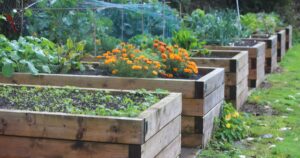
Besides the possibility of controlling your soil quality, raised beds have many more advantages: weeds grow sparsely, pests can be controlled easily and working in a standing position guarantees minimal back strain. So even when you have good garden soil, you can still build raised beds, create a lovely sight and spare your back.
Mound beds
Have you ever heard of “Hügelkultur” or mound beds? It’s a widespread concept in Eastern Europe and Germany and a great way to get rid of loads of garden waste and create a patch that’s self-fertilising for years to come.
The edges of the meadow where I have my current garden were (and in parts still are) overgrown with shrubbery and even small trees. To make entering possible, I had to severely cut back the wild bushes and even hack out several small trees. Although the majority of my newly designed patches were made according to the no-dig method with cardboard boxes and humus, I decided to add two “Hügelbeete” (mound beds) where I could discard all that garden waste. They hadn’t required fertilising during the first three years and although I had built them about 80 cm / 32 in high, now, in my fourth year, they have fallen to the same level as the other beds.
Step 4: Creating a garden layout
Let me share a pro tip here that I learned the hard way: graph paper is your best friend when planning a garden layout. Each square can for example represent one square foot or ¼ square metre which makes it super easy to plan. Take your time here: 30 minutes of planning your layout can save you hours of frustration later.
When planning your patches it’s ideal to make them no broader than 1,2 m / 4 ft. That way, you can reach every part of them without contorting yourself. Theoretically, the patch length doesn’t matter, but practical experience shows that 2 m /6.5 ft is ideal.
Leave at least 50 cm / 2ft between rows for walking paths that you can cover with wooden boards or planks, wood chips or even grass.
You’ll also have to consider access to water sources when planning your garden layout. You won’t want to drag a heavy hose across your yard every time you need to water your plants.
Make it as easy for you as possible!
Step 5: What vegetables do you want to grow?
Now that you have your garden layout you’ll want to consider what vegetables to plant.
This is where I see most beginners go wrong- they want to grow everything at once! When I started gardening, I made this mistake and ended up with way too many zucchini and not enough of the stuff we actually eat.
Here’s my tried-and-true method for choosing vegetables:
Preferences
Make a list of what your family likes and really eats. What are your favourites and what don’t you like at all? There’s no sense in growing kale if you loathe it.
Hardiness zone
When you know what you’d like to plant, check your hardiness zone.
If you live in the States or Canada just Google “hardiness zone + your zip code”, if you live in any other part of the world, search for “hardiness zone + your country”.
Knowing your hardiness zone is important for knowing what plants grow well in your climate and which of them may need additional support (like a greenhouse for example).
Vertical space
Have you thought of integrating poles and trellises into your garden plan? Believe me, using vertical space can make a huge difference. Even if you have a large garden, elements of vertical gardening can be a game-changer! Not only can you grow more on less space but it also makes harvesting much easier. Great plants for vertical gardening are for example peas, climbing beans, tomatoes and summer squash.
Beginner-friendly vegetables
Based on my experience (and that of a lot of gardeners 😊) some vegetables are easy to grow and for that reason perfect for beginners:
Leaf lettuce
Onions / Garlic
Zucchini/summer squash
Carrots
Spinach
Cherry tomatoes
Bush beans
Yet, don’t choose too many different veggies. As with the garden size, start small and expand.
Step 6: Make a planting plan
Alright, by now you not only know where to establish your vegetable garden and what beds to put in but you’ve also decided what vegetables to grow. Time to plant? Not yet. There’s one tiny – but important – step before and that’s: creating a planting plan. So grab your garden layout plan and let’s get started.
Basics
There are some basic things you should consider like planting large vegetables on the north side of your garden so that they won’t shadow smaller plants.
Another tried and tested tip is to group plants with similar water needs together.
However, that’s not all. When you want to make the most of your garden, you have to consider companion planting.
Companion planting
Remember that time in school when the teacher randomly divided the class into teams? You so wanted to be with your best friend in a group but instead, you ended up with that kid you loathed. Friendships and aversions also happen with plants. Some grow really well in each other’s company, others have a negative influence on each other. That’s what companion planting is all about: pairing “best buddy” veggies and avoiding planting arch enemies together.
Here are some examples of plants that work well together:
– Tomatoes + Basil (keeps pests away and improves flavour)
Making a planting plan may take some time but it’s worth every minute. A good plan is essential for healthy plants and a good harvest. Remember, your first garden plan isn’t set in stone. Think of it as a rough draft that you’ll keep tweaking as you learn what works best in your specific situation. That’s the beauty of gardening – there’s always room to grow and improve!
Step 7: Starting from seeds or buying plants?
Some plants thrive better when you sow them directly where they shall grow. Carrots are a good example. They don’t want to be transplanted as they build long roots but grow better when directly sown into the bed.
Other plants get a headstart when you sow them indoors and plant them out after the last night frosts. Cabbages, for example, which usually have a long cultivation time, profit from being sown indoors in February or March (depending on your climate zone) and transplanted into the garden mid to late April.
Another example of plants that should be sown indoors is tomatoes and peppers. As they like it really warm, you can only plant them outside after the last night’s frosts. In my zone (7b), that’s mid-May. If I started to sow them out then, their fruits would never ripen.
Starting plants from seeds indoors is also a great way for succession planting. For example: when you’ve harvested your spinach in late spring, you can plant cauliflower seedlings into the free row.
Although starting from seeds has its advantages, it also requires some knowledge about what the plants need and the right timing for each vegetable. As a beginner, it can be overwhelming to start from seeds, so it’s totally okay to work with plants from a nursery if possible. That way you can feel your way around gardening first and gradually gather more experience.
Later on, you sure will want to try to grow your vegetables “from scratch”, i.e. from seeds. You’ll have a larger variety with seeds and as I said it’s way cheaper. Also, there are some plants that you’ll always have to sow. Carrots for example (and other root vegetables) are sowed directly into the patch.
Later on, you’ll certainly want to try to grow your vegetables “from scratch”, i.e. from seeds. You’ll have a larger variety with seeds and it’s way cheaper.
Step 8: Sowing and planting
The time has come! You’re about to sow your first seeds and plant your first seedlings. Don’t worry: if you observe a few tips, everything will be fine.
Preparing the patch
Before you start to put something INTO the patch, you have to put OUT what doesn’t belong there. You guessed it: get started weeding. This step can be omitted, of course, if you have created a new patch or raised bed. In all other cases, make sure that your vegetable patch is weed-free.
After weeding, loosen the soil with a hoe and break up any soil clumps. Rake your patch to create an even surface to sow into.
Direct sowing
The exact time for sowing your seeds depends on the hardiness zone you live in. However, I recommend having a close look at your seed packets. They usually indicate the right sowing time together with the right spacing.
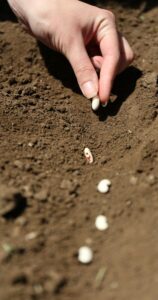
When you sow directly, draw a straight line with the handle of your rake. Using a string may help you to get straight rows. Then put the seeds into that line observing the right spacing. When the row is finished, carefully cover the seeds with soil and press it slightly either with your hands or with the back of your rake.
Carefully water the seed line so that it’s fully soaked through but not water-logged.
If you have large seeds like pumpkin or squash, you can make individual holes in the right spacing. Covering with soil and watering are carried out similarly.
Labelling
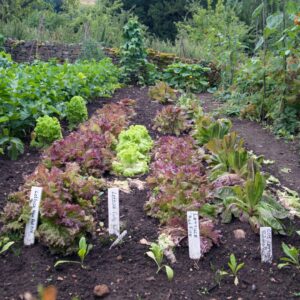
I must admit I’ve often “forgotten” (read: was too lazy) to label my seed rows and I don’t want to know how many seedlings I’ve ripped out, taking them for weeds. So do yourself a favour, write the plant name on a label and stick that at the end of the row. You can get labels made from plastic, wood, clay and even slate.
Seedlings
You’ve bought vegetable seedlings or a friendly neighbour gave you some spare ones and now you’re ready to plant. Prepare the soil as described above and then… don’t plant yet. You’ve got to harden the seedlings first.
Hardening off
The very first time I planted vegetables, I learned the hard way to harden off my seedlings. I was so excited about all the (store-bought) tomato seedlings, that I planted them straight from their warm and comfortable indoor spot right into the garden. This turned out to be a big mistake. Nearly half of them withered away from sunburn within a few days, and the rest looked like they were hanging on by a thread.
Seedlings can be compared to little children who have never been outside. You can’t shoo them out just like that but have to ease them into it. Some 7 – 10 days before transplanting, I start putting out the seedlings at a sheltered spot for just 2 – 3 hours.
Each day after that, I increase their outdoor time by about an hour and gradually move them into more direct sunlight. After that, they are ready to plant outside
Planting
I recommend laying your seedlings out on the patch before planting. That way you can still adjust the spacing between plants. Then dig up a whole that’s slightly larger than the root bale and fill in some ripe compost or well-rotted manure. Carefully remove the plant from its container (make sure that the stem doesn’t break!), put it into the hole and fill the space between root bale and the hole edge with the soil you dug out earlier. Carefully press the soil around the plants and water them generously so that the soil there will be no air holes and the roots are well soaked.
Planting depth
A rule of thumb when it comes to how deep you should set your veggies is that they should be planted at the same depth they were growing in their containers. That way you usually can’t go wrong.
An exception to this rule, however, is tomatoes. I plant them super deep, which means I bury about 2/3 of the plant after having removed the lower leaves. That way those little fuzzy hairs on the stem turn into roots and thus make your plants super sturdy.
Planting width
When you start veggies from seeds, take a look at the seed package. Usually, the spacing between plants and rows is indicated there.
When you have seedlings to plant, here are some general widths to go with:
– Tomatoes: 70 – 100 cm / 24-36 inches apart (believe me, they need it)
– Peppers: 30 – 40 cm / 12-16 inches apart
– Cucumbers: 30 cm / 12 inches apart along a trellis
– Broccoli and cauliflower: 40 – 45 cm / 16 – 18 inches apart
Watering
After the initial watering directly after sowing and planting, cover the soil with mulch (for example dry grass clippings) to prevent it from drying out. During the first week, you best check the soil moisture daily by sticking a finger about 3 cm / 1 inch deep into the ground. If you have to water, it’s best to do so in the morning. This makes sure that the leaves can dry before the evening which helps prevent fungal diseases.
Remember, every garden is different, and what works in my Zone 7b might need tweaking in your area. But these basic principles of hardening off, proper spacing and careful watering have served me well through many growing seasons. The key is paying attention to your plants – they’ll let you know if they’re happy or struggling if you learn to read their signs.
Step 9: Maintenance
The garden patches are made, the vegetables are planted, and now you can relax and wait for the harvest? Wrong! Think of your vegetables as your babies: you have to make sure that they have everything they need to grow into healthy adults:
Watering
As I said before, watering the right way is especially important at the beginning when you’ve just planted your vegetables. Unfortunately, most beginners tend to overwater their plants. Except for the first week after planting, it’s much better to let your plants “sit dry” for a while before watering them. That way they will grow deep and strong roots that will not only provide them with water but also make them sturdier.
Mulching
I’m a huge fan of mulching! After sowing and planting, cover the soil with mulch to prevent it from drying out and protect it from weeds. If you have sowed, distribute a very thin mulch layer, for example, dried grass clippings so that the seeds get enough water and light to grow. When the plants are larger the mulch layer can be thicker. Just make sure that the mulch material is dry, otherwise it may mould and spread fungal diseases.
You may have to weed despite mulching but only sparsely and those weeds will come out very easily.
Fertilising
Like humans, plants need to eat. And just like humans, it’s not healthy for them to let them have fast food only. Nutrients are key to a healthy life! Get informed on your plants’ needs and feed them accordingly with fertiliser (from plants or animal origin). For beginners, it’s best to buy a well-balanced fertiliser but you can also make some organic fertiliser at home. Be careful, however: “Much helps much” is not valid in the garden! When “overfeeding” your plants they will become mushy and prone to diseases. It’s best to feed your plants organically throughout the season.
Step 10: Pests and diseases in the vegetable garden
Truth bomb: you will at some time have pests and diseases in your vegetable garden. Hopefully not often and not to a large extent but that’s how nature works. It’s got nothing against us (I hope) but seeks balance by eliminating weak or ill plants through pests and diseases. The good news is that you are not powerless.
Companion planting (again)
First of all, by doing companion planting you’ve already done a great thing to hold pests and diseases at bay. Take the classic couple of carrots and onions for example: while carrots keep the onion fly away, onions hold off the carrot fly. If you know that and plant accordingly, you’ve already taken a huge step toward a healthy vegetable garden.
Physical protection and collecting
Another thing you can do is use physical protection like vegetable mesh. If you protect your cabbage plants with a mesh when the cabbage fly is around, trying to lay its eggs on your fondly raised plants, it’ll lose out.
However, when you already have pests in your garden, especially caterpillars and snails, it’s effective to collect them and discard them somewhere else, far away from your garden. For hunting snails, early mornings and evenings are best, as they’ll then come out of their hiding places. Caterpillars are best collected during the day.
Eco-system
Taking the alleged easy way by using chemical pest control has no room in my garden world. After all, you should always bear in mind that pests and diseases in your garden are a sign of imbalance. Make sure to establish a healthy eco-system with enough room for beneficial insects, birds and small mammals that’ll help you keep pests at bay. Care for your garden soil by fertilising it wisely with organic material, discarding infected plant parts and mulching. That way your garden will stay healthy.
Step 11: Harvest and enjoy
Let me tell you about my first attempt at harvesting broccoli- I waited so long for those heads to get “grocery store big”… and ended up with tough, flowering stems that were practically inedible. Now I know better – Harvest when florets are tight and dark green
Harvest timing
Here’s a quick cheat sheet for common veggies I’ve learned through experience:
Beans: pick when they’re about as thick as a pencil but before you can see the beans inside
Tomatoes: Pick when colourful. but firm
Cucumbers: 6-8 inches is perfect
Zucchini: Check daily or prepare to find baseball bats hiding under the leaves
Bell peppers: wait until they reach full size and desired colour
Oh, and use actual garden tools instead of wrestling with your plants. Using clean, sharp scissors or pruners makes all the difference.
Preserving
The real challenge hits when everything starts ripening at once. I remember standing in my kitchen one August, surrounded by mountains of tomatoes and thinking “What in the world am I gonna do with all these?”
Freezing is my go-to for most vegetables as it’s fast and easy. Just remember to label everything you pop into the freezer – playing “freezer surprise” in January isn’t as funny as it sounds!
Canning is not as scary as it might look (although a pressure canner sends off those mad scientist vibes). I do water bath canning for tomatoes and pickles, and pressure can green beans and other low-acid veggies. Just remember to always follow tested recipes and processing times!
Dehydrating has become another favourite preserving method as dried vegetables take up way less storage space than canned or frozen ones. Just make sure everything is completely dry before storing, or you might end up with mouldy surprises later (don’t ask…).
Step 12: Build your soil
Ok, strictly speaking, this step is a preparation for your NEXT gardening year. But, as I’m absolutely sure that you’re hooked by now and on your best way to becoming a gardening addict, this step is crucial for a further great harvest in the upcoming season.
After harvesting, the garden season isn’t over. On the contrary: you have to make sure that your soil is well nourished and protected so that your vegetables will grow as well (or even better) in the next season.
Mulching
Make sure your soil is always well-covered during winter. You can either put half-rotted compost on your patches or cover them with dried grass, leaves, or wood chips. The soil beneath the mulch is usually a bit warmer and that way mulch protects the soil organisms.
Soil building
To build your soil, you can for example sow green manure like phacelia. Not only do they cover the soil and protect it from washing off but they also collect nitrogen from the air, thereby forming the basis for plant nutrition. Additionally, they build a mulch layer when they die in winter, covering and protecting the soil. In spring, you can cut them off and dig the remnants in.
Get Growing and Enjoy the Rewards!
Okay, let’s quickly recap the key steps to get a new vegetable garden up and running:
Choose a sunny spot with well-draining soil near your house (if possible)
Decide what to plant based on your climate and preferences
Build garden patches or raised beds
Buy seedlings, start them indoors or directly sow seeds outdoors
Properly plant and space your veggies
Water, weed, and care for your garden regularly
Growing your own veggies is incredibly rewarding! You’ll get fresh, flavourful and nutritious food and it’s a satisfying and eco-friendly task.
Even with limited space, you can have an amazing little garden.
Ready to get started? I’m excited to hear about your gardening journey. Reach out if you have any other questions. Happy growing!