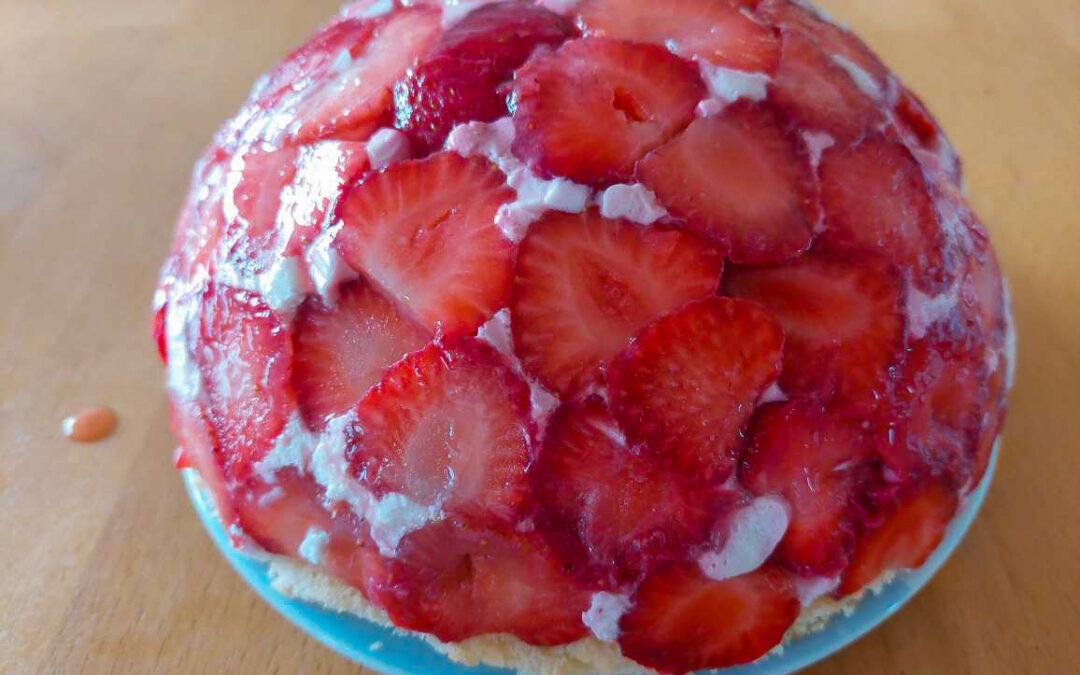
Strawberries! Every year we can’t wait for the first ripe strawberry and the knowledge that their harvesting time is limited to only a few weeks, makes them all the more precious. I think this relatively short availability and the fact that they don’t freeze well make them so popular. However, you can’t keep them for long in the fridge either and thus have to process them quickly. There are many fast and easy strawberry recipes like this strawberry pavlova or the strawberry tiramisu. But sometimes, we want to do something more impressive. That’s what this recipe is for. This strawberry dome cake will be a showstopper on every coffee table and it’s said to have even left some mother-in-laws speechless 😉 Admittedly, it takes more time to prepare this wonderful cake but it’s worth every minute of your effort!
Strawberry Dome Cake
10 – 12 servings
Ingredients:
3 eggs (size M) 1 pinch of salt 220 g sugar 100 g flour 1 tsp baking powder approx. 1 tsp butter 12 gelatin leaves (red or white) 1 kg strawberries 300 g curd cheese 200 g cream 1 package of red cake glaze
Instructions:
Preheat the oven to 180 °C (350 °F). Separate the eggs and beat the egg whites and salt until stiff. Gradually add sugar and beat again until the sugar has dissolved. Stir in the egg yolks. Mix the flour and baking powder and sieve it onto the stiff egg whites. Carefully fold in the flour mixture.
Line a baking tray with baking paper and put the dough on it. Smooth it out until it’s even and bake it in the oven for about 10 minutes. In the meantime, put a dishcloth on a flat surface and sprinkle it with sugar. When the cake is ready, remove it from the oven and immediately put it on the cloth, facing downwards. Remove the baking paper and let it cool down.
Take a half-round bowl and line it with cling film. Soak the gelatin leaves according to the packet instructions. Wash the strawberries and remove the green leaves. Cut about 300 g of the strawberries into slices and layer the bowl with them.
Mash the remaining strawberries together with 100 g of sugar. Stir the puree into the curd cheese. Remove the gelatine from the water and squeeze it. Afterwards, dissolve it in a small pot on medium heat and stir in 2 tbsp of the curd. Then stir this mixture into the remaining curd and let it cool down. In the meantime, whip the cream until it’s stiff and fold it into the curd mixture.
Cut the sponge cake into three layers for your half-round bowl. This can best be done with glasses or bowls of different sizes. The first layer should be the smallest, followed by a larger one. The last layer should be large enough to cover the bowl opening.
Carefully fill some of the cream into the bowl and put the smallest cake layer onto it. Alternately layer the mousse and the sponge, ending with the largest cake layer. Put it in the fridge for at least 3 hours.
Put a cake plate onto the bowl and turn it over so the cake sits on the plate. Remove the bowl and cling film. Prepare the cake glaze according to the package instructions and pour it over the cake. Let it cool for at least another 30 minutes.
The classic tiramisu consists of ladyfingers, coffee, mascarpone and cocoa. But did you know that you can also make strawberry tiramisu? It’s lighter than the original and thus the perfect dessert for summer! Whenever I make it, I have to quickly secure a portion for me before the boys gobble it up in no time! I can’t blame them. And when you taste it you’ll certainly agree: One bite of this delicious dessert and you’ll become addicted, as well.
The good thing is that it’s swift to make. But look for yourselves:
Strawberry Tiramisu
For 4 people (or 2 greedy boys)
Ingredients:
15 – 20 ladyfingers 300 g strawberries 300 g curd cheese 150 g cream 3 tsp sugar 1 tbsp lemon juice
Instructions:
Wash the strawberries, remove the green leaves and cut them into slices. Put them into a bowl and mix them with 1 tsp of sugar and the lemon juice. Let the strawberries marinate for about 20 – 30 minutes, until a juice forms.
Whip the cream until it’s stiff. Mix the curd with 2 tsp of sugar and gently fold in the cream.
Put the ladyfingers side by side into a tray. Drizzle some of the strawberry juice over them so that they soak it up. Evenly spread the cream-curd mix onto the ladyfingers and put strawberry slices on top. Repeat these steps until all ingredients are used up. The last layer should be strawberries. Serve well chilled.
If you have never come across a pavlova, you missed something! It’s basically a baiser base with cream and fruit. That may sound a little dull but don’t underestimate this yummy combination: the sweet, crisp base, the rich, fluffy cream and the fresh fruit will catapult your palate onto cloud nine! With this beginner-friendly recipe, I’ll show you how to make a wonderfully tasty strawberry pavlova.
Strawberry Pavlova
For 5 people
Ingredients:
For the Baiser base
270 g icing sugar 15 g cornstarch 4 egg whites (150 g) 1/2 tsp baking powder a pinch of salt 1/2 tbsp white vinegar
For the topping
250 g cream 250 g strawberries 1 tbsp sugar 1 tbsp balsamic vinegar almond flakes or chopped pistachios (optional)
Instructions:
Mix the icing sugar and cornstarch and sieve twice. Stir the egg whites, the baking powder and the salt in a metal bowl and set it in a hot water bath. Mix the icing sugar-cornstarch mixture in portions and warm up the whole batter until it is hand-warm. Transfer it into a second bowl and stir it until it’s very stiff. Add the white vinegar and mix it in.
Preheat the oven to 150 °C (300 °F). Fill the baiser into a piping bag with a large-holed nozzle. Alternatively, fill it into a common freezer bag and cut off a corner. Put baking paper onto the tray. Now, pipe three even circles onto the baking tray and bake them in the oven for 10 minutes. Reduce the temperature to 100 °C (210 °F) and let the baiser dry for approximately 2 hours. Let it cool.
Roast the almonds in a pan without fat until they are light brown. Put them on a plate and let them cool down. In the meantime, wash the strawberries, remove the leaves and cut them into slices. Whip the cream until it’s stiff. Layer the baiser bases with cream and strawberries (and almonds if you use them). The last layer is strawberries. Alternatively, you can use only one cake base and top it with cream and strawberries. Serve immediately, otherwise the baiser will soak through and become soft.
To put it bluntly, this is certainly the best and most useful tip of this whole fertiliser series. As far as fertilisers are concerned, urine is the non-plus-ultra. It contains everything your plants need, it’s free and it’s always available. When you complement this gold water with mull from manure and compost, your garden is well provided for.
Advantages of urine
Urine is an extraordinary raw material for maintenance fertilisation during the growing season. It’s rich in nitrogen, works fast and is produced right “on-site”. An average adult urinates three to seven times per day and thus releases about 2 litres of urine.
With a person’s annual urine production, 50 – 350 square metres of cropland can be fertilised. A general recommendation is to fertilise with one to two litres of urine per square metre during cultivation season. The exact amount depends on the plants you grow and the soil you grow them in. In any case, an amount of 200 ml of concentrated urine per square metre should not be exceeded.
Urine is also a great compost accelerator. Compost sometimes consists of so many carbon-rich materials that the decomposition of leaves and dry twigs for example is affected. In that case, you should try to achieve a balanced ratio between carbon and nitrogen. Urine with its high nitrogen content can help with that. Put some urine onto the compost and thus accelerate the composting process.
Nutrient content of urine
One litre of urine contains about 7.4 g nitrogen, 0.6 g phosphorus and 1.6 g potassium. That said, urine has relatively much nitrogen and relatively little potassium. For that reason, it is especially suitable for potassium-rich soils like loam. Urine consists of about 95 % water and substances like urea, chloride, sodium, potassium and creatine. Fresh urine has a neutral pH value and usually carries no pathogens. In the body, urine is sterile. Bacteria can sneak in on its way out of the body or at handling. That’s harmless, however, when you fertilise with your own urine and thus can control your “fertiliser production”.
Disadvantages of urine
Some drugs and chemicals leave traces in urine. Most of those substances degrade quickly but that’s not the case, for example, for hormones like those in hormonal conception control. Those hormones decompose slowly and harm animals and the environment when they seep into the groundwater.
Hobby gardeners fertilising with urine usually know where it comes from. If a member of your family is treated with medicine like for example penicillin, you should refrain from collecting this person’s urine.
Some plants are sensitive to salt in the soil and on the leaves. Depending on your food, your urine may contain salts as well. If you’ve eaten a lot of salty food, you shouldn’t use the resulting urine as fertiliser.
Fertilising with urine
About one month after basic fertilisation in spring (for example with manure or compost), we must start to fertilise for maintenance. In early and high summer, the plants grow so fast that they need a “snack” to help them reach their full potential and provide us with a great harvest.
Urine is usually used for maintenance fertilisation as it provides a lot of nitrogen.
To fertilise with urine, dilute one part of urine with 9 parts water. The colour of this fertiliser should be pale, like very weak tea and it shouldn’t smell of anything.
Water the soil with this dilution but not the plants and don’t fertilise shortly before harvesting.
Make sure to not over-fertilise. It’s better to use too little than too much of it.
If you fertilise with urine only, add organic matter to the soil.
Faeces
Human faeces often cause a feeling of disgust but when writing about natural fertilisers I can’t leave this topic out. If that stinks for you, you needn’t read any further. If, however, you rise to the challenge, take a deep breath. We’ll open the toilet door…
In general, humans must defecate once a day, regardless of their sex, age, ethnicity, social class, weight, religion, culture or values. In some parts of the world, human excrement is a possible source of diseases. In the Western world, we flush away our heaps with just a touch of a button.
Advantages and disadvantages of human faeces
Human (like animal) excrements contain nutrients that are suitable for plants. Urine contains the most nutrients and is especially rich in nitrogen. Faeces contain mull material and nutrients like nitrogen, phosphorus and potassium. In the Western world, every person releases about 5 kilograms of nitrogen and 0.6 kilograms of phosphorus per year into the sewer system, together with about 20 m3 of drinking water.
Contrary to urine, stool may contain pathogens (bacteria, viruses and parasites) and must be composted or stored before you can use it as a fertiliser for edible plants. The compost must reach temperatures of at least 50 °C to ensure that harmful organisms die. If faeces are not heat-composted, they have to be stored for at least two years before that compost can be used in the vegetable garden.
Composting faeces
Before composting faeces in your garden, please research if it is allowed in your region. In Germany, for example, you can do it as long as there is no danger to the environment. It must be guaranteed, for example, that the faeces won’t be washed off by rain. Also, one has to make sure that there is no smell. However, composting faeces is forbidden if the garden is situated in a water protection area.
If you want to try composting faeces, you must separate the faeces from the urine and collect them. There are so-called “dry toilets” that help you with this process. When the toilet is full, make a compost heap of the faeces in your garden. Let it rot for about one year and then shovel it to another place so that the microorganisms and soil organisms can accelerate the composting process. After 2 –4 years the compost is hygienically safe and can be used as natural fertiliser for your garden.
Conclusion
I have never used natural fertilisers of human origin in my garden. I could envisage trying urine as a fertiliser but using faeces compost is not an option for me right now. Call me narrow-minded if you like, but it simply doesn’t feel right. However, if you want to try it, go ahead. And if you have tried it already, please leave a comment below and tell us about your experiences.
The cheapest and easiest way to make natural fertiliser for your vegetables is by using plants that already grow in and around your garden. No transportation is required, (almost) no processing is involved and most of it won’t cost a penny! Just rip out the weeds – or should we call them “green gold” – use them as mulch or make liquid fertiliser from them. Or you sow cover crops to enrich the soil with nutrients. Let’s see how you can make natural fertilisers from plants.
Homemade liquid fertiliser
You can make liquid fertiliser from various plants that I’m sure you’ll find in your immediate vicinity. The basic process is simple:
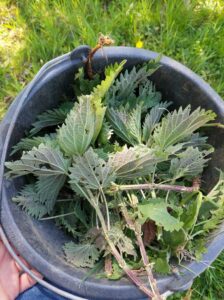
Take 1 kilogram of fresh or 150 g dried plants per 10 litres of water. Put the plants into a bucket, or a wooden or plastic barrel. Never use a metal container as it may react with the fertiliser in an undesired way. Fill the bucket or barrel with water about 5 – 10 cm (2 – 4 inches) under the brim. It’s best to use rainwater or stale water, warmed up by the sun. Cover the barrel or bucket with a lid so that air may get in and let it sit outside for about a week. You’ll know when the brew is ready because it’ll stink bestially 😊, usually after 2 – 3 weeks. Mix in some stone meal to get the smell under control and to prevent a riot from the neighbours.
Dilute the fertiliser at a ratio of 1 part fertiliser to 10 parts water and water or spray your plants.
Plants for liquid fertilisers and their benefits
These are the plants most commonly used for liquid fertilisers.
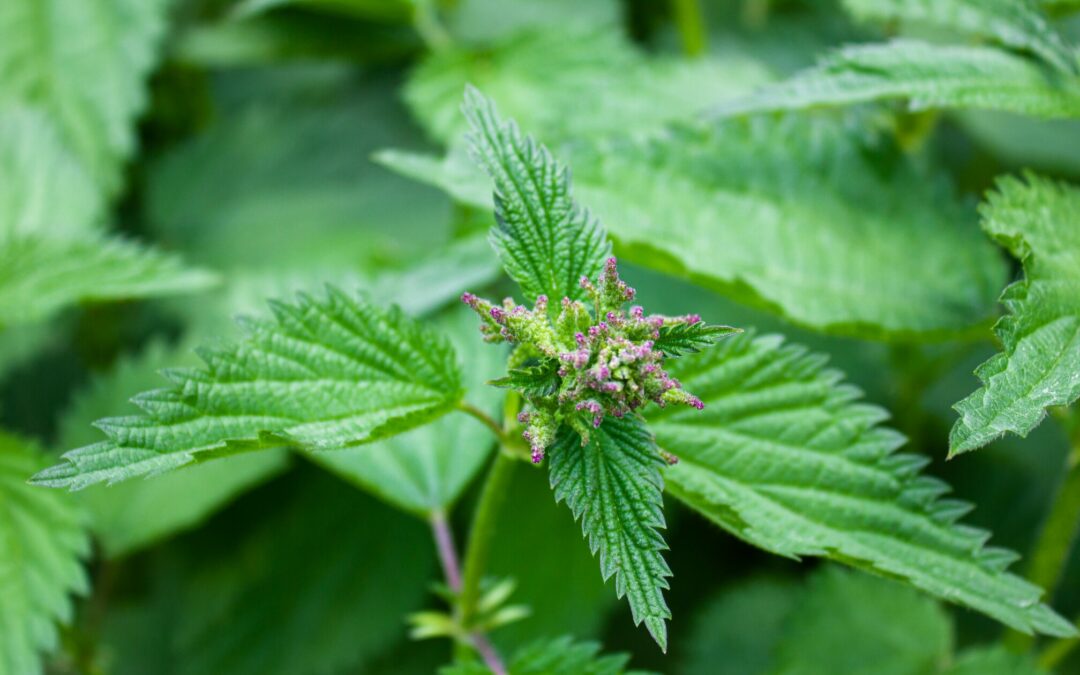
Stinging nettle (Urtica dioica)
Stinging nettle is one of many types from the family of nettles. They often grow – or rather proliferate – on soils that contain much nitrogen, thus indicating nutritious soil.
Besides nitrogen, stinging nettles are rich in potassium, iron, calcium and manganese. You can use it for liquid fertiliser as well as in your salad.
Comfrey (Symphytum officinale)
The comfrey family contains many types of lovely plants with small, tender flowers and large, stiff leaves. Liquid comfrey fertiliser is particularly rich in potassium but also contains calcium, phosphorus, magnesium, manganese, iron, selenium and zinc. It’s good for tomatoes. You can prepare the liquid fertiliser with a mixture of comfrey and stinging nettle to add more nitrogen.
Field horsetail (Equisetum arvense)
Field horsetail contains a lot of silicon, making it suitable for prevention against fungal diseases like mildew. If a plant is already ill, however, field horsetail can’t cure it. Make sure to use field horsetail for your liquid fertiliser and not the poisonous marsh horsetail.
Medicinal, aromatic and wild herbs
You can use medicinal and aromatic herbs as additives in liquid fertilisers. Those include chive, peppermint, marjoram, chamomile and hyssop. You may also use wild herbs like dandelion and shepherd’s purse. Just add one or two handfuls of herbs for example to your stinging nettle brew and let it ferment.
Fertilisation with liquid fertiliser
Liquid fertilisers are meant for maintenance fertilisation and as “energy drinks” or “snacks”.
Water the soil or spray the plant leaves with it.
Liquid fertiliser is a good substitute for urine when you want to fertilise vegetables shortly before harvesting.
Mulching
While fermenting plants to make liquid fertilisers is a direct method to enhance your garden’s nutrient content, mulching is an indirect way to make natural fertilisers from plants.
What is mulching
Mulching means covering the soil with organic material that comes either from plants or is of animal origin. With mulch, we imitate nature where soil never lies bare but is always covered with vegetation, leaves or other rotting organic material.
Advantages of mulching
Open soil is more vulnerable than covered soil. It erodes, dries out, gets cracks and becomes crusty. Without roots absorbing them, nutrients will wash out. And without food and “work” and “living space”, the soil animals and microorganisms disappear.
By covering your soil, its mull content rises, and it becomes porous. It can bind nutrients more easily and store water and oxygen better. A porous soil provides the plants with optimum conditions for growth. Also, the relatively constant temperature in a covered soil is beneficiary for vegetation. And last but not least, mulch suppresses weeds.
Covering soils with mulch is also called surface composting. Like in a compost heap, mulch material rots and becomes fine mull. The advantage of surface composting is that fewer nutrients disappear, and fewer greenhouse gases are released than with classic composting where high temperatures are generated.
Disadvantages of mulching
Alas, even mulching has its disadvantages. Snails and voles feel well under the moist mulch. Factors like microclimate, plant growth and thickness of the mulch layer also play an important role. If necessary, mulch in thinner layers.
Mulch material
In autumn, you can use leaves, in summer grass clippings and during harvesting time plant residues as mulch. You may shred the material (for example with your lawn mower) before using it as mulch. Apart from grass, leaves and plant residues you can also use hay, straw, bark and seaweed as mulch material, as well as sheep wool or hair from your pets.
How to mulch
Stack up about 5 – 30 of mulch, depending on your material. Grass clippings may stick together and rot when moist and spread too thickly. Let them dry a bit before using them as mulch. I recommend mulching more often and in small portions. Add new mulch as soon as the original mulch layer has decomposed and crumbled.
When organic carbon-rich material decomposes, part of the nutrients are used up during composting. You can compensate for that by fertilising with urine or liquid fertiliser from chicken manure.
Cover crops
Cover crops are special plants that improve the soil structure with their root system and at the same time provide nutrients. The plants themselves fertilise the soil with nitrogen, for their own growth and succession plants. That means they raise the nitrogen content (and only that) instead of decreasing it.
Nitrogen collectors
Legumes like beans, peas, lupines, flat and sweet peas, lucernes and clover can fix nitrogen from the air. It’s a miracle they can do by a symbiotic relationship between their root nodules and certain bacteria. Nitrogen is collected in the plant’s roots as well as in its aboveground parts. For this reason, you should dig in the remains after cutting the plants.
When the plant mass is worked superficially into the soil, decomposition starts and nitrogen is released into the soil. The organic material raises the soil’s mull content. 20 to 40 % of fixed nitrogen is released almost immediately for the successive crop.
Soil breakers
Cover crops with long roots like melilot and lupines “drill” into deeper soil layers and get nutrients from deep down. When you later work in the plants, the nutrients are released into the mother soil. This is a smart, yet simple process to make the otherwise inaccessible nutrients available.
A further advantage is that the roots that die off after cutting, leave long canals in the soil through which oxygen, water and nutrients can be transported. This results in a porous soil.
Furthermore, cover crops suppress weeds when they’re sown densely.
How to use cover crops
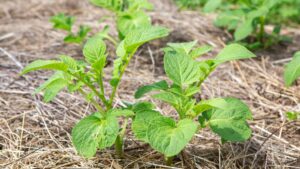
You can sow cover crops between plant rows or even between plants within a row. Beans and potatoes, for example, are a well-known and proven combination.
You can also sow cover crops after harvesting an early crop like lettuce or before a late crop to prevent the soil from lying bare.
When you create a new patch, cover crops are like a curative treatment for your soil. You must wait a year, that’s true, but you get a cultivation area in top form! For optimum results choose a mixture that provides nitrogen, loosens the soil deeply and suffocates weeds.
To prevent the cover crops from spreading their seeds, you must cut them off before. Some sorts may be cut several times during a season (and best used as mulch). Annuals can be worked into the soil late in autumn.
Perennials should be left on the patches over the winter to prevent washing out of nutrients. Work them into the soil in early spring or late autumn. You can also dig in dry leaves, straw or other carbon-rich materials.
Cover crop plants and their benefits
Depending on what your soil needs, you can choose the right cover crop plants:
Plants that gather nitrogen out of the air like legumes
Those that break up the soil like lupines and meliot
Plants that increase the mull content due to their great leaf mass like tansy phacelia
You can mix the seeds or buy ready-made seed mixtures.
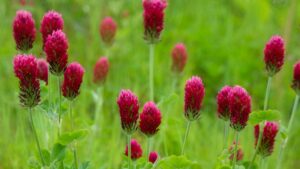
Crimson clover (Trifolium incarnatum)
An annual, fast-growing plant with a strong root system. Crimson clover is a good nitrogen collector.
Common vetch (Vicia sativa)
An annual, fast-growing plant that collects nitrogen well.
Bluebell (Phacelia tanacetifolia)
An annual, fast-growing plant that covers soil easily and well. Bluebells don’t collect nitrogen but absorb nutrients well from the soil.
Lupine (Lupinus)
An annual plant with a strong root system and good nitrogen-collecting abilities. The yellow and white lupine is suitable for light soils, and the blue lupine is great for heavy loam soil.
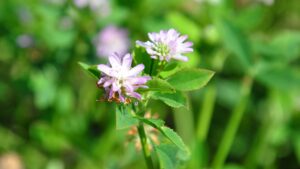
Persian clover (Trifolium resupinatum)
An annual plant with good nitrogen-collecting abilities that needs a lot of water.
Lucerne (Medicago)
A perennial, slow-growing plant with a deep root system. Lucerne is a great cover plant.
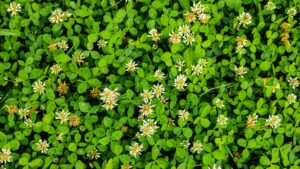
Burrowing clover (Trifolium subterraneum)
An annual plant with a strong root system. Burrowing clover is a great cover plant and a good nitrogen collector. Shade tolerant.
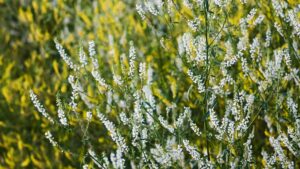
Sweet clover (Melilotus)
A bi-annual plant with a powerful taproot. Sweet clover is a good nitrogen collector.
There are many ways to use wild and cultivated plants as natural fertilisers for your garden! Plants in combination with fertilisers from animals not only give your vegetables a great start into the season. They also help you to maintain the soil’s nutrient level, thus ensuring healthy plants and a great harvest.