
.
May is one of the most exciting months in the vegetable garden. As frost risks fade and growth accelerates, it’s time for planting, protecting seedlings, and preparing for summer harvests.
In my own garden in Bavaria, mid-May is usually the turning point when tomatoes and cucumbers finally grow without protection.
May is the transition month between spring preparation and summer growth in the vegetable garden. Most planting, pest protection, watering routines, and soil care established now determine the success of the summer harvest.
The work done in May largely determines how productive your vegetable garden will be for the rest of the growing season.
This May gardening checklist walks you through everything you need to do now:
- What to sow and plant in May
- How to protect our plants from pests
- Fertilisation and mulching
- Thinning out
- Essential maintenance tasks
Let’s break down garden tasks we can do in May:
May Garden Checklist: Essential Tasks at a Glance
If you only have time for a few things, focus on these essential May garden tasks:
- Protect your vegetables from pests
- Harden off seedlings
- Sow and plant vegetables outdoors
- Thin out seedlings
- Water sufficiently
- Mulch beds
- Fertilise vegetables
Gardening seasons vary depending on your climate and last frost date.
This May gardening checklist is written for temperate Northern Hemisphere gardens (Central Europe, UK, Northern USA), that is, USDA hardiness zones 6 – 8.
If you live in a different zone, you’ll want to adjust the timing according to your local conditions.
Here’s a quick overview of the most important garden tasks to tackle in May:
| Garden Task | Best Time in May | Priority |
|---|---|---|
| Protect vegetables from snails & slugs | right after planting | High |
| Protect cabbage & leeks from pests | beginning of May | High |
| Harden off seedlings | one week before planting | High |
| Sow & plant outdoors | after the last night frosts | High |
| Thin out seedlings | when they're about 5 cm (2 inches) | High |
| Water plants | when the soil is dry | Medium |
| Mulch beds | when seedlings are 10 cm high ( 4 inches)s | Medium |
| Fertilise vegetables and berry shrubs | every 4 weeks | High |
| Break out first chilli/pepper blossom | when it shows | Low |
| Save seeds from last years vegetables | when they form | Low |
Finally, we can wave those night frosts goodbye and enjoy the sun and warmth that May brings. All the veggies we’ve sown or planted out already get a boost, and suddenly the earth is green again. With all the happiness it brings, there are also some tasks for us gardeners to make sure our green babies get on well.
If you’re just transitioning from spring preparation, you might also want to revisit the tasks from April. Many jobs started last month continue now — especially soil preparation and early sowing.
→ Continue from last month with my April Garden Tasks checklist
🌱Monthly Garden Checklist Printable
Download the printable May garden checklist + get future seasonal checklists.
How should gardeners manage the changing weather in May?
✔️ Why it matters: Protect your plants from sudden weather changes
The weather in May can be pretty volatile, and frosts at night are by no means impossible. During the day, however, temperatures can become quite hot already. Both extremes stress the plants and can even destroy them. Watching the weather and forecast is important to protect our plants before they get damaged.
When night frosts are forecast, I always put a fleece over my seedlings so that they’re protected from the cold.
When it gets hot during the day, I mulch them to keep the moisture in the soil.
In Bavaria, we often have a strong breeze in May, which additionally dries out the soil and rips off leaves or even breaks the stems of young plants.
When it finally rains (we haven’t had rain here for weeks), it may be heavy, and here as well, a protective net can prevent damage.
🌿 Gardener’s Tip:
Check the forecast daily and protect your plants if necessary.
One of the biggest challenges for gardeners in May is pest pressure. As temperatures rise, slugs and insects become highly active.
Protect your seedlings from snails and slugs
✔️ Why it matters: Snails and slugs can eat all your seedlings in one night.
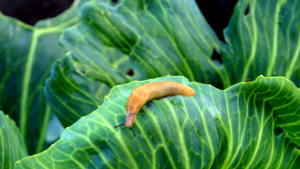
Are there any pests more dreaded than snails and slugs? I don’t think so. They are practically everywhere and, especially in spring, treat our gardens like all-you-can-eat buffets.
The seedlings that just start looking out of the soil, as well as the young plants we’ve put outside, all of that is a feast to slugs and snails, and somehow they manage to tell all their friends and families about it.
While I’m all for sharing with those who have less, slugs and snails don’t fall into that category, however, so there’s no need to have a bad conscience. If we want to harvest those veggies we nursed and nurtured all those months, we must make sure that snails and slugs won’t get near them!
A good way to keep those little suckers off our seedlings is to put snail collars around them, which they can’t overcome. Or you get out in the wee hours of the morning or in the evening with a bucket and collect them. Choose your way, but I prefer the collars.
🌿 Gardener’s Tip:
Check for slugs at dusk after rain — that’s when they’re most active.
Slugs are not the only pests, though.
Protect cabbage and leeks from pests
✔️ Why it matters: Pests can destroy your harvest
If you haven’t done so already, protect your cabbages and leeks with a protective net against pests like the cabbage white butterfly and the leek fly. Most often, you can buy protective nets as a set with half-arches that you can stick across the vegetables and put the net on top. That way, our plants have plenty of room to grow while being safe from pests. Just make sure that you fix the net thoroughly into the ground.
By the way, celery is a good companion for cabbage. In the unlikely event that a cabbage fly finds its way under the net, it may find itself repelled by the celery smell.
🌿 Gardener’s Tip:
Protect leeks and cabbage with a net.
After protecting young plants, the next important step in May gardening is preparing seedlings for outdoor planting.
How do you harden off seedlings in May?
✔️ Why it matters: Plants must get used to outdoor conditions

All the vegetables we have seed-started indoors during the last weeks can finally be planted outdoors in May. Before we expose our seedlings to outdoor conditions, however, we must harden them off so that they won’t get a shock when they get from that cosy, protected atmosphere to the outside garden where temperature differences between night and day are higher, and the wind can blow harshly.
To harden off our seedlings, we put them outside for a few hours per day, prolonging the time with each day. After about a week, our seedlings are ready to be planted outside.
🌿 Gardener’s Tip:
Put seedlings out for a few hours and gradually prolong the time.
Sow and plant outdoors
✔️ Why it matters: We continue in May what we started earlier.
Finally, as the last night frosts are history, we can sow and plant all the sensitive veggies we like so much. Beans, tomatoes, zucchini, corn, cucumbers – everything can now get outside! For a comprehensive list of vegetables you can sow and plant outdoors in May, read on here.
🌿 Gardener’s Tip:
Make a planting plan and get started.
When all plants and seeds are in the soil, make sure to give them what they need.
How often should you water the garden in May?
✔️ Why it matters: With increasing temperatures, your plants need more water.
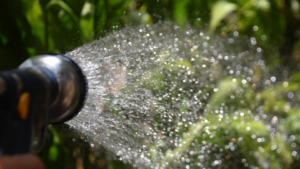
The seeds, as well as our freshly transplanted seedlings, need water until they’ve formed a healthy root network. As it can be quite dry in spring, especially in May, make sure that you keep your plants and seeds moist enough to sprout.
Watering is especially important in the greenhouse, where rain doesn’t get in, and if you plant in containers, for example, on a patio or balcony. Check the soil moisture daily and water regularly and thoroughly.
🌿 Gardener’s Tip: Water in the mornings so that the moisture can dry off during the day.
Thin out seedlings
✔️ Why it matters: Your seedlings need enough space to grow.
If you – like me – often sow vegetables like, for example, beetroots, too tightly, you can now thin them out. Carefully remove seedlings that are too close to each other and plant them in gaps or even into a separate row. That way, they get enough space for them to become large and sturdy.
🌿 Gardener’s Tip: Check your seed package for the appropriate space between vegetables.
When the seedlings have reached a certain height, we can protect them and the soil.
Mulch garden beds
✔️ Why it matters: Mulch suppresses weeds and keeps the soil moist.
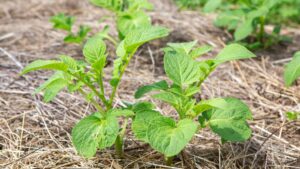
When my plants are about 10 – 15 cm (4 – 6 inches) high, I add mulch to my patches. For that, I either use (dry!) grass clippings, (old) hay, straw or leaves. Other good mulch materials are wood chips that have the additional advantage of being avoided by snails and slugs.
🌿 Gardener’s Tip: Add dry grass clippings, hay, straw or leaves as mulch.
Vegetables need food to grow into food, though.
Fertilise your plants
✔️ Why it matters: Plants need nutrients to grow optimally.
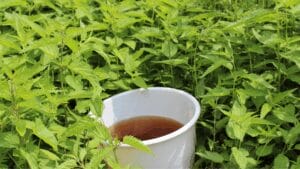
Like a bunch of ravenous teenagers, our vegetables need food or rather, fertiliser. After planting our seedlings outdoors, they’ll be grateful for a healthy dose of organic liquid fertiliser to push their growth.
Did you know, by the way, that you can make a great fertiliser out of stinging nettle? Just cut it off, put it in a bucket and fill it up with water. Let the brew sit for 3 – 4 weeks (warning: it stinks!), take out the stinging nettles, and then you’ve made a nitrogen-rich fertiliser for nought! Now add this liquid manure to your water at a ratio of about 1:20 and fertilise your plants, especially the heavy-feeders, with it.
Your berry shrubs, such as raspberries, gooseberries, currants, and blackberries, need food as well. They also profit from a healthy dose of that liquid manure from stinging nettles I mentioned above. Additionally, you should cover the soil under the bushes and shrubs now with mulch.
🌿 Gardener’s Tip: Use homemade nettle manure to fertilise your plants.
If you want to deepen your soil fertility naturally, you may enjoy these guides:
Natural Fertilisers From Plants
Natural Fertilisers From Animals
Natural Fertilisers From Humans
🌿 Enjoy slow seasonal gardening?
Join my newsletter for monthly garden guidance aligned with nature’s rhythm.
Break out the first blossom on your peppers
✔️ Why it matters: It makes the plant form more blossoms
Check your peppers and chilis for the first blossom they produce and – brutal as it may sound- break it out. In doing so, you induce the plants to produce more flowers, which will eventually turn into fruit. If you let the first blossom stay on the plant, it would form no or only a few additional flowers and your harvest would be very small.
You can read up on that matter in more detail in my comprehensive guide on growing peppers and chillies.
🌿 Gardener’s Tip: Use small scissors or your fingers to cut off the first bloom
Save seeds
✔️ Why it matters: Saves money
Are there still some last year’s vegetables in your garden? Don’t rip them out. Instead, let them blossom and build seeds that you can save for next year. They not only usually produce more sturdy plants, but they also make us independent from seed companies and let us save heirloom plants.
🌿 Gardener’s Tip: Only harvest dry seeds
The best gardens are not sterile but have a large, diverse wildlife.
Support the Wildlife
✔️ Why it matters: Insects and birds help with pollination and keep pests away
Plants, especially vegetables and fruits, need insects to pollinate them. Otherwise, there won’t be any fruits. The calculation is simple: no pollinators – no harvest.
At the same time, beneficial insects can help keep pests at bay, like ladybug larvae eating aphids.
We can help attract all those bees and insects by sowing flower strips as insect pastures, either on the borders of our vegetable garden or in the patches between the plants. An insect hotel is also a great way to invite insects into your garden.
Where there are insects, there are birds that also help in decimating pests. Make sure they have ample nesting space. In my garden, I’ve hung up a birdhouse for that purpose.
Help keep all those animals in your garden by providing water for them.
🌿 Gardener’s Tip: Add flowers and blooming herbs to your vegetable garden.
Frequently Asked Questions About Gardening in May
Gardening in May raises many questions, especially about planting times and pest protection. Here are the most common ones:
Can you plant tomatoes outside in May?
Absolutely. May is the right time, but only after the last night frosts and after hardening the seedlings off.
Is May too late to start a vegetable garden?
No, not at all. In fact, May is one of the best months to start a vegetable garden because soil temperatures are warmer and many plants establish quickly. If you haven’t started seeds earlier, you can buy plants like tomatoes, peppers and cucumbers. See the complete May sowing and planting calendar.
Is frost still a risk in May?
Yes, until around mid-May, there can still be frosts at night. Check the weather forecast and don’t plant out sensitive plants too early.
Should I fertilise my garden in May?
May is a key feeding month for many plants. As temperatures rise, vegetables and fruits grow rapidly and need food. Use a balanced fertiliser and avoid over-fertilising young seedlings to prevent them from becoming weak.
Common May Gardening Mistakes
Mistakes can happen, even when you’re an experienced gardener. To help you prevent them, I’ve listed the most common mistakes:
Planting before the last frost
It’s tempting to transplant our seedlings when it’s warm during the days, but nights can still be frosty in May. Check the weather forecast and, when in doubt, wait a few days longer. It would be a pity to kill your seedlings a few days before it’s safe to plant them out. I’m speaking of experience here….
Forgetting to harden off seedlings
Seedlings must be accustomed to outdoor conditions before being transplanted. Otherwise, they can stagnate or even die.
Overwatering young plants
Check the soil’s moisture by poking a finger into it and only water when it’s dry below the surface.
Mulching too early
Don’t mulch before the seedlings have reached a height of about 10 cm (4 inches). Otherwise, they could get suffocated.
🌿 May Gardening Summary
In May, focus on:
- Planting warm-season vegetables
- Protecting seedlings from pests and weather
- Establishing watering routines
- Feeding and mulching actively growing plants
Each month builds on the previous one in the garden, and following seasonal rhythms makes gardening simpler and more productive year after year.
Why May Garden Tasks Matter
As May unfolds with its warm sunshine and gentle rains, your garden is ready to truly come alive. Now’s the perfect time to get your hands dirty planting those summer vegetables, while keeping an eye out for unwanted pests that enjoy the warmer weather too.
Beyond all the gardening tasks, May invites us to pause and enjoy the abundance around us. I share some slower seasonal thoughts in my May Reflections.
Remember to water consistently as temperatures rise, add a fresh layer of mulch to retain moisture, and feed your plants enough but not too much. With just a few hours of care each week this month, you’ll be rewarded with a thriving garden that will provide beauty and bounty throughout the summer. Happy gardening!
Gardening never truly stops — it simply changes with the season.
Continue with my June Garden Tasks to stay one step ahead.
🌼Want this checklist of May Garden Tasks as a download?
Download the printable May garden checklist + get future seasonal checklists.
Can’t get enough of gardening? These articles may also interest you:
Beginner’s Guide: How to Start A Vegetable Garden
Beginner’s Guide to Composting: How to make compost in 8 easy steps
23 Common Vegetable Gardening Mistakes (And How to Fix Them!)
Or you just browse my gardening library for all posts about gardening.
0 Comments