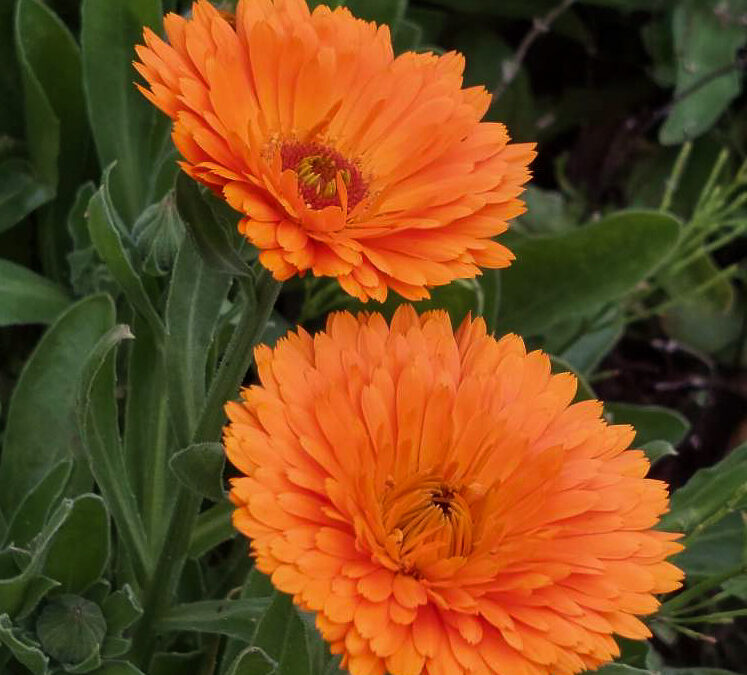
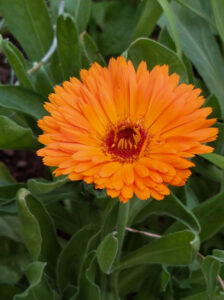
The first year I cultivated my garden, I decided to sow a few calendula between rows of red cabbage. The patch looked beautiful with its combination of thick violet cabbage heads and the bright orange calendula flowers floating above them like tiny suns. Not knowing how to use the flowers, I just let them wither and harvested only the cabbage. I don’t know what I had decided to plant on that patch the following year. What I do know, however, is that the only thing that grew there was calendula. They spread like the proverbial wildfire and it was time to get them under control (failed!) and learn how to use them (check!). This post shows you my five favourite uses for calendula.
Ingredients and benefits of calendula
Calendula is often used against skin problems like small wounds, burns, cracks, bruises and inflammation. Folk medicine also uses it for stomach and bowel disorders, emotional stress and injuries. Calendula contains flavonoids, triterpenes and saponines. Fat-soluble faradioles are mainly responsible for the wound-healing effects.
Among others, calendula shows antibacterial, decongestant, anti-inflammatory and anti-fungal as well as antispasmodic effects. Furthermore, it supports the formation of new connective tissue.
With its brightly warm and sunny orange nature, calendula heals not only physical wounds but is also said to have a soothing effect on an emotional level.
All recommendations in this post are based on my experience. I’m not a doctor and thus cannot be held liable for any adverse effects in connection with the use of the following recipes.
Five uses for calendula
#1 Calendula oil
This is a classic and so easily made. All you need is
1 glass jar with lid Calendula flowers (fresh or dry) Olive oil
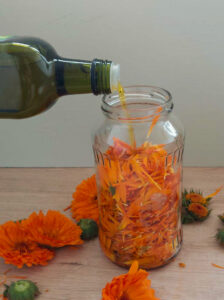
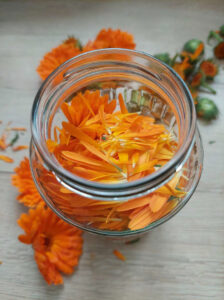
Pluck the petals from the calendula flowers and fill them loosely into the glass jar until it’s roughly full. Fill the jar up with the olive oil and close the lid. Put the jar onto a windowsill and let it rest for 10 – 14 days. Shake it every day.
After that time, strain the oil through a sieve into a second jar. Press the petals out thoroughly to remove every drop of oil. Close the jar and store the oil in a cool, dark and dry place for up to one year.
If you’re pressed for time, you can make a warm extraction. For that purpose, put the calendula petals and the oil in a jar and place that you place in a hot water bath. Let it simmer for about 30 minutes at no more than 60 °C while occasionally stirring. Let it cool and repeat the process. Then filter the mixture through a sieve and let it cool down.
Application
Calendula oil can be used as an alternative to calendula salve (see below) to support wound healing. It’s great for small injuries, inflamed skin, mastitis or nailbed infections. You can make compresses with gauze presses soaked with calendula oil. However, you should never apply it on deep or open wounds. Calendula oil is also an ingredient for calendula salve and calendula soap.
#2 Calendula salve
As I said before, calendula is THE herb for the skin. It soothes your skin and heals small wounds and irritations. Number 2 of my favourite uses for calendula is calendula salve. You’ll only need
250 ml calendula oil 25 g beeswax
Slightly warm the oil in a pot. Add the beeswax and let it melt until all is liquid. Make sure that the oil temperature won’t rise above 60 °C. Fill the mixture into small jars, close the lid tightly and let it cool. Store at a cool and dry place for up to one year.
Application
Use calendula salve as a soothing hand cream for working hands or to support the healing of irritations or small wounds. If you work in the garden and are a bit like me, you’ll always have scratches, skin irritations (hello stinging nettles) and overall rough hands. This is when calendula salve can do wonders for your skin. It soothes immediately and minor injuries seem to heal almost overnight!
#3 Calendula tincture
A tincture is a herbal extract in alcohol. For this calendula tincture, we need:
1 glass jar with lid Calendula flowers (fresh or dried) Alcohol (45 %)
Pluck the petals from the calendula flowers and fill them loosely into the glass jar until it’s roughly full. Fill the jar with alcohol (45 %) and close the lid. Put the jar in a warm place at room temperature but without direct sunlight and let it rest for 7 days. Shake it every day.
Strain the tincture through a sieve and press the petals out thoroughly. Fill the tincture into dark jars (e.g. amber glasses) and store at a cool, dark and dry place for up to one year.
Application
Like calendula oil and salve, you can use calendula tincture to support wound healing or prevent inflammation. However, tincture must be diluted. Add 1 – 2 tablespoons of calendula tincture to 1/4 l of distilled or boiled water. Soak a gauze pad in it and fix it with a dressing on the wound in question. Large, open wounds should be shown to a doctor.
Furthermore, calendula tincture may be used as a mouthwash in case of gum inflammation or other inflammation in the mouth. Add 1 tablespoon of calendula tincture to a glass of warm water and rinse your mouth with it.
#4 Calendula tea
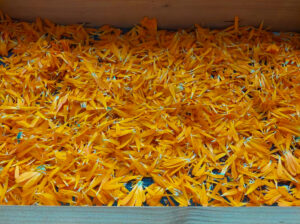
This is the easiest way to preserve calendula flowers. You just pluck the petals off and let them dry. This is best carried out in a dry place (who would’ve thought it) without direct sunlight but enough air circulation.
When the petals are dry, store them in a glass jar or tea box.
To make calendula tea, put 1 – 2 teaspoons of dried calendula petals into a cup and pour hot water over them. Let it sit for 10 minutes before use.
Application
Calendula is often added to tea blends against stomach and bowel disorders or menstruation problems.
I often add a teaspoon of dried calendula to our morning tea blend. Apart from soothing the belly it always – at least in my opinion – adds a ray of sunlight to the day.
Calendula tea can also be used for washing out wounds or as a wound compress. Soak a gauze pad with calendula tea, put it onto a wound or irritation and fix it with a dressing. It can also be used as a wound pad for eyes, bruises, varicose veins or haemorrhoids. Breastfeeding mothers can use calendula compresses to soothe their irritated breasts. And, last but not least, you can rinse your mouth with calendula tea whenever you have an inflammation in the mouth or throat area.
#5 Calendula soap
This is a bit more complex to make and you should know about the basic processes of soapmaking. If you do make the effort, however, you’ll create a very mild soap that’s even suitable for baby’s skin care. For this easy beginner’s soap, you’ll need
700 g calendula oil (see above) 200 g coconut oil 100 g sunflower oil 133 g sodium hydroxide 330 g calendula tea 1 tbsp dried calendula petals
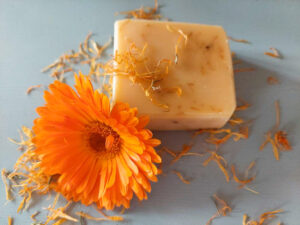
Calendula soap always reminds us of how wonderful summer is – even when it’s dark and cold outside. The special thing here is that we use calendula not only as a soap additive but also as a colouring agent. The calendula tea as the basis for the sodium hydroxide makes a beautiful yellow colouring of the soap. That way, we won’t have to use colouring additives like clays or soap pigments.
Calendula is a wonderful plant for body and soul and I hope I’ve inspired you to try out some of the easy recipes above to preserve it.
Fancy strawberry jam with a twist? Try these yummy recipes for strawberry jam with mint, woodruff or kiwi. Four ingredients and about 30 minutes of your time are all you need to be sent to seventh jam heaven.
Strawberry Mint Jam
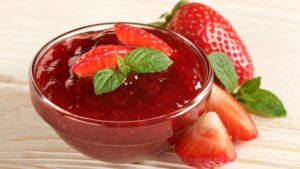
My first recipe is for strawberry mint jam. The sweetness of the strawberries in combination with the fresh mint leaves makes a refreshing spread for a summer breakfast!
Hint: The mint flavour will develop over time, so don’t use more than the recommended 3 – 4 stems. Otherwise, the jam could taste a bit like toothpaste…
Yield: 6 – 8 jars à 200 ml
Ingredients:
1 kg strawberries 500 g preserving sugar 3 – 4 stems of mint lemon juice
Instructions:
1. Sterilize your jars and lids by washing them with boiling water. Let them cool on a rack and dry them out.
2. Wash the strawberries, cut off the green leaves and let them dry in a colander.
3. Remove the mint leaves from the stems and cut them into very fine pieces.
4. Next, put the strawberries into a high pot and blend them with a hand blender.
5. Add the mint leaves, preserving sugar and lemon juice and bring it all to the boil under constant stirring.
6. Let it boil for 5 minutes while constantly stirring. If foam forms, you can remove it if you like. It’s a purely optical matter and doesn’t impact storage or flavour.
7. Test if the jam sets. When it’s ready, fill it into the jars and close the lid tightly. Place the jars upside down onto a towel for about 5 – 10 minutes. This will help to build a vacuum within the jars.
8. Let the jars cool down and store them in a cool, dark place. Or you just eat the jam up at once after cooling 😉.
Strawberry Woodruff Jam
Remember the woodruff syrup we made in spring? Besides adding it to your drinks, it’s also great in strawberry jam. The herbal and slightly earthy flavour of the woodruff matches very well with the sweetness of the strawberries.
Yield: 10 – 12 jars à 200 ml
Ingredients:
1 kg strawberries 500 ml woodruff syrup gelling agent 3:1 lemon juice
Instructions:
1. Sterilize your jars and lids by washing them with boiling water. Let them cool on a rack and dry them out.
2. Wash the strawberries, cut off the green leaves and let them dry in a colander.
3. Next, put the strawberries into a high pot and blend them with a hand blender.
4. Add the woodruff syrup, gelling agent and lemon juice and bring it all to the boil under constant stirring.
5. Let it boil for 5 minutes while constantly stirring. If foam forms, you can remove it if you like. It’s a purely optical matter and doesn’t impact storage or flavour.
6. Test if the jam sets. When it’s ready, fill it into the jars and close the lid tightly. Place the jars upside down onto a towel for about 5 – 10 minutes. This will help to build a vacuum within the jars.
7. Let the jars cool down and store them in a cool, dark place.
Strawberry Kiwi Jam
I would never have come across this recipe if I hadn’t been presented with a (very) large box of kiwis one day. The boys, of course, ate lots of them but there were still so many left that I had to find ways to preserve them. A day before the kiwis came into my life, I had been harvesting strawberries. So I decided it would be worth a try to combine these two fruits. I haven’t regretted it!
Yield: 6 – 8 jars á 200 ml
Ingredients:
500 g strawberries 500 g kiwis 500 g preserving sugar 2:1 lemon juice
Instructions:
1. Sterilize your jars and lids by washing them with boiling water. Let them cool on a rack and dry them out.
2. Wash the strawberries, cut off the green leaves and let them dry in a colander.
3. Peel the kiwis and chop them roughly.
4. Next, put the strawberries and kiwis into a high pot and blend them with a hand blender.
5. Add the preserving sugar and lemon juice and bring it all to the boil under constant stirring.
6. Let it boil for 5 minutes while constantly stirring. If foam forms, you can remove it if you like. It’s a purely optical matter and doesn’t impact storage or flavour.
7. Test if the jam sets. When it’s ready, fill it into the jars and close the lid tightly. Place the jars upside down onto a towel for about 5 – 10 minutes. This will help to build a vacuum within the jars.
8. Let the jars cool down and store them in a cool, dark place.
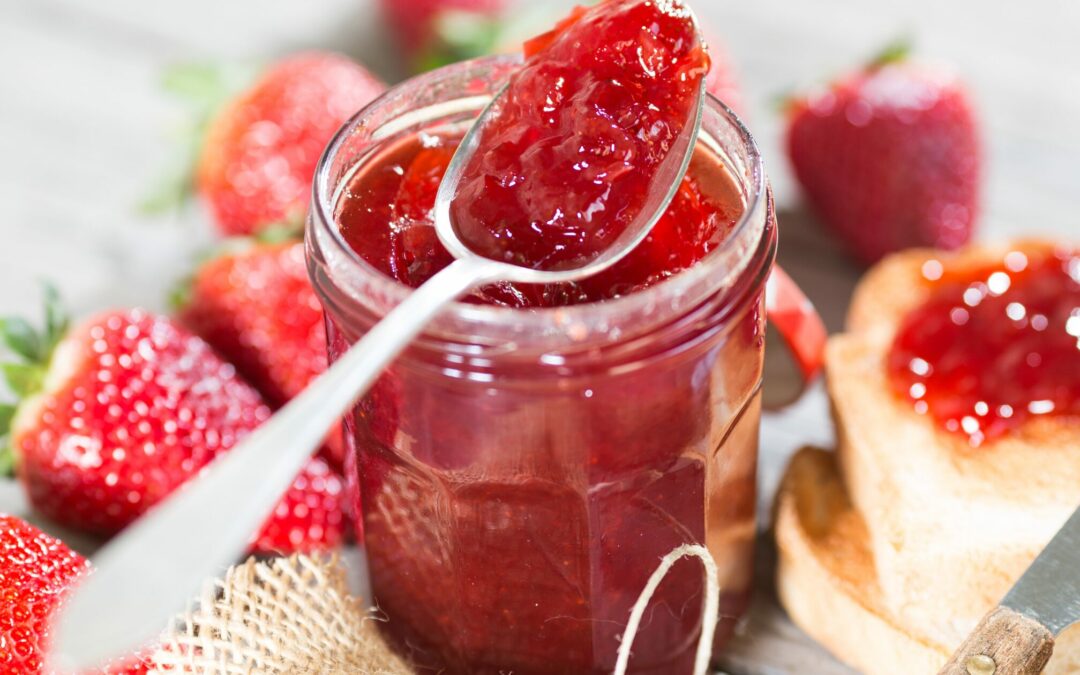
Strawberries! These sweet, bright red fruits are always a highlight in desserts and cakes. And above all in homemade classic strawberry jam! Enjoy it on freshly baked rolls and you have the ultimate indulgence for breakfast. You can easily capture the sweet taste of summer in a jar by making a classic strawberry jam. This easy recipe only requires three ingredients and about 30 minutes of your time. And when it has cooled down, you can use it for breakfast, in pancakes or even as a cake filling.
Why you should make your own classic strawberry jam
You’ll see: it’s so easy to cook your own strawberry jam and the result is a thousand times better than store-bought products.
Home-made strawberry jam is fresher and more flavourful, especially when you use fully ripe fruits from your own garden or a local market.
You can tailor the recipe precisely to your preferences. You can decide how sweet you want it – in this recipe, we’ll use preserving sugar 2:1 for less sweetness – and add other flavours like mint or woodruff.
You have full control over the sugar content and completely do without dubious additives.
Cooking jam makes you happy and you’ll always have a great gift for family and friends ready at hand.
Three ingredients for classic strawberry jam
Only three ingredients are necessary for a classic strawberry jam:
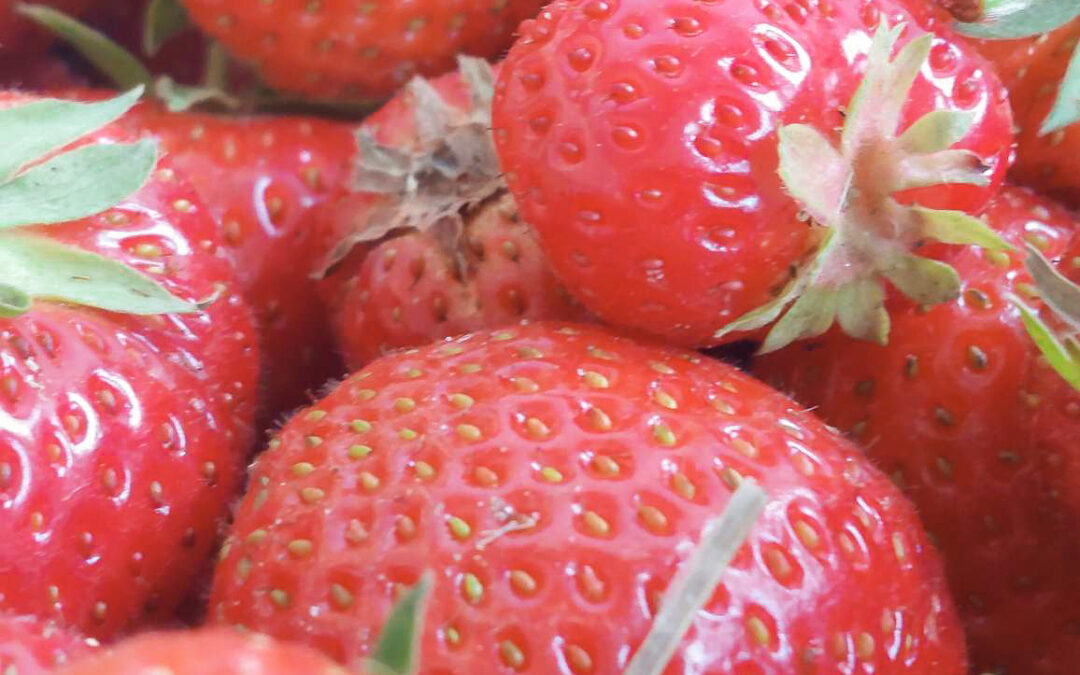
Only pick strawberries that are fully ripe and don’t show any white spots. They should be bright red and have a sweet smell. If they don’t smell at all, they most probably won’t taste at all either.
For sweet fruits like strawberries, I recommend using preserving sugar 2:1. That way, the jam won’t be too sweet and the characteristic flavour of the strawberries is more pronounced.
Lemon juice supports the gelation of fruits low in acid like strawberries. Furthermore, it helps to keep the red colour and adds a nice, fresh flavour to your jam.
My top tips for making strawberry jam
Sterilized jars will prolong the shelf life of your jam. Wash your jars and lids with boiling water and let them dry on a rack.
Cook the jam slowly. That way you make sure that it gelates evenly and doesn’t burn. Stir constantly to dissolve all the sugar.
Always test if the jam sets. Put a spoonful of jam onto a cold plate. If the jam runs it’ll need 1 – 2 minutes further boiling. If it sets on the plate, it’s ready to be filled in jars.
Fill the jam immediately into the sterilized jars and close the lid tightly. That way you prevent the formation of mould and prolong the shelf life of your jam.
Store the jars in a cool and dark place to keep the freshness and taste of your jam.
Classic strawberry jam
Yield: 6 – 8 jars à 200 ml
Ingredients:
1 kg strawberries 500g preserving sugar 2:1 1 tbsp lemon juice
Instructions:
Sterilize your jars and lids by washing them with boiling water. Let them cool on a rack and dry them out.
Wash the strawberries, cut off the green leaves and let them dry in a colander.
Next, put the strawberries into a high pot and blend them with a hand blender.
Add the preserving sugar and lemon juice and bring it all to the boil under constant stirring.
Let it boil for 5 minutes while constantly stirring. If foam forms, you can remove it if you like. It’s a purely optical matter and doesn’t impact storage or flavour.
Test if the jam sets. When it’s ready, fill it into the jars and close the lid tightly. Place the jars upside down onto a towel for about 5 – 10 minutes. This will help to build a vacuum within the jars.
Let the jars cool down and store them in a cool and dark place. Or you just eat the jam up at once after cooling.
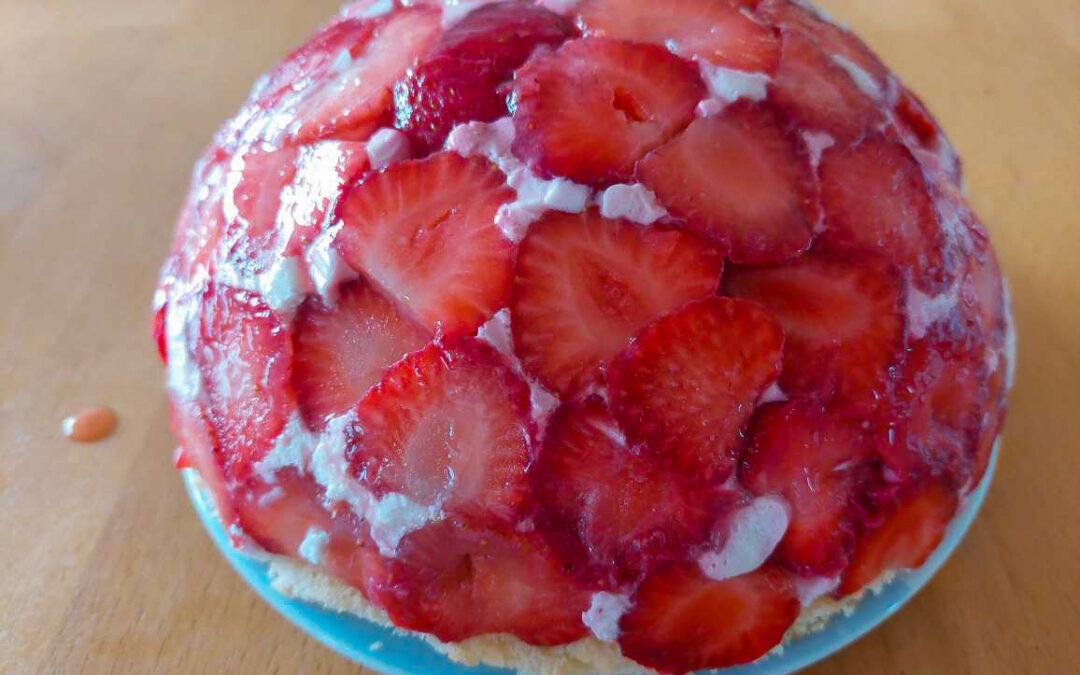
Strawberries! Every year we can’t wait for the first ripe strawberry and the knowledge that their harvesting time is limited to only a few weeks, makes them all the more precious. I think this relatively short availability and the fact that they don’t freeze well make them so popular. However, you can’t keep them for long in the fridge either and thus have to process them quickly. There are many fast and easy strawberry recipes like this strawberry pavlova or the strawberry tiramisu. But sometimes, we want to do something more impressive. That’s what this recipe is for. This strawberry dome cake will be a showstopper on every coffee table and it’s said to have even left some mother-in-laws speechless 😉 Admittedly, it takes more time to prepare this wonderful cake but it’s worth every minute of your effort!
Strawberry Dome Cake
10 – 12 servings
Ingredients:
3 eggs (size M) 1 pinch of salt 220 g sugar 100 g flour 1 tsp baking powder approx. 1 tsp butter 12 gelatin leaves (red or white) 1 kg strawberries 300 g curd cheese 200 g cream 1 package of red cake glaze
Instructions:
Preheat the oven to 180 °C (350 °F). Separate the eggs and beat the egg whites and salt until stiff. Gradually add sugar and beat again until the sugar has dissolved. Stir in the egg yolks. Mix the flour and baking powder and sieve it onto the stiff egg whites. Carefully fold in the flour mixture.
Line a baking tray with baking paper and put the dough on it. Smooth it out until it’s even and bake it in the oven for about 10 minutes. In the meantime, put a dishcloth on a flat surface and sprinkle it with sugar. When the cake is ready, remove it from the oven and immediately put it on the cloth, facing downwards. Remove the baking paper and let it cool down.
Take a half-round bowl and line it with cling film. Soak the gelatin leaves according to the packet instructions. Wash the strawberries and remove the green leaves. Cut about 300 g of the strawberries into slices and layer the bowl with them.
Mash the remaining strawberries together with 100 g of sugar. Stir the puree into the curd cheese. Remove the gelatine from the water and squeeze it. Afterwards, dissolve it in a small pot on medium heat and stir in 2 tbsp of the curd. Then stir this mixture into the remaining curd and let it cool down. In the meantime, whip the cream until it’s stiff and fold it into the curd mixture.
Cut the sponge cake into three layers for your half-round bowl. This can best be done with glasses or bowls of different sizes. The first layer should be the smallest, followed by a larger one. The last layer should be large enough to cover the bowl opening.
Carefully fill some of the cream into the bowl and put the smallest cake layer onto it. Alternately layer the mousse and the sponge, ending with the largest cake layer. Put it in the fridge for at least 3 hours.
Put a cake plate onto the bowl and turn it over so the cake sits on the plate. Remove the bowl and cling film. Prepare the cake glaze according to the package instructions and pour it over the cake. Let it cool for at least another 30 minutes.
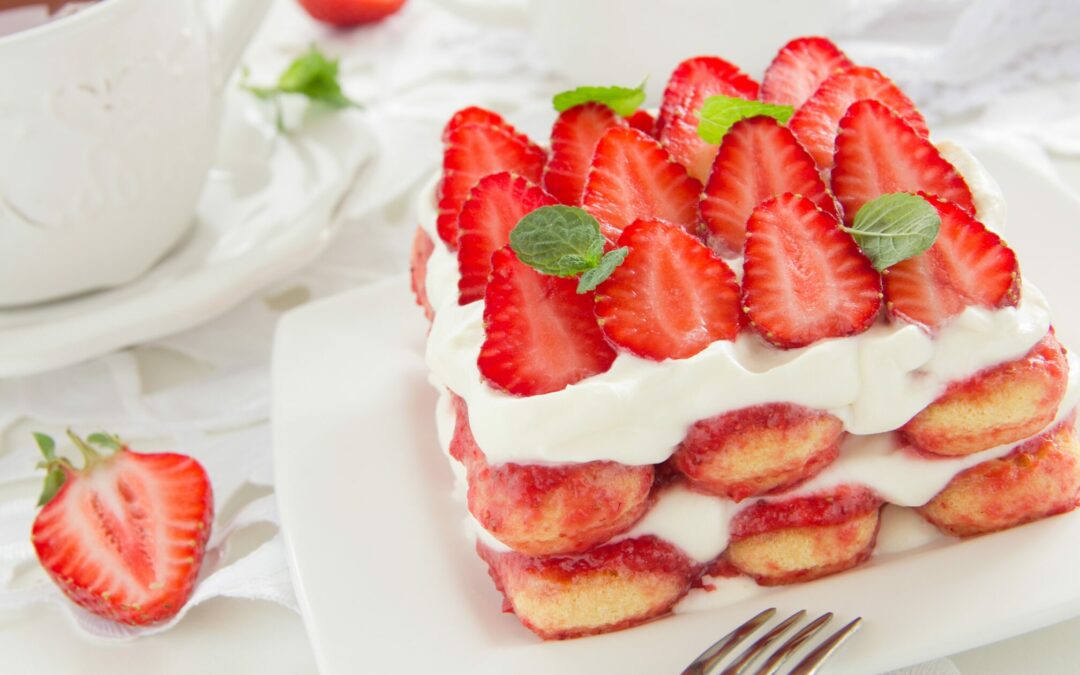
The classic tiramisu consists of ladyfingers, coffee, mascarpone and cocoa. But did you know that you can also make strawberry tiramisu? It’s lighter than the original and thus the perfect dessert for summer! Whenever I make it, I have to quickly secure a portion for me before the boys gobble it up in no time! I can’t blame them. And when you taste it you’ll certainly agree: One bite of this delicious dessert and you’ll become addicted, as well.
The good thing is that it’s swift to make. But look for yourselves:
Strawberry Tiramisu
For 4 people (or 2 greedy boys)
Ingredients:
15 – 20 ladyfingers 300 g strawberries 300 g curd cheese 150 g cream 3 tsp sugar 1 tbsp lemon juice
Instructions:
Wash the strawberries, remove the green leaves and cut them into slices. Put them into a bowl and mix them with 1 tsp of sugar and the lemon juice. Let the strawberries marinate for about 20 – 30 minutes, until a juice forms.
Whip the cream until it’s stiff. Mix the curd with 2 tsp of sugar and gently fold in the cream.
Put the ladyfingers side by side into a tray. Drizzle some of the strawberry juice over them so that they soak it up. Evenly spread the cream-curd mix onto the ladyfingers and put strawberry slices on top. Repeat these steps until all ingredients are used up. The last layer should be strawberries. Serve well chilled.