

.
Let’s address the elephant in the room, shall we? Whenever I talk about fermentation, someone eventually asks the same question: “That sounds great—but is homemade fermentation safe?”
Few topics create as much anxiety among beginner fermenters as food safety. Some people say fermentation is perfectly safe, others warn about deadly bacteria, and somewhere online you’ll inevitably stumble across frightening stories about botulism.
The good news is that traditional vegetable fermentation is one of the oldest and safest methods of food preservation—provided you follow a few simple principles. So yes, homemade vegetable fermentation is remarkably safe when you use the correct amount of salt, keep your vegetables submerged beneath the brine, and practise good hygiene.
In this guide, I’ll explain what actually keeps fermented foods safe, what can go wrong, and when you should throw a batch away.
If you’re new to fermentation, this overview will tell you more about what lactic acid fermentation is and how it works
Quick Overview
To answer the question if fermentation is safe quickly: Yes, as long as you observe certain rules.
✔ Usually not.
Traditional lacto-fermentation naturally creates an acidic environment that prevents harmful bacteria from growing. As long as you:
- use clean equipment
- keep vegetables submerged
- use enough salt
- discard obviously spoiled batches
home fermentation is remarkably safe.
What Makes Fermentation Safe?
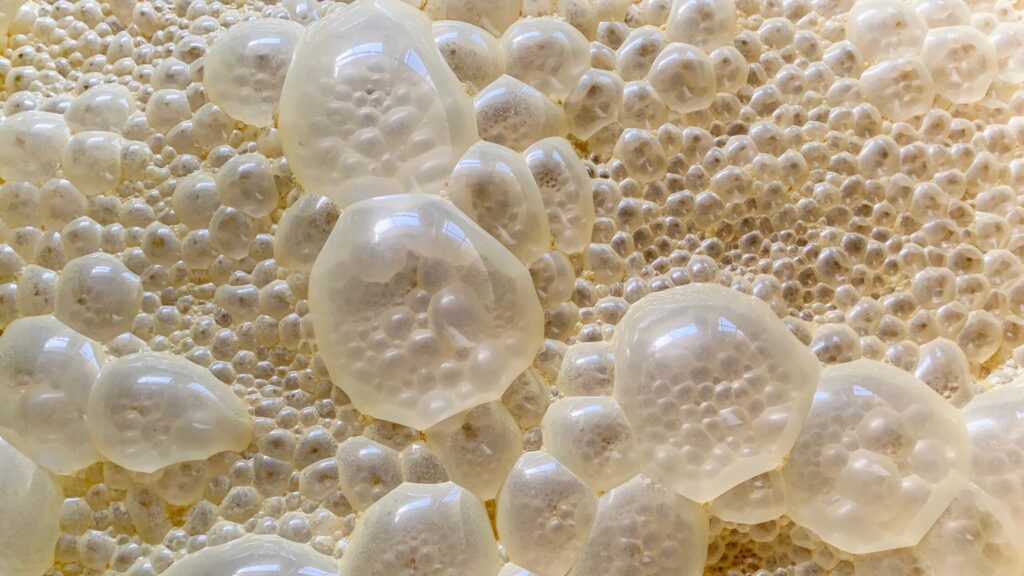
To determine that fermentation is a safe process, we must first understand how fermentation works. Please note that I’m talking mainly about lactic acid fermentation in this article.
The (originally Latin) word „fermentation“ means „transformation of a substance“. When food is fermented, the transformation is carried out by the smallest creatures, called microorganisms or microbes, such as bacteria and yeasts.
In simple terms, fermentation is a preservation method that uses beneficial microorganisms to transform and protect food.
By the way: Fermentation is NOT the same as pickling. In fact, those are two very different ways to preserve food. In this article about the difference between fermentation and pickling, you can learn more about that matter.
Microorganisms which are naturally present on vegetables, fruits and other food break down the natural sugars and transform them into alcohol, acids or other by-products.
Depending on the type of fermentation, the microorganisms involved in the process vary. When we ferment sauerkraut, for example, we apply lactic acid fermentation and the most common bacteria responsible for that process are the Lactobacillus species.
Now, there aren’t only beneficial bacteria on our food, but also some that could do us harm. To keep them at bay and even kill them off, we use salt in lactic acid fermentation.
These three factors work together to make lactic acid fermentation remarkably safe.
Salt
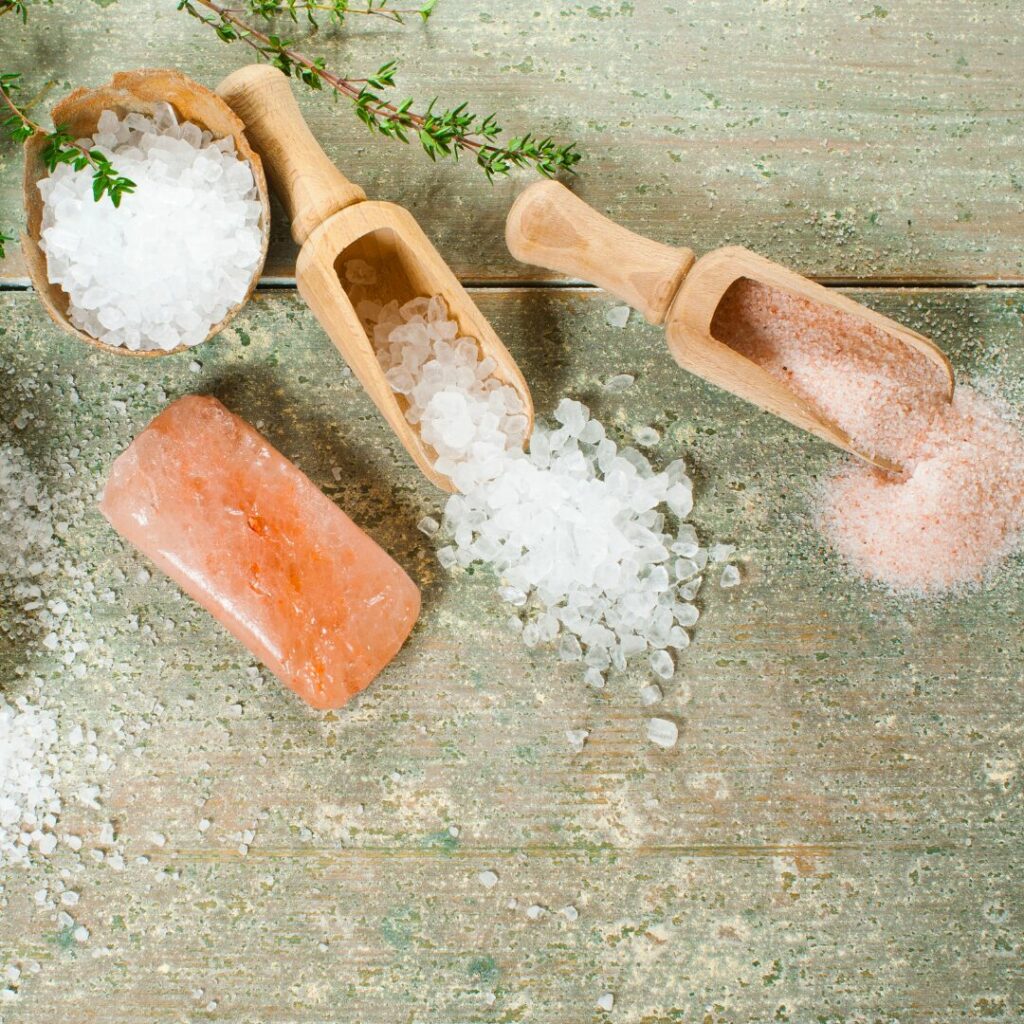
If you have ever made sauerkraut, you know that we just need two ingredients: cabbage and salt.
The amount of salt is determined by the net weight of the cabbage. After slicing the cabbage, we weigh it and add 3 % of its weight in salt.
This step is essential for the safety of the fermented food later. Salt slows down undesirable microbes while at the same time giving lactic acid bacteria an advantage. The latter can handle the salty environment much better, allowing them to multiply faster and displacing unbeneficial microbes.
Oxygen removal
Another crucial point in lactic acid fermentation is the removal of oxygen in the jars or crock.
Let’s take sauerkraut again as an example: when we’ve sliced the cabbage and added the salt, we knead the cabbage with our hands until a brine forms. Then we pack the cabbage tightly into jars or a crock, pounding it down so that any air pockets get removed. The brine will eventually cover the cabbage.
When we’ve packed enough cabbage in the jar, we cover the surface with a weight, keeping everything under the brine, that is, without oxygen.
Why is this important? Well, certain harmful microorganisms need oxygen to survive and grow. Mould, for example, usually forms on the surface of the brine when it’s been exposed to air. Kahm yeast, though not toxic, is another example.
I can hear you ask now: “But although the cabbage may be under the brine, there’s always oxygen between the brine surface and the jar lid. Wouldn’t mould form as a consequence?”
The short answer is: No. You see, during fermentation, gases will be built up. We can witness this process by the bubbles that form and the occasional “burp”. The gases develop so much pressure that they’re gradually pressed out from under the lid. That way, they also displace the oxygen that has been in the jar in the first place.
Lactic acid
After a few days, the fermentation process will start. As I mentioned before, we can see bubbles and the gases that form not only take oxygen with them, but sometimes also a bit of brine. These are the visual clues for a successful fermentation process.
What we can’t see – but could measure – is that the brine’s pH level continually drops. After all, it’s called lactic acid fermentation for a reason: the Lactobacilli transform the sugars in the vegetables into acid, which naturally lowers the pH to between 3.8 and 4.2.
Although properly fermented vegetables usually reach a pH below 4.6, most home fermenters don’t need to measure it. If you follow the basic rules—adequate salt, submerged vegetables, and sufficient fermentation time—the acidity develops naturally.
In this acid environment, harmful microorganisms like putrid bacteria or alcohol-producing yeasts can’t exist.
Pretty cool, right?
Together, these three factors—salt, oxygen removal and acid production—create an environment in which beneficial bacteria thrive while harmful microorganisms struggle to survive. That’s the foundation of safe vegetable fermentation.
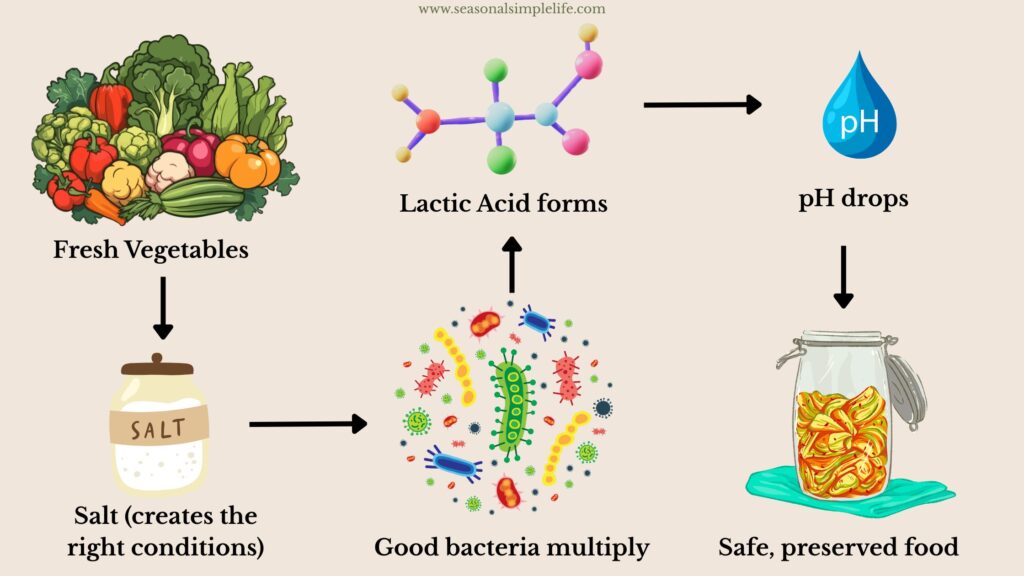
Even with all these natural safety mechanisms in place, many people still confuse fermentation with food spoilage. When talking about fermentation, one woman once said to me that to her fermentation is just rotted food. Let me show you why fermentation is something entirely different:
Why Fermentation Isn’t “Rotting”
Rotting is always an uncontrolled (and uncontrollable) process where many different microorganisms are involved. The results are always several unpleasant compounds. Thankfully, we can detect them in multiple ways, either by their abhorrent smell, alarming colours (black, violet, orange, etc.) or their repugnant appearance.
Humans are naturally repelled by rotten food. We have an inherent toxicity detector that alerts us when food is off.
Fermentation, on the other hand, is a controlled process that is dominated by beneficial microbes. In the case of lactic acid fermentation, these microbes produce acid, which not only gives our food a sour taste but also protects it from any harmful microorganisms.
Fermented vegetables smell slightly sour but not repugnant, and they look perfectly well.
Can You Get Botulism from Fermented Vegetables?
It’s important to distinguish vegetable fermentation from low-acid home canning. Although both preserve food, they rely on completely different principles and carry different risks.
Botulism is a rare but life-threatening poisoning that is caused by the bacterium Clostridium botulinum. This poison usually results from rotten meat or insufficiently canned food.
If someone were to eat food contaminated with Clostridium botulinum, they’d develop severe symptoms that could even be lethal. Although botulism is extremely rare, isolated cases do occur, which is why people are understandably concerned.
But: Properly fermented vegetables are a very poor environment for Clostridium botulinum. The ferments become too acidic for botulism bacteria to grow or produce toxin.
When we apply the right amount of salt to our vegetables when fermenting them and see that everything remains submerged, we have done everything to make sure our ferments will be safe to eat.
But how will we know that?
Signs Your Ferment Is Healthy
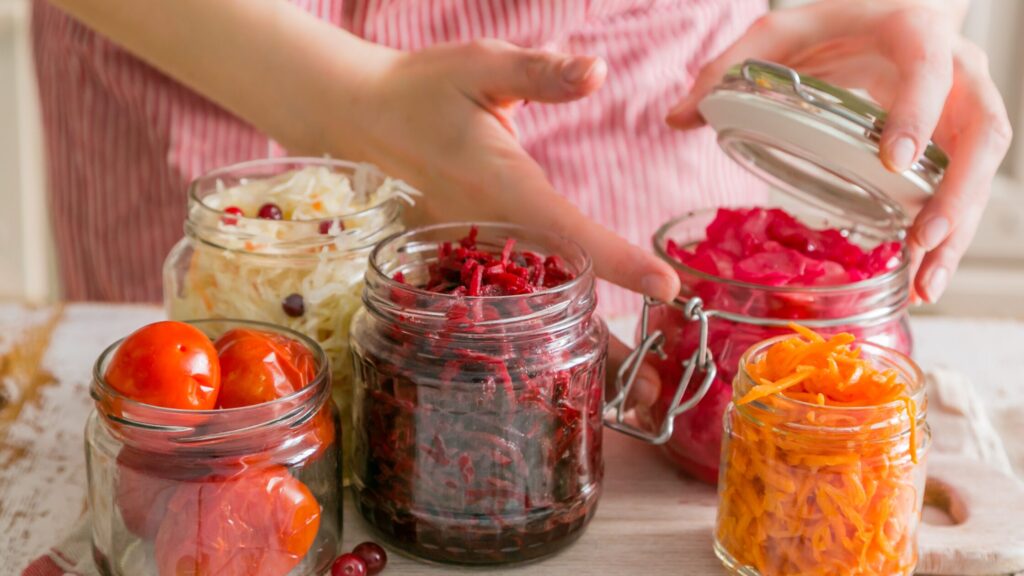
The best way to check whether our ferment is healthy is by using our senses:
✔ The content of the jar has a sour smell.
✔ When fermentation starts, bubbles form.
✔ The brine eventually becomes cloudy.
✔ We can even detect a slight yeast aroma.
✔ When you eat a forkful, you’ll notice that the vegetables have been softened.
✔ The vegetables change their colour during the fermentation process and usually become duller.
Now that we know what a good ferment looks and smells like, what about one that’s gone south?
Signs Something Went Wrong
This table will show you at a glance whether your ferment is good-to-eat or must be thrown away:
| Normal 👍🏻 | Discard ⚠️ |
|---|---|
| Cloudy brine | Fuzzy mould |
| White kahm yeast | Pink mould |
| Bubbles | Black mould |
| Sour smell | Rotten, putrid smell |
| Sediment | Slimy, foul ferment |
Let me show you the difference between kahm yeast and mould:
Kahm Yeast vs Mould
Kahm yeast is a layer of wild yeasts that forms on lacto-fermented goods. It always appears on the surface; that is exactly where the ferment has contact with oxygen.
It may develop an unpleasant flavour, but overall it’s harmless.
Its typical appearance is flat and sometimes slightly wrinkled, but it never shows a furry structure. And that’s the great difference between Kahm yeast and mould.
Important: Kahm yeast is not mould. It occurs when oxygen comes into contact with the ferment.
Mould: While Kahm yeast is flat, even and like a white film on the surface, mould grows in sections. It’s often coloured – either green, black, blue, or even pink – and, most importantly, it has a fuzzy, hairy appearance that’s growing upward.
Contrary to Kahm yeast, mouldy ferments must always be discarded.
If in doubt, throw it out!
If you’re ever genuinely unsure whether a ferment is safe, don’t taste it.
Fermentation should build confidence—not anxiety. When a batch shows obvious mould, smells rotten or makes you uneasy, discard it and start again.
You’ll find a whole article here on How to Identify and Fix Common Fermentation Problems
Common Safety Mistakes
There are some common mistakes to avoid when fermenting vegetables:
Using too little salt
Initially, it seems like a large amount of salt we have to use when fermenting vegetables, and we may be tempted to cut it down. Unfortunately, that’s a sure way to produce something rotten.
As we’ve learned, the salt kills harmful microorganisms and promotes beneficial ones, which will thrive and multiply happily in the salt brine. Eventually, they will create an acidic environment that helps keep the ferment safe for a long time.
Vegetables floating above the brine
Fermentation is an anaerobic process, which means without oxygen. When vegetables are not constantly submerged but stick out of the brine, they’ll get in touch with the little oxygen that’s left in the jar and eventually will start to mould.
Dirty utensils
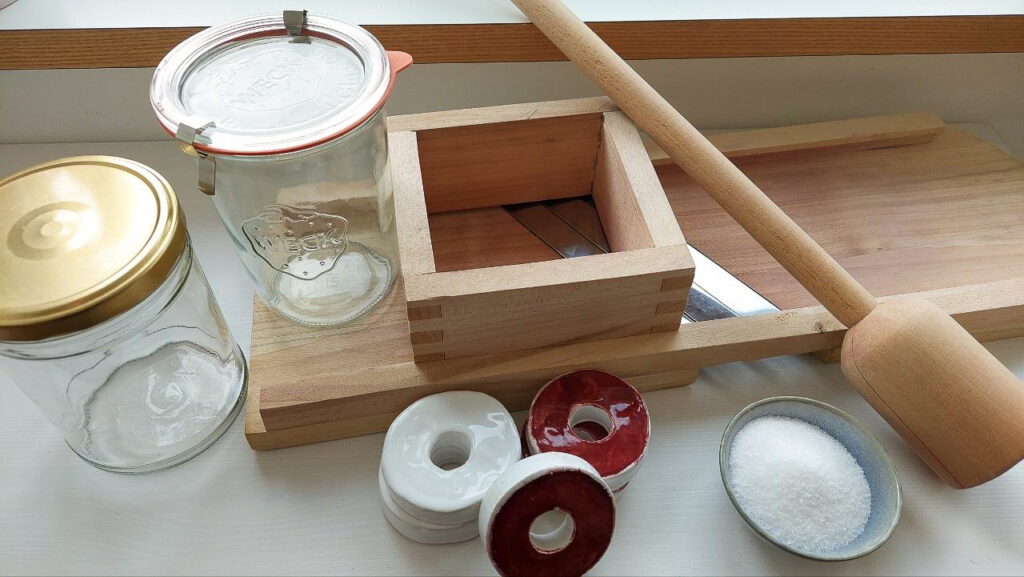
Hygiene is important in any preserving process, and also in fermentation. The jars and lids we use needn’t be sterile (see below) but clean. The same goes for knives, cutting boards, the tamper and fermentation weights. Clean them in hot soap water and let them dry before you use them.
Wondering what equipment you actually need? You might be surprised how little it is. Here’s my complete fermentation equipment guide.
Sealing jars too tightly
While you should close the lid on fermentation jars, it’s sufficient to only screw them slightly. That way, gases that form during fermentation as well as the occasional drop of brine can get out from under the lid. If you seal the jars too tightly, the gases have no way of escaping and pressure will build up, which could even lead to the jar exploding.
Opening constantly
When I first fermented in jars, I opened them once a day because I feared they might explode otherwise.
And to have a peek inside. Not that I’m curious. I just wanted to check that everything’s alright.
Unfortunately, this non-curiosity allowed the oxygen to flow back, and from the five jars I had initially used for fermentation, I had to throw out three because they got mouldy.
By now you know how to recognise a healthy ferment and avoid the most common mistakes. If you’d like a printable reminder while making your first batch, I’ve put together a free checklist you can keep beside your jar.
Common Questions During Fermentation
A healthy ferment can still surprise you. Here are a few common questions that often come up during the fermentation process.
Should You Sterilise Jars?
It’s a great myth that still circles around in fermentation groups that the jars and lids you use must be sterilised.
While that’s perfectly true and necessary for canning or preserving jam, sterilising isn’t necessary for vegetable fermentation.
After all, we make use of microorganisms that occur naturally on vegetables and fruits – and also our clean hands with which we have touched the jars.
Clean is enough when it comes to fermentation equipment. Just wash it all in hot soap water and let it dry before use.
Is White Sediment Dangerous?
Often, there’s a white sediment forming at the bottom of the jar, especially some time after the initial fermentation process has ended. This sediment is completely normal.
During fermentation, dead lactic acid bacteria and vegetable particles can settle at the bottom of the jar. It’s harmless and a normal sign of fermentation.
Does Fermentation Continue in the Fridge?
To start the fermentation process, we need temperatures between 20 – 24 °C ideally. After the initial fermentation is finished, we put our jars in a cool place, usually the fridge. There, the process doesn’t stop entirely, but slows down considerably so that the ferment can be stored longer without becoming too sour.
Can You Eat Fermented Food If It Smells Strong?
Especially beginners get hit in the face when they open their first jar of home-fermented vegetables, because the smell is unfamiliar and they wonder whether what they produce is safe to eat.
Look, fermented food doesn’t smell in the least like fresh vegetables. Freshly sliced cabbage, for example, has a slightly stale smell, but nothing strong. Sauerkraut, on the other hand, smells sour, tangy and even a bit sulphuric, and that’s perfectly fine.
Depending on what you fermented, the smells may differ.
Garlic, for example, develops a very sharp, pronounced smell once it’s fermented. I’ve put my small jar of fermented garlic paste into another jar, because the smell was so pronounced that the whole fridge reeked of it.
Even a slightly yeasty smell is perfectly normal in a ferment. After all, there are also yeasts involved in lactic acid fermentation.
There are, however, smells that tell us that this jar has to be thrown out.
When a ferment smells truly repugnant, rotten and like garbage or rotten meat, the only way is to discard it. A bad smell usually goes with mould, pink or orange slime on the surface, and maybe even a lid that explodes in your face when you open the jar.
Frequently Asked Questions
Can harmful bacteria survive fermentation?
Not when you use the right amount of salt, have observed hygiene and made sure that everything is submerged.
How much salt makes fermentation safe?
Depending on the vegetables you use, a salt ratio between 2 and 5 % is safe.
Should I remove kahm yeast?
Yes, I’d recommend carefully removing it. Otherwise, mould could form.
Can I scrape mould off and keep the ferment?
Mould develops long “roots” that penetrate the whole ferment, but is invisible to the naked eye. Mouldy ferments should always be discarded.
Is cloudy brine normal?
Yes. Microorganisms and yeasts make the brine cloudy.
Can I use tap water?
Yes, but only if it’s not chlorinated. Chlorine will harm the fermentation process.
Is fermentation safe for children?
Yes, children benefit as much from fermentation as adults.
Can pregnant women eat fermented vegetables?
Yes, it won’t harm them or the baby.
Can I eat fermented vegetables if they taste very sour?
Yes. A stronger sour taste simply means fermentation has progressed further. The vegetables are still perfectly safe, although you may prefer storing them in the refrigerator sooner next time if you enjoy a milder flavour.
Why does my ferment smell like cheese?
During fermentation, many different aromatic compounds are produced. Depending on the vegetables and the microorganisms involved, some ferments can briefly develop a smell reminiscent of cheese or feet. As long as the smell isn’t rotten, putrid or accompanied by mould, this is usually a normal stage of fermentation.
Does vinegar make fermentation safer?
No, it would, on the contrary, inhibit the process. Vinegar is used in pickling, which is different from fermentation.
Common Fermentation Safety Myths
Somehow there are still some fermentation myths out there that refuse to die, no matter how often someone has proven them wrong. Let me show them to you, so that next time one of them comes up in conversation, you can confidently clear it up.
Myth 1: If there’s no mould, it’s always safe
I wish this were true, but as we’ve learned, there are several factors that matter when it comes to food safety in ferments.
The first, of course, is smell. If there’s no mould but your nose tells you it’s dying from the smell, discard the ferment.
Other factors are acidity and a properly performed fermentation process.
Myth 2: Every white film is mould
More often than not, a white film on the brine surface is just kahm yeast, which is harmless.
Myth 3: Fermentation needs special bacteria
Fresh vegetables and fruits naturally carry all the microbes needed for fermentation.
Myth 4: Sterilising everything makes fermentation safer
While clean equipment is important, sterile conditions are neither necessary nor desirable for vegetable fermentation.
Myth 5: Fermentation is unpredictable
On the contrary: once you understand the basic principles, fermentation is remarkably consistent.
Final Thoughts
For thousands of years, our ancestors have preserved food through fermentation.
While no method of food preparation is entirely without risk, vegetable fermentation is surprisingly forgiving. By understanding the basic principles—salt, submersion, cleanliness, and patience—you’ll soon learn to recognise the difference between a healthy ferment and one that should be discarded.
Confidence comes with experience, and after a few successful batches, you’ll likely find fermentation far less mysterious than it first appeared.
Something doesn’t look quite right?
Learn how to diagnose soft vegetables, white film, strange smells and other common fermentation issues in my complete troubleshooting guide.
Continue Your Fermentation Journey
Just getting started? These guides will help you take the next step:
- → Fermentation for Beginners
- → Easy Homemade Sauerkraut
- → Fermentation Equipment
- → Common Fermentation Problems & Solutions
- → Fermentation vs Pickling
Looking for more ways to preserve your harvest?
Visit my Preserving Hub for fermentation, pickling, jams, syrups, drying and other traditional preservation methods.
0 Comments