If you, like me, pickle a lot of vegetables, you need a good deal of apple vinegar. Instead of buying it, however, why not try your hand at making it by yourself – from scraps! It’s so easy, that you’ll wonder why you didn’t do it earlier and never will buy a drop of apple vinegar again. All you need is apple scraps that is peels and cores (for example from making apple sauce or dry-canning apples), water, sugar and a bit of raw apple vinegar to start. As containers you’ll need sufficiently large sterile bottles or jars as well as some cloths to cover the jars
But before we start, let’s take a quick look at how vinegar is made.
Step 1: Sugar becomes alcohol
The first step to making apple vinegar is the production of apple wine. Natural yeasts transform the sugar from the apples plus the sugar we add into alcohol. You can see that by the formation of white foam on the surface. It’s also possible that after a few days, a white layer forms on the surface. That’s kahm yeast and it’s harmless.
When, after some time, the acid content in the liquid rises, kahm (and other) yeast(s) disappear.
Step 2: Alcohol becomes vinegar
As soon as the first alcohol has formed, acetic acid bacteria also start to work. They are naturally in the air and on the fruits and need alcohol and oxygen to multiply. For this reason, it’s essential that you only cover the jars with a cloth because without oxygen the acetic acid bacteria cannot work.
The alcohol is now fermented to acetic acid. If you want to learn more about how fermentation works, this article is just the thing you need:
How to make apple vinegar from scraps
Prepare your jars by washing them and the lids in hot water or the dishwasher and then let them dry.
Before processing your apples, wash them thoroughly in the sink to remove any dirt. Now peel and quarter them (depending on what you want to do with those apples) and remove the core. Cut off any rotten parts. Only unspoiled and healthy peels and cores can be used for making vinegar.
When chopping apples, I usually have three bowls at hand: one for the apple quarters to be processed, one for the “good” apple peels and cores and one for the rotten parts to be thrown away.
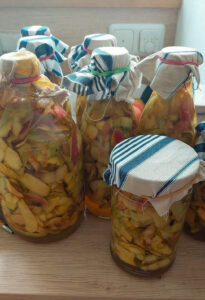
Put the peels and cores into a one-litre glass bottle until it’s about ¾ full. Add half a cup of sugar, and half a cup of apple vinegar as a starter and fill the bottle up with water. Stir or shake the mixture until the sugar has dissolved.
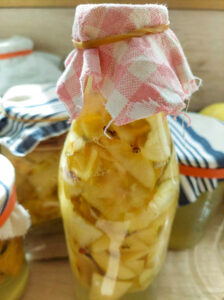
Don’t close the bottle with a lid as we need oxygen to make vinegar. Instead, put a clean piece of cloth on the bottle opening and fix it with a rubber band. That way, the liquid is exposed to oxygen, but no fruit flies or dirt can get into it.
Put the bottle in a warm, dark place (no direct sunlight) and let it sit for about 10 – 14 days. After a few days, you’ll see tiny bubbles forming.
After a few days, bubbles start to form
Sometimes, the mixture builds foam and may even bubble over the rim. If a thin white spread forms on the surface that destroys when you stir it slightly, that’s no reason to worry. It’s kahm yeast and will neither affect the process nor the taste. Around day 6 it’ll start to smell of vinegar.
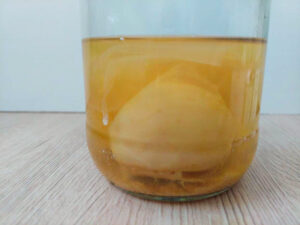
After about 10 – 14 days, strain the liquid through a colander into a clean glass bottle. Make sure to squeeze out any residual liquid from the peels. If you have, you can add a vinegar mother to your fresh vinegar. This will help it to mature.
Put a fresh clean cloth on the opening and fix it with a rubber band. Let the vinegar mature in a cool, dark place for about six months. During this time, a mother of vinegar might form which is a great sign that everything’s going well! Taste your vinegar after six months. If it’s to your liking and a vinegar mother has formed, decant it into a fresh bottle. Carefully put the vinegar mother into a separate jar and fill it up with enough vinegar to cover it completely. You may use it as a starter for the next vinegar.
Homegrown jellyfish, a.k.a. mother of vinegar
Other fruit vinegars
I’ve also tried making vinegar from pear and quince scraps and it worked out very well. The pear and quince vinegar took a bit longer to mature (about 8 – 12 months) but the wait was absolutely worth it! Both vinegars tasted deliciously fruity and relatively mild and they add an interesting flavour to fruit salads. Pear and quince vinegar are also marvellous in a vinaigrette for autumn salads like lamb’s ear and chicory with pears, grapes and walnuts.
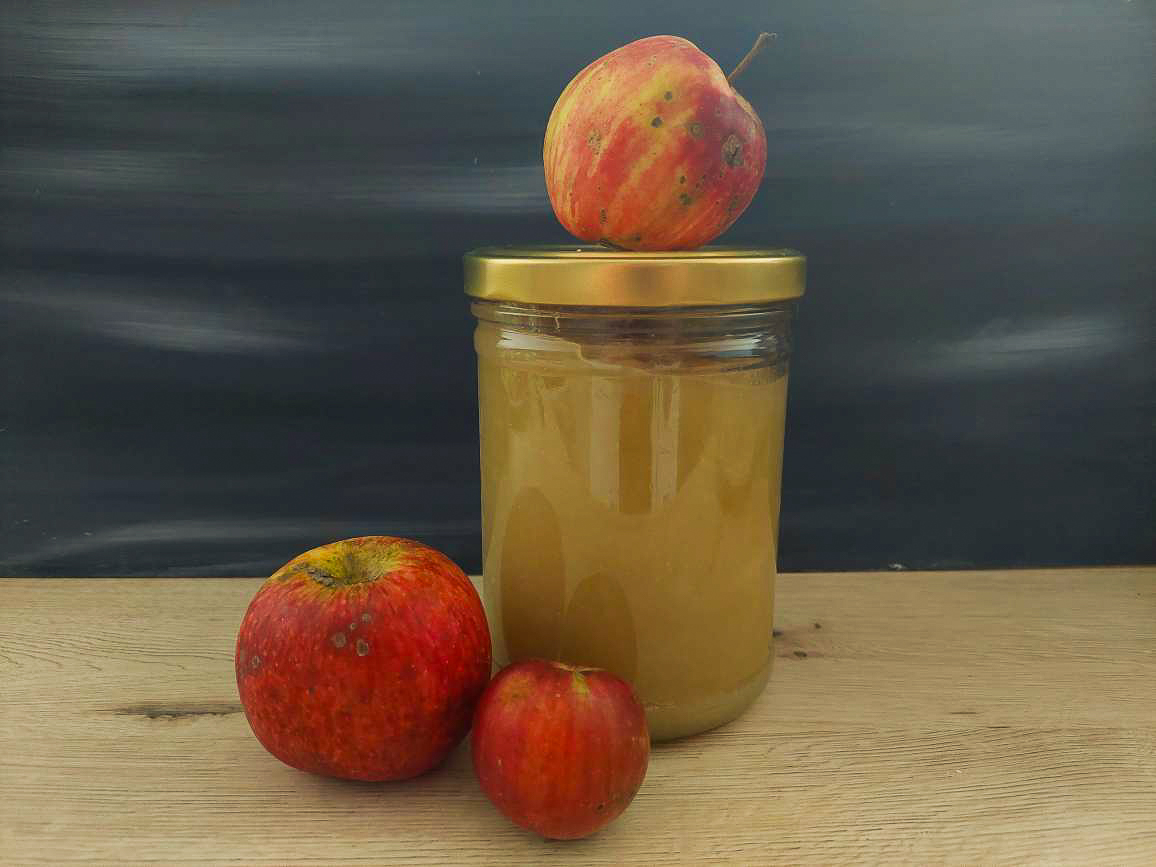
Apples are available all year round, especially when you grow a variety of them that ensure a long harvesting and shelf life. If you don’t have an orchard, you still can buy apples at any time of year. Nevertheless, fresh apples, plucked right from a tree when they are ripe are the privilege of autumn. I’m lucky enough to have a wonderful brother with a vast orchard and enough love for his sister that he allows her (that is: me) to have her share of his fruit harvest. Where we had very few fruits last year, this year has presented us with an abundance of them! Apart from eating the apples right from the tree and baking apple cakes in all varietes, what better way to preserve them for the upcoming winter than by canning apple sauce?
Ingredients and equipment for canning apple sauce
You’ll need a water bath canner (no pressure canner necessary for this recipe), appropriately large jars with well-closing lids and apples – at least one kilogram, the more the better – and sugar if you like.
Preparations
Prepare your jars by washing them and the lids in hot water or the dishwasher. Put the jar lids and rings or the rubber bands in a pot and cover them with water. Bring the water to a boil and let it all cook for five minutes. Remove the lids, rings and/or rubber bands from the boiling water and put them onto a clean dish towel on the kitchen counter. Let them dry.
Instructions for canning apple sauce
Rinse the apples in your sink to wash off any dirt. Also, remove any leaves, grass or other residues. Once washed, peel the apples, quarter them and cut out the cores. Cut off all rotten parts. If you want to make apple vinegar from the scraps, make sure that you only use unspoiled peels and cores. I usually take three bowls when preparing apple sauce: one for the apple quarters to be cooked, one for rotten apple parts or wormy cores to discard and one for all the scraps I later use for making vinegar.
Cooking
Once you’ve peeled and cut all the apples, wash the quarters again and put them into a large pot (or several if you have too many apples to fit into one, though you can also cook them in succession). Fill up water to about a quarter of the pot and put the apples to a boil. When the water’s boiling, carefully stir the apples from the top under so that they cook as well. After some minutes – depending on the sort – the apples become soft. Now use a hand blender to mix them into a smooth, homogenous mass. If you want, you can now optionally add some sugar to the apple sauce, but it isn’t necessary for preserving. I don’t use sugar in my apple sauce but if you want to and like your sauce sweeter, go ahead and add sugar to your taste.
When the sauce is blended stir it well until it’s boiling. Be very careful at this stage as the thick mass will easily bubble over and explosively release splashes of hot apple sauce that usually shoot at an unsuspecting arm or hand. I’ve gotten burnt more than once and know what I’m talking about…
Remove the pot from the stove and with the help of a funnel, ladle the apple sauce into the jars. Leave about one inch of headspace. Before closing the lids, make sure that the rim of the jar is clean. That’s best ensured by dipping a clean cloth (for example a towel) into some vinegar and wiping the rims clean. Seal the jars with the lids.
Canning
To can the jars, fill as much water into your water-bath canner as indicated in the manual and heat it. The water in the pot must have approximately the same temperature as the apple sauce in the jars. If we put the hot jars into cold to medium-warm water, they would break due to the huge temperature difference between the outside (water) and the inside (apple sauce). When the water has reached about 70 °C (160 °F), you can put the jars into the water bath canner (the apple sauce in the jars will have cooled down to approximately the same temperature by now). Make sure there is enough space between the jars and they don’t touch. Close the pot lid and bring the water to a boil. Once it boils, set the timer to 35 minutes and let the canner do its wonders.
When time’s up, carefully open the canner lid. Beware of the hot steam! Remove the jars with a glass lifter out of the canner and put them onto a towel on the counter to cool down.
When they’ve cooled down completely, store the apple sauce in a cool and dark place. It’ll last up to two years.
Apple sauce is a wonderful addition to pancakes or waffles, you can stir it into your morning yoghurt, make an autumnal apple tiramisu with it or just scoop it right from the jar.
Apple Sauce
Apple sauce is a wonderful addition to pancakes or waffles, you can stir it into your morning yoghurt, make an autumnal apple tiramisu with it or just scoop it right from the jar.
apples, at least one kilogram, the more the better
sugar (optional),to taste
Method
Prepare your jars by washing them and the lids in hot water or the dishwasher. Put the jar lids and rings or the rubber bands in a pot and cover them with water. Bring the water to a boil and let it all cook for five minutes. Remove the lids, rings and/or rubber bands from the boiling water and put them onto a clean dish towel on the kitchen counter. Let them dry.
Rinse the apples in your sink to wash off any dirt. Also, remove any leaves, grass or other residues.
Once washed, peel the apples, quarter them and cut out the cores. Cut off all rotten parts. If you want to make apple vinegar from the scraps, make sure that you only use unspoiled peels and cores.
Once you've peeled and cut all the apples, wash the quarters again and put them into a large pot (or several if you have too many apples to fit into one, although you can also cook them in succession). Fill up water to about a quarter of the pot and put the apples to a boil.
When the water's boiling, carefully stir the apples from the top under so that they cook as well. After 5 - 20 minutes - depending on the variety – the apples become soft. Now use a hand blender to mix them into a smooth, homogenous mass. If you want, you can now optionally add some sugar to the apple sauce, but it isn't necessary for preserving.
When the sauce is blended stir it well until it’s boiling. Be very careful at this stage as the thick mass will easily bubble over and explosively release splashes of hot apple sauce that usually shoot at an unsuspecting arm or hand.
Remove the pot from the stove and with the help of a funnel, ladle the apple sauce into the jars. Leave about one inch of headspace. Before closing the lids, make sure that the rim of the jar is clean. That's best ensured by dipping a clean cloth (for example a towel) into some vinegar and wiping the rims clean. Seal the jars with the lids.
To can the jars, fill as much water into your water-bath canner as indicated in the manual and heat it. The water in the pot must have approximately the same temperature as the apple sauce in the jars. If we put the hot jars into cold to medium-warm water, they would break due to the huge temperature difference between the outside (water) and the inside (apple sauce). Make sure there is enough space between the jars and they don’t touch. Close the pot lid and bring the water to a boil. Once it boils, set the timer to 35 minutes and let the canner do its wonders.
When time's up, carefully open the canner lid. Beware of the hot steam! Remove the jars with a glass lifter out of the canner and put them onto a towel on the counter to cool down.
When they’ve cooled down completely, store the apple sauce in a cool and dark place. It’ll last up to two years.
Never judge a book by its cover – or in this case: a vegetable by its appearance. Beetroots are not the prettiest of veggies. They are plump, dirty and make a hell of a mess when cut up. But if you get to know them, you’ll love them. You can eat them raw, cooked, steamed, boiled or roasted and preserve them by freezing, pickling, canning or fermenting them. Add to that a wonderfully unique taste and a bunch of nutrients and you have a veggie superstar! If you don’t know how to deal with an abundance of beetroots, look no further. In this post, I’ll show you two recipes for pickled beetroots so that you can enjoy their flavour and colour all winter long.
Pickled beetroots I
Yield: 5 jars of 350 ml Shelf life: up to two years
Ingredients
1,2 kg beetroots 3/4 l apple vinegar 1/8 l water 80 g sugar 1 tsp salt 4 tbsp grated horseradish 1 tbsp white peppercorns 1 tbsp caraway 5 cloves 1 bay leaf
Instructions
1. Put on an apron and always – ALWAYS – wear disposable gloves when handling beetroots. Otherwise, the stains will never come out of your clothes and your hands will have a butcherlike colour for quite some time.
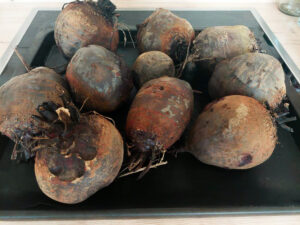
2. Cut off the leaves to about 1 cm and put the beetroots onto a baking tray. Bake them in the oven at a temperature of 175 °C (350 °F) for 60 – 90 minutes, depending on their thickness. When they feel soft, they’re ready.
Put your beetroots onto a tray and bake them in the oven for about 1 – 1,5 hours.
3. In the meantime, mix the vinegar, sugar and salt and put it to a boil. Wash the horseradish, peel it and grate it.
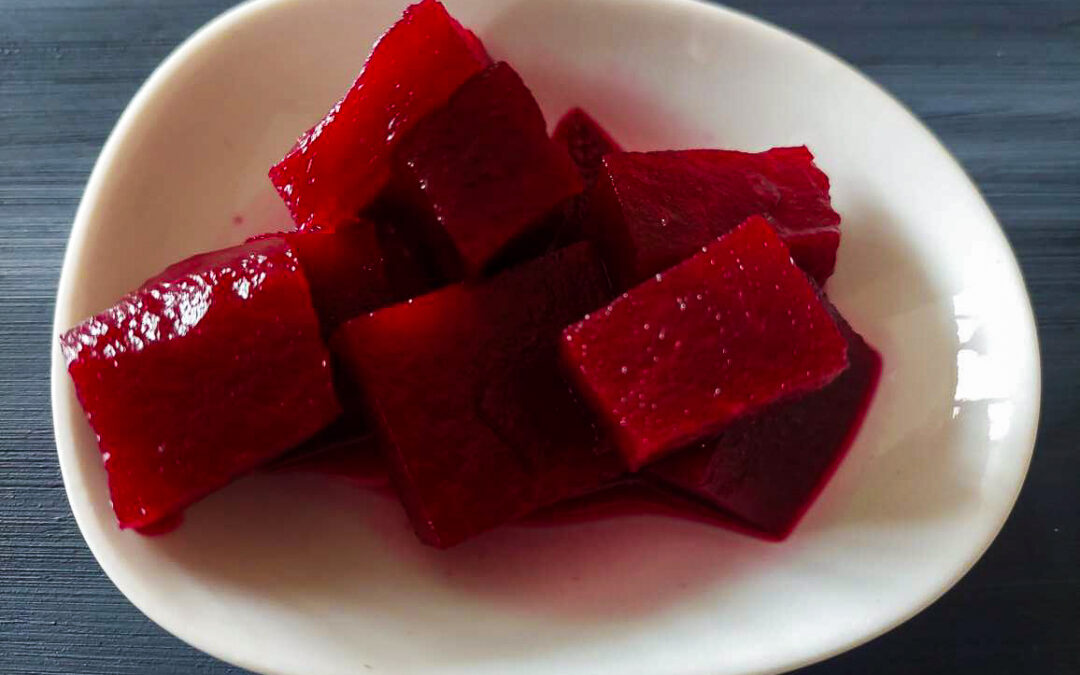
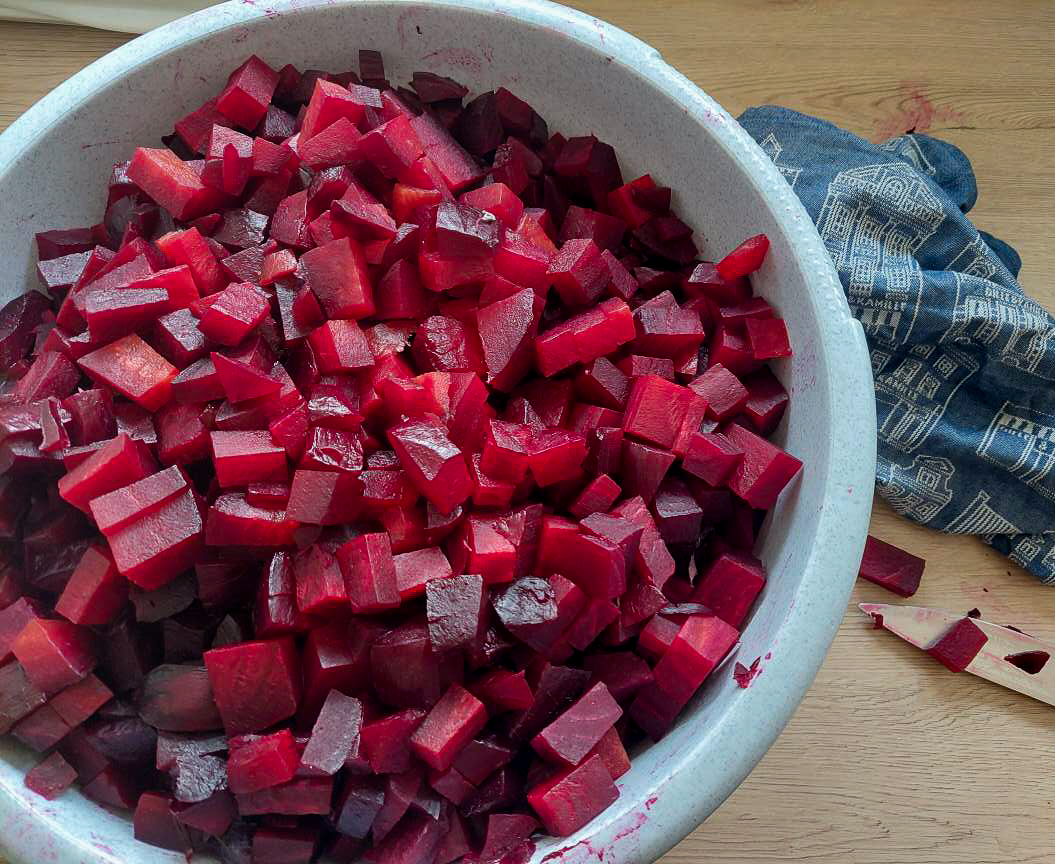
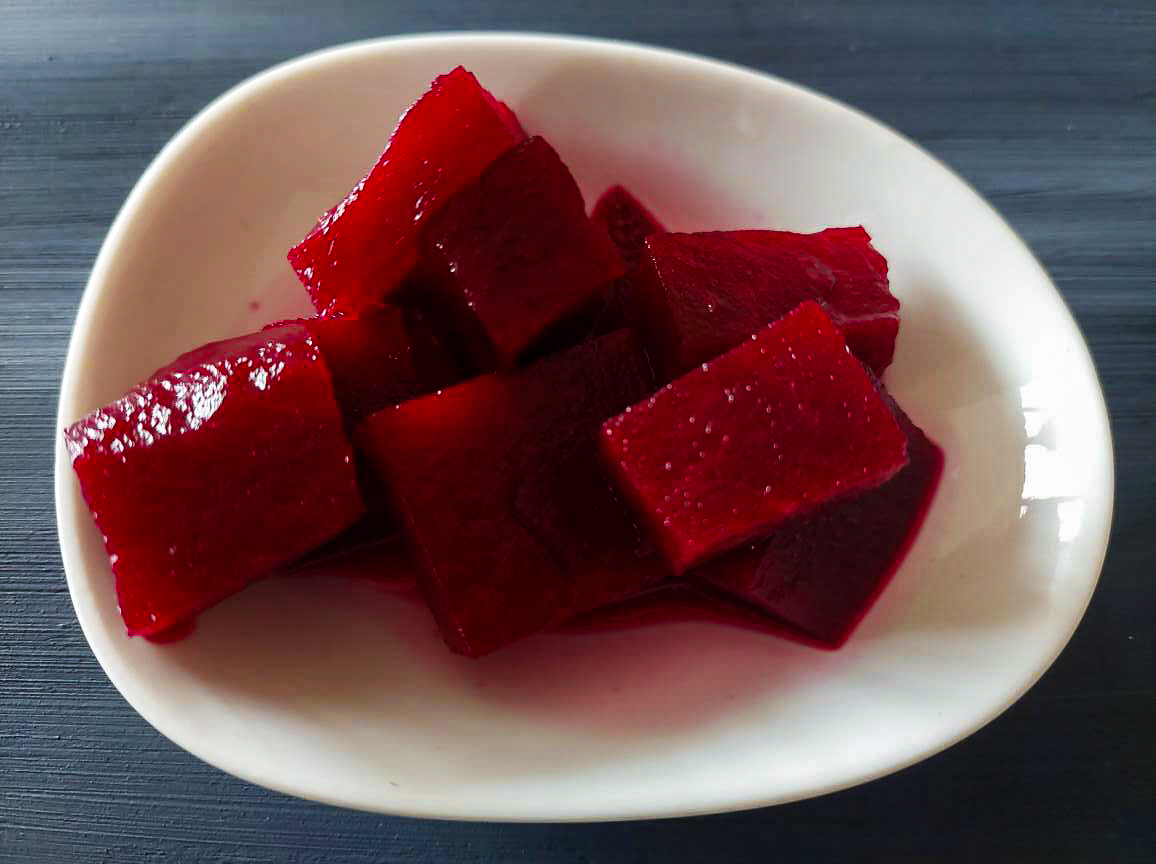
4. Peel the cooked beetroots and chop them into squares. I do not recommend slices as they fall apart easily.
5. Layer the still-warm beetroots with the spices into jars. Fill up with the hot fluid and close the jars tightly with lids. Store the pickled beetroots in a cool and dark place.
Put on an apron and always - ALWAYS - wear disposable gloves when handling beetroots. Otherwise, the stains will never come out of your clothes and your hands will have a butcherlike colour for quite some time.
Cut off the leaves to about 1 cm and put the beetroots onto a baking tray. Bake them in the oven at a temperature of 175 °C (350 °F) for 60 - 90 minutes, depending on their thickness. When they feel soft, they're ready.
In the meantime, mix the vinegar, sugar and salt and put it to a boil. Wash the horseradish, peel it and grate it.
Peel the cooked beetroots and chop them into squares. I do not recommend slices as they fall apart easily.
Layer the still-warm beetroots with the spices into jars. Fill up with the hot fluid and close the jars tightly with lids. Store the pickled beetroots in a cool and dark place.
Pickled beetroots II
If you like it a bit milder, the following recipe will suit you! It uses apple juice in combination with vinegar which leads to a more fruity taste. As we use less vinegar, however, the shelf life is only up to one year when stored in a cool place.
Yield: 5 jars of 350 ml Shelf life: up to one year
Ingredients
1,2 kg beetroots 1 l water 3/8 l apple juice 1/8 l apple vinegar 100 g sugar 1 tsp salt 1 tbsp black peppercorns 1 tbsp caraway
Instructions
The procedure is pretty much the same as in recipe I:
1. Cut off the leaves to about 1 cm and put the beetroots onto a baking tray. Bake them in the oven at a temperature of 175 °C (350 °F) for 60 – 90 minutes, depending on their thickness. When they feel soft, they’re ready.
2. In the meantime, mix the vinegar, sugar and salt and put it to a boil.
3. Peel the cooked beetroots and chop them into squares.
Once baked and peeled, chop the beetroots into squares
4. Layer the still warm beetroots with the spices into jars. Fill up with the hot fluid and close the jars tightly with lids. Store the pickled beetroots in a cool and dark place.
Pickled Beetroots II
This is a recipe for a milder version of pickled beetroots. The combination of apple vinegar and apple juice takes the edge off the vinegar while at the same time adding a fruity aroma to the pickles.
1. Put on an apron and always - ALWAYS - wear disposable gloves when handling beetroots. Otherwise, the stains will never come out of your clothes and your hands will have a butcherlike colour for quite some time.
Cut off the leaves to about 1 cm and put the beetroots onto a baking tray. Bake them in the oven at a temperature of 175 °C (350 °F) for 60 - 90 minutes, depending on their thickness. When they feel soft, they're ready.
In the meantime, mix the vinegar, sugar and salt and put it to a boil.
Peel the cooked beetroots and chop them into squares.
Layer the still warm beetroots with the spices into jars. Fill up with the hot fluid and close the jars tightly with lids. Store the pickled beetroots in a cool and dark place.
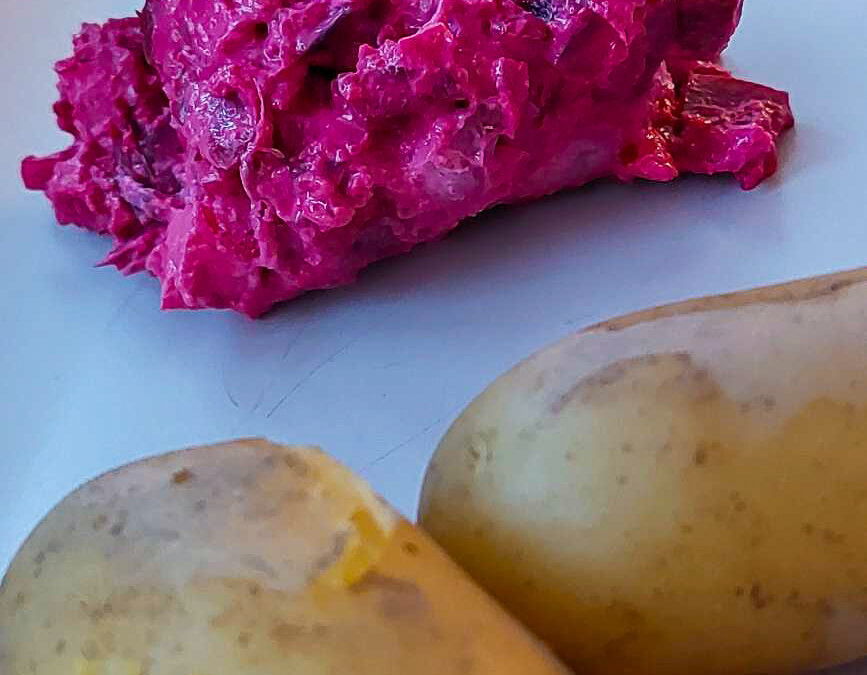
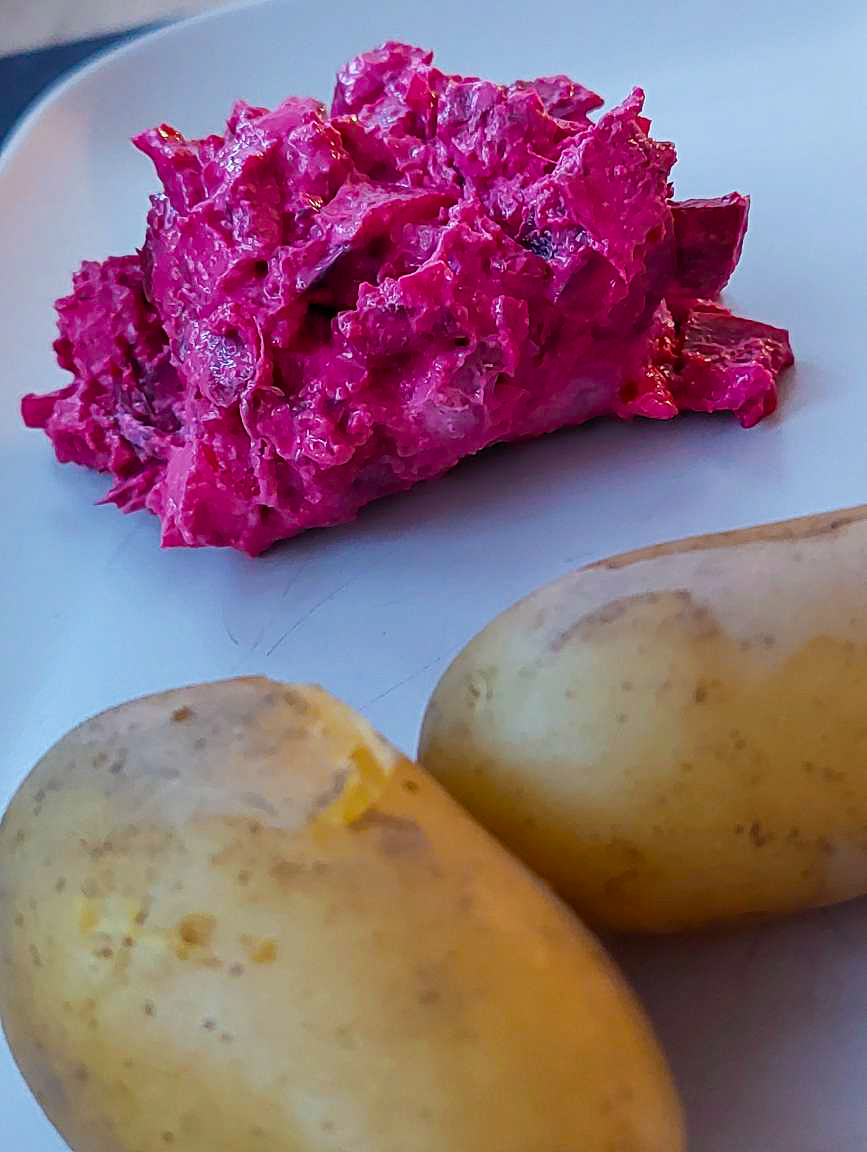
Pickled beetroots can be eaten with a cold supper or some sandwiches, but they also make a wonderful side dish to potatoes and herring as well as boiled beef. If you want to go a bit further you can make this tasty spread with pickled beetroots.
Sometimes, it has to be quick! Whether you don’t have the time or energy to cook or simply don’t want to spend more than five minutes in the kitchen, this quick and easy beetroot curd recipe will make a wonderful spread on bread or a dip for boiled potatoes. If you have pickled beetroots in your pantry, it’ll be done even faster.
Beetroot curd
Ingredients
150 – 200g pre-cooked or pickled beetroots 1 tbsp fresh lemon juice 2 tbsp sour cream 1/2 apple 3 young herring filets 1 small onion 1/2 bunch of dill 100 g curd salt, pepper
Instructions
1. If you use precooked beetroots, chop them into squares. Mix half of them with the lemon juice and sour cream and blend them with a hand blender. If you use pickled beetroots, strain them through a colander. Mix half of them with the sour cream and blend them (leave off the lemon juice as they are already a bit sour due to the vinegar we used for pickling).
2. Cut the apple into quarters and remove its core. Chop it into small cubes and mix with the remaining beetroots and the blended mass.
3. Cut off the tails of the herring filets. Dab the filets dry and also chop them into small cubes. Peel the onion and finely dice it. Wash and dry the dill and chop its leaves.
4. Mix the curd with the beetroots and the onion to a homogenous mass. Fold in the herring and dill and season it all with salt and pepper.
You can make this spread in advance and keep it in the fridge where it can be stored for up to two days.
Beetroot curd
This quick and easy beetroot curd recipe will make a wonderful spread on bread or a dip for boiled potatoes. If you have pickled beetroots in your pantry, it'll be done even faster.
If you use precooked beetroots, chop them into squares. Mix half of them with the lemon juice and sour cream and blend them with a hand blender. If you use pickled beetroots, strain them through a colander. Mix half of them with the sour cream and blend them (leave off the lemon juice as they are already a bit sour due to the vinegar we used for pickling).
Cut the apple into quarters and remove its core. Chop it into small cubes and mix with the remaining beetroots and the blended mass.
Cut off the tails of the herring filets. Dab the filets dry and also chop them into small cubes. Peel the onion and finely dice it. Wash and dry the dill and chop its leaves.
Mix the curd with the beetroots and the onion to a homogenous mass. Fold in the herring and dill and season it all with salt and pepper.
You can make this spread in advance and keep it in the fridge where it can be stored for up to two days.
I harvested the first carrots and they smell and taste so good that usually I eat the first bunch of them raw. I love their sweet and earthy flavour, it’s delicious! However, it would be a pity to just eat them all up like that and not use them in some more elaborate recipes. One of my favourites with carrots is this easy recipe for carrot pizza.
How to make carrot pizza
Make a yeast pizza dough, put sour cream on it and coat it lavishly with carrots, herbs, onions and garlic. Top the pizza with cheese and bake it in the oven until it’s crisp and the cheese has melted. And voilà: a hearty and comforting dinner is ready to be served!
Even if you consider carrots bland, give this delicious meal a chance. The carrots taste even sweeter when cooked and the combination with sour cream, herbs, and salt makes this pizza a great dish for summer. It’s so tasty, I’m sure it’ll become your new favourite food.
Although I like it as a vegetarian dish, you could also put some bacon on it to add a smokey flavour. Either way, you’ll sure love this carrot pizza!
Recipe for Carrot Pizza
Ingredients (4 servings):
For the yeast dough
300 g flour 25 g fresh yeast or 3 g dried yeast 1 tsp salt 150 ml lukewarm water 2 tbsp olive oil
For the topping
450 g carrots 2 onions 1 clove of garlic 2 tbsp fresh thyme or 2 tsp dried thyme 200 g sour cream 4 tbsp olive oil salt pepper grated cheese (parmesan, mozzarella or emmentaler)
Instructions
1) Dissolve the yeast in the water and mix it with the flour, salt, and oil until it forms a smooth dough. Cover it and allow it to rise for 30 minutes.
2) In the meantime, clean the carrots, peel them, and cut them into thin slices. Peel the onions and cut them into slices, as well. Peel the garlic and dice it. Put some thyme aside for a garnish and chop the rest.
3) Mix garlic, carrots, onions, and chopped thyme with 2 tbsp oil and season it with salt and pepper.
4) Heat the oven to 250 degrees (fan: 230 degrees).
5) Roll out the dough and coat it with sour cream. Distribute the carrot mix evenly on the pizza and sprinkle the grated cheese on top. Bake it in the preheated oven for approx. 20 minutes. Garnish with the thyme and freshly ground pepper.
Carrot pizza
This carrot pizza makes for a hearty and comforting dinner.Even if you consider carrots bland, give this delicious meal a chance. The carrots taste even sweeter when cooked and the combination with sour cream, herbs, and salt makes this pizza a great dish for summer. It's so tasty, I'm sure it'll become your new favourite food.Although I like it as a vegetarian dish, you could also put some bacon on it to add a smokey flavour. Either way, you'll sure love this carrot pizza!
Dissolve the yeast in the water and mix it with the flour, salt, and oil until it forms a smooth dough. Cover it and allow it to rise for 30 minutes.
In the meantime, clean the carrots, peel them, and cut them into thin slices. Peel the onions and cut them into slices, as well. Peel the garlic and dice it. Put some thyme aside for a garnish and chop the rest.
Mix garlic, carrots, onions, and chopped thyme with 2 tbsp oil and season it with salt and pepper.
Heat the oven to 250°C / 480°F (fan: 230°C / 445°F).
Roll out the dough and coat it with sour cream. Distribute the carrot mix evenly on the pizza and sprinkle the grated cheese on top. Bake it in the preheated oven for approx. 20 minutes. Garnish with the thyme and freshly ground pepper.