
.
It’s summer at last! Everything we’ve wished for during those dark, cold winter months comes true now: seemingly endless days, sunshine, bird song, and more than all, blooming flowers and fertile vegetables. In July, our main goal is to keep the garden healthy, productive and under control. Now we’ve got to make sure that our gardens stay on top. It may seem overwhelming to check our plants regularly and give them whatever they need right now, but we’re also rewarded with huge harvests. And don’t worry: small, consistent tasks, maybe in the early morning or late evenings when it’s gotten cooler, are usually all our garden needs right now.
Think of your garden as an athlete in peak season. After all the growth of spring, plants are now putting enormous energy into producing flowers, fruits and seeds. A little extra care now pays off with bigger harvests later.
In July, we’ve reached the middle of summer, and regularity is what our garden needs right now. While in spring I only went to my garden every few days, now I’m checking on it constantly. I’ll go there in the early mornings before work, open the windows to the greenhouse (if I have closed them at all) and do a quick check on pests or diseases I need to tackle. In the evenings, when it has finally cooled down a little, I spend my time on weeding, watering, mulching and – yeah! – harvesting.
Let’s see what other gardening jobs we’ve got to do in July:
July Garden Checklist: Essential Tasks at a Glance
If you only have time for a few things, focus on these essential July garden tasks:
- Feed heavy-feeding crops
- Stake and support fruiting plants
- Water deeply during dry spells
- Sow vegetables for autumn harvests
- Mulch beds to conserve moisture
- Harvest and preserve regularly
Here’s a quick overview of the most important garden tasks to tackle in July:
| Garden task | Best Time in July | Priority |
|---|---|---|
| Staking plants | When plants bear fruits | High |
| Pruning tomatoes and cucumbers | When suckers form | Medium |
| Checking for pests and diseases | Every second day | High |
| Watering | When soil is dry | Medium |
| Mulching | When plants are about 10 cm (4 in) high | Medium |
| Weeding | Twice a week | Medium |
| Fertilising | Every 2 - 3 weeks | High |
| Harvesting | When plants are ripe | High |
| Preserving harvest | After harvesting | High |
| Sowing and planting | After gaps form due to harvest | High |
Want a printable version?
Download the free July Garden Checklist and keep it with you in the garden.
If you’re transitioning from early summer, you might also want to revisit the tasks from June. Many jobs started last month continue now — especially fertilising and mulching.
→ Continue from last month with my June Garden Tasks checklist.
What to Sow and Plant in July
July is still a good time to sow vegetables directly outdoors to prepare the autumn harvest.
Direct sow outdoors
Good vegetables to sow in July include:
- Swiss chard
- Bush beans
- Pole beans
- Spinach
- Radishes
- Rocket salad
- Fennel
- Cabbages
Transplant outdoors
You can also plant cabbage plants like cauliflower, Brussels sprouts, broccoli and kohlrabi, as well as zucchini and leek.
→ For a complete overview, read my full guide on what to sow and plant in July.
Now that we’ve covered that, let’s see what garden tasks are important in July:
1. Staking plants
✔️ Why it matters: Staking supports fruit-bearing plants
If you haven’t already done so, it’s high time now to stake fruit-bearing plants like tomatoes, peppers, cucumbers and zucchini. Otherwise, they’ll collapse under the weight of their fruits and leaves. For peppers and zucchini, I always use wood rods that I stick into the earth next to them. Then I bind the plants with a string around the rod to keep them upright.
For tomatoes that grow outdoors or in pots, I either have long wood rods or metal spiralling rods. You could also build a cage with rods and wire or use ready-made cages. In the greenhouse, I fix a string at the base of the tomato plant and lead it upwards to the ceiling.
No matter which way you choose, make sure that with increasing weight, your plants are securely fixed to the stake.
2. Pruning tomatoes
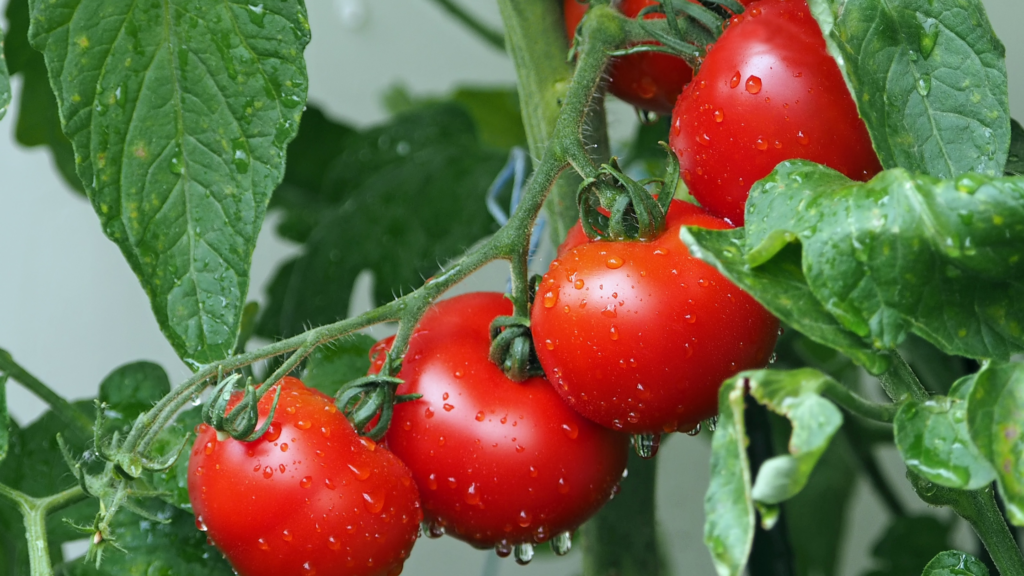
✔️ Why it matters: Pruning helps tomatoes form more fruits and stay healthy.
Every time we turn our backs on our gardens, even if it’s only for a second, our tomatoes seem to shoot out new suckers from their leaf axils. If you want to induce the plant to produce many fruits instead of leaves, you must remove these suckers before they get too large. Over here, you’ll find a detailed guide on how to grow tomatoes.
3. Remove side shoots from greenhouse cucumbers
✔️ Why it matters: If you let them, greenhouse cucumbers will produce many side shoots to strengthen their build and help them grow as broad as they can. We, however, want them to produce more fruit. When we cut off the side vines, the cucumber plants can put all their energy into building more fruits instead of forming new vines and leaves.
If you want to learn more about how to grow cucumbers, this complete guide will show you.
🌿 Gardener’s Tip: Leave only one to two cucumber stems
4. Check regularly for pests and diseases
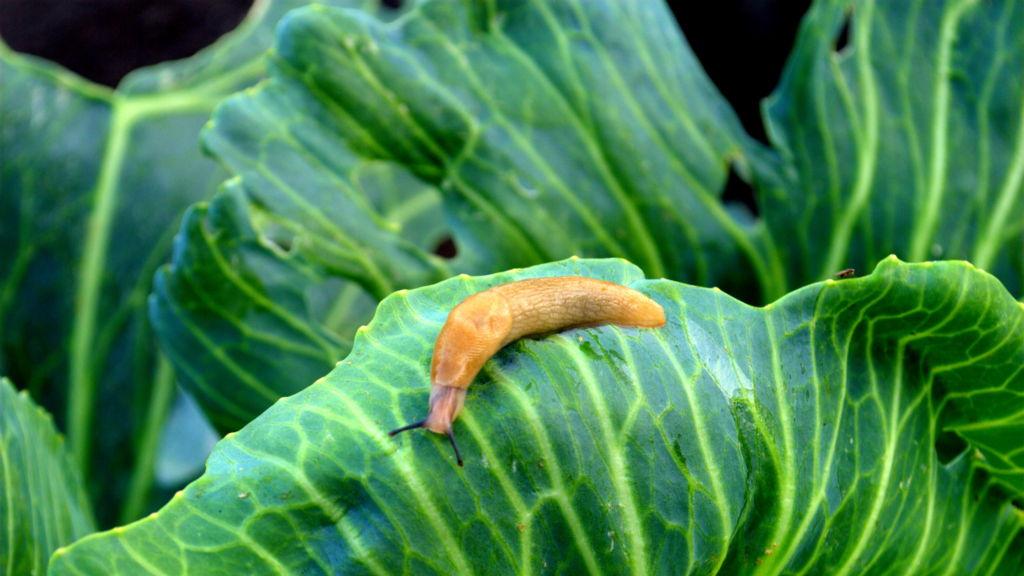
✔️ Why it matters: Pests and diseases can destroy your plants, sometimes overnight.
An important garden task in July is checking our vegetables regularly (at best daily) for pests and diseases. Nothing’s more devastating than finding a plant that we’ve started from seed and nurtured, wilted and dead because we didn’t pay attention. We haven’t invested all that time and energy to see our babies be either eaten off overnight or die from some disease. The earlier we detect possible harm, the better the chances of protection.
🌿 Gardener’s Tip: Check regularly for pests and diseases
5. Water thoughtfully
✔️ Why it matters: All plants need water to survive and thrive.
Although some summers can be quite rainy, it’s usually hot and dry in July. To keep our plants not only alive but thriving, we need to water them – but thoughtfully.
Instead of watering every day a little bit, it’s better to water once or maybe twice a week thoroughly. The water must really go down to the roots and moisten the deeper layers of the soil instead of only the surface. That way, the plants’ roots grow deep and gather water from even deeper regions – which means we have to water less.
This is not valid for plants in containers and raised beds, though. Due to the smaller space and soil amount, they can dry out a lot faster. Water your raised beds at least every other day and your containers at least once a day. If it’s really hot and dry, even more often.
🌿 Gardener’s tip: The best time for watering is in the morning.
When we protect the soil, though, we don’t need so much water.
6. Mulching
✔️ Why it matters: Mulching keeps the soil moist and suppresses weeds
As soon as my plants are about 10 – 15 cm (4 – 6 inches) high, I cover the soil between them with mulch. I either use (dry!) grass clippings, (old) hay, straw or leaves. Other good mulch material is wood chips that have the additional advantage of being avoided by snails and slugs.
🌿 Gardener’s Tip: Add dry grass clippings, hay, straw or leaves as mulch.
7. Weeding
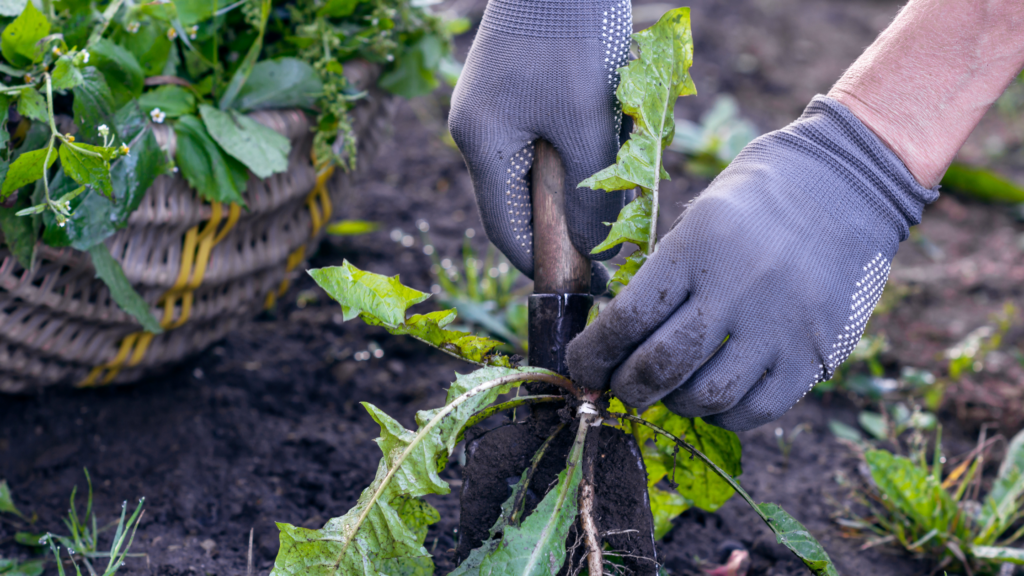
✔️ Why it matters: Weeds compete for nutrients.
Mulch is a good way to suppress weeds, but sometimes it’s not enough, and we have to weed regularly before dandelion, couch grass, and nettles get the upper hand. As plenty of weeds are edible, you should consider making a pesto from them (for more, see this article). From nettle, dandelions and horsetail (and some more), you can make liquid manure as a fertiliser for your plants. Read here how to make nettle manure.
🌿 Gardener’s Tip: Rip weeds out as soon as they occur.
8. Fertilise heavy feeders
✔️ Why it matters: Heavy-feeders need a lot of nutrients to produce an abundant harvest.
With the long days, sunshine and warmth, our vegetables now have optimum conditions for growing, but especially the heavy feeders like cabbage, tomatoes, peppers, cucumbers, zucchini and pumpkins need food. In fact, picture them as a bunch of ravenous teenagers that can eat almost 24/7. The good news is that you don’t have to provide “food” that often. In fact, the best schedule is to fertilise them every 3 – 4 weeks, and medium-feeders every 4 – 5 weeks.
While we’ve added some long-term fertiliser when we planted them out in spring, now they need some easily accessible food. For that reason, liquid fertiliser is best as the plant can use the nutrients almost immediately. A quick and easy way to prepare liquid fertiliser at no cost is this homemade nettle manure.
🌿 Gardener’s Tip: Use homemade nettle manure to fertilise your plants.
If you’d like to explore more natural ways to feed your garden, these guides cover plant-based, animal-based and even human-derived fertilisers.
9. Harvest, harvest, harvest
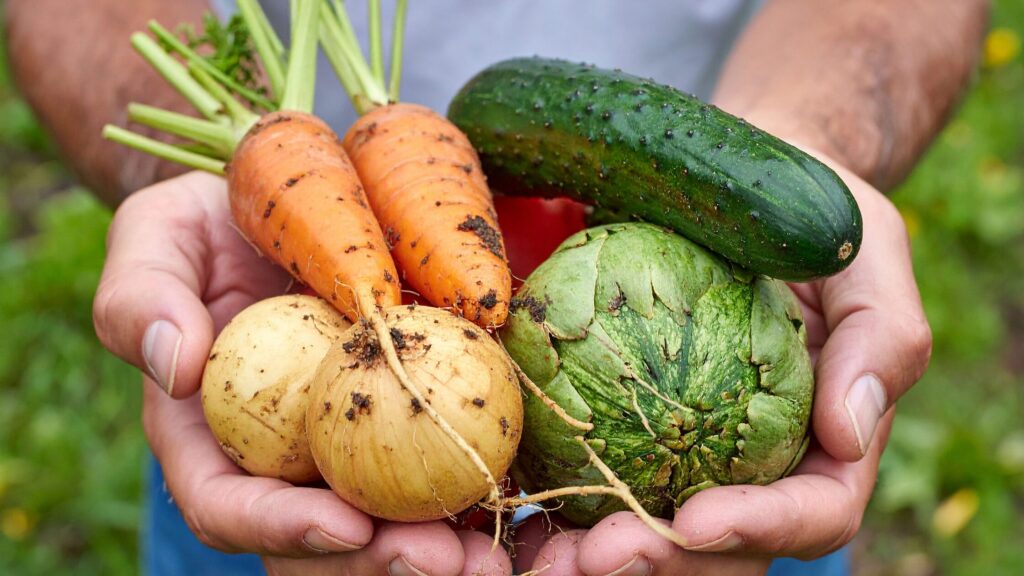
✔️ Why it matters: Vegetables harvested at the right time taste better, stay tender, and encourage plants to remain productive.
Some gardeners, especially beginners, tend to harvest their vegetables too late. The result: kohlrabi and radishes, for example, become fibrous, lettuce and spinach bolt and cauliflower turns brown.
Harvesting regularly also induces the plant to grow more fruits, leaves or whatever we cultivate it for.
10. Harvesting seeds
✔️ Why it matters: Saving seeds saves money and preserves heirloom varieties.
Some vegetables like early lettuce, spinach or last year’s leek will bolt in the summer heat and form blossoms. You could rip those plants off, of course, but why not let them flower and harvest their seeds for the next year? It’s actually a very easy way to get lots of seeds from plants that have already proven to be adapted to your garden’s microclimate and conditions. And it makes us (at least partly) independent from large seed companies.
To harvest the seeds, let the plants flower and wait until the seeds that form after pollination are dry and rustle in their hulls. Carefully harvest them and, if necessary, dry them at home. When the seeds are completely dry, you can store them in paper bags or small jars in a cool and dark place. Remember to label them!
🌿 Gardener’s Tip: Save seeds on a dry day.
11. Harvest onions and garlic
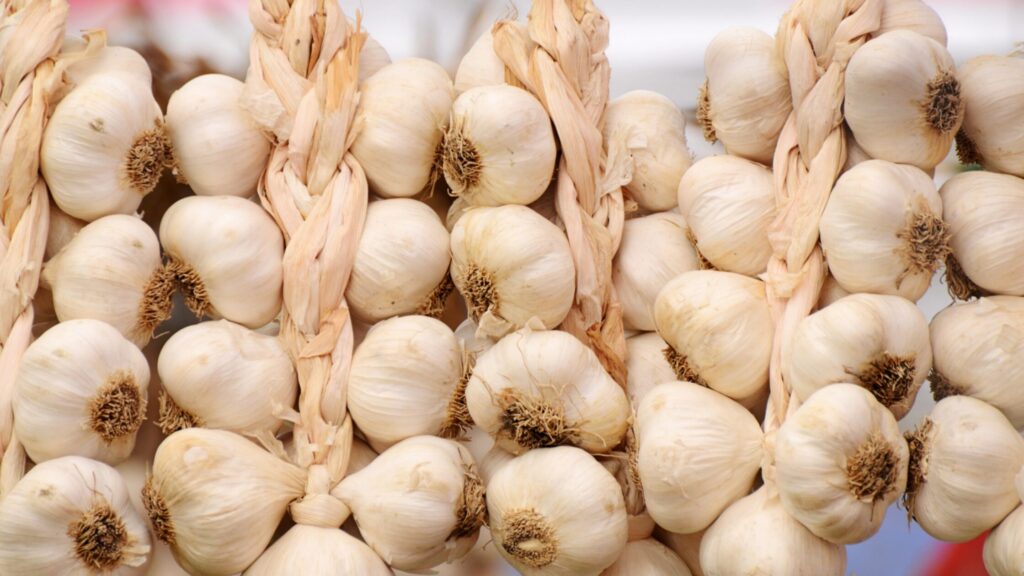
✔️ Why it matters: Onions and garlic are now ready to be harvested. When about half to two-thirds of the leaves have yellowed and fallen over, you can take them out of the ground. Harvest onions and garlic on a dry and sunny day to keep them as dry as you can. In fact, we’ve got to cure them for a few weeks after harvesting to make sure they’re dry enough for storage. After all, the goal is to store onions and garlic until the next harvest.
To cure onions and garlic, I usually bind 5 – 10 of them together at the stems and hang them in the greenhouse for a few weeks. You can also hang them somewhere indoors or under a dry roof overhang without direct sunlight, or you can cure them by laying them on racks. When your onions and garlic are completely dry, you can twine the stems into braids and store them in a cool, dark place, for example, your basement.
When your garlic has formed flowers, you can take the bulbils at the blossom to grow further garlic. It’ll take two years, though, instead of one.
If you’re interested in the best way to grow garlic, this article will show you.
12. Harvest and preserve herbs
✔️ Why it matters: Herbs are now at the peak of their flavour.
It’s so easy to become self-sufficient with herbs. Even if you don’t have a garden, patio or balcony, you can cultivate herbs. A windowsill on a sunny window is enough. It’s a satisfying feeling to have all the herbs you need all year round from your own patch – even if that patch is just a pot on your kitchen sill.
The best time to harvest herbs is in the late mornings when the dew has evaporated, and the essential oil concentration is highest, but honestly, if you can only harvest them in the evenings, that’s okay, too. It’s better to harvest them at all, instead of waiting for the perfect moment and having no harvest at all.
If you don’t know how to preserve herbs, this article will show you.
13. Preserving our harvest
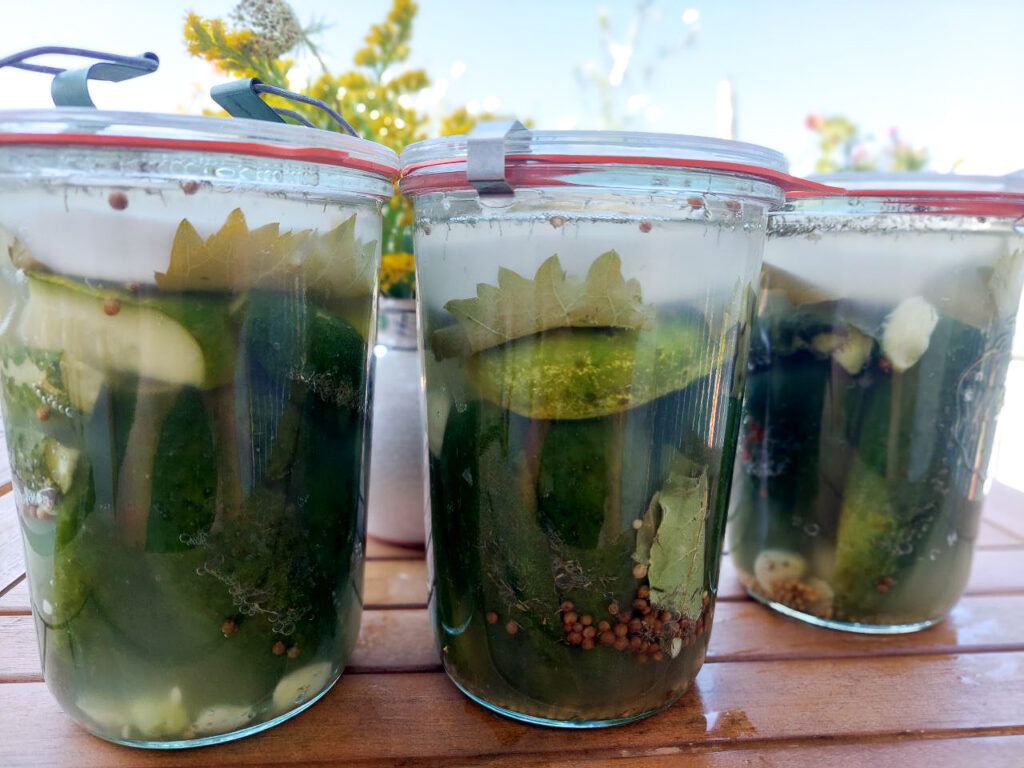
✔️ Why it matters: Preserving makes our harvest last throughout the year
Usually, by now we can harvest so much that we can’t eat it all immediately. Now, my friends, it’s time to preserve what we’ve grown for the winter months (*gleefully rubbing my hands*).
It’s a good time to check your preserving equipment, for example when you want to ferment any of your vegetables, which I highly recommend! Fermentation is the oldest and most satisfying way to preserve vegetables, and if you want to learn more about lacto-fermentation and how it works, here’s a comprehensive overview.
If you want to check your fermentation equipment, here’s a list of what you really need (hint: it’s less than you may think and definitely nothing fancy).
14. Assess your pantry
✔️ Why it matters: Check how much you need of each preserve
Before we start preserving, take a moment to review your pantry and look at what’s still in there from last year. Maybe you (like me) still have some jars of fermented gherkins left, which shows you that you may not need as many as you made last year. Or you’ve been out of tomato sauce since February, and that means you definitely need more of it.
Write these insights down for your next garden plan.
15. Cook jam from fruits and ferment vegetables
✔️ Why it matters: Preserve fruits and vegetables for the winter months
In my eyes, there’s nothing more rewarding than a homemade jar of strawberry jam or a crock of sauerkraut made from vegetables you’ve grown yourself! And now’s the time to do so. Get your gear ready, sterilise your jars and stir the pots or – in case of fermentation – get your weights and salt ready.
If it’s too much to tackle now, freezing is also a good option. Just bear in mind that while you can still make jam from frozen berries, you can’t ferment anything from once-frozen vegetables.
16. Prepare your garden for YOUR vacation
✔️ Why it matters: Make sure your garden survives when you take time off.
If you plan to go on vacation in July, make sure your garden survives. Now, the best solution is a fellow gardener who tends to your garden as thoroughly as you would, but let’s be honest: the larger your garden, the fewer volunteers you’ll get.
So, before you leave, harvest anything ready now and, if you can, preserve it for later. Water your garden deeply so that the soil contains as much moisture as it can. Mulch the patches to keep the soil from drying out, and implement a watering system that keeps your plants alive until you’re back.
17. Sowing and planting
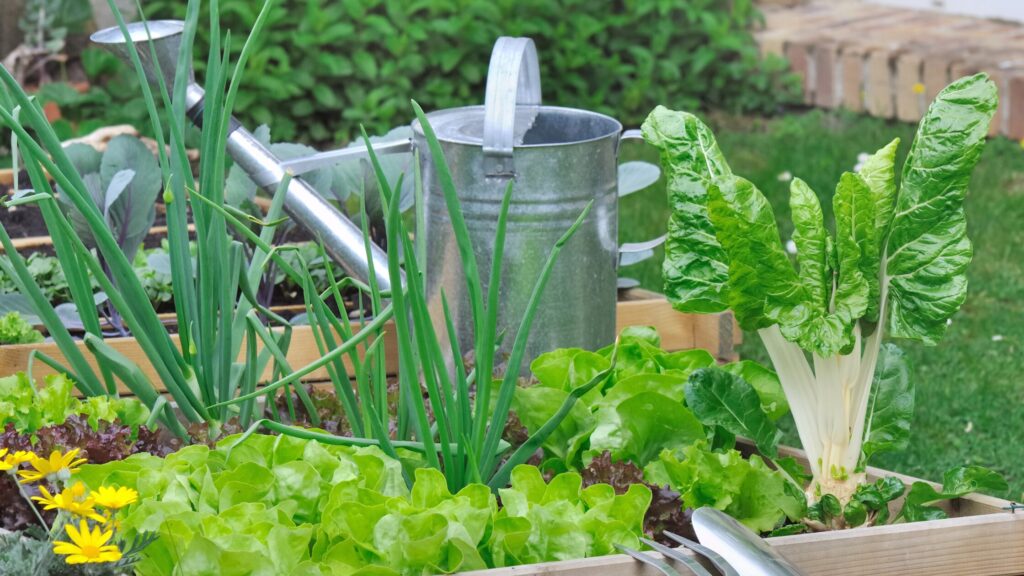
✔️ Why it matters: Sowing and planting in July prepare our autumn and winter harvest.
What we sow and plant in July, we can harvest in autumn. So, wherever there’s a gap in the patch where we’ve harvested something, let’s fill it up with seeds or seed-started plants.
That way, we cannot only harvest continually but also keep the soil covered. This will suppress weeds and keep the soil moist. For a quick overview of what to sow now, check the list above or read this comprehensive list of vegetables we can sow and plant in July in our garden beds.
🌿 Gardener’s Tip: Keep seed-starting indoors so that you have ready plants when gaps arise.
Frequently Asked Questions About Gardening in July
What vegetables can I still plant in July?
Many fast-growing vegetables can still be sown in July, including Swiss chard, bush and pole beans, radishes and rocket salad. July is also ideal for succession sowing to extend harvests into autumn.
Can I still start a vegetable garden in July?
Yes. While spring is the traditional planting season, many fast-growing vegetables such as radishes, rocket, spinach and Swiss chard can still be sown in July. You can also plant young brassicas and leeks for autumn harvests.
Why are my cucumbers flowering but not producing fruit?
Poor pollination, heat stress, inconsistent watering or nutrient imbalances can reduce fruit production. Greenhouse cucumbers may also require pruning to direct more energy into fruiting.
Should I prune tomatoes in July?
Most indeterminate tomato varieties benefit from regular pruning. Removing suckers improves airflow, reduces disease risk and helps plants focus on producing fruit rather than excessive foliage.
What can I harvest in July?
Depending on your climate, July harvests may include lettuce, spinach, peas, beans, zucchini, cucumbers, onions, garlic, herbs, berries and the first tomatoes.
Is it too late to fertilise vegetables in July?
No. July is one of the most important months for feeding hungry crops. Tomatoes, cucumbers, squash and cabbage continue to need nutrients while producing flowers and fruits.
Common July Gardening Mistakes
Mistakes can happen, even when you’re an experienced gardener. To help you prevent them, I’ve listed the most common mistakes:
Forgetting to harvest regularly
Many vegetables become tough, fibrous or overripe if left too long. Frequent harvesting keeps plants productive and improves flavour.
Letting greenhouse temperatures soar
Greenhouses can become dangerously hot in July. Ventilate daily and provide shading if necessary to prevent heat stress.
Leaving soil exposed
Bare soil dries out quickly during summer. Mulch helps retain moisture, suppresses weeds and protects soil organisms.
Skipping pest inspections
July is peak season for aphids, caterpillars, spider mites and fungal diseases. A quick daily inspection can prevent major problems.
Neglecting succession sowing
Many gardeners stop sowing once summer arrives. However, July is an excellent month for planting crops that will provide autumn harvests.
Preserving too late
Summer harvests arrive quickly. Waiting until produce piles up can lead to waste. Preserve little and often to stay ahead of the harvest.
🌿 July Gardening Summary
In July, focus on:
- Watering, mulching and fertilising actively growing plants
- Harvesting and preserving what’s in season
- Monitoring for pests and diseases
- Closing gaps in the beds by sowing and planting autumn veggies
Each month builds on the previous one in the garden, and following seasonal rhythms makes gardening simpler and more productive year after year.
Why July Garden Tasks Matter
Now it’s all about providing enough food and water for our vegetables so that they can thrive and produce an abundant harvest throughout summer. The next step lies in preparing our harvest for autumn by sowing and planting as soon as we get gaps in the patches. But although this may be a busy time for us gardeners, we are also well rewarded by everything that we can harvest – and hopefully preserve – in July. Whether it’s a bunch of herbs, a bowl full of fruits and berries or a basket of lettuce, broccoli, tomatoes, zucchini and cucumbers: every humble plant we can put into our mouth gives us gratitude for what grows on our beautiful earth and the satisfaction that we are a part of it, too.
🌿 Enjoy slow seasonal gardening?
Join my newsletter for monthly garden guidance aligned with nature’s rhythm.
Can’t get enough of gardening? These articles may also interest you:
Small garden, huge harvest: Maximising your small vegetable garden
Beginner’s Guide to Composting: How to make compost in 8 easy steps
Easy Vegetables for Beginners: 11 Foolproof Crops for Your First Garden in 2025
Browse my garden library for all gardening tutorials.
0 Comments