
.
Few things are more frustrating than discovering holes in your beautiful pepper leaves or watching your chilli plants weaken for no obvious reason. If you’ve ever wondered what’s eating your peppers — and how to stop it — you’re not alone.
Even experienced gardeners run into pest problems from time to time. I certainly have.
One summer’s evening, I took a last stroll through my vegetable garden and enjoyed the view over my vast green paradise. Everything was fine and growing happily towards an abundant harvest.
Or so I thought.
When I came back two days later, some of my peppers had large chunks ripped out of their leaves, and the fruits bore large holes.
It turned out that slugs had found my precious plants and feasted on them, wreaking havoc in just two days. I felt sick looking at the damage.
That day, I learned two important lessons: First, pests can strike faster than you think. Second, knowing what to look for—and how to respond quickly—makes all the difference between losing a plant and saving your harvest.
In this guide, I’ll walk you through the most common pests that affect peppers and chillies, how to identify them, and what to do if they appear. You’ll also learn how to prevent serious infestations in the first place — so your plants stay strong and productive throughout the season.
I’ll cover:
- Identification: How to recognise each pest and the damage they cause
- Prevention: Garden practices that reduce pest pressure
- Treatment: Organic and conventional options that actually work
For comprehensive information on growing healthy, pest-resistant peppers from the start, see my complete guide to growing peppers and chillies from seed.
Container-grown peppers can experience pests differently. Learn more in my guide to growing peppers in pots.
Quick Overview: Pests at a Glance
| Pests | Signs | Most Active | Quick Fix |
| Aphids | Honeydew | All day | Spray them off with water or soft soap solution |
| Armyworms | Irregular holes in leaves and fruits, or even bare leaf veins | Night | Handpicking |
| Corn borers | Holes or tunnels in stems, wilting plants | All day | Neem solution |
| Corn earworms | Holes in fruits | All day | Remove infested fruits |
| Cucumber beetles | Large, irregular holes in leaves, buds, blossoms and fruits | Day | Neem oil |
| Cutworms | Cut-through stems, dying plants | Night | Handpicking |
| Flea Beetles | Tiny holes in leaves | Day | Keep soil moist |
| Hornworms | Large, irregular holes, de-leaved stems | Night | Handpicking |
| Pepper Maggots | Fruits turn brown | Day | Remove infested fruits |
| Pepper Weevils | Holes in fruits, fruits turn brown | Day | Remove infested fruits, handpicking |
| Red Spider | Withering leaves with light to brownish speckles | Day | Spray off with water or neem solution |
| Slugs | Holes in leaves, silvery slime trace | Night | Handpicking |
| Spider mites | White webs on plants, leaves wither and die | Day | Spray off with water or soft soap solution |
| Thrips | Silvery-white patches on leaves | Day | Neem, olive oil or rapeseed oil emulsion |
| White Flies | Flies flying up when plant is shaken | Day | Spray off with soft soap solution |
But let’s see first what we can do to prevent pests from getting the upper hand.
General preventive measures against pests
There are a few things we can do to make it hard for pests to thrive there.
Healthy plants
I’m not saying that pests don’t attack healthy plants; when there are enough of them, they stop at nothing. But they go for the tiny and weak ones first (the cowards!), multiply and then head over to the sturdier plants.
By strengthening our peppers and chillies, we can make it a bit harder for pests.
But how do we do that?
First of all, by meeting all the requirements our plant babies have for thriving:
Peppers and chillies need sandy-loamy soil with good drainage and a large amount of organic matter.
Only transplant your peppers and chillies outdoors when night temperatures don’t fall below 17 °C (63 °F).
Water them regularly and deeply without waterlogging them. Poke your finger about 2 inches into the ground and check for moisture. If the soil feels dry, water the plants.
Add a long-term fertiliser when planting peppers and chillies out in the garden, greenhouse or pots. Every four weeks, you can add 10 % nettle manure to the water.
When buds show, choose a fertiliser containing potassium and phosphorus to promote the building of blossoms and fruits.
Attracting predators
When we create habitats for beneficial insects and predators, they’ll balance out pests.
Build an insect hotel and plant herbs, flowers and even wild plants that attract them. I especially recommend
- Fennel, dill, basil and coriander
- Calendula and tagetes
- Nettles (at the edge of the garden)
- Yarrow
Build a birdhouse to make nesting for birds attractive in your garden. Leave them enough nesting material and install a bird bath. Put some flat stones in it so that insects and bees can also stop by and drink.
Collect some deadwood in a quiet corner of your garden. Different insects, hedgehogs, toads and even lizards will move in eventually.
Check for pests
Regularly check for pests. After the slug incident, I made it a habit whenever I go into my garden, to take a stroll and “visit” every plant before starting to work there. The sooner you spot pests, the easier you can get rid of them.
In my experience, early detection is far more effective than aggressive treatment.
Here’s how to identify pests and manage the most frequent problems.
How to identify pests quickly
| Sign | Likely pests |
| Large, irregular holes in leaves | Armyworms, cucumber beetles, hornworms, slugs |
| Tiny holes in leaves | Flea beetles |
| Holes in peppers and chillies | Armyworms, Corn earworms, cucumber beetles, pepper maggots, pepper weevils, slugs |
| Sticky residue | Aphids, white flies |
| Leaves turn silvery | Thrips |
| Fine white nets | Spider mites |
| Leaves turn brownish | Red spider |
| Plants wilt suddenly | Corn borers, cutworms |
Organic Treatments – Overview
When you read this guide, you’ll soon realise that I don’t recommend any pesticides that can harm beneficial insects.
While it might seem tempting to go for “the quick solution”, it would create problems in the long run. Better to stick with homemade remedies and get the balance in your garden right again.
Here are my go-to methods that you’ll encounter later on:
- Soft Soap Solution
Mix one tablespoon of soft soap and one litre of water.
- Neem oil Emulsion
Mix one tablespoon of neem oil and one litre of water.
⚠️ Never use neem oil on flowers, as it will stay there and may harm pollinators. If your plant is flowering, use soft soap solution instead.
- Garlic tea
Boil one litre of water with 2 cloves of garlic. Let the mixture cool down and rest for two hours. Use undiluted.
- Nettle manure solution
Mix one part of nettle manure with 9 parts of water (for example: 100 ml nettle manure with 900 ml water).
- Rapeseed oil (or olive oil) emulsion
Mix 3 parts oil with 7 parts water (for example: 300 ml of rapeseed oil with 700 ml of water).
- Beneficial nematodes
Buy them online and stir them in water as instructed on the package. Water your plants with them.
- Bacillus thuringiensis (Bt)
You can buy them online. Dilute 1 – 2 tablespoons per 4 litres of water.
Now that we know how to grow healthy plants and attract beneficial insects and predators, let’s see which common pests affect peppers and chillies. It’s important to identify them as soon as possible so that we can quickly take measures against them.
Common Pepper Plant Pests (A – Z)
Aphids ( Myzus persicae)
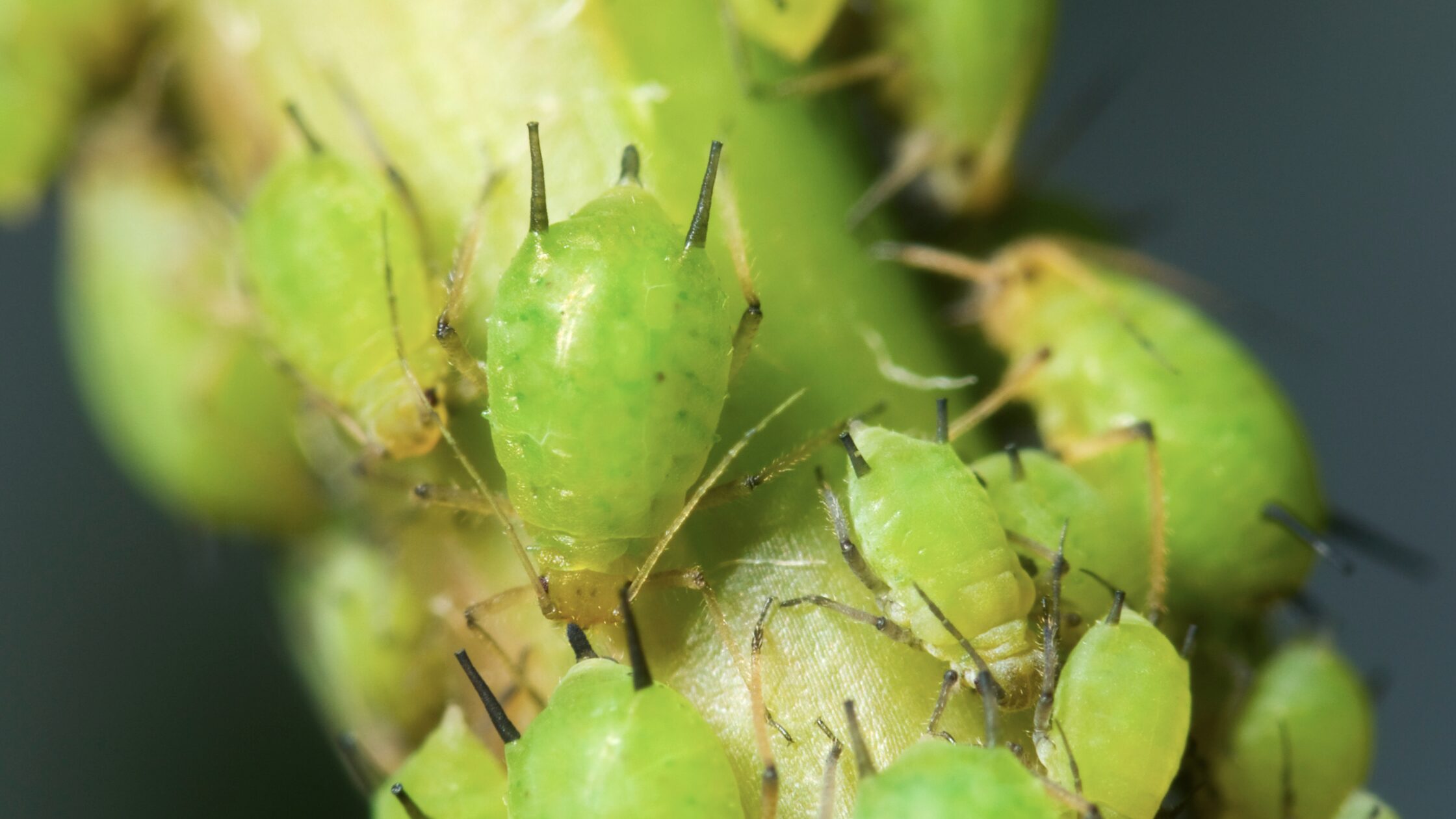
Besides snails and slugs, aphids are the most common pest in our gardens. They’re just a few millimetres large and either green, reddish brown or black-brown, depending on the variety. They come in zillions, pierce plant cells with their mouthparts, and suck out plant sap. Additionally, they defecate a sweet, sticky coating (the “honeydew”), on which fungi can easily settle.
Aphids spread especially widely in warm summers. They can easily be detected by their large numbers and the sticky coat they leave on the plants.
How to prevent them:
- Observe companion planting and don’t plant the same kind of vegetables in the same spot
- Strengthen the plants by watering and fertilising them
- Don’t feed your plants too much nitrogen; it makes the plant cells weak and vulnerable.
- Create sufficient nesting opportunities for beneficial insects like lacewings, ladybugs, and ichneumon flies.
How to get rid of them:
- If the infestation is not too large, you can spray the aphids off with a strong jet of water.
- Spray the plants, especially the leaves’ undersides, with soft soap solution.
- Spray the plants with garlic tea.
- Spray the plant with nettle manure solution.
- In this article, you’ll find more household remedies to get rid of aphids naturally.
Armyworms (Spodoptera frugiperda)
Source: Wikipedia
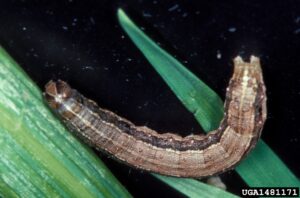
Armyworms, particularly the beet armyworm and fall armyworm, can cause significant damage to pepper plants by feeding on buds and young leaves, leading to reduced fruit production. Armyworms are caterpillars. Depending on their variety, they’re either green with light stripes, dark with yellow stripes or green/brown with a V-shaped mark on their head.
Sure signs of infestation are skeletal leaves where only the veins remain, holes in the leaves or fruits, and small, dark droppings on the leaves and on the ground around the plants.
If undetected, they can defoliate your peppers and chillies very quickly, sometimes overnight!
How to prevent them:
- Grow plants that attract beneficial insects who feed on caterpillars, their eggs and larvae. Good attractor plants are cilantro, dill, basil and thyme.
- Make your garden bird-friendly and, if you’re thinking of buying or building a greenhouse, make sure it has large windows through which the birds can get in.
- Dust the ground around your peppers and chillies, as well as their lower leaves, with diatomaceous earth. It forms a natural barrier for the caterpillars so that they can’t lay their eggs in the soil. At the same time, it penetrates the armyworms’ skin and dehydrates them.
- Install physical barriers like fine-meshed nettings, which you install before the adult moths lay their eggs
How to get rid of them:
- If you suspect armyworms are eating your peppers and chillies, take a nightly stroll through the garden and check the leaves’ underside, the soil around the plants, as well as young leaves and developing fruits for the caterpillars. Pick the armyworms and throw them in a bucket with a soap solution.
Get out there every night until you can’t detect any new damage. This is the best and most direct approach for small gardens. - Beneficial nematodes combat armyworms while they’re a pupa in the ground. To bring the nematodes into the ground, moisten the soil, then dilute the nematodes with water according to the instructions on the package and water your plants with them.
- Bacillus thuringiensis (Bt) is an organic control for armyworms. Once eaten by the armyworms, Bacillus thuringiensis messes with their digestive tract, causing them to stop eating and die.
The great thing about Bt is that it’s only toxic for armyworms but not for humans, pets or beneficial insects. - Spray your peppers and chillies with a solution of neem oil and soft soap. For that purpose, mix 1 tablespoon of pure neem oil with 1 tablespoon of soft soap and 1 litre of water and spray every inch of your plants’ surface.
Neem oil not only repels pests (not only armyworms) but also kills their eggs and larvae.
Corn Borers (Ostrinia nubilalis)
Source: Wikipedia
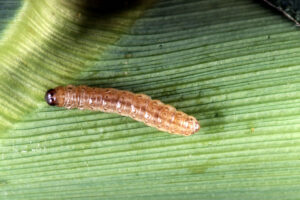
Corn borers are beetles. Despite the name, they also attack peppers and chillies. Their larvae bore into the fruits and even the stems of our plants, where they hide, which makes it difficult to spot them.
Common signs of borer infestation are wilting leaves, holes or even tunnels in the stems and stunted growth. Sometimes you can discover frass that looks like sawdust near the entry holes.
How to prevent them:
- Observe crop rotation and don’t plant peppers in the same spot year after year.
- Keep the soil covered with mulch.
- Tend to your plants so that they stay healthy.
How to get rid of them:
- Use beneficial nematodes, which are natural enemies of corn borer eggs.
- Spray the plants, especially the leaves’ undersides, but also the soil around them, with neem oil emulsion.
- Spray the plants with garlic tea.
Corn Earworms (Helicoverpa zea)
Corn Earworms mostly show as green or brown caterpillars that enter the fruits of our tomatoes, peppers and chillies and eat them from within.
How to prevent them:
- Strengthen your plants by watering and feeding them properly.
- Protect your plants with row covers like fine-mesh insect netting before corn earworm moths fly and lay their eggs on leaves and fruits.
How to get rid of them:
- Remove the infested fruits and put them in the garbage bin, not in the compost.
- Cut infected parts back and put them in the garbage bin.
Cucumber beetles (Diabrotica)
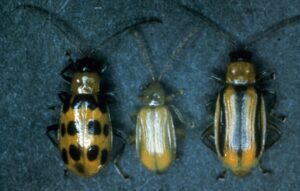
Source: Wikipedia
As their name indicates, cucumber beetles primarily target cucurbits like cucumbers and squash, but they can also feed on peppers. They are yellowish-green with either black spots or stripes and lay orange eggs near the plant roots. When the larvae emerge, they feed on the roots until they pupate.
The adult beetles feed on pepper and chilli leaves as well as the blossoms and fruits. What’s more, they transmit bacterial wilt, which can weaken and sometimes even kill pepper and chilli plants.
An infestation with cucumber beetles can often be detected by holes in the leaves. These holes are larger and more irregular than those of flea beetles.
How to prevent them:
- Observe crop rotation and don’t plant peppers where they or members of the cucurbit family, like cucumbers, pumpkins or zucchini, have grown the year before.
- In spring, add compost to your vegetable patches to improve the soil and thus plant health.
- Install row covers as a natural barrier.
- Plant good companions to your peppers and chillies, like dill, fennel, cilantro, nasturtium and calendula.
How to get rid of them:
- Spray the plants with neem oil emulsion or garlic tea.
- Dust the soil around the plants as well as the lower leaves with diatomaceous earth.
- Yellow sticky traps can catch the beetles as they’re focused on the colour yellow.
- You can make a DIY trap by mashing 100 g (about 1/2 cup) of mashed cucumber or zucchini with 1 tablespoon of soft soap and diluting that in 4 litres of water. Put that mixture in yellow containers and place them around your garden, about 3 metres (10 feet) from your pepper plants. Empty the traps every other day and replace the mixture.
Cutworms (Noctuidae)
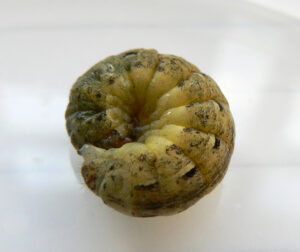
Source: Wikipedia
These are the green, brown or grey larvae of a moth. As their name indicates, they can cut through pepper stems at ground level and thus kill the plant, especially when it’s young.
How to prevent them:
- Create healthy soil by adding compost and mulching.
- Practice companion planting
- Seed-start peppers and chillies indoors early, that is in January or February. When you transplant them outdoors, they’re large and sturdy enough to withstand cutworms.
How to get rid of them:
- Grab a flashlight and look for cutworms in the evenings when they’re active. Handpick them and drown them in a bucket with soap water.
- Cover your plants with fine-mesh insect nettings, creating a barrier.
- Buy beneficial nematodes and add them to the water you use to water your peppers and chillies with.
- Bacillus thuringiensis (Bt) can kill cutworms without being a danger to humans, pets or beneficial insects.
Flea beetles (Chrysomelidae)
Flea beetles are small jumping beetles that usually infest young plants.
You can easily detect an infestation by the many tiny holes in the leaves.
How to prevent them:
Flea beetles love dry soil, so the easiest way to prevent them is by keeping the soil around your peppers and chillies moist.
Also, remove all weeds well before planting so that the beetles have nothing to feast upon.
How to get rid of them:
Same as above: water the plants regularly and keep the soil around them moist. Cover the soil with mulch.
Hornworms (Manduca)
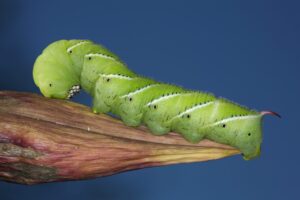
Source: Wikipedia
Although hornworms are quite large (10 cm/4 inches), they blend perfectly with the leaves of our peppers and are therefore often overlooked. They feed on leaves, stem and even the fruit and can kill our pepper and chilli plants literally overnight.
When your plants show large, irregular holes or only the bare stems, and you find dark droppings lying around the plants, your garden is probably infested with hornworms.
How to prevent them:
As so often, a well-planted mix of companion planting repels pests like hornworms and attracts beneficial insects.
The most effective companions for peppers and chillies are basil, dill, nasturtium, calendula and borage.
How to get rid of them:
- The fastest way to get rid of hornworms is handpicking. Get out in the evenings, when they start to get active and thoroughly search your pepper and chilli plants, especially on the leaves’ undersides.
- Bacillus thuringiensis (Bt) is an organic control for hornworms on peppers and chillies. Spray your plants with that dilution, at best in the evening. When the worms eat the sprayed leaves, Bt messes with their digestive tract and eventually kills them.
- Create physical barriers like protective fine-meshed insect nettings that you put around the plants before the moths lay their eggs.
- Spray your peppers and chillies with a solution of neem oil and soft soap.
Pepper maggots (Zonosemata electa)
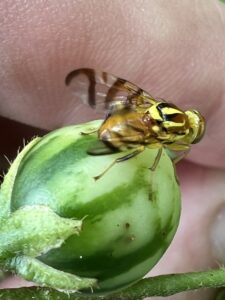
Source: Wikipedia
Pepper maggots are moths with brown striped wings that get 2 – 3 inches long. They lay their eggs on the pepper and chilli fruits near the stem. When the larvae hatch, they eat their way first into the fruit, feeding there and then out of it again. It falls on the ground, digs itself into the soil and pupates there.
When your peppers and chillies don’t get ripe but turn a brownish red and get squishy or fall off, cut them open and look if you can find the culprit.
How to prevent them:
- Observe crop rotation and leave at least 2, better 3 years after you plant peppers and chillies in the same spot again.
How to get rid of them:
- Dust the soil around your peppers and chillies and the lower leaves with diatomaceous earth.
- Remove infected fruits and throw them in the garbage bin.
Pepper weevils (Anthonomus eugenii)
Pepper weevils are 2 – 3 mm long insects that look like little bugs. Adult weevils feed on buds, flowers and fruits, and they lay their eggs in the fruits where the larvae, once they’ve hatched, feed on them.
How to prevent them:
- Observe crop rotation and don’t plant peppers and chillies where they’ve grown the year before.
- Remove fallen fruit, leaves or other plant debris where weevils and their larvae can hide.
How to get rid of them:
- Handpicking is the most effective way to get rid of pepper weevils or at least decimate them considerably.
Red Spider (Panonychus ulmi)
Source: Wikipedia
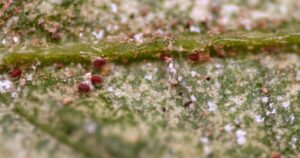
The red spider is red, tiny (0.6 mm /0.02 inches) and technically a red variety of spider mite. You can hardly see it without a magnifier, but the leaves will show broad strips of light to brownish speckles. The shoots are distorted and stunted, and leaves wither while the fruits stay small.
How to prevent them:
- Attract beneficial insects like robber mites, ladybugs and lacewings with a natural garden where you don’t use artificial pesticides.
- Strengthen your peppers and chillies by giving them enough water and nutrients.
How to get rid of them:
- Spray off red spiders from the plants with a strong water ray.
- Spray the plants with a solution of potassium and soap, rapeseed oil or a concoction from nettles, wormwood, tansy or mugwort.
Slugs
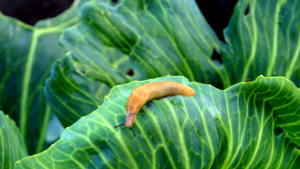
While many snails are beneficial, certain slug species can be very destructive in gardens. The large brown or orange slugs are typically the culprits.
An infection with slugs is easily detectable by their feeding traces. The leaves are eaten from the edges, and often only the veins remain. Additionally, slugs leave a silvery slime trace.
How to prevent them:
Let’s be honest here: there is no way to prevent slugs completely. There are, however, a few things we can do to make life harder for them.
- Regularly hoe the soil
- Don’t dig your garden in autumn, as the slugs lay their eggs in the holes
- Add compost to the soil and rake it in.
- Remove the mulch early in spring and compost it quickly, if necessary, with a compost accelerator. There are often slug eggs in the mulch.
- Water the garden only in the mornings so that the soil can dry until evening when the slugs get active.
- Install slug barriers around the plants
How to get rid of them:
- In a small garden, you can collect the slugs by hand and bring them somewhere else
- Mulch with tomato or fern leaves and green pine needles
- Build slug fences around your garden
- Attract benefectors like hedgehogs and toads by creating hideouts for them,
- Get chickens and ducks who can patrol around your vegetable garden. They love eating slugs.
Spider mites (Tetranychus urticae)
Source: Wikipedia
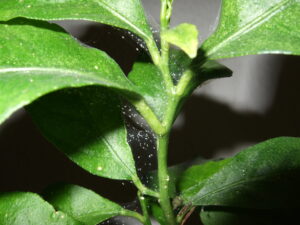
Spider mites are about 0.5 mm (0.2 inches) small and suck on the leaf cells. Their toxic saliva can infect the plants with viruses. Spider mites love dry air and warmth.
Like red spiders, spider mites are hardly detectable by eye alone. What we can see are their fine, white webs. Infected leaves show white, yellow, light green, greyish or brown patches; they wither and die.
How to prevent them:
- Regularly check plants for infestation
- Enhance air humidity by regular spraying
- Thoroughly clean stakes after an infection
- Keep the soil around the plants covered with mulch to keep it moist
- Observe crop rotation and don’t plant peppers and chillies in the same patch in succession.
How to get rid of them:
- Spray off the spider mites with a strong water ray. Repeat regularly every other day until they’re gone
- Spray the plants with a soap solution of 15 – 20 ml of potassium soap, 15 – 20 ml of spirit and one litre of water. Repeat every 5 days.
- When the plants are large and sturdy, spray them with rapeseed oil emulsion, which covers the mites‘ respiratory organs, and they die.
- Spray the plants with a mixture of tea tree oil and water or garlic tea.
Thrips (Thysanoptera)
Thrips are tiny insects with wings. Like other insects, they suck the plant sap, gradually killing your peppers and chillies. As they are so small, we usually discover them by secondary signs of an infestation like silvery or white patches on the leaves, tiny droppings on the plant and stunted growth.
How to prevent them:
- Avoid waterlogging as it weakens the plant and makes it more prone to infestation.
- Thrips don’t like high humidity but love dryness. Water regularly and keep the soil covered with mulch.
How to get rid of them:
- Spray the plants, especially the leaves’ undersides, with neem, olive oil or rapeseed oil emulsion or a soft soap solution. Also, spray the soil around the plants as thrips lay their eggs in the soil.
White flies (Trialeurodes vaporariorum)
Source: Wikipedia
White flies are a very common pest on peppers, especially in greenhouses.
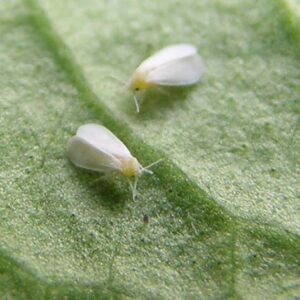
Technically, they’re moths, but look like tiny (1,5 mm) white flies, hence the name. The female white flies lay their eggs on the underside of pepper and chilli (and many other) plants. When the “nymphs”, as they’re called, hatch, they suck the plant sap and produce a sticky cover, the honeydew, where fungal diseases like sooty mould or other black fungi grow easily.
White flies are large enough to be seen. When we shake the plant, the flies fly up like a white cloud, but later settle again.
How to prevent them:
- Plants with a strong odour distract or repel white flies, so it’s a great idea to plant thyme, basil, lavender, nasturtium or even celery/celeriac near or between peppers and chillies.
- Other plants, like calendula, tagetes and corn flowers, attract ichneumon flies, the natural enemies of white flies.
How to get rid of them:
- When you detect the white flies early, wash them off the plants, especially the leaves’ undersides, with a sharp beam of water or a soft soap solution.
- After the plants have dried off, you can spray them either with rapeseed oil emulsion, diluted nettle manure or garlic tea.
- Cut off infested plant parts and throw them in the garbage bin – not in the compost.
Frequently Asked Questions About Pepper Plant Pests
✔️ Why are my pepper leaves full of holes?
They may be infested with Armyworms, slugs, cucumber beetles, hornworms, slugs or – if the holes are tiny – flea beetles.
✔️ What is the white sticky stuff on my pepper plants?
It’s called honeydew and is a sign of aphids or white flies.
✔️I see fine webbing on my pepper leaves. What is it?
This is spider mites – tiny arachnids that suck plant juices.
✔️ Can I use neem oil on peppers during flowering?
No. Neem oil will stay in the flower and may harm pollinators. If your plant is flowering, use soft soap solution instead.
✔️ Can I use chemical pesticides on pepper plants I’m going to eat?
Yes, but I strongly recommend trying organic methods first.
✔️ Are pepper pests dangerous to humans?
No.
✔️ How often should I check my plants?
I recommend checking them at least every third day, better every day.
You Can Do This
In an ideal world, we would just transplant our veggie babies outdoors, feed and water them and someday have a huge harvest. But we are not the only ones who love the taste of peppers and chillies. Some pests also find them good enough to eat.
Therefore, we must be watchful and check our plants regularly for infestations. The earlier you identify a problem, the simpler the solution usually is.
Don’t be afraid of pests, though. A garden is an ecosystem, and a small number of pests is good as they attract beneficial insects and natural predators. Our goal is not perfection but to help keep the balance.
Not by eliminating pests, but by managing them, because a healthy, well-observed garden rarely suffers catastrophic damage.
Healthy pepper plants are not pest-free plants.
They are plants that grow in balance — and a gardener who knows what to look for.
Can’t get enough of peppers and chillies?
In this comprehensive guide, I explain how to grow peppers and chillies from seed.
Your plants don’t have pests, but diseases? This guide shows you common pepper plant pests.
Don’t have a garden but want to cultivate peppers and chillies nevertheless? How to Grow Peppers and Chillies in Pots (Complete Container Growing Guide)
0 Comments