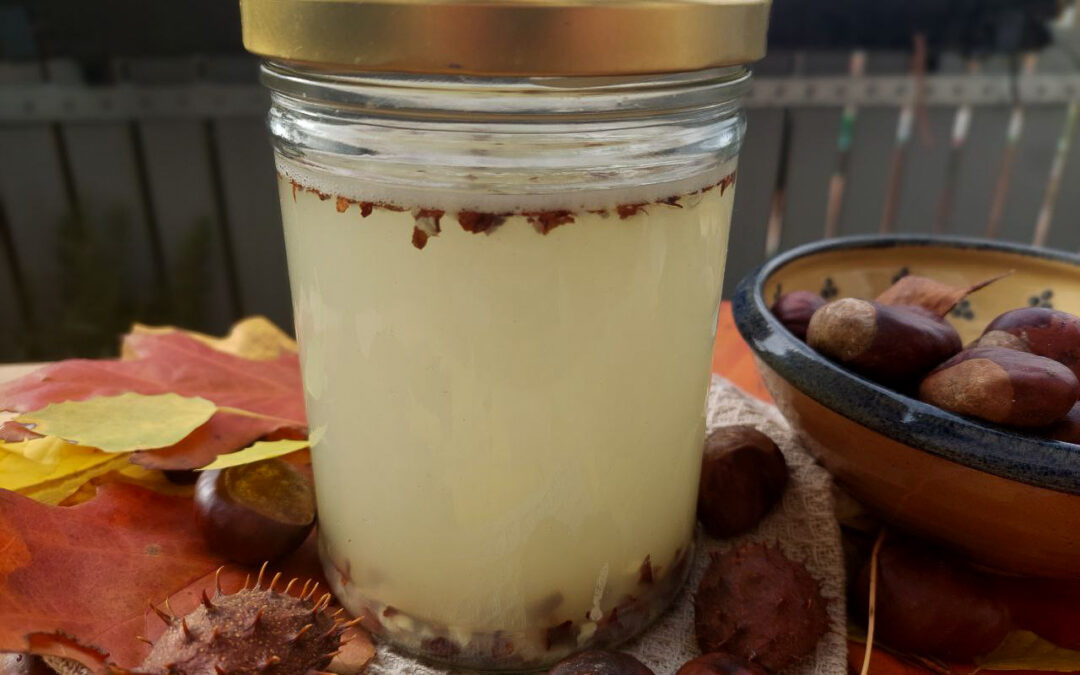
Homemade Chestnut Laundry Detergent: Simple, Sustainable and Free
When I wander around in autumn and come across a chestnut tree, I always remember making little animals and people from chestnuts and toothpicks as a child. Today, I still can’t pass chestnuts lying on the ground, and I always stuff my pockets with as many as I can get into them. First of all, for decoration, but then for making chestnut laundry detergent. It’s so simple, sustainable, and eco-friendly – plus it’s completely free!
Which Chestnuts Are Suitable?
Just to clarify: When I speak of “chestnuts” in this recipe, I’m referring to the common horse chestnut (Aesculus hippocastanum) as opposed to the edible sweet chestnut (Castanea sativa). Horse chestnuts naturally contain soap compounds, so-called saponins. Due to this, chestnuts were (and still are) widely used as a washing detergent, much like a local alternative to washing nuts. Today, however, we want to use the saponins to enhance the washing characteristics of our homemade laundry detergent.
You can also use chestnuts to make homemade chestnut soap – check out my complete chestnut soap recipe for another sustainable way to use foraged chestnuts.
How to Make Chestnut Laundry Detergent – Step-by-Step Instructions
Step 1: Gather and prepare chestnuts
That’s easy: take a wonderful stroll in the crisp autumn air to your nearest (or most beautiful or largest, that’s up to you) horse chestnut tree. Advanced collectors always bring a bag. When you’ve reached your destination, bend down and gather as many chestnuts as you can carry.
Bring them home and wash them thoroughly.
Step 2: Chop chestnuts
To extract the saponins, you must chop the chestnuts, either doing it roughly with a knife or – and this is my recommendation – by shredding them in a food processor. Process small amounts at a time to avoid damaging the blade or motor. And just in case you’re wondering: yep, I learned this the hard way!

If you want to store chestnuts for future use, you can shred them in the processor and dry them in the oven or a dehydrator.
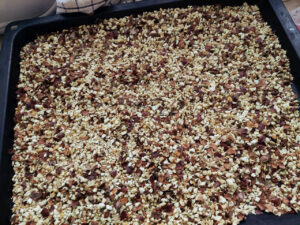
Make sure they are completely dry; otherwise, they’ll mould. Store the dried chestnut shreds in a jar.
Step 3: Making the detergent
Ok, so there are two ways of making chestnut laundry detergent.
The short method is to put the chopped chestnuts into a pot, fill it up with water, and let the mixture simmer for about 15 minutes, then let it cool down.
An alternative way – and that’s the one I always use – is to put the chopped chestnuts into a bottle or a jar, fill it up with water, and let it extract for about 24 hours.

Either way, strain the liquid laundry detergent through a fine-meshed sieve.
Homemade chestnut laundry detergent does not store very long. It’s best to make it fresh every few days or when needed, and use it up within a few days. I usually make about one litre and use it up within 5 – 7 days. I’ve heard that you can freeze it and use it just like the fresh detergent once it’s thawed, but I’ve never tried it myself.
How to wash with chestnut laundry detergent
While making homemade chestnut laundry detergent is already easy, washing with it is even simpler: Take your dirty laundry, put it in the washing machine, and add your homemade chestnut laundry detergent where you’d normally put your store-bought wash powder or liquid. Start the washing programme and that’s that.
I always use about 200 ml per load.
Industrially manufactured laundry detergents are made for severely dirty clothes, while our homemade chestnut laundry detergent only contains as much cleaning agent as necessary. That way, we not only save the fibres but also the environment.
Chestnut Laundry Detergent – FAQs
How can I store the chestnuts?
Unfortunately, chestnuts get mouldy quickly. For that reason, it’s best to dry them properly, either whole or shredded, and store them in an airtight container like a jar with a lid to keep moths away.
Can I just put the chestnut powder into the washing machine?
You can, yet not loosely, but in a sealable fine-meshed net or a sock. Otherwise, the powder or shreds will make your laundry dirty and clog the drain filter. However, the washing effect is better with the liquid laundry detergent because the saponins are better extracted this way.
How many chestnuts do I need per wash cycle?
I always use 2 – 3 tablespoons of chestnut shreds and add one litre of water. This laundry detergent is enough for about five wash cycles. I’d estimate then, that you need about 2 – 4 chestnuts per wash cycle.
My chestnut laundry detergent is yellow. Is that normal?
Unpeeled chestnuts make a yellowish extraction, but it won’t colour your laundry. To avoid greying of white laundry, you can peel the chestnuts before using them.
My chestnut laundry detergent has made my machine’s detergent dispenser dirty. What can I do?
Remove the dispenser and clean it with vinegar or citric acid. Use a cleaning brush, if necessary.
Is the chestnut laundry detergent suitable for all types of laundry?
Basically, it’s suitable for every laundry and every wash temperature. You can even use it for wool or delicate laundry. Pretreat stains with bile soap or curd soap before washing.
Can I wash white laundry with chestnut laundry detergent?
Homemade chestnut laundry detergent doesn’t contain optical brighteners like store-bought laundry detergent. For that reason, white laundry may develop a greyish tint after some wash cycles. You can prevent that by adding wash soda to your dispenser or vinegar where you’d normally put your fabric softener.
For bright white laundry, I also recommend adding one tablespoon of oxygen bleach.
Is chestnut laundry detergent safe for baby’s clothing?
Chestnut laundry detergent is milder than industrial washing detergents and thus suitable for baby clothing.
How does chestnut laundry detergent smell?
Chestnut laundry detergent doesn’t have a scent, so the laundry comes out fragrance-free. If you like, you can add essential oils and some alcohol as a binding agent to the detergent. However, essential oils are volatile and only last for a few hours in the detergent. For that reason, I use store-bought, eco-friendly washing powder for our sports clothing.
Do I need a fabric softener?
No, that’s not necessary. If you like, though, you can add vinegar to the fabric softener dispenser. It not only prevents greying but also makes the fabrics softer.
Aren’t horse chestnuts food for wild animals?
Yes, they are, but considering that there are so many horse chestnut trees in parks or on streets, and bearing in mind that we only need a small amount to make a year’s worth of laundry detergent, we don’t deprive the wild animals of their food.
If you want to help wild animals further, collect horse chestnuts and bring them to a forestry office or game park where staff can use them as feed.
Is chestnut laundry detergent eco-friendly?
Yes, definitely! First of all, chestnuts grow locally and therefore there’s no long-distance transportation. They also don’t need to be processed extensively.
The chestnuts’ saponins are milder than the washing agents in commercial laundry detergent. They’re much gentler than harsh surfactants (tensids) and other additives.
More chestnut projects:
How to Make Chestnut Soap: Easy Homemade Recipe & Instructions