.
Most of us have heard of elderflower cordial or syrup, but have you ever tasted elderflower jelly? Let me show you how you can make this simple yet wonderfully floral preserve, which captures the scent of early summer.
For centuries, people have used elderflowers to flavour milk, cream, vinegar, honey, and later syrups and cordials. Elderflower jelly is another delicious way to preserve that fleeting fragrance and enjoy it long after the blossoms have faded.
Here, I want to show you a quick recipe for elderflower jelly that captures the essence of early summer in a jar. It not only tastes delicious on toast, scones and pancakes but is also an unusual but very tasty addition to a cheese board.
If you’d rather preserve elderflowers as a drink concentrate, have a look at my homemade elderflower syrup recipe.
🌿 Harvest season: Late May to June
🌿 Difficulty: Easy
🌿 Preparation time: 25 minutes
🌿 Infusion time: 24 hours
🌿 Storage: Up to 1 year
🌿 Best served with toast, scones and cheese
What Does Elderflower Jelly Taste Like?
If you’ve never tasted elderflower before, imagine a combination of honey, pear, citrus blossom, and summer sunshine.
Now, elderflower jelly tastes floral but not perfumed and has a honey-like sweetness. At the same time, it has subtle citrus notes that are a zesty counterpart to the sweetness.
All in all, elderflower jelly tastes very light and elegant compared to berry jams, for example.
Harvesting Elderflowers for Jelly
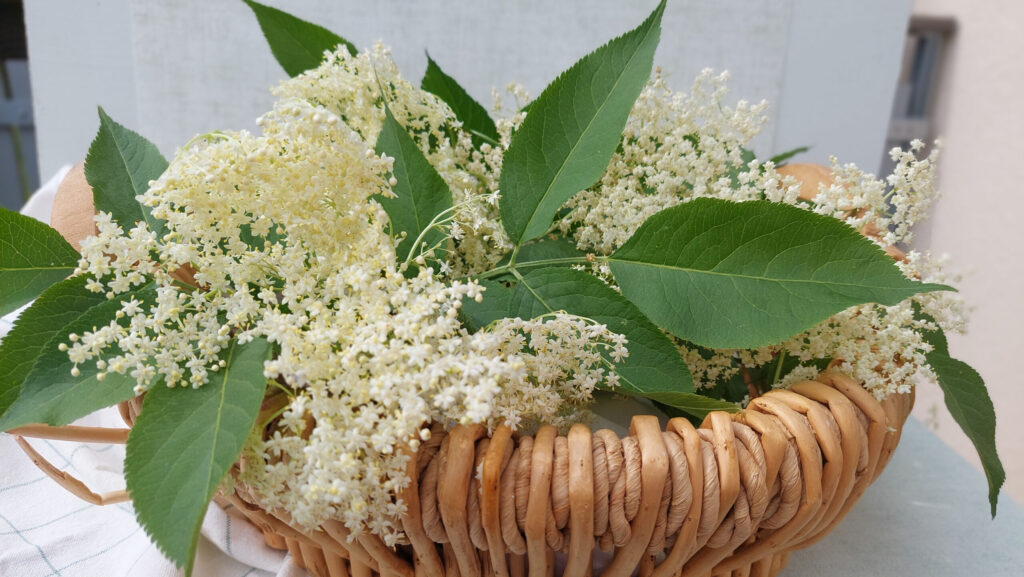
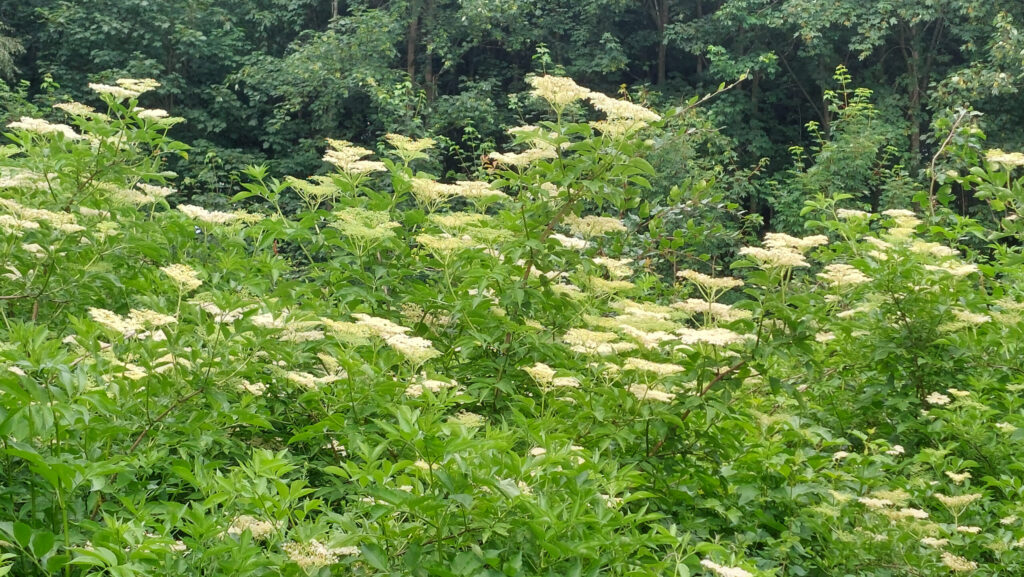
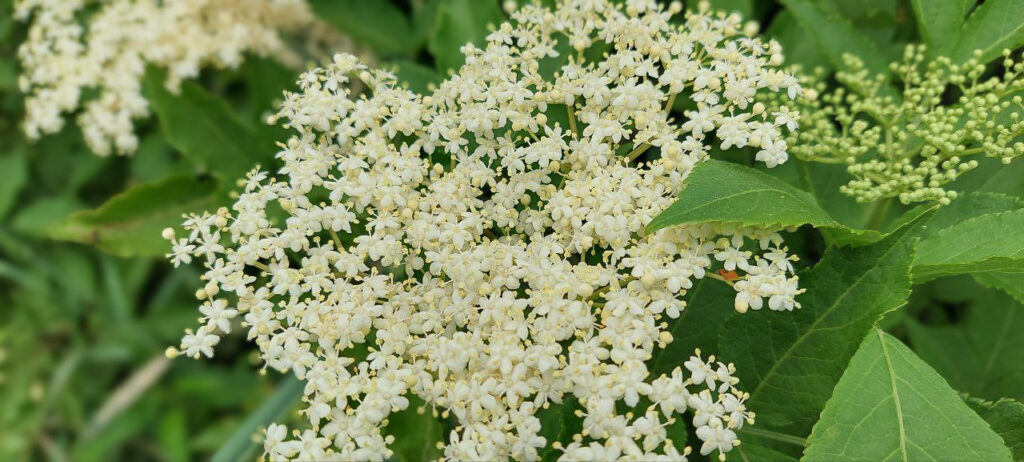
Elderflowers have creamy white flower heads that grow in an umbrella-like form with diameters of up to 30 centimetres (12 inches).
The numerous tiny single flowers form the panicles, and each of these flowers consists of five petals and yellow stamens.
When you spot them, take a basket and garden shears and head out to forage them.
Only gather umbels that grow far away from streets, at the edge of the woods, on field paths or in gardens. At those places, you can be sure that they are not polluted by exhaust fumes or other environmental toxins.
Always cut the elderflower umbels with garden shears or scissors. That way, you won’t shake the flowers too much and lose their valuable pollen and flavour.
Make sure to forage only elderflowers that are in full bloom and still fresh, meaning that the little flowers don’t fall off when shaking them. The best time for harvesting is the late morning of a sunny day. Ideally, it has been sunny for several days because that’s when the fragrance is strongest, and there are hardly any insects in the flowers.
A basket is best for carrying the harvested elderflowers home, because they lie lightly and airily without being pressed too much together.
One important request: don’t overpick! Never take more than a third of umbels per bush to leave enough for bees and birds! And to come back in autumn and harvest the elderberries 😉
Do not wash the elderflowers! Their flavour lies in the pollen, and if you wash them, the pollen – and with it the flavour – would be rinsed off. Instead, simply shake them gently to remove any insects.
Elderflower Jelly Recipe
This simple recipe for elderflower jelly requires few ingredients, and you’ll probably already have all the necessary equipment at home. See the recipe card below for exact quantities.
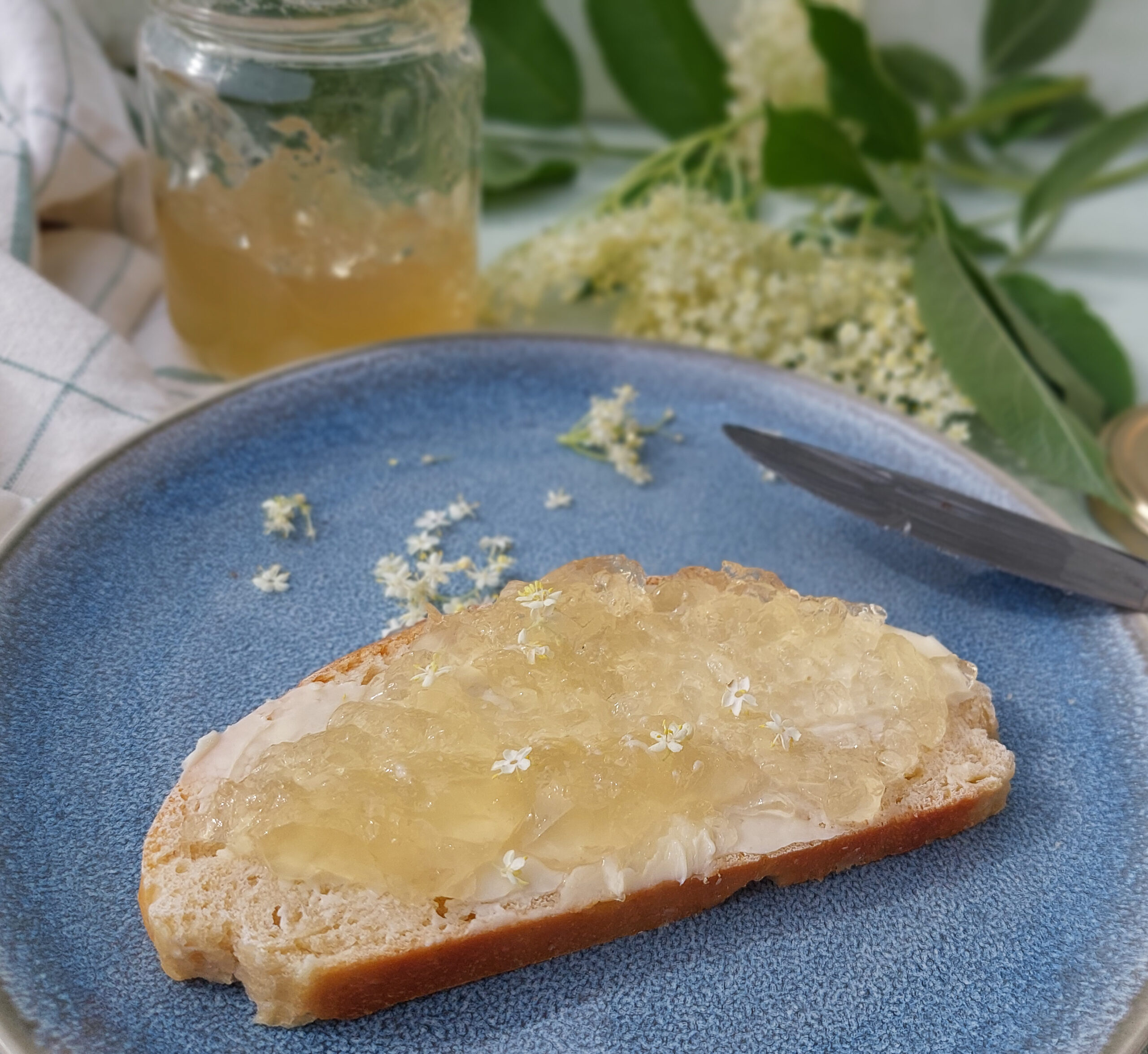
Elderflower Jelly
Ingredients
Equipment
Method
- Shake the elderflower umbels carefully to remove insects. If you want to be absolutely sure that no insects are left, leave the flowers outside in a dry and shady place for about 20 minutes. That way, the insects can wander off.Do not wash the elderflowers! Their flavour lies in the pollen, and if you wash them, the pollen – and with it the flavour – would be rinsed off.Once the elderflowers are clean, cut off the thick stems.
- Put the elderflowers in a bowl. Boil the water and pour it over the elderflowers and let them steep for about 24 hours.
- Lay a cheesecloth into a strainer. Now put the strainer into a pot and carefully strain the liquid through it into the pot. Squeeze the elderflowers out.
- Step 3: Cook the Jelly
- Add the lemon juice and preserving sugar to the infused liquid and stir it until the sugar has dissolved.
- Bring it to a rolling boil and let it cook for 4 minutes.
- To check if the jelly is ready, pour a few drops onto a chilled plate. Now tilt the plate: when the jelly is still running, let it cook for another 1 - 2 minutes; when it thickens, it's ready.
- Pour the jelly into sterilised jars and immediately seal them with the lid.
- Put the filled and sealed jars upside down onto a kitchen towel for about 15 minutes. Flip them back and let them cool down.
Love Preserving Seasonal Flavours?
Variations
Instead of just making pure elderflower jelly, as I described in the recipe, you can mix it with other flavours:
Elderflower Jelly from Syrup
If you’ve already made a batch of homemade elderflower syrup, you can use it as the base for this jelly. See my elderflower syrup recipe here.
Simply follow the pectin manufacturer’s instructions for the amount required.
Elderflower and Lemon Jelly
If you like it more tangy, use 200 ml of freshly squeezed lemon juice and reduce the amount of water to 800 ml. Additionally, add lemon zest to the liquid before boiling.
When you’ve filled the jelly into jars and sealed them, flip the jars every 10 – 15 minutes. That way, the zest distributes more evenly in the jelly before it sets.
Elderflower and Strawberry Jelly
Mix 500 grams of pureed strawberries with 500 ml elderflower syrup and make a mixed jam. For a detailed recipe, see this recipe collection of strawberry jams with a twist.
Elderflower and Gooseberry Jelly
Elderflowers and gooseberries make a great flavour team! Mix 500 g pureed gooseberries with 500 ml infused elderflower water or syrup, add sugar (in case of the infused water) and make a tasty jam!
How to Use Elderflower Jelly
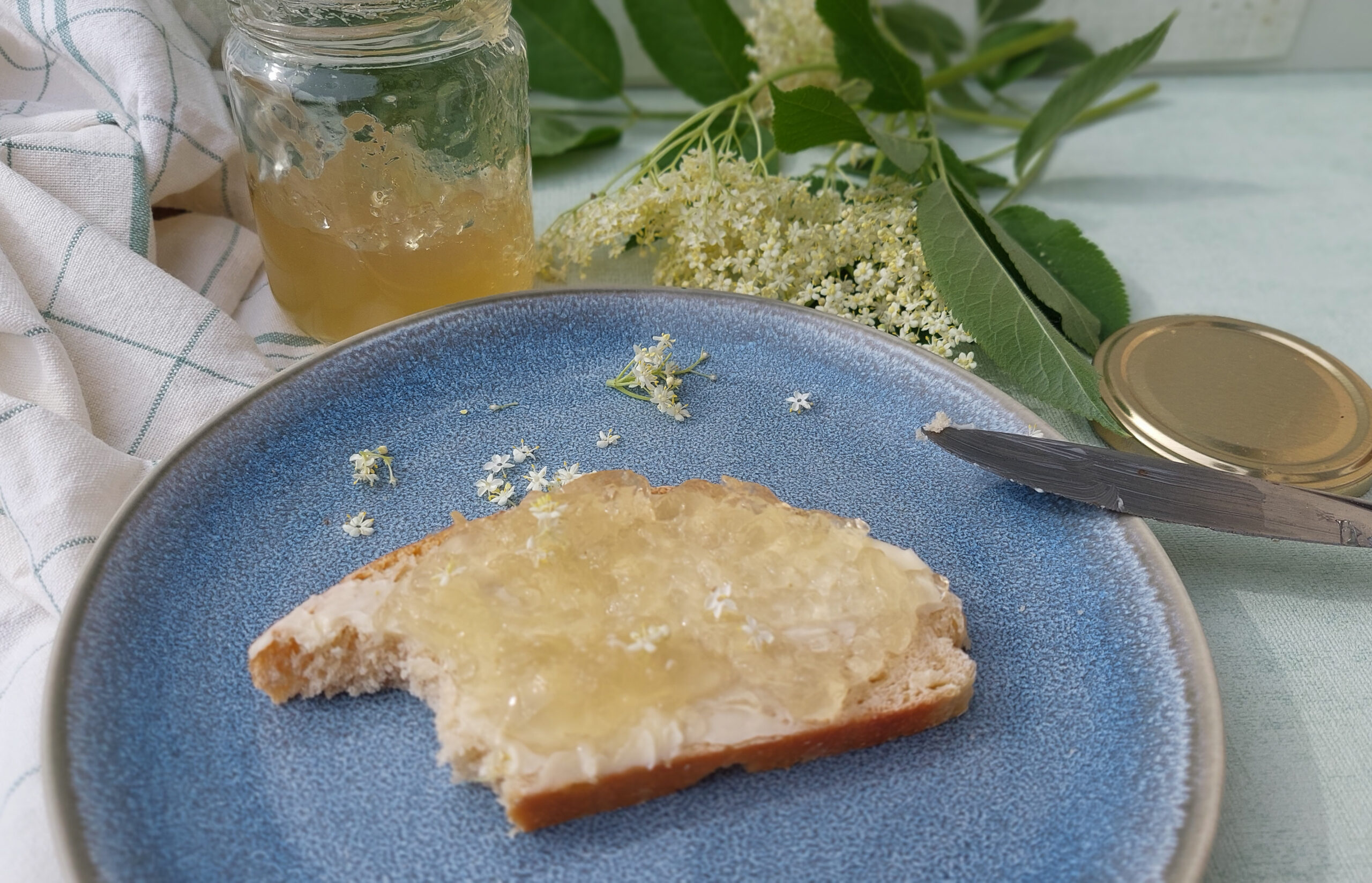
The classic use for elderflower jelly is, of course, to spread it thickly on toast and bread and enjoy it for a lovely breakfast. But it’s much more versatile than just that!
You can enjoy it on
- freshly-baked scones
- crunchy croissants
- in or on your pancakes
- in a yoghurt
- as a cheesecake glaze
- with soft cheeses
- with roast pork or chicken
Storage
Sealed tightly and stored in a dark place at room temperature, elderflower jelly can be stored for up to one year.
Once a jar is opened, store it in the fridge and consume it within two weeks.
Always use a clean spoon to get it out of the jar. That way, bacteria won’t contaminate the jelly, which would lead to fast spoilage.
Common Problems and Solutions
My Jelly Didn’t Set
This can be due to too little pectin or boiling it too shortly. Add some more pectin and boil it for another 2 minutes, and test again if it sets by pouring a few drops on a chilled plate.
My Jelly Is Cloudy
That’s normal because some of the pollen remains in the liquid.
My Jelly Is Too Sweet
That’s probably due to using jam or preserving sugar 1:1 instead. Next time, use a 2:1 sugar and add more lemon juice.
Frequently Asked Questions
Can I Freeze Elderflower Jelly?
Yes, you can freeze elderflower jelly, but it’s not necessary. Proper boiling and hot sealing in jars is enough.
Can I Use Dried Elderflowers?
Yes, you can use dried elderflowers, but fresh ones make a better flavour.
Can I Make Elderflower Jelly Without Preserving Sugar?
Yes, that’s possible, but then you must add pectin separately.
How Long Does Elderflower Jelly Last?
Up to a year when properly sealed.
What is the difference between elderflower jelly and elderflower syrup?
Elderflower syrup or cordial is a liquid concentrate used for drinks, desserts, and baking, whereas elderflower jelly is a spreadable preserve that can be served on bread, scones, or alongside cheese.
Early Summer Flowers in a Jar
Elderflower season lasts only a few short weeks, but a few jars of homemade elderflower jelly allow you to preserve its delicate fragrance for months to come. Whether spread on warm toast or served alongside a cheese board, this simple recipe is a lovely way to bring a little taste of early summer into your kitchen.
Want more recipes for homemade jams and preserves? Look at these:
Spruce Tip Honey (Vegan Forest Honey Recipe + Foraging Guide)
Homemade Woodruff Syrup (Waldmeister Syrup Recipe, Uses & Tips)
0 Comments