
.
Originally published June 2024 • Updated June 2026 with expanded June garden task and FAQs.
The promises of May are kept in June! Forgotten is the doom of night frosts, and it’s time to fertilise, mulch and even harvest the first vegetables. Summer solstice is around the corner, and the days are long, hot and busy (read more about June in my June reflections). Even if you’re a beginner gardener, June is one of the most rewarding months in the vegetable garden. Small, consistent tasks now make a huge difference later in the summer.
With June, we’ve reached early summer, and we’re called upon to tend to the garden in a more intense way. In my garden in Bavaria, there’s a lot to do right now. Weeding, mulching, harvesting and filling the gaps with new vegetables keep me busy.
The most important June garden tasks are watering deeply, mulching beds, feeding heavy-feeding vegetables, monitoring pests, sowing succession crops, and harvesting regularly.
Let’s break down gardening jobs we can do in June:
June Garden Checklist: Essential Tasks at a Glance
If you only have time for a few things, focus on these essential June garden tasks:
- Protect your vegetables from pests
- Water sufficiently
- Sow and plant vegetables outdoors
- Stake and prune tomatoes
- Fertilise vegetables
- Mulch beds
- Harvest and preserve
Here’s a quick overview of the most important garden tasks to tackle in June:
| Garden Task | Best Time in June | Priority |
|---|---|---|
| Harvesting | When plants are ripe | High |
| Watering | When soil is dry | Medium |
| Mulching | When plants are about 10 cm (4 in) high | Medium |
| Sowing and planting | After gaps form due to harvesting | High |
| Checking for pests and diseases | Every second day | High |
| Weeding | Twice a week | Medium |
| Fertilising | Every 4 weeks | High |
| Pruning tomatoes | As soon as suckers form | High |
| Saving seeds | When seeds are ripe and dry | Low |
If you’re transitioning from late spring preparation, you might also want to revisit the tasks from May. Many jobs started last month continue now — especially fertilising and mulching.
→ Continue from last month with my May Garden Tasks checklist.
What to Sow and Plant in June
1. Harvesting and preserving
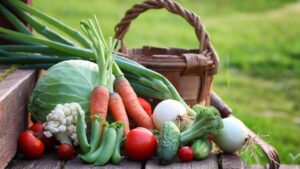
✔️ Why it matters: Eat fresh vegetables or preserve them for winter
Many veggies that we sowed and planted earlier that year can now be harvested in June. Apart from lettuce, which we have already been harvesting for weeks, we can now yield sweet peas, broad beans, kohlrabi and our second batch of spinach and Swiss chard.
Many herbs like mint, sage, thyme, oregano, and others can now be dried, frozen or preserved in other ways. If you want to learn more about how to preserve herbs, this article will help you.
Calendula is now in full bloom, and you can pluck the flowers and dry their petals. I’ve made a list of five uses for calendula that shows you what to do with them.
The strawberries are finally ripe (honestly, what’s in strawberries? I can never get enough of them!), and we’ll get busy cooking strawberry jam, the first jam of the season. If you happen to have elder bushes in the vicinity, you can harvest the flowers now and make elderflower syrup at home. It’s not only a tasty ingredient for drinks or in yoghurt, but can also be mixed with strawberries to make an interestingly flavoured jam. You’ll find more inspiration in this list of recipes for strawberry jam with a twist.
🌿Gardener’s Tip: Don’t wait too long to harvest your veggies.
One of the biggest issues in June is water. With rising temperatures, the soil dries out faster.
2. Watering
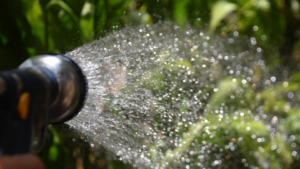
✔️ Why it matters: Plants and seeds need water to grow.
Watering is one of the most important garden tasks in June. So far, this year has been bone dry here in Bavaria. We had almost no rain in spring and only occasional rainfall in May, just enough to keep the plants alive. While I’m not a great fan of watering, it’s essential to support freshly sown or transplanted plants. Mulching (see next step) and hoeing are good additional methods to ensure that the soil stays moist.
🌿 Gardener’s tip: The best time for watering is in the morning.
When we protect the soil, though, we don’t need so much water.
3. Mulching
✔️ Why it matters: Mulching keeps the soil moist and suppresses weeds
As soon as my plants are about 10 – 15 cm (4 – 6 inches) high, I cover the soil between them with mulch. I either use (dry!) grass clippings, (old) hay, straw or leaves. Other good mulch material is wood chips that have the additional advantage of being avoided by snails and slugs.
🌿 Gardener’s Tip: Add dry grass clippings, hay, straw or leaves as mulch.
4. Sowing and planting
✔️ Why it matters: Let’s close the gaps in harvested plants
Wherever we harvest, we should sow or plant afterwards to fill up the gaps in the patches. That way, we cannot only harvest continually but also keep the soil covered. This will suppress weeds and keep the soil moist. For a quick overview on what to sow now, check the list above or read this comprehensive list of vegetables we can sow and plant in June in our garden beds.
🌿 Gardener’s Tip: Keep seed-starting indoors so that you have ready plants when gaps arise.
5. Monitoring for pests and diseases
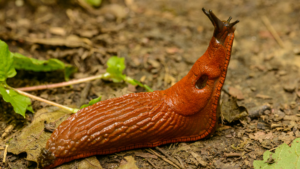
✔️ Why it matters: Pests and diseases can destroy your plants
One of the greatest garden “tasks” in June is taking a daily stroll through the garden. First of all, because it’s good for the soul. Is there anything more satisfying than witnessing how everything we planned and prepared earlier that year comes to life and works out? I can’t think of one.
While we are there to enjoy our bountiful garden, we should also watch out for pests and diseases like a hawk. We haven’t invested all that time and energy to see our babies be either eaten off overnight or die from some disease. The earlier we detect possible harm, the better the chances of protection.
Snails and slugs, for example, are some dreaded pests, especially when it’s moist or wet, but even during dry spells, we should check for them under the mulch. A good way to keep those pests off our seedlings is to put snail collars around them, which they can’t overcome. Or you get out in the wee hours of the morning or the evening with a bucket and collect them. Choose your way, but I prefer the collars.
Other common pests are aphids, especially when the weather is dry. If aphids are already appearing on your beans or peppers, this guide on natural aphid control shows exactly what to do.
🌿 Gardener’s Tip: Check regularly for pests and diseases
Apart from pests and diseases, weeds must also be prevented.
6. Weeding
✔️ Why it matters: Weeds compete for nutrients.
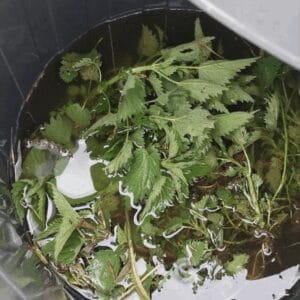
Mulch is a good way to suppress weeds, but sometimes it’s not enough, and we have to weed regularly before dandelion, couch grass, and nettles get the upper hand. As plenty of weeds are edible, you should consider making a pesto from them (for more, see this article). From nettle, dandelions and horsetail (and some more), you can make liquid manure as a fertiliser for your plants. Read here how to make nettle manure.
🌿 Gardener’s Tip: Rip weeds out as soon as they occur.
When we’ve removed weeds, let’s feed our vegetables.
7. Fertilising vegetables
✔️ Why it matters: Plants need nutrients to grow optimally.
June is when hungry plants suddenly start demanding far more nutrients. Depending on what parts oft he plants we want to harvest, we have to use different fertilisers: brassicas, for example, where we harvest the leaves, need mostly nitrogen to build large heads. Tomatoes and cucumbers, on the other hand, where we harvest the fruits from, need more phosphorus and potassium to build many large fruits.
Fertilise your heavy-feeders every 3- 4 weeks and the medium-feeders every 4 – 6 weeks.
A nitrogen-rich fertiliser that you can easily make yourself is nettle manure.
🌿 Gardener’s Tip: Use homemade nettle manure to fertilise your plants.
If you want to deepen your soil fertility naturally, you may enjoy these guides:
Natural Fertilisers From Plants
Natural Fertilisers From Animals
Natural Fertilisers From Humans
🌿 Enjoy slow seasonal gardening?
Join my newsletter for monthly garden guidance aligned with nature’s rhythm.
8. Fertilising and mulching berry shrubs
✔️ Why it matters: Berries need nutrients, too.
We’ve talked mainly about vegetables, but our berry shrubs, like raspberries, gooseberries, currants, blackberries, and so on, need food as well. So, another garden task you should do in June is to fertilise your berry shrubs and fruit trees. They’ll profit as well from a healthy dose of that liquid manure from stinging nettles I mentioned above and will reward you with a large harvest. Additionally, you should cover the soil under the bushes and shrubs now with mulch.
🌿 Gardener’s Tip: Although perennial, berry shrubs and fruit trees need care, too.
While cabbages and lettuce are relatively easy to care for, tomatoes need a bit more attention.
9. Pruning tomatoes
✔️ Why it matters: Pruning helps tomatoes form more fruits and stay healthy.
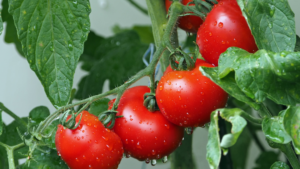
Every time we turn our backs on our gardens, even if it’s only for a second, our tomatoes seem to shoot out new suckers from their leaf axils. If you want to induce the plant to produce many fruits instead of leaves, you must remove these suckers before they get too large. Over here, you’ll find a detailed guide on how to grow tomatoes.
You can put the pruned suckers into water, and they will soon form roots. If you want to and have some room left, you can transplant these new tomato plants in a few weeks into the patch.
🌿 Gardener’s Tip: Put the suckers in water; they’ll grow roots, and you can plant them out as well.
10. Saving seeds
✔️ Why it matters: Saving seeds saves money and preserves heirloom varieties.
If you still have some vegetables from last year in your garden, they’ll be blooming by now, which attracts beneficial insects. In a few weeks, these blooms will turn into seeds that we can harvest and store for the next gardening season. The plants from those seeds are usually more robust and better adapted to your (micro)climate. Best of all: gaining our own seeds helps us save heirloom varieties and makes us (at least partly) independent from large seed companies.
🌿 Gardener’s Tip: Save seeds on a dry day.
Frequently Asked Questions About Gardening in June
What vegetables can I still plant in June?
Many fast-growing vegetables can still be sown in June, including carrots, beetroot, lettuce, radishes, bush beans, cucumbers, zucchini, kale, and Swiss chard. June is also ideal for succession sowing to extend harvests into autumn.
How often should I water my garden in June?
Most vegetable gardens benefit from deep watering one to three times per week, depending on rainfall, soil type, and temperature. Newly planted seedlings and container plants may need water daily during hot weather.
Should I fertilise vegetables in June?
Yes. June is one of the most important months for fertilising because vegetables enter a phase of rapid growth. Heavy feeders like tomatoes, cucumbers, pumpkins, and cabbage especially benefit from regular feeding.
Is mulching necessary in summer?
Mulching becomes extremely valuable in June because it helps retain moisture, suppresses weeds, and protects soil life during rising temperatures. Grass clippings, straw, hay, and leaves all work well as natural mulch materials.
What pests appear in the garden in June?
Common June garden pests include aphids, slugs, snails, flea beetles, and cabbage white caterpillars. Regular inspections help catch infestations early before plants are seriously damaged.
Can I still sow seeds in June?
Absolutely. June is an excellent month for sowing many vegetables directly outdoors, especially quick-growing crops and succession plantings for continuous harvests later in the season.
Why are my tomato plants producing so many side shoots?
Tomatoes naturally produce suckers between the main stem and leaf axils. Removing these shoots helps indeterminate tomato varieties focus energy on producing fruits instead of excess foliage.
Common June Gardening Mistakes
Mistakes can happen, even when you’re an experienced gardener. To help you prevent them, I’ve listed the most common mistakes:
Overwatering in heat
Watering is important, especially when the weather is hot and dry, but much is not always best. Water deeply every 2 – 3 days instead of watering every day, which could lead to waterlogging.
Forgetting succession sowing
When we harvest, we’re often so delighted with it that we completely forget to fill the gaps that are created by ripping out the veggies. But that’s an important step for a) enhancing our harvest and b) keeping the soil covered.
Letting weeds seed
This is a common problem in June: one day, the weeds are tiny and barely visible, letting us think that “within the next few days” we’ll tackle them. Just to see that ONE DAY LATER they’ve grown exponentially and also produced seeds. Which will immediately seed and produce even more weeds. In short: weed as early as you see them.
Fertilising too late
In June, our vegetables get hungry and need nutrients to grow and thrive. If you fertilise them too late, they’ve already run on low, and either need more time to ripen or stay smaller and produce less fruit.
Ignoring pests until damage spreads
Target pests as soon as you see them. The earlier you get rid of them, the less damage they can cause and the less the chances of exponential reproduction.
Harvesting too late
Guilty of that one! Ripe vegetables are such a great sight that we sometimes want to prolong it. And miss the right time to harvest. The result: vegetables that have lost part of their flavour or have become fibrous. Watch your vegetables like a hawk and harvest them as soon as they’re ripe.
🌿 June Gardening Summary
In June, focus on:
- Planting warm-season vegetables
- Protecting seedlings from pests and weather
- Establishing watering routines
- Feeding and mulching actively growing plants
Each month builds on the previous one in the garden, and following seasonal rhythms makes gardening simpler and more productive year after year.
Why June Garden Tasks Matter
June is a bit like a summer camp – everything’s growing, thriving, and probably getting a little wild when you’re not looking. Between watering, weeding, and wondering why your tomatoes are taking their sweet time, remember that gardening is part science, part art, and part wishful thinking. Your plants don’t need perfection; they need care, consistency, and maybe the occasional pep talk. So grab your watering can, embrace the dirt under your fingernails, and enjoy watching your little green kingdom flourish. After all, every master gardener started with one slightly wonky seedling!
Can’t get enough of gardening? These articles may also interest you:
Small garden, huge harvest: Maximising your small vegetable garden
Beginner’s Guide to Composting: How to make compost in 8 easy steps
Easy Vegetables for Beginners: 11 Foolproof Crops for Your First Garden in 2025
Browse my garden library for all gardening tutorials.
0 Comments