
.
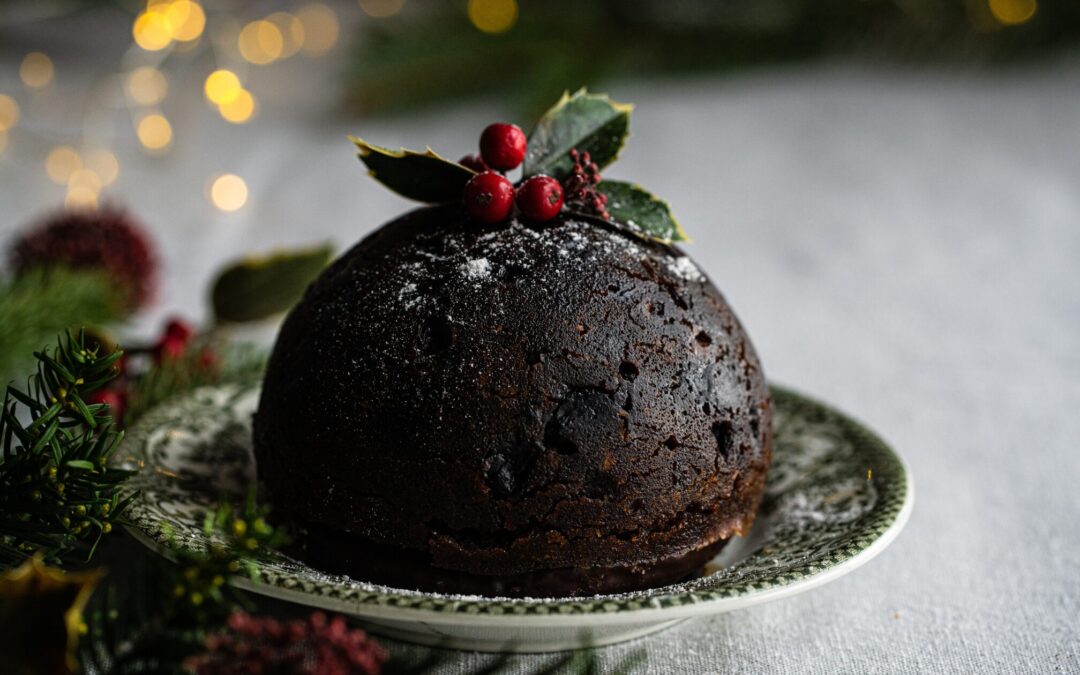
While I’m quite open to trying out new recipes when it comes to cookies, I won’t negotiate my favourite Christmas dessert: Christmas pudding. Today, I’m sharing my tried-and-tested homemade Christmas pudding recipe that I’ve refined for years.
This rich, chewy and flavourful mother of all Christmas desserts (at least in my opinion) is so much better than anything store-bought. It contains an array of dried fruit, and it’s bursting with the Christmassy flavours of warming spices, brandy and tangy citrus. Better yet, it’s also an impressive show-stopper that’ll awe your family and guests.
The only catch is that it needs at least 4 weeks to mature. So, what are you waiting for? Let’s make a Christmas pudding that’ll become your new family tradition!
The History of Christmas Pudding
First, let’s explore the tradition behind this beloved dessert, then I’ll break down the key ingredients.
Traditionally, Christmas pudding was made on Stir-up Sunday, the last Sunday before the start of Advent. That way, it leaves the pudding enough time to mature and develop its wonderful flavours.
Stir-up Sunday got its name from an Anglican prayer, recited in the churches on this day, asking God to “stir up” the hearts of the faithful. Over time, it became associated with the stirring of the Christmas pudding.
The tradition of making the Christmas pudding on Stir-up Sunday likely started in Victorian times. The family gathered in the kitchen and took turns to stir the pudding while making a wish for the upcoming year. This wasn’t only about cooking, it was about celebrating the start of the Christmas season and creating memories together.
Sometimes, a coin or a trinket was stirred into the pudding, predicting good luck in the New Year for the person who found it in their piece on Christmas Day. In my family, we refrain from adding anything other than edibles to the pudding. I don’t want to risk a broken tooth for anyone…
On Christmas Day, the pudding is decorated with a sprig of holly to represent Jesus’ thorn crown. Add a little bit of warm brandy and light the pudding before proudly carrying it to the family table.
Now that we know the tradition, let’s see what goes in a good Christmas pudding:
Key Ingredients for Traditional Christmas Pudding
Fruit mix
Traditional Christmas pudding contains loads of different dried fruit. I prefer the mixture I describe in the recipe, but you can alter the fruits and/or their amounts. Just make sure that in the end, you have the same overall amount of dried fruit. You’ll need 550 grams total of dried fruit (plus candied orange and lemon peels separately)
If you can’t get dried cherries, for example, you can easily swap them for dried cranberries. Or you leave out the dried apricots and try dried apples or pears instead.
Spices
Although you can juggle with the fruits if you want, don’t alter the spices. The blend of cinnamon, nutmeg, cloves, and ginger is what makes this recipe so unique and special. There’s nothing quite like this combination of warming Christmas spices that fills your kitchen with the most wonderful aroma while it steams.
Suet
Suet is beef or mutton fat from around the kidneys, which is usually sold shredded or in blocks. Here in Germany, I can get it at the butcher’s; I just need to call in advance and pre-order it. Sometimes you can find suet in the supermarket meat section, in speciality stores or even online.
There are many recipes that use butter, vegetable shortening or even oil for Christmas pudding. I strongly recommend, however, to always use suet, not butter or oil! Suet is in the recipe for a reason: it needs a relatively high temperature to melt. When the pudding gets steamed for hours in a hot water bath, the suet melts very slowly and distributes evenly throughout the pudding as it melts.
When you use butter, shortening or oil, it’ll pool at the bottom of the pudding bowl. When you serve the pudding on Christmas day, you’ll have a greasy top (which was the bowl bottom) and a dry remainder.
I agree that suet isn’t the best thing in the world to eat, but it’s only once a year and in a relatively small amount. And just in case you were wondering: no, it doesn’t taste of meat.
By the way: Suet can be frozen if you buy extra, making it easy to keep on hand for next year.
Booze
This recipe is not for teetotalers as it contains a fair amount (150 ml) of brandy, rum, sherry or similar spirit in which the dried fruits are soaked. Unfortunately, the alcohol doesn’t fully cook off, so this isn’t suitable for children either. If you want to make an alcohol-free version of Christmas pudding, use alcohol-free rum (yep, that’s a thing) instead.
The mould
Apart from the usual equipment like mixing bowls, a spoon (wooden or metal), and a large pot to cook the pudding in, the most important equipment is the pudding mould. Don’t worry, there’s no need to rush out and buy a specific Christmas pudding mould or worse, refrain from making the pudding because you don’t have one! A simple metal bowl that’s large enough to hold the pudding dough and still has some space below the brim will do well. I use a 1.5-litre pudding basin and it’s perfect. If you have a pudding mould of whatever shape, though, feel free to use it. There’s no law that forbids Christmas pudding in any other form than the famous half-ball.
How to make Christmas Pudding
Day 1 – 4: Soaking the fruit
Christmas pudding needs some time to make, several days, in fact. But don’t worry, most of the time is spent letting the ingredients sit and soak.
Start with the dried fruit: place the dates, raisins, sultanas, figs, plums, cherries, as well as the candied orange and lemon peel in a large bowl.
Add the rum or brandy, or whatever your favourite booze is.
Mix all these ingredients thoroughly, taking care not to crush the cherries. I recommend either using a wooden or metal spoon or just mixing everything with your hands. The ingredients are heavy – and will get even heavier as they soak up the booze as the days go on.
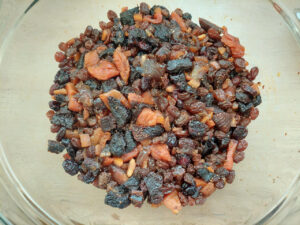
This fruit mix has been soaking in rum for a few days!
Once everything is thoroughly mixed, cover the bowl with clingfilm or aluminium foil and let it soak for four days. Every day during this time, take the cover off and mix the ingredients. The 150 ml of booze we used on Day 1 will usually be soaked up within two days. If the mixture looks a little dry, add more booze.
So, if you want to cook the pudding on a Sunday, for example, start soaking the fruits on Wednesday or even Tuesday evening.
Day 4
Everything’s prepared, now’s the time to bring our pudding together.
Making the pudding dough
Place the flour, baking powder, brown sugar, the spice mixture (cinnamon, nutmeg, cloves, and ginger), salt and breadcrumbs into a large mixing bowl. Mix these dry ingredients well before adding the next one.
Now, coarsely grind the beef suet on a cheese grater and add it to the dry mixture.
Grate the apple as well and also add it to the mix.
The same goes for the treacle, the eggs and – you guessed it – the freshly grated orange and lemon peel.
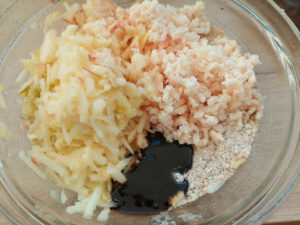
Mix everything really well, taking care not to crush the cherries if possible. When the pudding cooks, the suet melts, so it must be well distributed or else it will look clumpy. At this point, the mixture is very sticky and heavy.
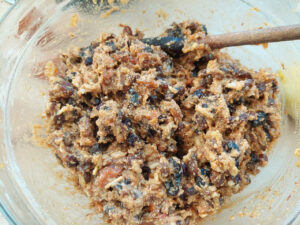
Filling the mould
Grease whatever pudding mould you have with butter, so that the ready-cooked pudding will come out more easily. Gently press the sticky mixture into the bottom of the bowl or mould so that there are no holes or gaps. The bottom of the mould will later be the top of the pudding once it’s unmoulded.
If you want to stick to the old tradition of adding a penny or another token into the pudding, now is the right time. Tradition says that the person who finds the penny in his piece of pudding will get one year of good luck. Just remember to tell your guests in advance to watch out for the penny; otherwise, the new year would start with a broken tooth…
Fill the bowl or mould up to 1 cm (1/2 inch) under the brim. The pudding will expand a bit when cooked so it’s important to leave some room.

If you use a pudding mould, close and secure the lid. In case of a bowl, cover it with aluminium foil. I like to fold a pleat into the foil to give the pudding plenty of room if it likes to rise.
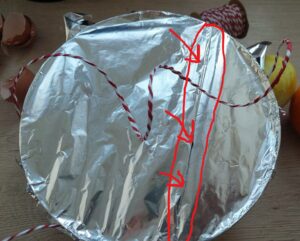
See the crease? That way, the pudding can rise without pushing off the foil
Seal the foil with rubber bands to prevent water from getting into the bowl while the pudding’s cooked in the water bath. Make sure you don’t get water in your pudding!
Cooking the Pudding
Now the pudding is ready to be cooked in a water bath. Fill a pot that’s large enough to hold the pudding bowl or mould. The water level should come up halfway to the edge of the pudding mould, so that water can’t get into it.
Put the mould into the water and bring the water to a boil.
Don’t put cold pudding moulds into boiling water, unless the bowl is of a tempered material. The bowl may crack from the drastic temperature change!
How long to steam Christmas Pudding
Let the pudding cook for 8 hours on low to medium heat. The water shouldn’t boil vigorously (boiling water could splash into the mould); keep it at a gentle simmer.
As the water will evaporate, you must check the pot every one – two hours and fill it up with boiling (!) water if necessary.
After eight hours, take the mould out of the water bath. Be careful handling it, it’s hot and it’ll take a while to cool down.
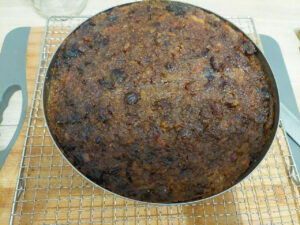
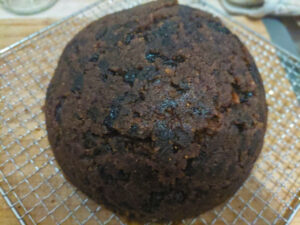
I usually let the steamed Christmas pudding sit for about 5 – 10 minutes on the counter to cool down before I try to unmould it. Then I place a cooling rack on top of it. Take the mould with one hand (wear an oven mitten!) and the rack with the other and flip it upside down. Usually, the pudding comes out beautifully.
Maturing
This is where the magic happens! As the pudding ages, it develops more flavour. Smell the traditional steamed Christmas pudding when it’s first cooked, and then smell the pudding on Christmas Day. You can smell and taste the difference in an aged Plum Pudding. There’s a reason for preparing homemade Christmas pudding about four weeks before Christmas and some people even start in early or mid October.
When the pudding is completely cool, sprinkle it with the booze you used to soak the fruit and cover it in aluminium foil and either store it in the fridge or a cool and dry basement for at least four weeks.
Once a week, take off the foil and sprinkle the pudding again with rum or brandy. Wrap it back up again (in the same foil) and put it back to rest. Keep up this weekly maintenance until Christmas.
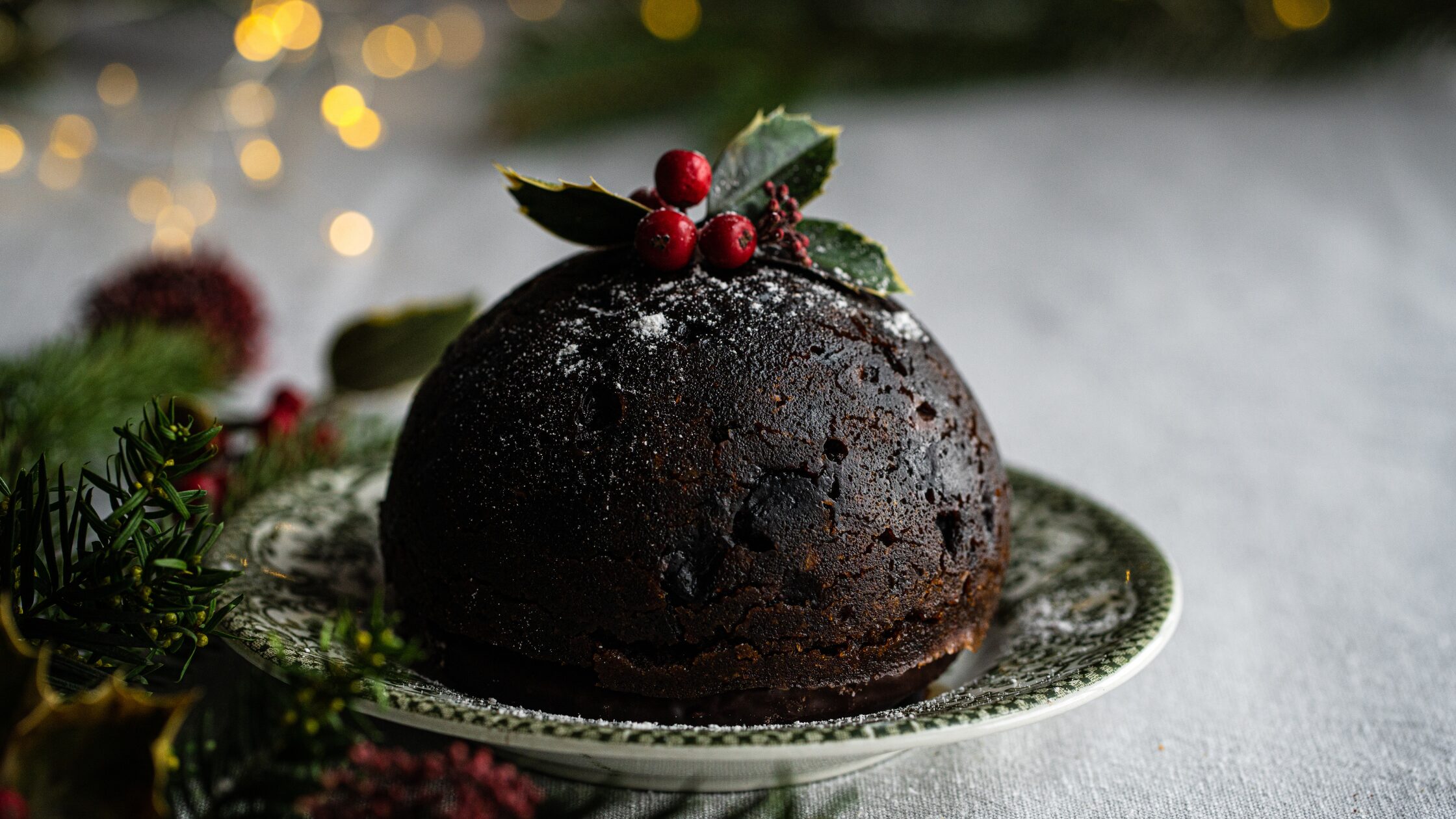

Christmas Pudding (aka Plum Pudding or Figgy Pudding)
Ingredients
Equipment
Method
- Start four days before you want to steam the pudding:
- Place the raisins, sultanas, figs, dates, prunes, apricots, cherries and the candied orange and lemon peel in a bowl.
- Pour the brandy or rum over the dried fruit and stir to combine the mixture.
- Once everything is mixed, cover the mixing bowl with cling film or a plastic wrap and let it soak for four days. Once a day, take the plastic wrap off and mix up the ingredients. If the mixture gets a little dry, add more brandy or rum.
- After four days, place the breadcrumbs, flour, salt, baking powder, brown sugar and spices in a bowl and stir to combine.
- Finely grate the suet.
- Grate the apple.
- Add the grated apple, treacle (or molasses), suet, lemon and orange zest and the eggs to the soaked dried fruit and stir to combine it.
- Add the dry mixture to the fruit mixture and stir thoroughly to combine it. It'll become very thick and sticky.
- Grease your pudding mould or bowl with butter and scoop the batter into the mould. Gently press the batter down and smooth the top.
- Either close the lid on the form or cover it with aluminium foil that you secure with a string around the mould. Fold a pleat in the foil to allow room for expansion as the pudding cooks.
- Fill a large pot with water and bring it to a low simmer.
- Put the pudding mould into the water. The water level should come up halfway to the edge of the pudding mould.
- Now, cook the pudding over low heat for about 8 hours. The water should not be boiling but just simmering. Check every 1 - 2 hours to make sure that there's enough water left in the pot. Add more (hot) water if necessary.
- When the pudding is done steaming, carefully lift out the pudding mould and let it sit for about 5 - 10 minutes. Then, put the mould upside down and let the pudding slide out of it.
- Put the pudding on a plate and let it cool completely.
- When the pudding is cool, sprinkle it with brandy or rum and cover it with foil. Store the pudding in the fridge or a cool place, e.g. the basement.
- Once a week take off the foil and sprinkle the pudding with brandy or rum. Then wrap it back up again and put it back in the fridge or basement.
- On Christmas Day - or whenever you want to serve the pudding - unwrap the pudding and put it back into the mould it was steamed in. Recook it again on a low setting for one hour.
- Flip the pudding onto a plate and light it on fire if you like (see blog post section on how to light a pudding).
- Serve the Christmas pudding with vanilla sauce, whipped cream or ice cream.
How to serve Christmas Pudding
Reheating the Pudding
On Christmas Day (or whenever you want to serve your Christmas pudding), unwrap the pudding, place it back into its original mould and cover it with foil (or tighten the lid). Seal the foil with rubber bands and steam it again in a water bath on a low setting for one hour. This gentle reheating brings the pudding back to its perfect serving temperature and refreshes the texture.
Flaming (optional)
Now, you can serve your pudding traditionally with a holly sprig and a dusting of powdered sugar, or go for the spectacular flaming presentation!! It’s not necessary, of course, but it looks so spectacular, and it gives the pudding even more punch.
Safety first: This creates dramatic flames, so keep children and pets at a safe distance, tie back long hair, and have the lights dimmed for maximum effect.
Unmould the warm pudding onto a plate and make a cross-shaped indentation on top of the pudding with a wooden spoon handle – this creates channels for the flaming brandy to run down dramatically.
The trick is to use booze with more than 50% alcohol. I usually use “Strohrum” with 80 % alcohol content but any high-proof rum or brandy (50%+ alcohol) will work – the higher the proof, the better it flames.
To flame your brandy, it must be warm or even hot. Place about 50 ml of brandy in a pot and heat it until it starts to steam. Then pour the heated brandy over the pudding, letting it run down the sides of the pudding where you put the cross in.
For maximum dramatic effect, dim the lights. Then quickly light your homemade Christmas pudding with a lighter or a match. Be careful not to burn yourself! A blue flame will now cover the pudding where the brandy has run down. After a few seconds, the flame will go out.
What to serve with Christmas Pudding
Traditional accompaniments for Figgy Pudding include brandy butter, custard, or cream. I usually serve the pudding with vanilla sauce – maybe because I’m German and we’re famous for drowning everything in sauce. In this post about apple strudel, you’ll find my favourite recipe for vanilla sauce.
FAQs
How many servings does this Christmas Pudding make?
If Christmas pudding were a cake, I’d say you’d get out about six servings from this recipe. However, due to all the heavy ingredients like the dried fruit, suet and sugar, Christmas pudding is a relatively rich and satisfying dessert, so I recommend serving small slices. The pudding will be enough for 8 – 10 people.
Can I substitute the suet? / What can I use instead of suet?
As explained in the ingredients section, suet is essential for the best texture. However, if you absolutely can’t source it or if you’re looking for a vegetarian alternative, you can use butter or vegetarian suet. BUT: as suet has a higher melting point, it melts later during steaming and distributes evenly throughout the pudding. Butter melts a lot quicker and tends to pool at the bottom of the bowl, leaving a slightly soggy pudding top and a dry remainder.
Vegetarian suet is chemically similar to traditional suet and should work, though I haven’t tested it myself due to concerns about hydrogenated oils. If you prefer to avoid both animal suet and hydrogenated fats, butter is your best option—just expect a slightly different texture.
Can children eat Christmas Pudding?
The alcohol doesn’t fully cook off during steaming, so this recipe isn’t suitable for children. For a family-friendly version, substitute alcohol-free rum or brandy throughout the recipe, and skip the flaming presentation.
Does Christmas Pudding contain nuts?
As my son’s girlfriend is allergic to nuts, I’ve adapted this recipe to be nut-free. If you want to, however, you can add 100 g coarsely chopped hazelnuts, walnuts, almonds or other nuts of your liking to the dried fruit mix on Day 1 and let them soak alongside everything else.
How long does Christmas Pudding keep?
Christmas pudding keeps for at least 6 months when stored in a cool and dry place. If you sprinkle it with alcohol weekly, it won’t go bad and you can even store it longer, up to one year.
So, if you like to you can make Christmas pudding already in summer or early autumn, put it in the fridge and sprinkle it with alcohol once a week until Christmas. It’ll mature with time.
Can I store leftover Christmas Pudding?
Definitely! The sugar as well as the alcohol preserve it rather well. Wrap the leftover pudding tightly in foil or plastic wrap to prevent it from drying out. Then, put in the fridge, where it’ll keep for up to two weeks.
Can I freeze Christmas Pudding?
Yes, you can, but it’s best done when the pudding is already steamed. Once the pudding has cooled down completely, wrap it tightly in foil or clingfilm and put it in the freezer. It’ll last for up to one year.
To defrost, put the pudding out of the freezer, unwrap it and put it on a cake rack where you let it come to room temperature.
Can I make Christmas Pudding to be served right away?
Well, you still need to soak the dried fruit, even if it’s only for one hour. Then you could mix the pudding “dough” and steam it in the water bath, all on the same day. The pudding will taste delicious, just not as complex and deep as Christmas Pudding that had the time to mature.
So, while possible, I really recommend the 4-week maturation—the flavour difference is remarkable and truly worth the wait.
Ready to get started?
And there you have it—my tried-and-tested Christmas pudding recipe that’s been years in the making! Yes, it requires some advance planning and weekly attention (think of it as a delicious pet that only needs feeding once a week), but I promise the end result is worth every moment. There’s nothing quite like presenting a flaming Christmas pudding to your amazed guests, knowing you made it from scratch—and didn’t burn down the kitchen in the process! So don’t wait—start soaking those fruits today and make this Christmas truly special. If you have any questions along the way, leave a comment below. I’m always happy to help fellow pudding makers! Enjoy, and have a wonderful Christmas!
Looking for more Christmas recipes? These may interest you:
Vanillekipferl Recipe (Austrian Vanilla Crescent Cookies)
The Best Orange Christmas Cookies Recipe (Soft, Citrusy & Festive!)
This is sooooo yummy! It was my first try this year but already I can see a new tradition take shape 🙂
I was unable to source the suet locally, so I ordered something that cam in a jar and had a scoopable consistency. This worked absolutely fine. The recipe is easy to follow, I only deviated in the end: instead of re-steaming the pudding before serving, I just microwaved individual slices (I did not do the thing with setting it on fire – that is for next year. If you want to do the flame thing, you may need to steam it first to get the whole thing warm).
The taste is absolutely delicious and I was surprised that despite of the clearly unhealthy amounts of rum I poured over my pudding, it did not taste that much of alcohol and even two slices did not make me tipsy. Which makes me wonder: should I use more rum next time? Should one be able to eat 2 slices without feeling tipsy? Any tips appreciated!
Thanks for this wonderful recipe dear Angela!
Dear Kathrin,
thank you so much for your kind feedback!
I guess you used rendered lard instead of fresh one, which seems to have turned out very well. Good tip, thank you!
Also, I’ve never tried to heat it in the microwave instead of steaming it. Thanks again for sharing your experience here.
About the rum: I’ve never gone tipsy by eating Christmas Pudding (and I usually eat a very large portion). This could be due to our sturdy genetics 😉 – or just the fact that the sugar and fat in the pudding build a solid basis for tolerating the booze. Anyway, I don’t recommend feeding Christmas pudding to small children.
Happy tradition-making 😊,
Angela
Dear Kathrin,
thank you so much for your kind feedback!
I guess you used rendered lard instead of fresh one, which seems to have turned out very well. Good tip, thank you!
Also, I’ve never tried to heat it in the microwave instead of steaming it. Thanks again for sharing your experience here.
About the rum: I’ve never gone tipsy by eating Christmas Pudding (and I usually eat a very large portion). This could be due to our sturdy genetics 😉 – or just the fact that the sugar and fat in the pudding build a solid basis for tolerating the booze. Anyway, I don’t recommend feeding Christmas pudding to small children.
Happy tradition-making 😊,
Angela