
.
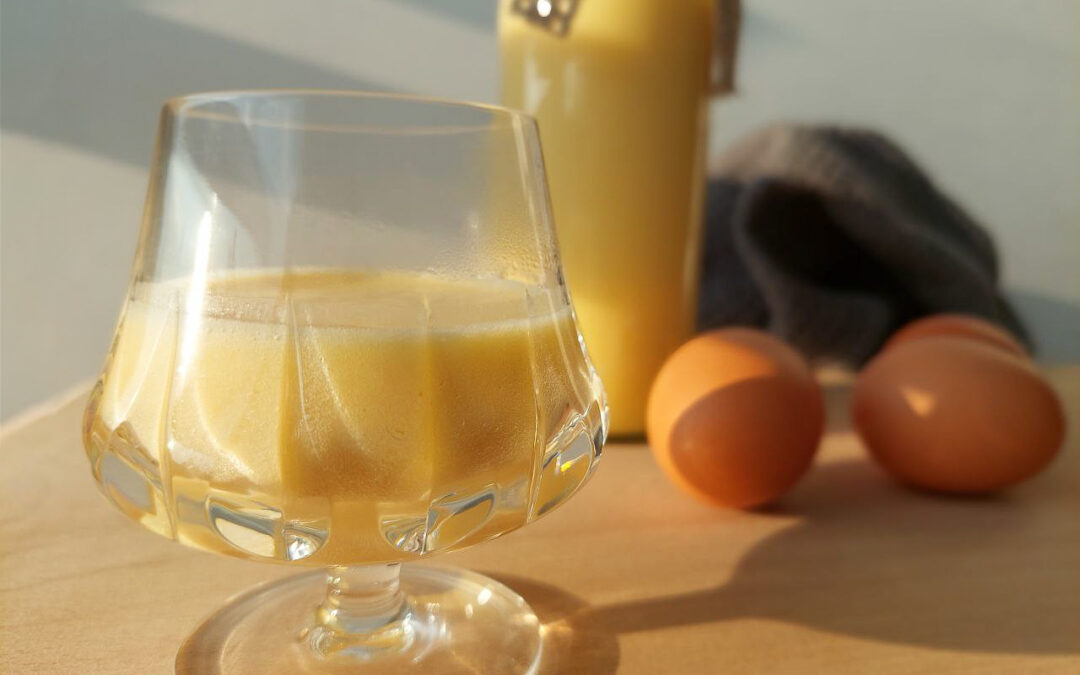
German Eierlikör (or Eierlikoer as it is sometimes spelled) is a wonderfully tasty cream liqueur and makes for a great last-minute gift, especially (but not only) for Easter.
Oma (my granny) had five sisters, who regularly visited her on her birthday. Each year on January 22, all those lovely great-aunts — or “aunties” as we called them — came to celebrate, talk and laugh with her. When none of them could possibly eat any more cake, Oma got up, went to the large sideboard and fetched a large bottle of Eierlikör, which was greeted with great enthusiasm. At least by the adults.
After our aunties had left several hours later in a spirited mood and giggling happily, Oma let us dip our fingers in the empty glasses and taste what Eierlikör was left in them. It was wonderfully creamy and rich and bore a hint of vanilla. And to be honest, just those few drops made us feel like grown-ups.
Nowadays, I make my own homemade Eierlikör, and I’m here to show you how it’s done. With a few simple ingredients, some basic equipment and my traditional recipe, you can whip up this delicious German Eierlikör in under 10 minutes.
This homemade Eierlikör recipe shows you how to make traditional German egg liqueur with egg yolks, cream and vodka in just 10 minutes.
What is Eierlikör?
Eierlikör is a creamy German liqueur made from egg yolks, sugar and alcohol. It has an alcohol content between 14 and 20 %. A thicker variety containing at least 140 g of egg yolks per litre is called Advocaat (also spelled Avocat or Advocat).
So Advocaat and Eierlikör are essentially the same drink, just known under different names.
No matter the name, the liqueur is usually drunk pure or together with coffee (like Oma used to).
The origin of Eierlikör
In the 17th century, European conquistadores in Brazil were introduced to a beverage called Abacate, made with avocados. They mixed the drink with rum and sugar and thus created the first version of an “Advocaat”. In Europe, however, avocados were unknown at that time and could neither be cultivated nor imported.
The Dutch entrepreneur Eugen Verpoorten, who later founded the enterprise Verpoorten, substituted the avocados with egg yolks, and so the Eierlikör was born.
I don’t know if this story is true, but I think it’s quite cute, so let’s pretend it is 😉.
How to Make Eierlikör
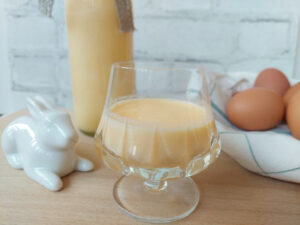
Making Eierlikör at home is neither difficult nor complex. Let me show you:
Equipment For Making Eierlikör
To make this classic German Eierlikör recipe at home, you’ll need
- A pot
- A metal bowl that fits into the pot
- A whisk or electric mixer
- A thermometer (analogue or digital, range from 0 – 100 °C (32 – 212 °F)
- A rubber spatula
- A funnel and sieve (optional)
- Glass bottles; I use 2 – 3 bottles of ¼ l (the last will not be full). It’s better to use bottles with a wide rim instead of a small one because the liqueur will thicken during cooling and may be difficult to pour.
Ingredients and variations
There are a few standard ingredients you need for making the classic Eierlikör – eggs, for example 😉. All other ingredients can be easily varied.
Egg yolks are the basis for this recipe, and it’s best to use organic, free-range eggs that are not older than one week. Before making the liqueur, take them out of the fridge at least 3 hours ahead so that they can reach room temperature.
Sugar not only sweetens the liqueur but also works as a conservation agent and enhances volume. You can either use granulated sugar, in which case you have to whisk the egg yolks longer until the sugar has dissolved or icing sugar.
Cream makes the Eierlikör very, well, creamy and rich. Alternatively, you can use condensed milk (10 % fat) or part cream, part milk. In the latter case, the liqueur is more liquid and has a more alcoholic taste.
Alcohol preserves the egg liqueur. The most recommended alcohol for Eierlikör is neutral vodka, but you can also use other varieties like corn schnapps, Doppelkorn or white rum. They work equally well but bring their own flavour.
Speaking of which: you can flavour your liqueur, for example, with vanilla, cinnamon or grated tonka bean.
How to Make Eierlikör: Step-by-Step
- Sterilise the bottles by rinsing them and the lids with boiling water and letting them cool down and dry. If you want a detailed description, this article will show you how to sterilise jars.
- Fill half the pot with water and bring it to a boil.
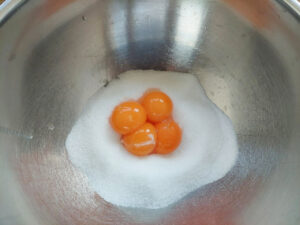
- Separate the eggs and put the yolks, sugar and vanilla pulp in the bowl.

- Hang the bowl in the pot with the hot water. This is called a bain-marie or double boiler.
- Whisk the ingredients together until they become a fluffy, light yellow mass.
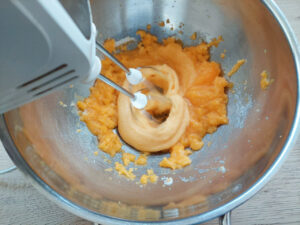
6. Constantly check the temperature with a thermometer. It should not exceed 60 °C (140 °F), or else the eggs will start to clot.
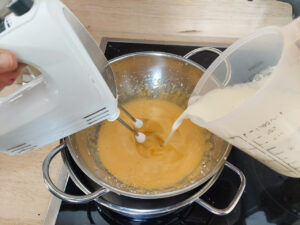
7. Now add the alcohol and the cream and whisk until the mixture noticeably thickens — this usually takes 5–10 minutes. Again, make sure the temperature does not exceed 60 °C (140 °F).
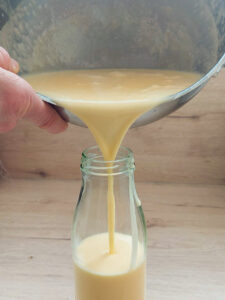
8. Use a funnel and sieve to fill the Eierlikör into bottles.
How to store Eierlikör
The sugar and alcohol in the Eierlikör work as preservatives so that it won’t spoil easily. However, store your homemade Eierlikör in the fridge to be on the safe side. There, it will last for 4–6 weeks.
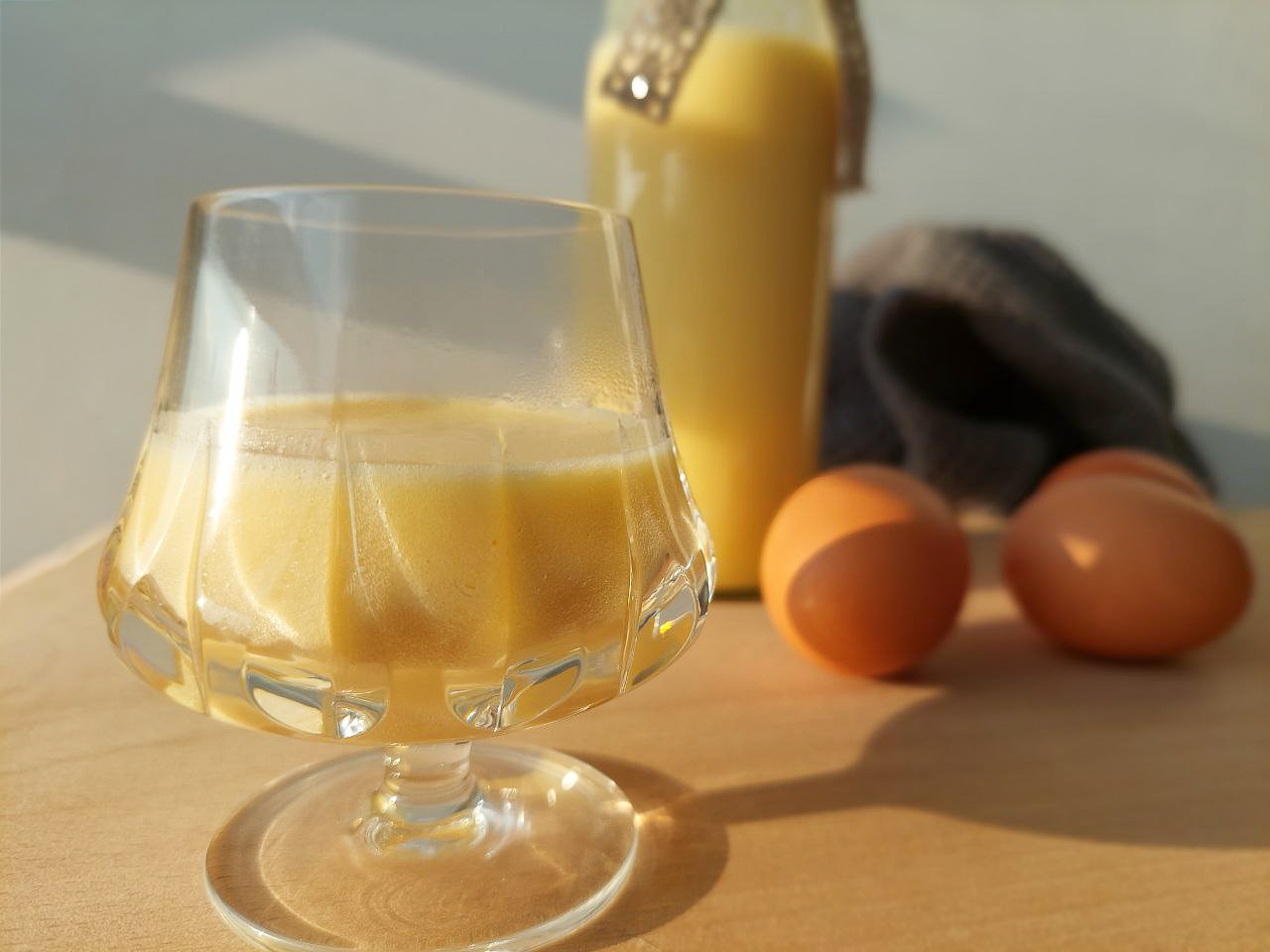
Homemade Eierlikör (German Egg Liqueur)
Ingredients
Equipment
Method
- Sterilise the bottles by rinsing them and the lids with boiling water and letting them cool down and dry.
- Fill half the pot with water and bring it to a boil.
- Separate the eggs and put the yolks, sugar and vanilla pulp in the bowl.
- Hang the bowl in the pot with the hot water. This is called a bain-marie or double boiler.
- Whisk the ingredients together until they become a fluffy, light yellow mass.
- Constantly check the temperature with a thermometer. It should not exceed 60 °C (140 °F), or else the eggs will start to clot.
- Now add the alcohol and the cream and whisk until the mixture noticeably thickens — this usually takes 5–10 minutes. Again, make sure that the temperature does not rise above 60 °C (140 °F).
- Use a funnel and sieve to fill the Eierlikör into bottles.
Notes
How to serve Eierlikör
- Eierlikör is often served in small glasses or chocolate-coated wafer cups. But that’s only one of many options.
- Pour your homemade Eierlikör over an ice cream cup. It works wonderfully with vanilla, chocolate or hazelnut ice cream, but also with fruity ones like strawberry or raspberry.
- Sneakily add German Eierlikör to your coffee. No one will see it, and it tastes delicious.
- There are several cake recipes with Eierlikör, which I intend to post soon. Stay tuned.
- Eierlikör can pimp many a dessert and take it from “meh” to “wow”. Whether it’s a tiramisu (forgive me, my Italian friends!), an Eton mess (a British cream dessert) or just whipped cream: a healthy dollop of Eierlikör can make a huge difference.
- As Eierlikör is made from eggs, it’s natural that it’s connected with Easter, where it’s often served at celebrations. This is a lovely tradition I absolutely intend to keep!
German Eierlikör – A Treat Made in No Time
Whenever I see Eierlikör, I think of my Oma and aunties and the fun they had together. I miss them and the happy days and moments I shared with them.
Today, I make my own Eierlikör, and I encourage you to make your first (or second, or third…) batch with this quick and easy recipe. It doesn’t need fancy equipment or lots of ingredients and is done in about 10 minutes.
You can drink all of it by yourself, of course. I won’t judge you. But it’s more fun to share it with family and friends. And who knows, you could even start a new tradition that your kids and grandchildren will remember fondly one day.
I toast my granny for that. Cheers, Oma!
If you’re looking for more simple recipes to make from scratch, head over to my Recipes page — there’s plenty more to explore.