

.
These January reflections are part of a monthly practice of noticing what each season asks of us.
When I look outside my bedroom window on a typical January morning, I can see the nearby woods, sometimes covered in tiny snow hats. At least, that’s the case this January (so far) as snow has become increasingly rare around here in the alpine upland. A hundred kilometres to the south, snow is a certainty, but not here. That’s why I’m so happy that this year we are covered in white.
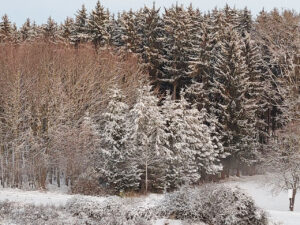
View from my bedroom window in January.
Temperatures hover steadily below 0 °C (32 °F), and a slight wind blows from the west. Going outside is a marvel – if you’re appropriately accessorised with a thick scarf, a woolly hat and mittens. The air smells crisp and clean with a hint of wood smoke. On my strolls through the snow-covered woods, there’s almost no sound. Everything seems muffled by the white blanket that buries all the plants, or at least considerably changes their appearance.
The sun rises late this time of the year, and sometimes we don’t see it at all (despite it being day) due to thick fog. On days like these, I light as many candles as I can to make our home cosy and light, despite the dullness outside. When the sun does come out, however, its light is reflected by zillions of snowflakes, making it almost blinding.
When I was a child, life had slowed down on our farm. Dad went to the woods to fell trees if necessary, but on the farm itself, beyond caring for the animals, we mainly did maintenance work. We organised the workshop and kept the machines and tools well-tended.
I love the slow pace of January.
Only a few things need, can and should be done. While others crowd gyms and plan overhauls, I prefer to hibernate as much as I possibly can. This resistance to January’s forced productivity isn’t just personal preference—it runs contrary to how humans historically understood the year.
I learned that it was Julius Caesar who determined the first of January as the start of the year, choosing the date because it was when the new consuls started their work. Later, Pope Gregory XIII reformed the Julian calendar but kept January 1 as the year’s start.
This was largely a political decision rather than a seasonal one. Before that, many cultures started the New Year at the spring equinox on March 20/21.
This makes so much more sense to me!
Nature starts reviving again, so it’s a lot more plausible to “start” anew then, instead of in the deepest winter. No wonder January can feel misaligned with our energy!
While the world rushes with resolutions, nature rests – and we should do the same. Instead of getting myself stressed out, I’d rather sit on my couch with hot cocoa, browsing through seed catalogues, or journaling by the Christmas tree (which we’ll keep until the end of January). No hectic for me, thank you very much. This is my January: dreaming, planning, organising – a quiet preparation for spring.
The Garden’s Deep Sleep

When I stroll through my garden in January, everything is dormant. It’s like watching a child sleeping peacefully, deep in dreams, undisturbed. Snow covers the garden, tucking the earth into winter’s rest.
The branches of the nearby trees and shrubs are bare, showing their form and unique structure clearly against the deep blue January sky. The beds in the vegetable garden are almost empty; only a few hardy leeks brave the cold.
At first glance, it might seem bleak, yet a garden in winter is incredibly beautiful in its bareness.
The necessity of dormancy
This dormancy is necessary for our garden to regain its strength for the upcoming growing season. Just like the child I mentioned earlier, our garden needs its rest after a long year.
Nevertheless, there’s work underneath that we can’t see: the roots of trees, shrubs, and perennials strengthen and store as much energy as possible, invisibly preparing for spring.
The garden as teacher
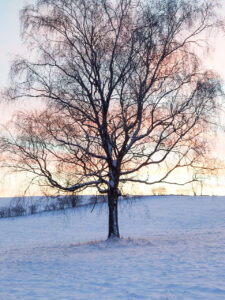
The garden quietly teaches us something important here: rest isn’t laziness; it’s necessary preparation. Just like nature – and we are part of nature – we live in cycles. There’s a time to work and a time to rest, daily and yearly. Trusting these cycles makes us stronger and more productive in the long run–not despite the rest, but because of it.
The garden asks very little of me right now.
There’s little to do in the garden right now. I clean my tools and repair them as needed. I also sketch out a planting plan for the vegetable garden, dream of new patches and order new seeds – remember the seed catalogues I mentioned earlier.
If you dream of adding a greenhouse, now is the perfect time to research and plan. When I built my greenhouse from scratch, I started planning it in January.
Here are more January garden tasks, but there’s wisdom in not starting too soon. Instead, let’s honour this deep rest.
Self-Care in the darkest month
Honouring the Darkness
Let’s be honest: January is the darkest month of the year. Indeed, the days get longer again after the winter solstice at the end of December, yet the festive glamour of Christmas is over, and it can all look very bleak. Whenever I catch myself sinking into melancholy, I tell myself that January is meant to be dark and quiet. It’s nature’s permission to hibernate, and I try working with it instead of fighting it.
Winter Self-Care Practices
For body…
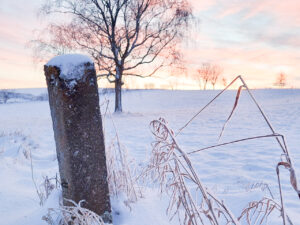
Just because it’s cold doesn’t mean we shouldn’t go outside. On the contrary, a walk in the snow gets us enough fresh air and movement to keep us fit and healthy during the cold months. And it’s mesmerising to see how our surroundings look so different when they’re covered in snow. No gym session offers quite the same nourishment.
After the walk, a long, hot bath, ideally with dried herbs from summer, is perfect. The hot water envelops us like a soft embrace and warms us up after our time in the cold.
It’s a small ritual, but it makes a difference.
To nourish my body, I love eating warm food, often made from root vegetables, but also meat with delicious gravy. These rouladen with Spaetzle, for example, are one of my favourite dishes in winter.
I’ve found out that in January, I often need more sleep than in any other month, and I’ve learned to give myself permission to go to bed early and get that extra sleep if I need it.
That, too, feels like winter care.
…Mind…

One of my favourite things in January is reading all the books that I saved for winter. Right now, for example, I’m reading a biography about Franz Schubert, which I’ve had for almost a year now. I couldn’t muster the energy for it during the busy growing season, but now is the perfect time to indulge in Schubert’s life and work.
I also tackle creative projects that I simply don’t have the time for the rest of the year. Knitting a shawl or fingerless gloves is on my list. As I’m not an avid knitter, I need time and muse to concentrate on a knitting pattern. Now is a wonderful time to just give it a go.
As an introvert who needs her alone time to recharge, I take winter as the perfect excuse to say no to as many obligations as I can. I’ve experienced that I’m much more outgoing and sociable in summer, but in winter, I love being at home, either alone or with my boys and not interacting with any other people if I can avoid it. If all else fails, there’s always the weather to blame for not being able to leave the house…
… and Soul

Whenever it’s dim and dusky in January, I light candles. Their natural, flickering light creates an atmosphere of enchantment and cosiness. It lifts my mood and touches my soul. Also, I light up the Christmas tree as long as we have it in our apartment. It has artificial candles, but the light banishes the darkness–and with it any chance of a dark mood.
What has also helped me a lot when my mood plummets is listing five things I’m grateful for. For that purpose, I keep a gratitude journal on my nightstand where I can reach it literally any time, day or night. I’ve found gratitude practice a powerful tool to boost my energy and mood.
I’m not good at meditation (my thoughts always wander elsewhere), but I love just sitting in a quiet environment. In my job, I almost constantly communicate with many different people, which sometimes can be overwhelming. That’s why I treasure some quiet time at home all the more.
Creating Cosy (Gemütlichkeit)

What Hygge is for Scandinavian folk is Gemütlichkeit for Bavarians. Both describe the same longing for warmth and shelter, the art of making your home a sanctuary. It doesn’t take much. Some candles, one or more thick blankets and some tea or hot chocolate can transform a home into a cosy nest.
Gemütlichkeit deepens when nothing needs to be rushed. When you are not obliged to be productive but permit yourself to live slowly, you’ve reached a new level of relaxation.
Pantry Gratitude

May I tell you a secret? Sometimes I go down to the basement just to look at all the jars of homemade preserves. I’m immensely grateful to my former self for having cooked, canned, fermented, and dried all the vegetables, fruits, and herbs that we can now consume. Having tomato sauce with our pasta, sprinkled with dried herbs, then a dessert made of frozen or canned berries, is like opening jars of preserved summer.
It’s also deeply satisfying to cook creatively with what we have and not run to the store and buy “fresh” ingredients from the other end of the world. Cooking from what we already have feels quietly abundant. Traditional winter recipes pave the way for a more sustainable life in harmony with the seasons. For me, re-learning to make do – and finding joy in it – is the best part of preserving.
January invites reflection—even in the pantry. If you want to get your pantry organised, now is a good time. Look here for my guide to pantry audit and rotation.
The beauty of January

Right now, I wish that January would never end. The slowness of the month and the cosiness I have created for us feel deeply relaxing. By month’s end, I know I’ll get restless, sensing daylight lengthen, but that’s weeks away. For now, I take my garden’s advice and allow myself to rest, relax, and contemplate my intentions, not resolutions, for the upcoming year.
I hope you, too, can embrace January’s slow energy! If you’re looking for permission to rest – you have it. It’s not a luxury – it’s essential. I’m making my home cosy, flowing with January’s energy, and caring for myself— I hope you’ll do the same.
I wonder if you feel this pull too—this permission to rest when January arrives. However you spend this month, may you find the rhythm that serves you best. Spring will come — but for now, winter is enough.
In the mood for garden planning? Here are all the posts about gardening: Gardening – seasonalsimplelife.com
If you’re interested in more cooking and baking recipes, look here: Recipes – seasonalsimplelife.com
Many (but not all) of the recipes there are authentically Bavarian.
For homemade bodycare articles, look right here: Home and Body – seasonalsimplelife.com
And if you want to learn more about different preserving techniques, this is your site: Preserving – seasonalsimplelife.com
0 Comments