
.
November 11 is St. Martin’s Day, an important holiday in German-speaking regions. We celebrate this day extensively with lantern processions: Children (and their parents) walk through their town or village with handcrafted lanterns, singing songs about St. Martin and performing a play about his good deeds. Afterwards, everybody gets hot tea and Saint Martin’s geese, sweet yeast pastries that are shaped like geese (more on the geese connection later). Although my boys are no longer children, the scent of spiced tea and the rich dough of Saint Martin’s geese bring up treasured memories of the lantern-lit streets and the wonderful sense of community at the procession. To keep the seasonal traditions alive (and satisfy our sweet teeth), we still bake Saint Martin’s geese every year, and I want to show you how it’s done.
The Story Behind the Tradition
Martin was a Roman soldier, born around 316. When riding along on a cold winter’s day, he came across a hungry and freezing beggar. Martin, moved by pity, cut his warm cloak in half with his sword and gave half to the beggar. At night, the beggar appeared in Martin’s dreams, revealing that he was Jesus Christ.
Why geese?
After this incident, Martin converted to Christianity and studied the Christian faith. Later, the people of Tours (France) asked Martin to become bishop. Martin, however, modest as he was, didn’t consider himself worthy enough for the task and hid in a goose barn. The geese started quacking, betraying Martin’s whereabouts. He became bishop and served for about 30 years, said to have worked several miracles during that time. Martin died on November 11, 397 and was later canonised. After his death, eating goose on his memorial day became a tradition.
But is that really the reason why we eat geese (real or baked ones) on that day? Historians have another explanation for the tradition of the Saint Martin’s geese: for one, November 11 was the day when taxes or feudal dues were collected. The payment was often made in goods, such as a goose. At the same time, November 11 was the last day before the 40 days of Advent fasting (historically called “Saint Martin’s Lent”) before Christmas, and people indulged in a last hearty (goose) roast and other food that were taboo during the fast.
From harvest fires to lantern processions

I can’t believe how long it has been since that day when my boys attended St. Martin’s lantern processions! And did you see that my youngest had made a goose? 😏
And what does Saint Martin have to do with lantern processions? Light processions were already a tradition among early Christians, and this practice was adopted to honour Saint Martin on his memorial day. Additionally, people lit fires in November in the fields in gratitude for the harvest and as a symbolic farewell to the harvest year. The children crafted torches from straw and lanterns from hollowed turnips with which they wandered through the streets. Sound familiar? Rightly so: this is similar to the original Celtic harvest traditions that resulted in Halloween.
About the Dough: Enriched Yeast Dough
Now that we’ve covered the tradition’s history, let’s dive into baking Saint Martin’s geese!
While you may find recipes using different doughs, the classic dough to make the geese is an enriched yeast dough. “Enriched” simply means that apart from flour and yeast, our dough includes ingredients like butter, eggs, milk and sugar. Enriched yeast dough is perfect for special occasions as it’s sweet, softer and, well, richer than just plain yeast dough. It’s also perfect for shaping, which is ideal for cutting out our geese. Another sweet treat made from enriched dough is this braided yeast bun.
One of the secrets of enriched dough is to give it enough time to rise properly. Once you’ve got your core dough right, you allow it to rise and prove fully. You must be patient here and give it enough time; otherwise, you’ll end up with a brick.
But don’t worry: once you know what to watch for, it’s straightforward to make and a real treat to eat.
Ingredients & Equipment Needed
For making the enriched yeast dough for our Saint Martin’s geese, you’ll need
- Flour: Pastry or all-purpose flour is equally good
- Yeast: You can either use fresh or dry yeast, but keep in mind that you have to activate fresh yeast before adding it to the other ingredients
- Sugar: either use granulated sugar or icing sugar
- Egg
- Milk: whole milk is best – I don’t recommend low-fat milk
- Butter: alternatively, you could use margarine, but honestly, the taste will not be the same
For the decoration, you’ll need
- Raisins for the eyes
- Pearl sugar
You don’t need any special equipment to make Saint Martin’s geese. A goose-shaped cookie cutter makes the job easier, but it’s not essential – I cut out my geese using this template (download and print at 100%):
Template Saint Martin’s geese
Step-by-Step Recipe
Making the dough
Put the flour and sugar in a large bowl. If you use dry yeast, add it as well. In case you use fresh yeast, however, you must activate it now: warm up the milk until it is lukewarm (not warmer or the yeast will die!) and crumble the fresh yeast into it. Stir until it’s dissolved. Make a well in the centre of the flour and pour the yeast milk into it. Cover the bowl and let the yeast activate for about 20 minutes. After that time, the yeast liquid will be bubbly and considerably risen.
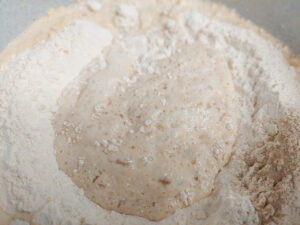
Melt the butter and pour it into the bowl. Now add the egg and start kneading the dough, either by hand or with a food processor. Knead for about 5 minutes. The dough is ready when it’s soft and smooth and doesn’t stick to your fingers.
First rise
Form the dough into a ball, put it back in the bowl and cover it with a kitchen towel to prevent it from drying out. Let it sit for about 60 minutes in a warm place. The dough is ready when its volume has at least doubled.

This dough has risen perfectly and is ready to be rolled out and cut into Saint Martin’s geese!
Cutting the geese
Line two to three baking trays with parchment paper or brush them with some butter, lard or tallow so that the geese won’t stick.
Lightly flour your work surface and roll out the yeast dough to about 1 cm (1/2 inch). Cut out the geese with a cookie cutter, the template or by hand and put them on the baking trays, leaving some space between them as they’ll expand during rising. If you use my template, also cut out one wing per goose.

Brush the wings with egg wash and gently press them onto the geese. Press a raisin into place for the eye.
Second rise
Now, let the geese sit for another 20 minutes. During that time, the dough will rise again, making the baked pastry all fluffy and soft.
In the meantime, preheat the oven to 175°C (350 °F).
Last decorations and baking
After the second rise, lightly brush the geese’s wings with egg wash and sprinkle pearl sugar on them. I prefer to sprinkle just the wings, but you can, of course, sprinkle the whole goose with pearl sugar.
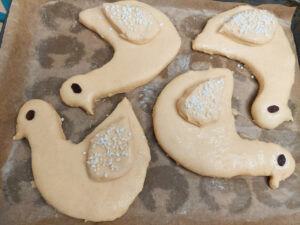
Put the trays in the preheated oven and bake them for 20 minutes until they are golden brown.
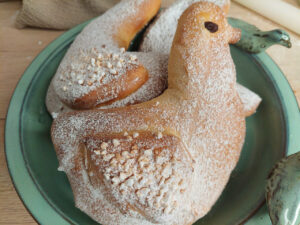
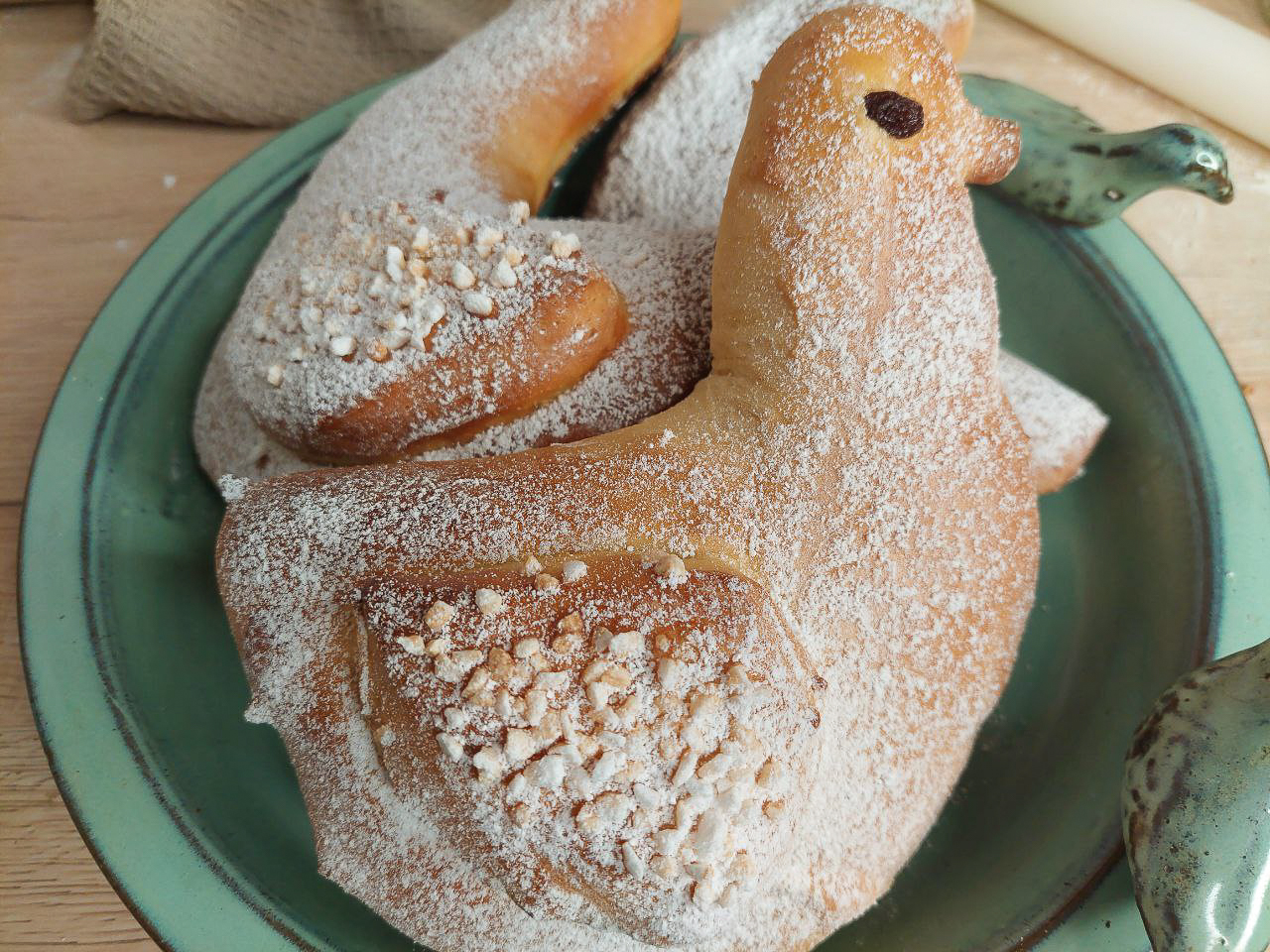
When the geese are baked, take them out of the oven and let them cool down. If you like, you can dust them with icing sugar.
Saint Martin’s Geese (Martinsgänse)
Ingredients
Equipment
Method
- Put the flour and sugar in a large bowl. If you use dry yeast, add it as well. In case you use fresh yeast, however, you must activate it now: warm up the milk until it is lukewarm (not warmer or the yeast will die!) and crumble the fresh yeast into it. Stir until it's dissolved. Make a well in the centre of the flour and pour the yeast milk into it. Cover the bowl and let the yeast activate for about 20 minutes. After that time, the yeast liquid will be bubbly and considerably risen.
- Melt the butter and pour it into the bowl. Now add the egg and start kneading the dough, either by hand or with a food processor. Knead for about 5 minutes. The dough is ready when it’s soft and smooth and doesn’t stick to your fingers.
- Form the dough into a ball, put it back in the bowl and cover it with a kitchen towel to prevent it from drying out. Let it sit for about 60 minutes in a warm place. The dough is ready when its volume has at least doubled.
- Line two to three baking trays with parchment paper or brush them with some butter, lard or tallow so that the geese won’t stick.
- Lightly flour your work surface and roll out the yeast dough to about 1 cm (1/2 inch). Cut out the geese with a cookie cutter, the template or by hand and put them on the baking trays, leaving some space between them as they’ll expand during rising. If you use my template, also cut out one wing per goose.
- Brush the wings with egg wash and gently press them onto the geese. Press a raisin into place for the eye.
- Now, let the geese sit for another 20 minutes. During that time, the dough will rise again, making the baked pastry all fluffy and soft.
- In the meantime, preheat the oven to 175°C (350 °F).
- After the second rise, lightly brush the geese’s wings with egg wash and sprinkle pearl sugar on them. I prefer to sprinkle just the wings, but you can, of course, sprinkle the whole goose with pearl sugar.
- Put the trays in the preheated oven and bake them for 20 minutes until they are golden brown.
- When the geese are baked, take them out of the oven and let them cool down. If you like, you can dust them with icing sugar.
Notes
Alternatively, you can freeze them for up to 6 months, but remove any sugar because it will turn liquid when defrosted.
FAQs
How to tell when the yeast is properly activated?
After 20 minutes, properly activated yeast will be bubbly and noticeably risen. If it looks flat or unchanged, your yeast may be dead, or the milk was too hot.
What’s the right dough consistency?
Once you have added all ingredients to the bowl, mix them well together and knead the dough for about 5 minutes. Another option is letting it knead in a food processor. Anyway, the dough is ready for rising when its surface is smooth and it doesn’t stick to your fingers, your work surface or the bowl.
How do I keep the shapes defined during rising and baking?
The geese will enlarge by about 10% during rising, but the shape will stay the same, only become, well, larger. After rising, you can make small adjustments if you deem them necessary, like changing the bend of the neck, for example, or sharpening the beak. All in all, though, the shapes will stay much the same as the freshly cut out dough.
During baking, there may be a slight additional rise, but that’s it.
How long can I store baked Saint Martin’s geese?
Put any leftover geese in a linen bag or the bread bin, where they can be stored for several days.
Alternatively, you can freeze them. Just make sure not to use icing sugar and scrape off the pearl sugar, as it would turn liquid when the geese are defrosted. Frozen geese can be stored up to 6 months.
Serving Suggestions
Traditionally, Saint Martin’s geese are given to the children after the lantern procession, but they also make a great gift for friends and neighbours. A few years ago, I brought a batch to work and left them in the teachers’ room. Boy, it was like throwing a steak in a lion’s den! The geese were gone within a few minutes.
If you host a tea or coffee party at St. Martin’s Day, the geese make a wonderful treat with coffee, spiced tea or hot cocoa (my favourite!). Any seasonal hot drink, like pumpkin spice latte or gingerbread hot cocoa, as well as chai tea, is also a wonderfully fancy pairing for Saint Martin’s geese.
If there are some geese left the day after baking (or if you’ve made enough to store or freeze them), try them instead of bread for breakfast. The sweet pastry goes marvelously with butter and jam, for example one of these pear jam variations.
Variations & Creative Ideas
Now that you’ve mastered the sweet yeast dough, you can get creative.
Different shapes
Who says that you can only make geese from this dough? Try making large gingerbread men shapes that you decorate with raisins for the eyes and buttons for the shirt. For New Year’s Eve, you can form tiny pig heads or fish; they‘re considered to bring luck. Or you can just make this braided yeast bun.
Flavour additions
In this post, I’ve shown you the recipe for a basic enriched yeast dough. If you like, you can add different flavours to the dough, like for example the zest of an orange, the pulp of half a vanilla pod or ¼ teaspoon of cardamom.
Filling options
Try filling the geese with marzipan, Nutella or jam. For that purpose, roll out the dough only to 0.5 cm (1/4 inch), cut out the geese and put your preferred filling in the middle of the belly of half of the geese. Brush the edges of the geese with egg wash and stick the unfilled geese on top, gently pressing the seams closed. Let the geese rise as described in the recipe, decorate them as you like and bake them for 20 – 25 minutes.
Bake Saint Martin’s Geese!
Although we have stopped attending lantern processions, we still make Saint Martin’s geese every year to celebrate this day – and indulge in these sweet, fluffy pastries. I think it’s important to keep traditions, even if you bend them slightly. It would be a pity if these recipes and traditions vanished! And besides, for me, this seasonal recipe is the signal to start baking Christmas cookies!
These geese are so easy and fun to make that I encourage you to try making them with your children or grandchildren, nieces, nephews or friends’ kids. They’ll love it, cherish this memory of baking geese with you forever and hopefully will carry on this tradition.
Looking for Christmas recipes? These may interest you:
Vanillekipferl Recipe (Austrian Vanilla Crescent Cookies)
The Best Orange Christmas Cookies Recipe (Soft, Citrusy & Festive!)
Traditional Christmas Pudding Recipe (Better Than Store-Bought!)
For more recipes, visit this site: Recipes – seasonalsimplelife.com
0 Comments